

Key takeaways
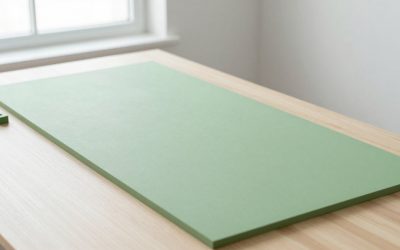
- Planer sled: A flat carrier board that holds the workpiece on shims so a thickness planer can create the first flat face.
- Router sled: Rails and a router bit flatten slabs far wider than any jointer, though the process is slow.
- Table saw edge-jointing jig: Straightens one edge before ripping, useful if you have no jointer.
- Pre-surfaced lumber: Reduces the need for a jointer when projects use standard dimensions.
For most woodworkers the best jointer is a 6 in model with a bed long enough to support the boards they use: the Jet JJ-6CSX or its longer-bed JJ-6CSDX suit people who want a traditional floor-standing machine, the Cutech 40160H-CT suits those with limited space and budget, the Grizzly 8 in benchtop G0947 suits those who want extra width without a floor machine, and the Powermatic 54HH or a Jet JJP-12 combination suits permanent shops. The guide below explains how to choose between those, using maker specifications where found and flagging where reviewers disagree.
Jointers at a glance
| Model | Best for | Key stated specs | Limits |
|---|---|---|---|
| Jet JJ-6CSX | Traditional 6 in jointer for a home shop | Manual lists 1 HP motor, table 7 in wide by 46 in long, 6-1/16 in by 1/2 in cutting capacity, three knives, 4,800 rpm cutterhead | Straight knives; 46 in bed is modest for long boards |
| Jet JJ-6CSDX | Longer bed, quick-set knives | Listed 56 in by 7-3/8 in table, 6,000 rpm cutterhead, 1 HP | Higher outlay than the JJ-6CSX |
| Cutech 40160H-CT | Small shops and budgets | Reported 6 in benchtop, spiral cutterhead, around 40 lb, aluminum fence | Specs vary by source; short bed; bolt it down |
| Grizzly G0945 | 6 in benchtop | Retail listing: 6 in capacity, 6-1/4 in by 30 in table, 10 amp | Short table limits long boards |
| Grizzly G0947 | 8 in benchtop with a spiral-type head | Retail listing: 8 in width, 8-3/4 in by 34 in table, six-row spiral-type cutterhead | Still a short bed for its width |
| Powermatic 54HH | Premium 6 in helical | Reported 66 in bed, 1 HP, 40 carbide inserts, five-year warranty, about 330 lb | Heavy and premium; not a benchtop machine |
| Jet JJP-12 | Planer and jointer in one | Maker lists 3 HP, 230 volt, 12 in capacity, 55 in by 12 in jointer table, about 500 lb | Needs space and 230 volt power |
What a jointer is for
A jointer flattens one face of a board and then squares an adjacent edge to it. Those two surfaces become the reference for everything that follows: a thickness planer then brings the opposite face parallel, and the table saw rips the other edge. Without a jointer or a substitute such as a planer sled, wide boards that are cupped or twisted cannot be made truly flat.
Bed length matters more than most beginners expect. A longer bed supports the board before and after the cutterhead, so it is easier to flatten a long board without rocking it. Short benchtop beds suit shorter stock, and users report needing outfeed support or extra care when jointing longer boards.
Straight knives versus helical heads
Straight-knife jointers such as the Jet JJ-6CSX use three knives across the cutterhead. They are well understood, fairly easy to sharpen and inexpensive to replace. A nick in one knife leaves a line, so careful maintenance matters.
Helical or spiral heads, found on the Cutech, Grizzly G0947 and Powermatic 54HH, use small carbide or high-speed steel inserts set at an angle. Reviewers report quieter operation and less tear-out in figured grain. You rotate or replace individual inserts when one chips. The Powermatic is reported to carry 40 carbide inserts on a 6 in head, while smaller benchtop machines use fewer.
Width: 6 in, 8 in and beyond
A 6 in jointer is the common entry point and is enough for most face and edge work. Wider boards can be flattened by a planer sled or a router sled instead. An 8 in jointer widens options considerably, and Grizzly lists an 8 in benchtop version (G0947) as well as larger floor models, including an 8 in by 83 in helical machine with a 3 HP motor and 36 carbide inserts. Combination machines such as the Jet JJP-12 offer 12 in capacity in a single footprint.
Choose width for the widest board you expect to face-joint regularly. Be wary of buying more width than your power or your space can support, since bigger jointers need heavier fences, more motor and often 230 volt wiring.
Fence, tables and adjustments
Tables should be flat and coplanar, with a smooth lever or crank to set depth of cut. The fence needs to hold square and tilt for bevels. Reviewers criticise lightweight aluminum fences on budget benchtop machines for flexing and tell users to check settings regularly. Cast fences on floor machines are more stable. One reviewer notes that the Powermatic 54HH fence is not perfectly flat along its length, a reminder that even premium machines need setup.
Every jointer requires alignment of the outfeed table to the top of the knives or inserts. If the outfeed table is too low you get snipe on the board’s end, and if it is too high you get a taper. Follow the manual’s steps, and expect to readjust after changing knives.
Budget, mid-range and premium tiers
Budget tier
Benchtop machines like the Cutech 40160H-CT and Grizzly G0945 fit here. They are good for small stock, door parts and edge-jointing for glue-ups. Limits are short beds, lightweight fences and a need to anchor the machine, since reviewers note the Cutech is light enough to move during a cut.
Mid-range tier
The Jet JJ-6CSX and JJ-6CSDX are floor-standing 6 in jointers with longer tables and a stronger fence. The Grizzly G0947 offers 8 in width at a benchtop scale. These suit a hobbyist who joints often.
Premium tier
The Powermatic 54HH, larger Grizzly helical jointers and combination machines such as the Jet JJP-12 line belong here. They combine long beds, heavy cast iron and more powerful motors, at the cost of price, weight and, for some, 230 volt power.
Pick the jointer that suits your shop
| Pick this if you… | Choose | Why |
|---|---|---|
| Have a small shop and mostly short stock | Cutech 40160H-CT or Grizzly G0945 | Benchtop size, lower tier |
| Want more width without a floor machine | Grizzly G0947 | 8 in capacity with spiral-type head |
| Joint boards of 4 to 6 ft regularly | Jet JJ-6CSDX or Powermatic 54HH | 56 in and 66 in beds |
| Want one machine for jointing and planing | Jet JJP-12 | 12 in combination, 230 volt |
| Work with figured hardwood | A helical-head model | Less tear-out per reviewers |
Alternatives
- Planer sled: A flat carrier board that holds the workpiece on shims so a thickness planer can create the first flat face.
- Router sled: Rails and a router bit flatten slabs far wider than any jointer, though the process is slow.
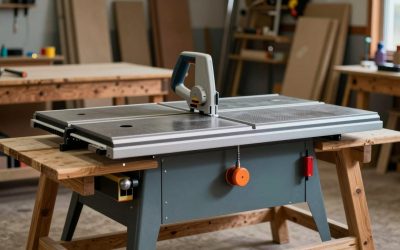
- Table saw edge-jointing jig: Straightens one edge before ripping, useful if you have no jointer.
- Pre-surfaced lumber: Reduces the need for a jointer when projects use standard dimensions.
Safety and setup
Use push blocks, never pass fingers over the cutterhead, and keep the guard in place. Take light cuts, feed with the grain, and avoid jointing boards shorter than the manual allows. Hearing, eye and dust protection are advisable. Jointers make a large amount of chips, so connect a dust collector with the right hose diameter. For wiring a 230 volt machine, hire a licensed electrician.
Footprint, power and dust needs
Jointers vary enormously in what they ask of a shop. A benchtop machine like the Cutech or the Grizzly 6 in models needs a sturdy bench and a standard outlet. The Jet JJ-6CSX lists a 1 HP motor and is offered in 115 or 230 volt versions according to retail listings, so you can usually run it on household power. The Powermatic 54HH is also listed at 1 HP, but its roughly 330 lb weight and 66 in bed demand permanent floor space. The Jet JJP-12 combination lists 3 HP at 230 volt single phase, which most home garages do not have wired.
Dust collection matters just as much. A jointer throws out a big stream of chips, and a small shop vacuum clogs quickly. A dust collector with a four-inch hose is a common match for a 6 in jointer. Ask a licensed electrician before adding a 230 volt circuit.
Learning curve and setup tips
New users often struggle less with the machine than with technique. Press the board down on the outfeed table, not the infeed, once the cut starts. Keep fingers well clear and use push blocks. Take shallow passes of around 1/32 in to 1/16 in on hard wood, and read the grain direction so the cutter shears downhill. Mark the board face with chalk so you can see when the whole surface has been cleaned up.
Plan on spending an hour on first setup. Check that the tables are coplanar, set the outfeed table to the cutting circle, square the fence at 90 degrees and tighten all locks. Repeat this check whenever you change knives or move the machine, and keep the manual close at hand.
Frequently Asked Questions
Do I need both a jointer and a planer?
If you work with rough lumber, yes, or a planer sled to replace the jointer. The jointer makes one face flat and an edge square, and the planer makes the opposite face parallel. If you buy surfaced boards, you can often skip the jointer.
Is 6 in wide enough?
For most furniture parts, yes. You can flatten wider boards with a sled on a planer. If you often work wide panels, an 8 in machine gives more flexibility.
Are helical heads worth it?
Reviewers report quieter cuts and less tear-out in figured wood, plus the ability to rotate single inserts. They cost more up front. Straight-knife machines still perform well on straight-grained stock.
Why does my jointer cut a taper or snipe?
The outfeed table is probably not level with the knives. Re-set it as the manual describes. Uneven pressure at the start and end of a pass can also cause a dip.
How long should the bed be?
Longer is easier for long boards. A 46 in bed such as on the JJ-6CSX handles most furniture stock with outfeed support. Beds of 56 in and 66 in, listed on the JJ-6CSDX and Powermatic 54HH, give more support.
Can a benchtop jointer replace a floor model?
For small parts, often yes. For long, heavy boards, benchtop machines are limited by short beds and lighter fences. Reviewers recommend bolting them to a stable base.



Write Your Review
No reviews yet. Be the first to share your experience!