

For most contractors and serious DIYers, the DeWalt DWE7491RS is the jobsite table saw that reviewers name most often, the Bosch GTS15-10 is its closest rival with a quick-deploying stand, and the SawStop Jobsite Saw Pro is the pick for anyone who puts blade-contact safety first and accepts a heavier, costlier saw. This guide compares those and a few others using the makers’ stated specifications and what outlets report, then explains how to choose by rip capacity, weight, stand design, dust handling and safety features.
Our top picks
 SKIL 15 Amp 10-Inch Jobsite Table Saw
- Ensures fence stays parallel to blade for fast…
- Legs quickly fold in to provide portability and…
- Available micro-adjustment of blade so that it is…
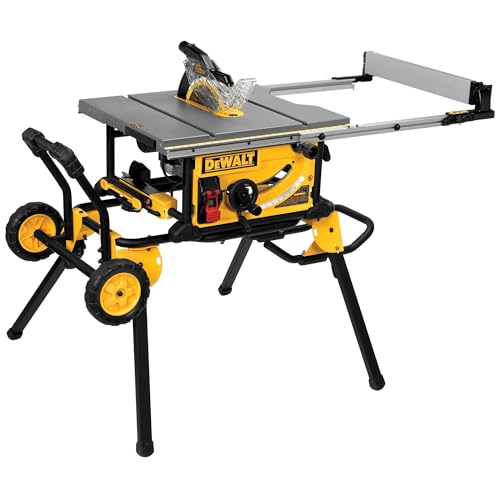 DEWALT Table Saw 10 Inch with Foldable
- Rack & Pinion Telescoping Fence System Make fence…
- Patented material support, can be used for narrow…
- 32-1/2" rip capacity easily cuts a variety of…
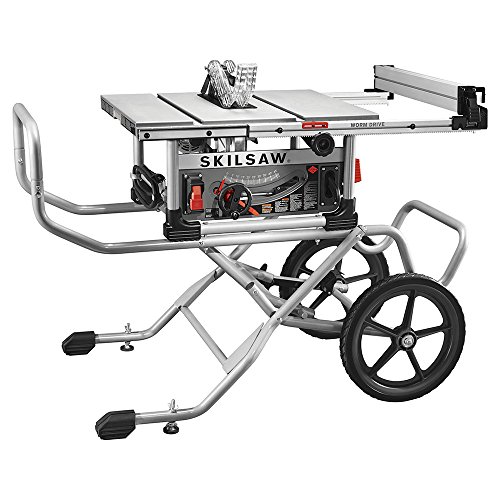 SKIL 10 Inch Heavy Duty Worm Drive
- Legendary worm drive gearing with 3-5/8 inch depth…
- Precision rack and pinion fence system makes fence…
- Rugged rolling stand with 16 inch Wheels and…
| Product | Key specs | |
|---|---|---|
| SKIL 15 Amp 10-Inch Jobsite Table Saw | Ensures fence stays parallel to blade for fast… Legs quickly fold in to provide portability and… Available micro-adjustment of blade so that it is… | Check price |
| DEWALT Table Saw 10 Inch with Foldable | Rack & Pinion Telescoping Fence System Make fence… Patented material support, can be used for narrow… 32-1/2" rip capacity easily cuts a variety of… | Check price |
| SKIL 10 Inch Heavy Duty Worm Drive | Legendary worm drive gearing with 3-5/8 inch depth… Precision rack and pinion fence system makes fence… Rugged rolling stand with 16 inch Wheels and… | Check price |
 BOSCH GTS15-10 10 Inch Portable Jobsite Table | Check price |
As an Amazon Associate we earn from qualifying purchases at no extra cost to you.
What Defines a Jobsite Table Saw
A jobsite saw is a portable 10-inch table saw built to be carried or rolled between sites. It trades some of the mass and table size of a contractor or cabinet saw for portability, usually with a universal motor, an aluminum or composite top, and a folding or wheeled stand. Most run on a standard 15-amp household circuit. That convenience comes with limits: less vibration damping, a smaller table, and fences that vary in quality. Because a table saw is one of the shop tools most associated with serious injuries, treat the manual’s guarding and push-stick instructions as non-negotiable.
At a Glance
| Model | Best for | Key stated specs | Limits |
|---|---|---|---|
| DeWalt DWE7491RS | All-round contractor use | DeWalt lists a 15-amp motor, 32-1/2 in rip capacity, 3-1/8 in depth of cut at 90 degrees, 2-1/4 in at 45 degrees, 10 in 24-tooth carbide blade, rack-and-pinion telescoping fence, rolling stand, onboard storage, 3-year limited warranty | Roundups note a bulky folded size and no blade brake |
| Bosch GTS15-10 | Fast setup and transport | 15 A, 10 in blade, 3,800 no-load rpm, 5/8 in arbor; 32-1/8 in rip to the right of the blade per retailers and Bosch; bevel -2 to 47 degrees; depth of cut 3-9/16 in at 90 and 2-1/2 in at 45; Gravity-Rise wheeled stand; convenience brake stops the blade in about 3 seconds; soft-start motor | Weight figures differ between sources (about 91 to 103 lb), so read Bosch’s spec sheet |
| SawStop Jobsite Saw Pro | Safety-first buyers | 15 A universal motor rated 1.5 HP continuous, 4,000 rpm; 25-1/2 in rip to the right; 10 in blade; 3-1/8 in depth at 90 degrees; flesh-detection system that stops the blade in under 5 ms | Heavier and premium-priced; weights quoted vary by source |
| Makita 2705X1 | Value with an electric brake | Roundups describe a 25 in rip capacity and an electric brake | Smaller rip capacity than DeWalt or Bosch |
| DeWalt DWE7485 | Compact and lightweight | Described by roundups as the compact DeWalt option | Read the maker’s page for capacity details |
| SKIL TS6307 | Budget | Named as the budget pick in roundups | Fewer premium features |
Rip Capacity and Table Size
Rip capacity is how far the fence can sit from the blade, which sets the widest board you can rip. For breaking down plywood sheets, 24 inches covers half a sheet, and the 25-1/2 inch SawStop and 25 inch Makita can handle that. The 32 inch class of the DeWalt and Bosch makes it easier to cut a 4 by 8 sheet down the middle if you can support the long edges. Table depth matters too: DeWalt lists a 21-7/8 by 26-3/8 inch table and SawStop lists 24-5/8 inches of depth. Bigger tables support work better but make the saw heavier.
Fence Design
The fence determines cut accuracy. DeWalt’s rack-and-pinion telescoping fence is a headline feature of the DWE7491RS, letting you set the fence by turning a knob instead of sliding and locking it. Check that the fence locks square, tracks parallel to the blade, and can be reset repeatably. If you plan to use the saw for finish carpentry, spend time setting up the fence and miter gauge, and replace a poor stock blade with a better one.
Stands and Portability
Stand design shapes your day. The DeWalt includes a rolling stand with onboard storage. The Bosch uses its Gravity-Rise stand with large treaded wheels and a foot pedal release for setup and takedown, which reviewers describe as setting up in seconds. The SawStop is heavier, with the cart bringing its weight to roughly 113 lb by most retailers, though some sources differ. If you lift the saw into a truck or up stairs, weigh these numbers carefully, and consider whether a second person will be available.
Safety Features
Safety technology is the biggest dividing line. SawStop’s patented system detects contact with skin and stops and drops the blade in under 5 milliseconds, at the cost of replacing a brake cartridge and possibly a blade after a trigger. Bosch’s convenience brake is described as stopping the blade in about 3 seconds after switching off, and Makita is said to use an electric brake, but those features slow the spinning blade after power-off and do not detect contact. Whatever saw you pick, use the riving knife, blade guard, anti-kickback pawls, push sticks, eye and hearing protection, and never reach over a spinning blade. Many injuries involve kickback and hand placement, which technology cannot fully prevent.
Dust Collection
Jobsite saws spread dust. DeWalt lists a 2-1/2 inch dust collection port. Connect a shop vacuum with the right adapter, and wear a suitable respirator when cutting sheet goods or treated lumber. Open-frame designs, such as the Bosch, allow dust to fall through, while enclosed bases catch more but need emptying.
Budget Tiers
- Budget: the SKIL TS6307 and compact saws like the DeWalt DWE7485, according to roundups. Good for occasional work.
- Mid-range: the DeWalt DWE7491RS, Bosch GTS15-10 and Makita 2705X1, the category where most contractors shop.
- Premium: the SawStop Jobsite Saw Pro. One comparison asks whether its safety technology justifies the large gap over the DeWalt.
Pick X If… Decision Table
| If you… | Choose | Why |
|---|---|---|
| Want the most commonly recommended all-rounder | DeWalt DWE7491RS | 32-1/2 in rip, rack-and-pinion fence, rolling stand |
| Set up and break down several times a day | Bosch GTS15-10 | Gravity-Rise stand with a foot release |
| Want blade-contact protection | SawStop Jobsite Saw Pro | Flesh-detection system, under 5 ms stop |
| Want a brake on a moderate budget | Makita 2705X1 | Electric brake per roundups |
| Carry the saw by hand often | DeWalt DWE7485 | Compact option per roundups |
| Work occasionally and watch spending | SKIL TS6307 | Budget pick per roundups |
Alternatives
- Compact benchtop saw: lighter but with smaller capacity; fine for trim and small projects.
- Contractor or hybrid saw: heavier, steadier and quieter, better for a fixed shop.
- Track saw: breaks down sheet goods safely and portably, though it does not replace a table saw for repeat rips.
Setup and Care Tips
Check the blade for runout and square it to the miter slot before first use, and confirm the fence is parallel. Keep the table clean and wax it occasionally to reduce friction. Replace the stock blade with a quality one if cuts look rough. Store the saw dry, and inspect the power cord and plug for damage; if anything looks worn, have it repaired by a qualified service center rather than improvising.
Matching a Saw to the Work
Framing and rough carpentry mostly need a saw that moves easily, sets up fast and rips common lumber and plywood. For that, the DeWalt DWE7491RS and Bosch GTS15-10 sit in the sweet spot described by reviewers. Finish work and cabinet parts demand a flatter table, a fence that locks true and a better blade, so budget time to tune the saw and consider the SawStop for its cut quality and safety system. Remodelers who work in occupied homes should plan for dust collection and quiet setup, so a saw with a good port and a vacuum matter as much as horsepower.
For hobbyists with limited storage, a lighter saw may be worth more than extra capacity, since a saw that is hard to move often stays in the corner. If you will mostly cut small stock, the compact end of the range is easier to live with. If you often rip full sheets, think about outfeed support, because even a saw with a wide rip capacity cannot keep a 4 by 8 sheet flat on its own.
Frequently Asked Questions
Which jobsite table saw do most reviewers recommend?
Most 2026 roundups name the DeWalt DWE7491RS as best overall, citing its 15-amp motor, 32-1/2 inch rip capacity, rack-and-pinion fence and rolling stand. The Bosch GTS15-10 is often described as very close.
Is the SawStop worth the extra cost?
That depends on how much the blade-contact system matters to you. SawStop states its system stops the blade in under 5 milliseconds. It also has a smaller rip capacity than the DeWalt and Bosch and is heavier, so weigh safety against portability.
Do I need a blade brake?
A brake stops the blade quickly after switching off, which reduces the time it spins, but it does not detect contact. Bosch describes its convenience brake as stopping the blade in about 3 seconds. DeWalt’s DWE7491RS reportedly lacks one.
How wide a board can these saws rip?
DeWalt lists 32-1/2 inches, Bosch and its retailers list 32-1/8 inches, SawStop lists 25-1/2 inches, and roundups put the Makita at 25 inches.
Can a jobsite saw be used in a home shop?
Yes, many people do. Expect more vibration and noise than a cabinet saw, and use a good blade and dust collection.
What safety gear do I need?
Use eye and hearing protection, a dust mask or respirator, push sticks, the guard and riving knife, and keep hands clear of the blade path. Follow the manual closely.






Write Your Review
No reviews yet. Be the first to share your experience!