

Key takeaways
- Space: Measure the floor area, allow infeed and outfeed room for long boards, and keep walkways clear.
- Power: A 15-amp jobsite saw needs a suitable circuit. Ask a licensed electrician about dedicated circuits for larger machines.
- Dust: Fine wood dust is a health concern. Use extraction, a respirator rated for fine dust, and talk to a doctor if you notice breathing trouble.
- Eye and hearing protection: Wear both every time a machine runs.
- Guards: Keep blade guards, riving knives and push sticks in use unless the maker’s manual says otherwise for a specific cut.
- Training: A short class or a mentor helps with machines that can injure.
A beginner is best served by a drill and impact driver pair, a circular saw with a clamped straightedge, a random orbital sander, a square, a tape measure and a set of clamps, while a woodworker with a dedicated space adds a jobsite table saw such as the DEWALT DWE7491RS, a compact router such as the Makita RT0701C, and bench chisels. Where buyers disagree is the order, because sources split on whether a table saw or a router belongs in the first purchase.
Our top picks


As an Amazon Associate we earn from qualifying purchases at no extra cost to you.
How the sources split on what to buy first
Roundups give conflicting priorities. One guide calls the table saw the most indispensable woodworking power tool and lists the router among the most versatile. Another ranks the circular saw, drill, tape, speed square and clamps as essential and puts the table saw under upgrade later. A third guide says to skip the table saw, router, planer and jointer for now, calling them powerful, expensive and dangerous until you have a feel for how wood behaves. Nearly every list agrees on a drill and driver, a random orbital sander, clamps, chisels, a square and a tape measure.
That agreement is a good guide: start with the tools every project uses, then add machines when your projects demand them.
The core kit
Drill and impact driver
A two-tool combination is common. The drill makes pilot holes and the impact driver sets screws without stripping them. Cordless 18-volt kits such as the Ryobi ONE+ set appear on beginner lists because the batteries are shared across many tools.
Circular saw
A corded or cordless circular saw cuts sheet goods and lumber to rough size. One guide says that with a clamped straightedge it is accurate enough for beginner projects, for far less than a table saw and without a dedicated space. A good blade matters as much as the saw itself, because a fine-tooth blade gives much cleaner edges on plywood than the one that ships in the box.
Random orbital sander
Random orbital sanders are preferred because they avoid swirl marks. The DEWALT DWE6423 and Bosch ROS20VSC appear in roundups. Dust extraction or a shop vacuum port is worth having.
Clamps, square and tape
A speed square, a combination square, a tape measure and several bar or pipe clamps hold parts accurately during glue-ups. One guide puts it plainly: you can never have enough clamps.
Chisels and hand saws
Bevel-edge bench chisels clean up joints, and Japanese pull saws in ryoba and dozuki styles are popular for thin kerfs. Learning to sharpen is part of the purchase.
Machines to add as projects grow
Table saw
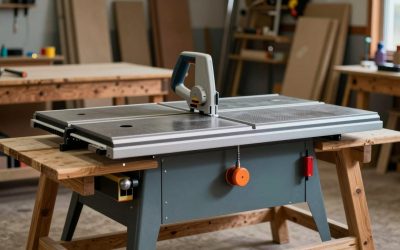
The workshop’s primary tool for ripping and crosscutting. Portable models listed by reviewers include the DEWALT DWE7491RS, a 15-amp jobsite saw described as portable and accurate, the compact DEWALT DWE7485 with an 8-1/4 inch blade, and the SKIL TS6307-00 as a budget pick. The SawStop Compact Table Saw is named for its flesh-sensing brake, which one guide describes as stopping the blade if contact occurs. Table saws carry the highest injury risk in a home shop, so follow the manual, use a riving knife, push sticks and guards, and consider a training class.
Router
Routers cut edges, grooves and decorative profiles. A compact router such as the Makita RT0701C is widely considered easy for beginners, and the Bosch GKF125CEK 1.25 horsepower palm router kit also appears. Fixed-base routers suit edge work, while plunge routers suit cutting into the middle of a board.
Miter saw
A miter saw makes repeatable crosscuts and angles, and is a frame, trim and box builder’s favorite.
Jointer and planer
These flatten and thickness lumber. They are costly and loud, and generally belong to people buying rough boards to save money or control grain.
At a glance: tools and who they suit
| Tool | Best for | Examples reviewers name | Limits |
|---|---|---|---|
| Cordless drill and impact driver kit | Every project, from pilot holes to assembly | Ryobi ONE+ 18V kit | Battery platform lock-in |
| Circular saw plus straightedge | Breaking down sheet goods, rough cuts | Corded or cordless, 7-1/4 inch typical | Accuracy depends on setup |
| Random orbital sander | Smooth surface prep | DEWALT DWE6423, Bosch ROS20VSC | Dust control needs a vacuum |
| Jobsite table saw | Ripping and repeatable cuts | DEWALT DWE7491RS, DWE7485, SKIL TS6307-00 | Space, noise, injury risk |
| Safety-brake compact saw | Buyers who prioritise protection | SawStop Compact Table Saw | Higher cost tier, brake cartridges are consumables |
| Compact router | Roundovers, small profiles, hinges | Makita RT0701C, Bosch GKF125CEK | Limited power for large bits |
| Pocket-hole jig | Fast frames and face frames | Kreg 720 | Visible holes unless plugged |
| Bench chisels and pull saws | Fine fitting, quiet work | Bevel-edge chisels, ryoba and dozuki saws | Sharpening skills needed |
Lists vary across sources and many are affiliate-style roundups, so confirm the exact model details with the maker before buying.
Choosing by budget tier
Budget tier
Buy a drill and driver, a circular saw, a square, a tape, and four or more clamps, plus a basic random orbital sander. This kit builds shelves, boxes, benches and outdoor furniture. Skip stationary machines until a project demands them.
Mid-range tier
Add a jobsite table saw, a compact router and a pocket-hole jig. A decent set of chisels and a sharpening stone make joinery possible. This tier suits someone with a garage corner and a steady habit.
Premium tier
A safety-brake saw, a cabinet-style table saw, a jointer and planer, and a dust collection system. This is for people building furniture regularly, where accuracy and workshop air quality are priorities.
Shop setup and safety notes
- Space: Measure the floor area, allow infeed and outfeed room for long boards, and keep walkways clear.
- Power: A 15-amp jobsite saw needs a suitable circuit. Ask a licensed electrician about dedicated circuits for larger machines.
- Dust: Fine wood dust is a health concern. Use extraction, a respirator rated for fine dust, and talk to a doctor if you notice breathing trouble.
- Eye and hearing protection: Wear both every time a machine runs.
- Guards: Keep blade guards, riving knives and push sticks in use unless the maker’s manual says otherwise for a specific cut.
- Training: A short class or a mentor helps with machines that can injure.
Pick X if you need this
| Pick | If you need |
|---|---|
| Drill and impact driver kit | A first tool that gets used in every project |
| Circular saw and straightedge | Accurate cuts without a table saw |
| Random orbital sander | Smooth finish prep without swirl marks |
| DEWALT DWE7491RS | A portable saw for ripping and repeat cuts |
| SawStop Compact | A flesh-sensing brake in a small footprint |
| Makita RT0701C | A first router for edges and small details |
| Chisels and pull saw | Quiet, precise joinery |
How to build the kit over time
A practical order is to buy for the project in front of you. A first bookshelf needs a drill, a saw, a square, clamps and sandpaper. A set of dining chairs asks for chisels, a router and a way to cut repeatable angles. A workbench build is often the moment to add a jobsite table saw, because ripping long boards by hand or with a circular saw becomes tiring. Buying in this pattern keeps money from sitting in tools that never leave the shelf, and it lets you learn which features you actually use. Battery platforms deserve thought early: choosing one brand for the drill, driver, circular saw and sander means one set of chargers and batteries, which lowers the cost of each added tool.
Alternatives
Hand-tool route
Planes, saws, chisels and a good bench replace many machines. The route is slow and rewarding, and cheaper to start but depends on sharpening skill.
Makerspace or community shop
Many towns have shared workshops where you can use table saws, jointers and planers under supervision for a membership fee. This is a good way to try machines before buying.
Track saw system
A track saw and guide rail can replace a table saw for sheet goods in a tight space, with less dust and a smaller footprint.
Frequently Asked Questions
What woodworking tools should a beginner buy first?
Most lists agree on a drill and driver, random orbital sander, clamps, chisels, a square and a tape measure. A circular saw with a clamped straightedge is a common first saw. Add a table saw or router when a project calls for it.
Do I need a table saw to start woodworking?
No. Several guides rank it as an upgrade, and a circular saw with a straightedge is enough for beginner projects. A table saw helps with repeat cuts and ripping, but it takes space and respect.
Is a SawStop worth it?
It uses flesh-sensing technology that stops the blade on contact, which one guide highlights as a key safety innovation. It sits at a higher cost tier and it does not replace guards, push sticks and training.
Which router should I get first?
Reviewers often point to compact routers like the Makita RT0701C as easy to handle. Fixed-base models suit edge work, and a plunge router suits cuts in the middle of a board. Choose by the tasks you expect.
Hand tools or power tools first?
Both routes work. Hand tools are quieter and cheaper to start but require sharpening and technique. Power tools speed up the repetitive steps. Many woodworkers combine them.
How can I reduce dust in a home shop?
Connect sanders and saws to a dust extractor or shop vacuum, empty it often, and wear a respirator rated for fine dust. Good ventilation helps. If you have breathing concerns, speak to a doctor about exposure.






Write Your Review
No reviews yet. Be the first to share your experience!