

Key takeaways
- Budget tier: a pin gauge or the iGaging wheel gauge. Expect to hone the wheel and accept slower adjustments.
- Mid-range tier: the standard Veritas wheel gauge or Lee Valley options. The O-ring fence and replaceable wheel make it a solid daily tool.
- Premium tier: Tite-Mark, or JessEm’s Wood Sabre if you like indexed settings. Both suit repeated precision work such as dovetails and tenons.
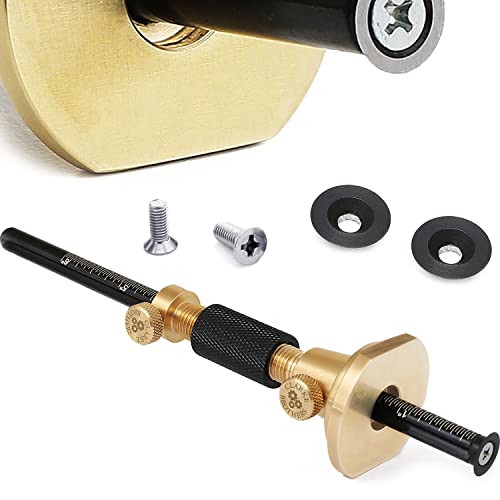
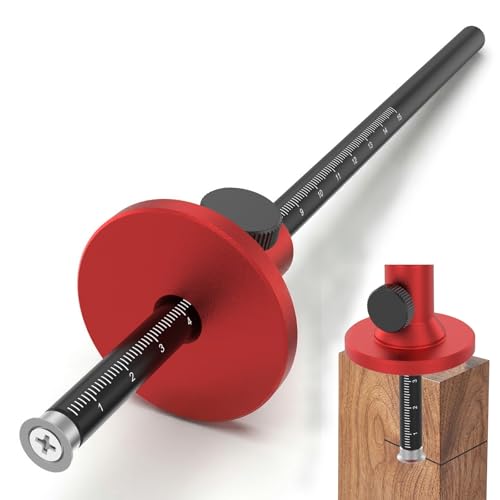
For most woodworkers, a wheel marking gauge is the best all-round choice: the Tite-Mark is the one reviewers praise for one-handed micro-adjustment, while the standard Veritas wheel gauge is the value pick that Fine Woodworking singled out in its comparison. Pin gauges suit marking along the grain on a tight budget, knife-style cutting gauges give clean cross-grain lines, and mortise gauges earn their place once you cut a lot of mortise and tenon joints. This guide explains the types, compares the models that testers and forum users discuss most, and lists the trade-offs by budget tier.
Our top picks


As an Amazon Associate we earn from qualifying purchases at no extra cost to you.
Marking Gauges at a Glance
| Gauge | Type | Best for | Stated strengths | Limits |
|---|---|---|---|---|
| Tite-Mark | Wheel, micro-adjust barrel | Precise joinery layout, one-handed setting | Reviewers praise the adjuster and locking; Fine Woodworking noted easy one-handed adjustment | Premium tier; longest version can roll off a bench |
| Veritas Wheel Marking Gauge (standard) | Wheel, O-ring fence | Best value for general work | O-ring friction gives smooth fine adjustments; named Best Value by Fine Woodworking | Can roll off the bench; micro-adjust is separate |
| Veritas Micro-Adjust Wheel Gauge | Wheel, rear adjuster | Fine setting without tapping the beam | Stable on the bench, larger fence | Adjuster sits at the beam end, so setting takes two hands |
| Lee Valley 3-in-1 / pocket gauges | Wheel or double-ended cutting | Compact kits, dual measurements | One forum user prefers the 3-in-1 over the Veritas | Small fences can be hard to hold |
| JessEm Wood Sabre | Knife cutting gauge | Repeatable settings at half-inch steps | Well-machined, substantial | Detents can pull the fence toward them |
| iGaging wheel gauge | Wheel, O-ring | Entry-level wheel gauge | Affordable, has the O-ring feature | Disk needs honing; less smooth than premium gauges |
| Traditional pin gauge | Pin | Marking with the grain | Simple and cheap | Tears fibers across the grain |
What a Marking Gauge Does
A marking gauge scribes a line parallel to an edge at a set distance. Woodworkers use it to mark tenon shoulders, dovetail baselines, hinge mortises and rabbets, and to scribe thickness lines around a board before planing. A cutter on a beam is locked by a fence that rides along the board edge. The cutter can be a pin, a knife or a rolling wheel, and the choice affects how clean the line is in different grain directions.
Gauge Types Explained
Pin gauge
The pin gauge is the traditional scratch tool. One tutorial describes it as best for marking along the grain, noting that across the grain it can tear fibers and leave a messy line. A file or stone is enough to keep the pin sharp. It is the lowest-cost way to start and works well for layout lines that you will later saw to or plane to.
Knife-style cutting gauge
Instead of a pin, a small blade severs the surface fibers. Fine Woodworking’s comparison included the Crown rosewood and brass cutting gauge, which cut well and tightened securely but had fussy fence adjustments and a knife bevel that needed reorienting. The JessEm Wood Sabre uses a knife with half-inch detents and micrometer adjustment, and testers found it precise, with the caveat that the detents can interfere with settings close to an indexed position.
Wheel gauge
A small rolling disk slices fibers cleanly in both directions, which is why wheel gauges are widely preferred for general furniture work. The wheel can be honed or replaced, and a sharper wheel gives a better line whatever the brand. Forum users who own several gauges often pair a wheel gauge for cross-grain lines with a pin gauge for scoring along the grain.
Mortise gauge
This design carries two pins or cutters on the same beam so both sides of a mortise are marked in one pass. It is a specialist tool: handy if you cut mortise and tenon joints regularly, unnecessary for basic projects.
Model Notes
Tite-Mark
The Tite-Mark appears in nearly every forum thread about the best marking gauge. One owner of both the Tite-Mark and the Veritas called the Tite-Mark far better at locking in position and micro-adjustment, and another described its barrel adjuster as fantastic. A UK workshop review called it the top tier of wheel gauges. Fine Woodworking reported that it adjusts precisely with one hand while you hold a ruler or workpiece, with the caveat that the longest model might roll off a bench. Some less expensive clones are described as decent, though quality varies.
Veritas Wheel Marking Gauge
Fine Woodworking named the standard version Best Value, noting that an O-ring inside the fence provides enough friction to hold position yet still allows the fence to slide for fine adjustments. Its cost was described as roughly one third of the Tite-Mark in that comparison. The same test noted that it can roll off the bench, so many users place a small stop or simply set it down on its side.
Veritas Micro-Adjust version
This newer variant adds an adjuster knob at the end of the beam that moves the fence by small increments. Testers found it stable in use and noted a larger fence than the older model. However, because the adjuster sits at the end, you cannot hold a ruler against the cutter and tweak the setting with the same hand, so it is a two-handed operation.
Lee Valley pocket and 3-in-1 gauges
The Lee Valley pocket gauge has two fences for setting two distances at once, which is useful for hinge or inlay work, but the test noted small fences that are harder to hold and a cutter that rests against the palm. A forum user compared the 3-in-1 gauge favorably to the Veritas wheel gauge, suggesting it is a decent alternative for people who want multiple functions in one tool.
iGaging wheel and digital versions
The basic iGaging wheel gauge is a budget wheel design with an O-ring for smoother adjustment, though its disk needs honing out of the box. The digital variant displays dimensions to fine fractions and also works as a depth gauge, but testers found no micro-adjust and judged the readout excessive for woodworking. For most people, the simple version makes more sense.
WoodRiver wheel gauge
Fine Woodworking noted good quality and stable seating that will not roll off the bench, but no O-ring for smooth fence movement and shaft markings that were off by about one thirty-second of an inch. As with any etched scale, set the gauge from a ruler or combination square rather than trusting the engraving.
Budget Tiers
- Budget tier: a pin gauge or the iGaging wheel gauge. Expect to hone the wheel and accept slower adjustments.
- Mid-range tier: the standard Veritas wheel gauge or Lee Valley options. The O-ring fence and replaceable wheel make it a solid daily tool.
- Premium tier: Tite-Mark, or JessEm’s Wood Sabre if you like indexed settings. Both suit repeated precision work such as dovetails and tenons.
Using and Caring for a Marking Gauge
- Hone the wheel or knife before first use. Reviewers note that a sharp cutter improves any gauge, including budget models.
- Press the fence firmly against a true reference edge, tilt the gauge slightly so the cutter trails, and push or pull in one smooth pass.
- Set the gauge from a rule, caliper or the actual joint part, not just the engraved scale.
- Take light passes across the grain, then deepen the line with a second pass so the cutter does not wander with the grain.
- Keep the cutter covered or stored in a roll so edges stay sharp and fingers stay safe. These are sharp tools; handle them with care.
Pick X If… Decision Table
| If you… | Pick | Why |
|---|---|---|
| Cut dovetails and joinery often | Tite-Mark | One-handed micro-adjust and positive locking |
| Want the best value in a wheel gauge | Veritas standard | Fine Woodworking Best Value, replaceable wheel |
| Need very fine, stable adjustments on the bench | Veritas Micro-Adjust | Stable and larger fence |
| Work to repeatable half-inch settings | JessEm Wood Sabre | Indexed detents and micrometer adjuster |
| Are starting out on a minimal budget | Pin gauge or iGaging wheel | Inexpensive, but plan to hone |
| Cut many mortises | Mortise gauge | Marks both walls in one pass |
Alternatives to a Dedicated Gauge
Combination square and marking knife
You can set a combination square to the desired distance and run a knife along its blade. It is slower but accurate, and many woodworkers already own both tools.
Digital caliper with a pencil
For rough layout, a caliper paired with a sharp pencil can mark parallel lines. It does not sever fibers, so it suits rough work rather than joinery shoulders.
Shop-made gauges
A simple gauge can be made from a block of hardwood with a pin or small blade. This is a good beginner project and gives a feel for what you want in a purchased tool.
Frequently Asked Questions
Which is better, a wheel gauge or a pin gauge?
Wheel gauges are usually preferred because they cut cleanly in both directions. Pin gauges are fine for marking along the grain, but a source describing the tools notes they can tear fibers across it.
Is the Tite-Mark worth the extra cost?
Forum users who own both gauges often say yes for precision joinery, citing the micro-adjuster and locking. If you only mark occasionally, the standard Veritas wheel gauge is the value pick in Fine Woodworking’s comparison.
How do I sharpen a marking gauge wheel?
Hone the bevel on a fine stone, keeping the wheel flat against the stone, and remove the burr on the back. Follow the maker’s instructions for removing the wheel, and replace it if it is chipped.
Why does my gauge wander along the grain?
This usually happens with pin or dull cutters following grain lines. Switch to a sharper wheel or knife, use light passes and keep firm pressure on the fence.
Do I need a digital marking gauge?
Testers considered the digital readout excessive for woodworking and noted it lacked micro-adjust. A mechanical gauge set from a rule is usually enough.
Can I use one gauge for everything?
A good wheel gauge covers most layout work, but many woodworkers add a second gauge so they can leave one set for a repeated dimension, such as a tenon shoulder, while using the other for the next step.



Write Your Review
No reviews yet. Be the first to share your experience!