

Key takeaways
- Start with flat boards. A planer does not remove cup or twist. Flatten one face with a jointer or a planer sled first.
- Take light passes. Smaller cuts reduce motor strain and tear-out, particularly on machines with a single feed speed.
- Support long boards. Roller stands at infeed and outfeed, set to table height, reduce snipe.
- Use sacrificial lead-in boards. Feeding a scrap before and after the workpiece puts the snipe on the scrap.
- Keep dust moving. Connect a vacuum or collector with enough airflow, as clogged outlets cause poor surfaces.
- Clean and wax. Wipe pitch from rollers and the bed, then wax the bed with paste wax for easier feeding.
If money is tight, the WEN PL1326 is the budget thickness planer reviewers point to most often for a spiral cutterhead, the Cutech spiral models suit buyers who want carbide inserts or two feed speeds, and the DeWalt DW734 is the step-up pick for people who will plane regularly but only boards of about 12.5 in or less. This guide explains where a budget planer saves money, what it gives up, and how to keep a lower-tier machine producing clean boards.
Sourcing note: specifications below come from makers’ listings where available and otherwise from review outlets, flagged as reported. Several outlets disagree on details such as knife counts, so those points are called out. Prices change often, so tiers are used in place of figures.
Our top picks


As an Amazon Associate we earn from qualifying purchases at no extra cost to you.
Budget and value planers at a glance
| Model | Best for | Key stated specs | Limits |
|---|---|---|---|
| WEN PL1326 | Lowest-tier spiral head | Reported 26 staggered HSS inserts, single feed speed, about 85 dB at the operator per one reviewer | HSS inserts, one speed |
| Cutech 40200H-CT | Lightweight spiral planer | Reviewers call it the best lightweight spiral; spiral head | Less published detail; smaller user base |
| Cutech 40800H | Spiral head with two speeds | Reported 26 carbide inserts, two-speed feed, board return rollers | Less independent coverage |
| DeWalt DW734 | Step-up straight-knife machine | Reported 12.5 in capacity, about 33.5 in of table support, four-column carriage lock, single speed near 96 cuts per inch | Sources disagree on knife count; mid-range spend |
| DeWalt DW735X | Reference for those who can stretch | 13 in, 15 amp, 20,000 rpm, three knives, 96 or 179 cuts per inch, spare knives | Premium tier of benchtop planers |
What a budget planer saves, and what it costs you
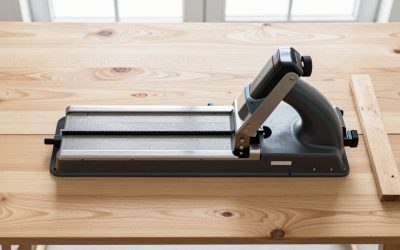
Budget thickness planers cut price in a few predictable places. The motor is usually a universal 15 amp unit like the premium machines, so power is rarely the gap. The savings come from simpler gearboxes (one feed speed in place of two), cheaper inserts or knives, lighter castings and shorter or thinner tables, and weaker dust ports.
Each saving has a consequence. A single feed speed means one compromise between finish and speed. Lighter tables can flex, and that shows up as snipe at board ends. Plastic or thin metal dust hoods may clog on long runs. None of these makes a budget planer a poor choice, but they explain why a machine in the top tier of the category earns its premium for frequent users.
The WEN PL1326, in context
Reviewers repeatedly name the WEN PL1326 as the value pick with a spiral head. One summary says it delivers around 90 percent of the DW735X’s performance at roughly half the price, though that is an outlet’s opinion and not a measurement. The stated advantages are the staggered inserts, which tend to give a smoother finish, and lower noise: one reviewer measured about 85 dB at the operator against about 95 dB for the DW735X.
The reported downsides are a single feed speed and HSS inserts in place of carbide. HSS inserts dull sooner, particularly in abrasive or reclaimed lumber, so plan on rotating or replacing them. For softwoods and clean hardwoods the difference may not matter to a weekend builder.
Cutech options
The Cutech 40200H-CT is named as a lightweight spiral planer, appealing if you carry the machine between a storage corner and a bench. The 40800H is reported to include a spiral head with 26 carbide inserts, two feed speeds and board return rollers, which would put features normally found on premium machines at a lower tier. Since fewer outlets cover these, read the maker’s specification sheet and warranty terms before committing, and look for customer reports about parts availability.
When to spend a little more
The DeWalt DW734 is a tier above the budget spiral machines. Reviewers cite its extra-long tables, giving about 33.5 in of support, and its four-column carriage lock, which is intended to cut snipe. It runs one speed and is limited to about 12.5 in width. If you plane every week, a machine with proven parts supply and service is easier to live with than a cheaper alternative with unknown support.
The DW735X is the benchmark and costs more. The maker lists a three-year limited warranty with one year of free service, along with a spare knife set. If you can stretch to it, it removes a number of the trade-offs listed above, but for occasional use the saving from a budget machine may be larger than the benefit.
Getting good results from a budget planer
- Start with flat boards. A planer does not remove cup or twist. Flatten one face with a jointer or a planer sled first.
- Take light passes. Smaller cuts reduce motor strain and tear-out, particularly on machines with a single feed speed.
- Support long boards. Roller stands at infeed and outfeed, set to table height, reduce snipe.
- Use sacrificial lead-in boards. Feeding a scrap before and after the workpiece puts the snipe on the scrap.
- Keep dust moving. Connect a vacuum or collector with enough airflow, as clogged outlets cause poor surfaces.
- Clean and wax. Wipe pitch from rollers and the bed, then wax the bed with paste wax for easier feeding.
Budget, mid-range and premium tiers explained
The budget tier here means spiral-head machines from WEN and Cutech. The mid-range tier is the DeWalt DW734 and comparable straight-knife planers such as the Makita 2012NB, which lists 12 in capacity, a 15 amp motor, two knives and a net weight of 61.9 lb. The premium tier for benchtop buyers is the DW735X. Beyond that are stationary and combination machines, which suit permanent shops and cost far more.
Which budget planer fits which buyer
| Pick this if you… | Choose | Why |
|---|---|---|
| Want the cheapest route to a spiral head | WEN PL1326 | Spiral cutterhead and lower reported noise |
| Want carbide inserts and two speeds at a lower tier | Cutech 40800H | Reported carbide inserts and two-speed feed |
| Need to carry the planer often | Cutech 40200H-CT | Described as a lightweight spiral |
| Plane weekly but not wide boards | DeWalt DW734 | Long tables, carriage lock |
| Plan to plane a lot of rough lumber | Stretch to the DeWalt DW735X | Two speeds, spare knives, warranty |
| Plane only a few boards a year | Buy surfaced lumber | May avoid buying a machine at all |
Alternatives to buying a planer
- Surfaced lumber: Many suppliers sell boards milled flat and to thickness, which suits small projects.
- Router sled: A router riding on rails can flatten wide boards without a planer, although it is slow and messy.
- Buying used: A used planer from a trusted seller can be a bargain, but inspect the rollers, bed and cutterhead for damage and confirm the parts are still sold.
Safety
Treat a budget planer with the same care as any other. Unplug before changing knives or inserts, keep hands out of the feed path, never plane wood with embedded metal, wear eye, ear and dust protection, and stand to the side while boards feed in. If you are unsure about circuit capacity for a 15 amp machine, consult a licensed electrician.
Reading budget planer reviews with care
Budget planers attract a lot of affiliate-style roundups, and many of them borrow wording from each other. Treat phrases such as “best value” as opinion and look for details that can be traced to a maker’s manual or specification page: width capacity, maximum thickness, cutterhead type, feed rate, weight and warranty length. The DeWalt DW735X page, for instance, states 13 in width, a 15 amp motor, 20,000 rpm, a three-knife head and a three-year limited warranty, which are concrete points of comparison for any cheaper model.
Warranty and parts availability deserve extra attention in this tier. A planer that costs less but cannot be repaired, or whose inserts are hard to buy, ends up costing more over time. Look for the number of years covered, whether the warranty includes service and how readily replacement inserts or knives can be bought.
Running costs people overlook
The purchase is only part of the expense. Spiral heads need replacement inserts eventually, and straight-knife machines need new knives. A dust collection solution is almost mandatory, because a planer can fill a small vacuum in minutes. Roller stands or a long outfeed support help control snipe. Hearing protection is worth buying too, since the loudest planers run in the mid-90s dB range according to one reviewer’s measurement, while the quieter spiral options read closer to the mid-80s.
If you add those items up, the gap between a budget machine and a mid-range one can narrow. That is why some buyers who plane often step up to the DW734 or the DW735X, while occasional users stay with a spiral-head budget model and accept the compromises.
Frequently Asked Questions
Is a cheap thickness planer good enough for furniture?
Many hobbyists build furniture with budget planers. The key is to feed flat stock, take light passes and manage snipe. Finish quality depends more on the cutterhead and sharpness than on price alone.
Are spiral heads always better?
Reviewers say they are quieter and reduce tear-out in figured wood. A budget spiral head with HSS inserts will dull sooner than carbide, so the advantage depends on the wood you plane.
Why do sources disagree on the DW734 knife count?
Roundup sites often repeat each other and mix model generations. Some say three knives and one says two. Look at the maker’s current specification sheet or manual for the unit you buy.
Can I use a budget planer on rough lumber?
Yes, but flatten one face first and use light passes. Rough, dirty lumber dulls knives faster, so expect more frequent cutter changes.
What is the minimum I need besides the planer?
A stable bench or stand, a dust collection solution, hearing and eye protection, and a way to flatten the first face. Roller stands for long boards are also useful.
Is buying used a good idea?
It can be, provided the rollers and bed are undamaged and parts remain available. Test it for odd noises and inspect the cutterhead for nicks. Avoid machines with missing guards or damaged cords.


Write Your Review
No reviews yet. Be the first to share your experience!