

Key takeaways
- Do you cut thin stock regularly? If most rips are wide, a standard push stick may be enough.
- Does your saw have a riving knife or splitter? Push jigs are designed to be used alongside, not instead of, factory guarding.
- Are replacement foot pads available? The gripping surface wears, and a worn pad slips.
A crosscut sled and a good push-block system are the two jigs that suit almost every table saw owner, while a thin-rip jig, a taper jig and a tenoning jig only earn their space once your projects call for them. Buy for the cuts you make every week, not for the cuts that look impressive in a catalogue. This guide sorts the most talked-about jigs by job, explains what the makers state about them, and flags the fit and safety points that decide whether a jig works on your saw.
Our top picks


As an Amazon Associate we earn from qualifying purchases at no extra cost to you.
Quick Answer: Which Jig for Which Job
Most woodworkers ask for the “best” jig, but the useful question is which hazard or inaccuracy you want to remove. Narrow rips and small offcuts put hands near the blade, so a grip-style push system matters first. Square, repeatable crosscuts are the second problem, and a sled solves it better than the miter gauge that ships with most saws. Everything else is a specialty tool that you can add later.
At a Glance: Leading Jigs Compared
| Jig | Best for | Key stated features | Limits |
|---|---|---|---|
| MICROJIG GRR-RIPPER push block | Rips, narrow stock, and keeping hands above the blade | The maker describes a gripping, heel-and-toe design that holds the workpiece down and against the fence; reviewers on the maker’s own page praise the grip | Works best with the blade guard and splitter set up correctly; needs practice to use well |
| GRR-RIPPER Air | Users who want a tunnel that lets the blade pass through the centre leg | Reported by 731 Woodworks as adding more grip and a blade tunnel | Newer product, so fewer long-term reports |
| Incra MITEREXPRESS crosscut sled | Precise, repeatable crosscuts and miters | Reviewers describe zero-play fit in the miter slots and an adjustable fence system | Premium tier; needs bench space for storage |
| Specialty-retailer crosscut sled | Large panels and square cuts for a mid-range outlay | Praised in a 731 Woodworks roundup as the best sled that reviewer has used | Large and heavy; check your table depth first |
| iGaging digital thin-rip jig | Repeatable thin strips with a digital readout | Named the top pick in a 731 Woodworks guide | Specialised; electronics need battery care |
| GRR-RIPPER Microdial tapering jig | Table legs and tapered parts | The maker lists 122 built-in angle presets | Only useful if you cut tapers |
| Woodpeckers taper sled and straight-line jig | Tapers, straight-line rips and edge jointing | The maker positions it as a repeatable multi-task sled | Premium tier; takes shop space |
Specifications change between production runs, so use the table as a map of the field and read the maker’s current data sheet before you buy.
Push Blocks and Grip Systems
A push block is the cheapest safety upgrade for a table saw. The MICROJIG GRR-RIPPER has become the reference design in this category. According to the maker, its tall heel and toe keep the workpiece pressed down and against the fence while a hand stays well above the blade. Reviewers quoted on the maker’s page describe the grip as better than any alternative they have used, though that is a testimonial on a sales page and should be read as such.
The newer GRR-RIPPER Air takes a slightly different approach. 731 Woodworks reports that it adds more grip and a tunnel that lets the blade pass through the centre leg. That tunnel means you can push a very narrow strip all the way past the blade without having to lift the jig, which is the stage of a cut where many accidents begin.
Things to check before buying a push system
- Do you cut thin stock regularly? If most rips are wide, a standard push stick may be enough.
- Does your saw have a riving knife or splitter? Push jigs are designed to be used alongside, not instead of, factory guarding.
- Are replacement foot pads available? The gripping surface wears, and a worn pad slips.
Crosscut Sleds
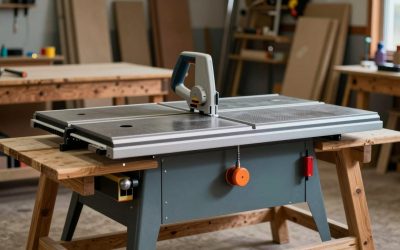
A sled carries the workpiece on a base that rides in both miter slots, so the board stays fully supported through the cut. For small parts and for long, awkward boards, that support beats a stock miter gauge. Reviewers repeatedly call a sled non-negotiable for safety on short pieces, because your hands stay behind a fence and away from the blade path.
The Incra MITEREXPRESS is the sled most often singled out for precision. One reviewer says it edges out the rest for zero play in the slots, and a September 2026 sled roundup also lists it among its top picks. A specialty-retailer house-brand sled earned the top sled placement in the 731 Woodworks guide, and a small-parts version of that sled appears in the same roundup as a choice for little pieces.
Sled sizing and fit
- Measure the distance from the front edge of your table to the blade at full height. The sled has to clear it with room to spare.
- Check miter slot size. Most saws use a standard three-quarter by three-eighths slot, but some compact and jobsite saws differ, so read the maker’s compatibility notes.
- Think about storage. A full-size sled is about the size of a small tabletop and will not hang neatly on every wall.
- Look at the blade guard on the sled. Good designs enclose the cut line so a hand cannot drift into it.
Thin-Rip and Taper Jigs
A thin-rip jig lets you cut repeatable strips on the waste side of the blade. That is useful for edging, inlay stock and slats. The iGaging digital thin-rip jig was the top pick in the 731 Woodworks roundup, helped by its digital readout, which saves you from repeating tape-measure checks. The trade-off is that you are buying electronics for a task you might do monthly.
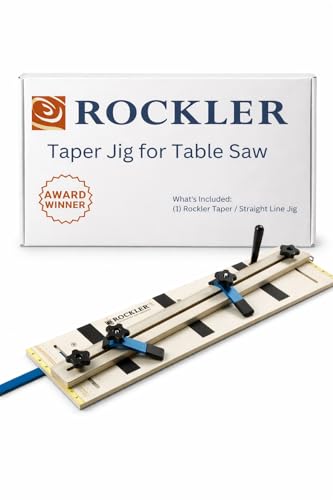
Taper jigs are the other specialty. The GRR-RIPPER Microdial tapering jig lists 122 built-in angle presets according to the maker, which suits furniture builders making legs to a defined taper. The Woodpeckers taper sled and straight-line jig covers tapers as well as straight-line rips and edge jointing, so it can double as a way to straighten a rough board edge before it meets the fence.
Budget Tiers
| Tier | What to buy first | What to expect |
|---|---|---|
| Budget | A grip-style push block and a shop-made sled | Safety first; you supply time and plywood for the sled |
| Mid-range | A ready-made crosscut sled and a push-block system | Square, repeatable cuts with little setup |
| Premium | Incra-class sled, tapering jig and a digital thin-rip jig | Highest repeatability; best for furniture and cabinet work |
Many experienced woodworkers build their first sled themselves from sheet material. A shop-made sled is cheap, but it takes care to square up, and it will not have the adjustable fences or stop systems of the commercial ones.
Pick X If You Need …
| If you need … | Pick |
|---|---|
| Safer narrow rips | GRR-RIPPER or GRR-RIPPER Air |
| Square crosscuts every time | Incra MITEREXPRESS or a comparable commercial sled |
| Small parts | A small-parts crosscut sled |
| Repeatable thin strips | A digital thin-rip jig such as the iGaging |
| Tapered legs | A tapering jig with presets or a taper sled |
| Straightening a rough edge | A straight-line jig |
Safety and Setup Notes
A jig does not replace the saw’s own protection. Keep the riving knife or splitter fitted when the cut allows it, follow your saw’s manual, and never reach over a spinning blade. Dust and offcuts build up on sled bases, so wipe the runners and miter bars before each session; a sticky runner makes a sled drift. If a jig requires removing the guard, check the maker’s instructions to see whether that is permitted, and consider another approach if it is not. If you are new to the machine, an experienced woodworker or a local class can show you safe hand positions that written advice cannot.
Alternatives Worth Considering
- Featherboards: Hold stock against the fence or table so you do not have to. They suit repeat rips on longer boards.
- Tenoning jig: Supports a board on end for cutting tenons. Worth it for joinery-heavy work, otherwise skip it.
- Shop-made jigs: A plywood sled, a zero-clearance insert and a simple rip fence extension handle many tasks at the cost of materials and time.
- Router-table or track-saw approaches: If you mostly break down sheet goods, a track saw may replace several table saw jigs.
Frequently Asked Questions
What is the first jig I should buy for a table saw?
Most reviewers point to a grip-style push block first, because it addresses the most common hazard. A crosscut sled is the next purchase, since it replaces the often loose factory miter gauge.
Are commercial sleds better than ones you build?
Commercial sleds offer adjustable fences, stops and a tested fit in the slots. A well-built shop-made sled can be just as accurate, but it relies on your skill and on stable sheet material.
Will a jig fit my jobsite or compact saw?
Not always. Table size, miter slot dimensions and blade height vary, so read the maker’s compatibility notes and measure your saw before ordering.
Do push blocks make a saw safe on their own?
No. They help control the workpiece and keep a hand clear, but they work alongside the guard, riving knife and good technique. Follow the saw manual and seek training if you are unsure.
Is a digital thin-rip jig worth it?
It suits people who cut many identical strips. If you rip thin pieces only occasionally, a simple fence-and-spacer method costs less and works well enough.
How should I look after my jigs?
Keep runners clean and lightly waxed, store sleds flat or hung so they do not warp, and replace worn grip pads. Check that miter bars still fit smoothly in the slots before each use.



Write Your Review
No reviews yet. Be the first to share your experience!