

Key takeaways
- Find the best linseed oil for wood: pure raw and boiled linseed oil finishes compared for furniture, tool handles, and shop projects, with drying times.
Linseed oil is one of the oldest wood finishes still in regular use. Pressed from flaxseed, it soaks into bare wood instead of sitting on top of it, deepening the grain and giving furniture, tool handles, and shop projects a warm, hand-rubbed look.


This guide covers pure linseed oil only: raw linseed oil and boiled linseed oil. It does not cover Danish oil blends. Danish oil blends linseed oil with varnish resins and solvents to build more of a film, and it was covered in an earlier guide on this site. If you want straight oil, the five picks below are the place to start.
As an Amazon Associate, I earn from qualifying purchases.
How to Choose Linseed Oil for Wood
The first decision is raw or boiled. Raw linseed oil is unprocessed pressed flaxseed oil with nothing added. It penetrates deeply, but it cures very slowly, often taking two to four days between coats. Boiled linseed oil is the same base oil with metallic drying agents added, usually cobalt or manganese compounds, so it cures in roughly 12 to 24 hours. Despite the name, modern boiled linseed oil is not actually boiled. The drying agents do the work, and they are the reason boiled oil is the practical choice for most furniture and tool-handle projects.
That difference also decides food safety. Raw linseed oil with no additives is the only type suited to surfaces that touch food, such as cutting boards and wooden spoons, once fully cured. Boiled linseed oil contains metallic driers and should never be used on anything that contacts food. Check the label before you buy.
Size is the next question. A quart covers several pieces of furniture or a full set of tool handles, while a gallon makes sense for floors, decks, or a shop that finishes wood often. Small bottles suit a single project or a first try.
Application is simple. Sand the wood, remove the dust, and apply the oil to bare, unfinished wood only. Flood the surface lightly, let it soak for 15 to 30 minutes, then wipe off every trace of excess with a clean rag. Oil left pooling on the surface will not cure properly and will stay sticky. Two or three thin coats, each wiped dry and given time to cure, beat one heavy coat. Outdoors, expect to reapply at least once a year.
Safety deserves a plain warning. Rags, steel wool, and paper towels soaked in linseed oil can catch fire on their own as the oil cures. Never bunch oily rags in a bin. Lay them flat outdoors to dry, or drop them into a sealed metal container filled with water.
Finally, know what linseed oil will not do. It will not build a hard shell like polyurethane, it will not hide scratches or dents, and it will darken pale woods with a yellow or honey tone over time. On walnut, oak, and cherry that warmth is usually welcome. On pale maple or ash meant to stay light, it can be a drawback.
Comparison Table
| Product | Type | Size | Drying Time | Best For |
|---|---|---|---|---|
| Sunnyside Boiled Linseed Oil | Boiled | 1 quart | 12 to 18 hours | Furniture and tool handles |
| Sunnyside Pure Raw Linseed Oil | Raw | 1 quart | 2 to 4 days | Additive-free finishing |
| Ecoxall Pure Raw Linseed Oil | Raw | 1 gallon | 2 to 4 days | Large projects and floors |
| Furniture Clinic Boiled Linseed Oil | Boiled | 8.5 fl oz | Fast drying | Small projects and touch-ups |
| Sunnyside Boiled Linseed Oil, 2-Pack | Boiled | 2 quarts | 12 to 18 hours | Shops finishing wood often |
The 5 Best Linseed Oils for Wood
1. Sunnyside Boiled Linseed Oil, Quart
Sunnyside has made this oil since 1893, and its boiled linseed oil is the standard bottle most woodworkers reach for first. It penetrates unfinished wood, brings out grain and tone, and cures to a tough, elastic finish in 12 to 18 hours. It also works as an additive for oil-based paints and stains, improving flow and gloss. Use it on bare furniture, antiques, and tool handles, applied thin and wiped dry. It is not for cutting boards or other food-contact wood.
Specs
- Type: Boiled linseed oil
- Size: 1 quart (32 fl oz)
- Drying time: 12 to 18 hours
- Best for: Furniture, antiques, and tool handles
-
Food-contact use: No
2. Sunnyside Pure Raw Linseed Oil, Quart
This is the same maker, without the drying agents. Sunnyside describes its raw oil as 100 percent pure linseed oil, and it is the bottle to buy when you want the oil and nothing else. It soaks deep into raw wood and resists weathering, but it needs two to four days to dry between coats. There are no metallic driers here, so once fully cured it is the right type for food-contact wood such as cutting boards and spoons.
Specs
- Type: Raw linseed oil
- Size: 1 quart (32 fl oz)
- Drying time: 2 to 4 days
- Best for: Additive-free finishing and food-contact wood once cured
- Food-contact use: Yes, once fully cured
-
Purity: 100 percent pure linseed oil, no additives
3. Ecoxall Pure Raw Linseed Oil, 1 Gallon
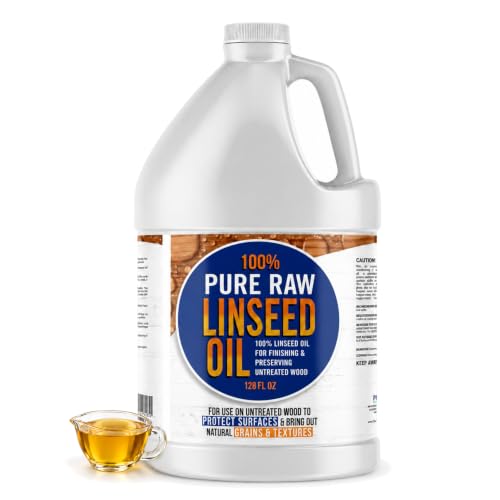
Ecoxall sells its raw linseed oil by the gallon, and that size is the point. One jug covers floors, decks, large furniture sets, and repeated maintenance coats without running out mid-project. The oil is 100 percent pure raw linseed oil with no solvents, so it behaves like the Sunnyside raw oil above, just in a larger container: deep penetration and a slow cure of two to four days between coats. Buy the gallon only if you have the work to match it.
Specs
- Type: Raw linseed oil
- Size: 1 gallon (128 fl oz)
- Drying time: 2 to 4 days between coats
- Best for: Floors, decks, and large furniture projects
- Food-contact use: Yes, once fully cured
-
Purity: 100 percent pure raw linseed oil, no solvents
4. Furniture Clinic Boiled Linseed Oil, 8.5 fl oz

Furniture Clinic packages its boiled linseed oil in a small 250 ml bottle, and the small size is exactly why it earns a place here. Most woodworkers do not need a quart for a single repair, a chair leg, or a set of handles, and a small bottle means less oil sitting open in the shop. The oil is refined and hot-air treated to dry fast, leaving a slightly glossy finish that restores dull wood and suits porous surfaces such as wood, terracotta, and stone. Like any boiled oil, keep it away from cutting boards and food-contact wood.
Specs
- Type: Boiled linseed oil
- Size: 8.5 fl oz (250 ml)
- Drying time: Fast drying
- Best for: Small projects, repairs, and touch-ups
- Food-contact use: No
-
Finish: Slightly glossy
5. Sunnyside Boiled Linseed Oil, Quart, 2-Pack

This pick is the same Sunnyside boiled linseed oil as the first pick, sold as a two-pack of quarts. To be clear, there is nothing different about the oil itself: same formula, same 12 to 18 hour drying time, same uses on furniture, antiques, and tool handles. The reason to buy it is volume. Two quarts suit a shop that finishes wood often, a run of several pieces, or a project such as a table and chairs that needs multiple coats.
Specs
- Type: Boiled linseed oil
- Size: 2 quarts (two 32 fl oz bottles)
- Drying time: 12 to 18 hours
- Best for: Shops and multi-piece projects
- Food-contact use: No
-
Note: Same oil as the single quart, in a two-pack
Which Linseed Oil Should You Pick
For most woodworkers, the Sunnyside boiled quart is the default choice. It dries in a day and suits furniture and handles. If the project touches food, switch to a raw oil instead: the Sunnyside raw quart for a small job, or the Ecoxall gallon if the job is large. The Furniture Clinic bottle is the pick for a single repair or a first try. The two-pack is the pick for a busy shop or a set of pieces finished together.
Frequently Asked Questions
Is linseed oil safe for cutting boards?
Raw linseed oil with no additives is safe for cutting boards once it has fully cured, but boiled linseed oil is not. Boiled oil contains metallic drying agents, so keep it away from any surface that touches food.
How long does linseed oil take to dry?
Boiled linseed oil usually dries in 12 to 24 hours per coat, while raw linseed oil takes two to four days, and sometimes longer in cool or damp conditions. Thin coats cure faster than thick ones, and wiping off the excess is the best way to avoid a sticky surface.
Can I use linseed oil on outdoor furniture?
Yes, with limits. Linseed oil suits outdoor furniture, decks, and tool handles, but it is water-resistant rather than waterproof, so it needs reapplication, often once a year.
How do I dispose of rags soaked in linseed oil?
Lay oily rags flat outdoors to dry, or place them in a sealed metal container filled with water, and follow the directions on the bottle label. Never pile oily rags in a bin or leave them bunched up in the shop, since they can catch fire on their own as the oil cures.
Conclusion
Linseed oil earns its place in the shop by doing one thing well: soaking into bare wood and leaving a warm, natural finish that is easy to apply and easy to renew. Raw oil is the pure, slow-curing choice, and the right one for food-contact wood. Boiled oil is the practical choice for furniture and handles, curing in about a day.
More from Amazon
Programs that pair well with the guide above. Offers and eligibility are set by Amazon and may change.
A free business account with business pricing and bulk-buying tools for work, shop or home office.
Create a business accountFree shipping on eligible items, Prime Video and more. Eligible new members can start with a free trial.
Start a Prime free trialAudiobooks and podcasts to listen to on the go. Eligible new members can start with a free trial.
Try Audible freeAd-free music streaming. Eligible new subscribers can start with a free trial.
Try Music Unlimited freeAs an Amazon Associate we earn from qualifying purchases.



Write Your Review
No reviews yet. Be the first to share your experience!