

Key takeaways
- Compare the best mending plates for reinforcing wood joints. Straight, T-shaped, and L-shaped steel plates in five sizes, compared by thickness and use.
A cracked chair rail, a split table apron, or a gate joint that has worked loose all ask for the same fix: a flat piece of steel screwed across the break so the two sides move as one piece again. A mending plate is that piece of steel: a flat plate with screw holes that turns a weak joint into one that holds. As an Amazon Associate, I earn from qualifying purchases.


Plates come in three shapes. A straight plate bridges a butt joint or a crack in a straight run of wood. A T-shaped plate ties a cross member into a beam, the classic post-to-beam joint on a pergola or a table frame. An L-shaped plate reinforces a corner where two boards meet at a right angle. This guide compares five plates across all three shapes, from under 3 inches to 16 inches long.
How to Choose Mending Plates
Start with the shape of the joint. For a straight crack or a butt joint, use a straight plate long enough to span the break with at least two screw holes on each side. For a T joint, where a cross piece meets a beam, use a T plate so screws land in all three members. For a corner, use an L plate so each leg fastens to one side.
Next, check thickness and material. The plates here run from about 0.07 inch to about 0.16 inch thick. Thicker steel resists bending, so a gate, a bench, or a pergola beam wants the thick end of that range, while a drawer or a small cabinet repair is fine with a thinner plate. Stainless steel resists rust outdoors, and powder-coated steel hides on stained wood.
Then look at the holes. Round holes fix the plate in one exact position once the joint is aligned and clamped. Slotted holes let you slide the plate a little before tightening, which helps when old screw holes sit close to the new ones, or when two boards need a final nudge into square. A slot sized for a 3/8-inch screw also accepts a bolt.
Comparison Table
| Plate | Shape | Size | Thickness | Material | Pack |
|---|---|---|---|---|---|
| QSJ 16 Pack Flat Mending Plate | Straight | 2.36 x 1.49 in. | Not listed | 410 stainless, black | 16 plates, 64 screws |
| Rasugarlary Black T Bracket | T-shaped | 6.5 x 5.75 in. | 5/32 in. | Steel, black powder coat | 4 plates, screws |
| Rasugarlary L Shape Flat Bracket | L-shaped | 10 x 10 in. | 0.12 in. | Steel, black | 4 plates, screws |
| Fanmao 5 in. Flat Mending Plates | Straight, slotted | 5 x 1 in. | 5/32 in. | 201 stainless, brushed | 10 plates |
| eoere 16 in. Mending Plate Straps | Straight, slotted | 16 x 1.18 in. | 0.16 in. | Steel, black powder coat | 6 plates |
The 5 Best Mending Plates for Wood Joints
QSJ 16 Pack Black Flat Mending Plate
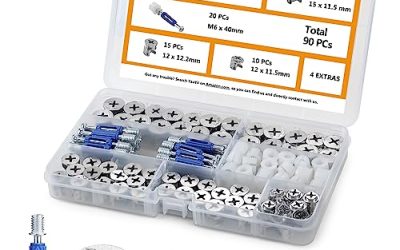
The QSJ 16-pack is the general-purpose pick for small furniture repairs. Each plate measures 2.36 by 1.49 inches, a size that fits chair rails, drawer frames, and shelf brackets. The plates are 410 stainless steel with a black finish, so they suit dark-stained furniture and damp shops. The set includes 64 screws and a drill bit, so a small repair needs nothing else. The trade-off is size: at under 3 inches, these plates suit light furniture joints, not gates or framing.
- Specs:
- Plate size: 2.36 x 1.49 in.
- Material: 410 stainless steel, black finish
- Pack: 16 plates, 64 screws, drill bit included
-
Part number: QSJ-03
Rasugarlary Black T Bracket
The Rasugarlary T bracket is the pick for post-to-beam joints on pergolas, workbenches, and table frames. Each plate measures 6.5 inches long by 5.75 inches high and 1.5 inches wide, is 5/32 inch thick, and the four-pack weighs 2.64 pounds. The black powder-coated finish suits outdoor builds, and screws are included. A T plate spreads load across all three members of the joint instead of concentrating it on one seam, so a cross beam tied with a T plate stays square under racking forces. Check beam width first: the plate needs a face at least 1.5 inches wide.
- Specs:
- Plate size: 6.5 x 5.75 x 1.5 in.
- Thickness: 5/32 in.
- Material: Steel, black powder coat
-
Pack: 4 plates, screws included
Rasugarlary L Shape Flat Bracket
The Rasugarlary L-shaped plate is the heavy corner pick of this group. Each leg measures 10 inches, so one plate ties a full 10 inches of each side of a corner together, which suits large frames, timber corners, gate frames, and raised-bed corners. The plates are 0.12 inch thick steel with a black finish, and the four-pack weighs 6.93 pounds, the heaviest set here by a wide margin. The long legs give many screw positions, so the load spreads along each side. The size is also the limit: a 10-inch leg overhangs small furniture corners, so save this plate for large frames and outdoor timber work.
- Specs:
- Plate size: 10 x 10 in. per leg
- Thickness: 0.12 in.
- Material: Steel, black finish
-
Pack: 4 plates, screws included
Fanmao 5 in. Flat Mending Plates

The Fanmao 5-inch plate is the adjustable pick for straight joints that need fine positioning. Each plate measures 5 by 1 inches and is 5/32 inch thick, made from 201 stainless steel with a brushed finish. The long slot accepts screws up to 3/8 inch, so you can slide the plate into exact position, or use a bolt for a heavier joint, before tightening down. That slot is the reason to choose this plate over a fixed-hole straight plate: when old screw holes sit near the break, or two boards need a last nudge into alignment, the slot gives room to work. The brushed silver finish suits light-colored wood.
- Specs:
- Plate size: 5 x 1 in.
- Thickness: 5/32 in.
- Material: 201 stainless steel, brushed finish
- Holes: Slotted, fits screws up to 3/8 in.
-
Pack: 10 plates
eoere 16 in. Mending Plate Straps
The eoere 16-inch strap is the long-span pick for cracks a short plate cannot bridge. Each strap measures 16 by 1.18 inches and is 0.16 inch thick, the thickest plate in this guide, made from steel with a black powder-coated finish. The slotted holes let you position the strap before tightening, and the six-pack covers a long crack or several joints on one project. At 16 inches, one strap spans a break with screws well clear of the damaged wood on both sides, since screws driven into split fibers near the break hold poorly. Check that your boards run at least 16 inches in the direction of the strap.
- Specs:
- Plate size: 16 x 1.18 in.
- Thickness: 0.16 in.
- Material: Steel, black powder coat
- Holes: Slotted
-
Pack: 6 plates
Which Mending Plate Should You Pick
For small furniture repairs, start with the QSJ 16-pack: the 2.36-inch plates fit chair rails, drawers, and cabinets, and sixteen plates plus screws cover a whole round of repairs. For a straight joint that needs fine positioning, or one you want to bolt, choose the Fanmao 5-inch slotted plates instead.
For T joints on pergolas, workbenches, and table frames, the Rasugarlary T bracket ties all three members together. For large corners on timber frames and gates, the Rasugarlary 10-inch L plate gives the longest legs and the most screw positions. For a long crack or a split top, the eoere 16-inch strap is the only plate here long and thick enough for the job. Whatever you choose, clamp the joint closed and aligned before you drive the first screw.
Frequently Asked Questions
What is a mending plate used for in woodworking?
A mending plate is a flat metal plate screwed across a wood joint or a crack to reinforce it or repair it. It bridges the break so the two sides move as one piece, spreading load across the joint instead of concentrating it on glue or a single screw. Common uses include chair rails, table aprons, cabinet frames, and gates.
What size mending plate do I need?
Choose a plate long enough to span the break with at least two screw holes on each side, and wide enough to sit flat without overhanging the edge. Small furniture joints suit plates under 3 inches, mid-size joints suit 5-inch plates, and long cracks suit plates of 10 to 16 inches.
Should I use a straight, T-shaped, or L-shaped mending plate?
Use a straight plate for a butt joint or a crack in a straight run of wood, a T-shaped plate where a cross member meets a beam, and an L-shaped plate for a corner where two boards meet at a right angle. The shape should match the joint so screws land in solid wood on every side.
Do I need to pre-drill screw holes for a mending plate?
Pre-drilling is good practice near board ends and in hardwoods, where screws can split the wood. Clamp the joint closed and aligned first, mark the holes through the plate, drill pilot holes, then drive the screws. Slotted plates let you adjust position before final tightening.
Conclusion
A mending plate is a simple fix that earns its place in every wood shop: a flat piece of steel, a few screws, and a joint that holds again. The QSJ 16-pack covers small furniture repairs, the Fanmao slotted plates handle straight joints that need adjustment, the Rasugarlary T bracket ties post-to-beam joints, the Rasugarlary L plate reinforces large corners, and the eoere strap spans long cracks. Match the shape to the joint, the length to the break, and the thickness to the load.
More from Amazon
Programs that pair well with the guide above. Offers and eligibility are set by Amazon and may change.
A free business account with business pricing and bulk-buying tools for work, shop or home office.
Create a business accountFree shipping on eligible items, Prime Video and more. Eligible new members can start with a free trial.
Start a Prime free trialAudiobooks and podcasts to listen to on the go. Eligible new members can start with a free trial.
Try Audible freeAd-free music streaming. Eligible new subscribers can start with a free trial.
Try Music Unlimited freeAs an Amazon Associate we earn from qualifying purchases.


Write Your Review
No reviews yet. Be the first to share your experience!