

Key takeaways
- VPN throughput. The maker lists the Beryl 7 at up to 1,100 Mbps. Cloudspress puts the Beryl AX at roughly 300 Mbps over WireGuard, and Fixory reports about 490 Mbps for the Slate 7. These are maker or reviewer figures under ideal conditions. Hotel connections rarely reach that high, so a Beryl AX is usually enough for streaming and video calls.
- Power draw. Reviewers report under 8 W for the Beryl AX and up to about 18 W for the Slate 7. A lower draw is friendlier to power banks and old hotel USB ports.
- Weight and size. Reviewers list about 196 g for the Beryl AX, 295 g for the Slate 7 and 135 g for the TP-Link. If you carry carry-on only, these differences add up.
- 6 GHz. Fixory notes neither current Wi-Fi 7 option listed has a 6 GHz radio. For hotel use the Wi-Fi standard matters less than VPN speed, captive portal handling, USB-C power and port layout.
- Ports. A 2.5 GbE port helps if the hotel provides a fast wired line. A USB port can share a drive or a tethered phone.
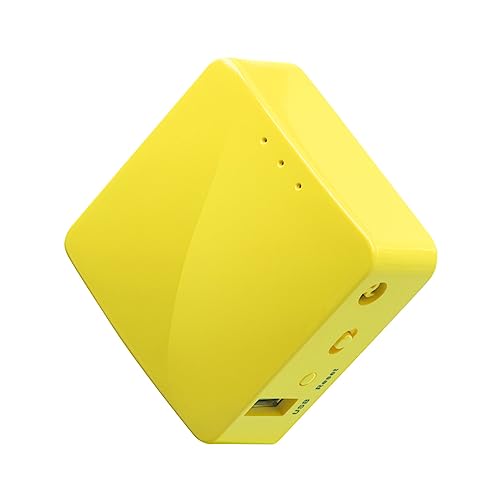
For most travelers, the GL.iNet Beryl 7 is the best all-round travel router for hotel Wi-Fi, the older Beryl AX is the budget pick that reviewers call proven in hotels, the Slate 7 suits people who want a touchscreen and two 2.5 Gbps ports, and the TP-Link TL-WR3602BE is the lighter, simpler option. Which one fits depends on how much you care about VPN speed, weight, power draw and how patient you are with setup.
A travel router does not create internet by itself. It connects to hotel Ethernet or hotel Wi-Fi, logs in to the captive portal once, and then gives all of your own devices a private network of their own. That means you sign in to the hotel only one time, your phone, laptop, tablet and streaming stick share one network name you already know, and, with a VPN set up on the router, everything is covered at once. Cloudspress puts the limits plainly: privacy still depends on the VPN connection, routing, DNS settings, kill-switch policy and the upstream network.
Our top picks


As an Amazon Associate we earn from qualifying purchases at no extra cost to you.
Travel Routers at a Glance
| Router | Wi-Fi class | Best for | Key stated or reported specs | Limits |
|---|---|---|---|---|
| GL.iNet Beryl 7 (GL-MT3600BE) | Dual-band Wi-Fi 7 | Most travelers and remote workers | The maker advertises up to 1,100 Mbps VPN speed; reviewers list two 2.5 GbE ports, USB 3.0 and USB-C power | Dual-band only, no 6 GHz; newer product |
| GL.iNet Beryl AX (GL-MT3000) | Wi-Fi 6 | Budget travel | Reviewers cite about 196 g, a 2.5G WAN port, preinstalled WireGuard, about 300 Mbps WireGuard, and power draw under 8 W | Slower VPN, no Wi-Fi 7 |
| GL.iNet Slate 7 (GL-BE3600) | Dual-band Wi-Fi 7 | Power users who like a touchscreen | Reviewers list dual 2.5 GbE, a small touchscreen, about 295 g, and WireGuard around 490 Mbps | Heavier, higher draw (up to about 18 W reported), some captive portal complaints reported |
| TP-Link TL-WR3602BE | Dual-band Wi-Fi 7 | Lightweight simplicity | Reviewers list about 135 g, one 2.5 Gbps WAN, one 1 Gbps LAN, app-based setup through Tether | Less customization, fewer wired ports |
| GL.iNet Mudi 7 | Tri-band Wi-Fi 7 with 5G | Travelers who need their own cellular link | Cloudspress lists 5G NR, eSIM, dual-SIM dual standby and battery power | Premium tier; North American and European variants differ by carrier |
| ASUS RT-BE58 Go and TP-Link Roam 6 | Varies | Alternatives named by roundups | Listed as other options in travel roundups | Look at each maker’s page before buying |
How Hotel Wi-Fi Works With a Travel Router
Hotels usually use a captive portal: you join the network, open a browser, and enter a room number, surname or code. A travel router needs to pass through that step. Most GL.iNet models have a repeater mode that joins the hotel Wi-Fi as a client, and a captive portal helper that lets you reach the sign-in page. Travel Anywhere reports that GL.iNet devices handle hotel sign-in most reliably, while Fixory notes captive portal problems on some networks with the Slate 7. In other words, results vary by hotel, so keep a laptop handy for the first login.
Many hotels also limit each room to a certain number of devices. Because the router counts as one device, this is a major advantage. Some portals tie the login to the MAC address of the device. If the portal rejects the router, a feature that clones or changes the MAC address (offered on GL.iNet firmware) can help, but read the hotel’s terms of use first.
If the room has an Ethernet jack, plugging in is usually quicker and more stable than relaying hotel Wi-Fi. The 2.5 GbE port on the Beryl AX, Beryl 7 and Slate 7 can serve as WAN or LAN.
Which Specs Matter on the Road
- VPN throughput. The maker lists the Beryl 7 at up to 1,100 Mbps. Cloudspress puts the Beryl AX at roughly 300 Mbps over WireGuard, and Fixory reports about 490 Mbps for the Slate 7. These are maker or reviewer figures under ideal conditions. Hotel connections rarely reach that high, so a Beryl AX is usually enough for streaming and video calls.
- Power draw. Reviewers report under 8 W for the Beryl AX and up to about 18 W for the Slate 7. A lower draw is friendlier to power banks and old hotel USB ports.
- Weight and size. Reviewers list about 196 g for the Beryl AX, 295 g for the Slate 7 and 135 g for the TP-Link. If you carry carry-on only, these differences add up.
- 6 GHz. Fixory notes neither current Wi-Fi 7 option listed has a 6 GHz radio. For hotel use the Wi-Fi standard matters less than VPN speed, captive portal handling, USB-C power and port layout.
- Ports. A 2.5 GbE port helps if the hotel provides a fast wired line. A USB port can share a drive or a tethered phone.
Picks by Budget Tier
Budget
The GL.iNet Beryl AX is the most common budget pick. Laptopbee names it its top choice, with Wi-Fi 6, a 2.5G WAN port and WireGuard preinstalled. It is small, uses little power and is described as proven in hotels. If you only stream and browse, its lower VPN ceiling will rarely matter. The GL.iNet Mango and TP-Link Roam 6 appear in roundups as even cheaper backups, though they are slower and simpler.
Mid-range
The Beryl 7 is the leading choice here. Cloudspress and Independent Travel Cats both single it out as best for most travelers, citing Wi-Fi 7, two 2.5 GbE ports, USB-C power and the highest VPN figure in the comparison. The TP-Link TL-WR3602BE sits in a similar tier with a lighter body and an easier app, which suits people who dislike OpenWrt-style menus.
Premium
The Slate 7 adds the touchscreen, so you can join hotel Wi-Fi without opening a laptop, plus dual 2.5 GbE. It is heavier and costs more than the Beryl 7. The Mudi 7, with its own 5G modem, is for people who want a backup when hotel Wi-Fi fails entirely, though you must match the right regional variant to your carrier and pay for data.
Setup Before You Leave
- Update firmware and change the default admin password at home.
- Set up your VPN profile and test the kill switch so traffic stops if the tunnel drops.
- Practice repeater mode against another Wi-Fi network, such as a friend’s or a cafe.
- Save your home Wi-Fi name and password into the router, so your devices connect automatically in the room.
- Pack the power adapter, a short Ethernet cable and a USB-C cable.
On arrival, plug in or join the hotel network, complete the portal sign-in, and then connect your devices to the router. Cloudspress also advises testing before travel rather than at the hotel, which is the step most people skip.
Common Hotel Problems and Fixes
- Sign-in page will not appear. Open a plain, unencrypted web page in a browser, or turn off any VPN until the portal accepts you, then reconnect the VPN.
- Connection drops after a day. Some hotels expire the login. Repeat the portal step on the router’s connected device.
- Slow speeds. Move the router closer to the window or the hotel access point, or switch to Ethernet if the room has a jack.
- Casting to a TV fails. Hotel networks sometimes isolate devices from each other, but a router that creates its own private network usually avoids this.
Pick X If… Decision Table
| If you want | Pick | Reason |
|---|---|---|
| Best overall balance | GL.iNet Beryl 7 | Wi-Fi 7, dual 2.5 GbE and the highest maker VPN figure |
| Lowest cost and low power | GL.iNet Beryl AX | Light, under 8 W reported, proven in hotels |
| Touchscreen setup | GL.iNet Slate 7 | Join Wi-Fi from the screen |
| Lightest and simplest | TP-Link TL-WR3602BE | About 135 g and app setup |
| Cellular backup | GL.iNet Mudi 7 | 5G and eSIM support |
Alternatives to a Dedicated Travel Router
- Phone hotspot. Works with no extra gear, but drains the battery, may be capped by your plan and does not help if signal is poor.
- VPN app on each device. Fine for one or two gadgets, but smart TVs and streaming sticks often cannot run one.
- Your existing home router in travel mode. Some models can act as a client bridge, but they are bulky and less friendly for a bag.
Frequently Asked Questions
Will a travel router work with any hotel Wi-Fi?
Usually, but not always. Captive portals vary, and a few require a browser sign-in each day or reject unknown devices. Keep a laptop available to complete the sign-in and use the router’s repeater and portal tools.
Do I need Wi-Fi 7 for hotel use?
No. Hotel connections are typically the bottleneck, and reviewers note the Wi-Fi standard matters less than VPN throughput, portal handling and power compatibility. Wi-Fi 6 on the Beryl AX is enough for most stays.
Does a travel router make hotel Wi-Fi safe?
It adds a private network of your own and, with a VPN, encrypts traffic leaving it. It does not secure everything, and the VPN settings and kill switch still matter. Avoid sensitive tasks if you are unsure of the setup.
Can I power one from a power bank?
Often yes with USB-C. Reviewers report under 8 W for the Beryl AX and up to about 18 W for the Slate 7, so lower-draw models last longer on a bank.
Is it allowed to use my own router in a hotel?
Many hotels allow personal devices, but terms differ. Read the hotel’s policy and do not interfere with its network equipment. If you are unsure, ask the front desk.
How is a travel router different from a mobile hotspot?
A travel router relays an existing connection and shares it among your devices. A hotspot creates its own cellular connection. Models such as the Mudi 7 combine both functions.









Write Your Review
No reviews yet. Be the first to share your experience!