

Key takeaways
- Six SawStop table saws, from jobsite to cabinet, plus two non-SawStop comparisons, matched to shop size, power, fence length and budget from listing specs.
SawStop is a single brand with many different saws, and the right one depends on your shop. For a portable saw choose the Jobsite Saw PRO; for a garage shop the 1.75HP contractor saw with a 30 inch fence is the compact pick; for permanent shops step up to the PCS175 or the 3HP cabinet saw. This page covers six SawStop listings plus two conventional jobsite saws, labeled as such.
Quick picks
Our top picks


 DEWALT Table Saw 10 Inch with Foldable
- Rack & Pinion Telescoping Fence System Make fence…
- Patented material support, can be used for narrow…
- 32-1/2" rip capacity easily cuts a variety of…
 SKIL 15 Amp 10-Inch Jobsite Table Saw
- Ensures fence stays parallel to blade for fast…
- Legs quickly fold in to provide portability and…
- Available micro-adjustment of blade so that it is…
As an Amazon Associate we earn from qualifying purchases at no extra cost to you.
- Portable: SawStop Jobsite Saw PRO (JSS-120A60), 120V per the title.
- Small shop: Contractor saw with the 30 inch Premium Fence.
- Wide panels: Contractor saw with the 52 inch T-Glide Advance fence.
- Permanent shop: PCS175 cabinet saw or the 3HP cabinet saw.
Eight listings compared
| Model | Key point from the title | Best for |
|---|---|---|
| SawStop Jobsite Saw PRO | 1 1/2 HP, 120V, mobile cart | Portable use |
| Contractor CNS175-PFA30 | 1.75HP, 30 inch Premium Fence | Small shops |
| Contractor, 36 inch T-Glide | 1.75HP, rails, extension table | Mid-size shops |
| Contractor, 52 inch T-Glide | 1.75HP, longest fence, rails, table | Wide panels |
| PCS175-TGP236 cabinet saw | 10 inch, 1.75-HP, 36 inch TGlide | Permanent shop |
| Professional 3HP cabinet saw | 3HP, 52 inch T-Glide Advance, table | Heavy, daily rips |
| DEWALT DWE7491RS (not SawStop) | 10 inch, rolling stand, 15 amp | Conventional comparison |
| SKIL TS6307-00 (not SawStop) | 10 inch, folding stand, 15 amp | Budget comparison |
The eight saws
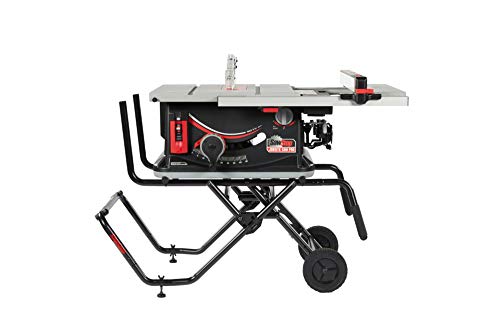
SawStop Jobsite Saw PRO with Mobile Cart Assembly (JSS-120A60)
The entry point to the SawStop range on this list. The title gives 1 1/2 HP, 120V 60Hz, a mobile cart assembly and the model code JSS-120A60. Running on 120V means it can plug into a standard outlet, which is the reason to pick a jobsite model over the bigger saws below. Rip capacity, blade size and weight are not in the title, so open the listing and manufacturer documentation for those before you decide.
Pros
- 120V operation and a mobile cart are stated in the title
- The only portable SawStop here, so it can travel between sites
Cons
- Rip capacity and weight are not in the title
- Less motor than the 1.75 HP and 3HP saws
Who it’s for: contractors and serious hobbyists who want SawStop’s safety system in a saw they can roll to the job or to the driveway.
SAWSTOP 1.75HP Contractor Saw with 30-inch Premium Fence (CNS175-PFA30)
The title lists a 1.75HP contractor saw with a 30 inch Premium Fence Assembly and the code CNS175-PFA30. The 30 inch fence is the shortest option among the contractor saws here, which keeps the footprint down in a one-car garage. Voltage is not in the title, so check the plug type and breaker needs before planning your wiring. Contractor saws sit between portable and cabinet saws in size and in motor power.
Pros
- 30 inch fence keeps the saw compact for small shops
- Model code in the title makes it easy to find the manual
Cons
- Voltage is not stated in the title
- A shorter fence limits rip width compared with the 36 and 52 inch versions
Who it’s for: garage and home-shop woodworkers with limited floor space who want a step up from a jobsite saw.
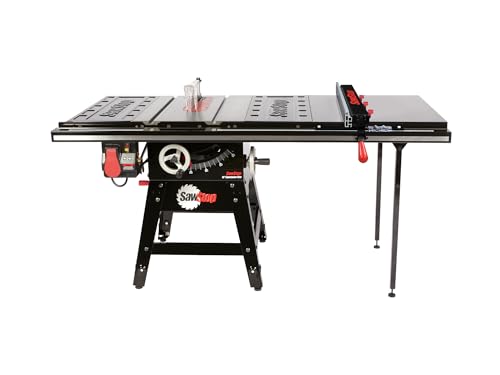
SawStop Contractor 1.75HP Saw with 36-inch Professional T-Glide Advance Fence
This listing pairs a 1.75HP contractor saw with a 36 inch Professional T-Glide Advance fence, rails and an extension table. There is no model number in the title, so confirm the exact part on the listing. The extended table gives you a bit more support for sheet goods than the 30 inch Premium Fence version. Compared with the 52 inch variant below, it uses less floor space but also offers less rip distance, which is the usual trade.
Pros
- Rails and an extension table are included per the title
- 36 inch fence gives a middle option between the 30 and 52 inch versions
Cons
- No model number appears in the title
- Voltage and weight are not given in the title
Who it’s for: woodworkers who want extension-table support for sheet goods but do not have space for the longest rails.
SawStop Contractor 1.75HP Saw with 52-inch Professional T-Glide Advance Fence
The same contractor saw family with the longest fence in this group: 52 inches of Professional T-Glide Advance rip fence, plus rails and an extension table. A 52 inch fence handles wide panels, but the rails and table take more space, so measure your shop first. Like the 36 inch listing, the title omits the model number and voltage, so read the full description, and check that the rails and table you expect are actually in the box.
Pros
- Longest fence on the list, suited to wide panels
- Rails and extension table are part of the package
Cons
- Needs noticeably more room than the 30 and 36 inch versions
- Model number and voltage are not stated in the title
Who it’s for: cabinet and furniture makers who rip full-width panels and have the floor space to support the rails and table.
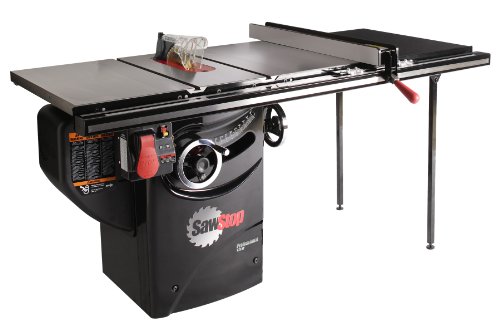
SAWSTOP 10-Inch Professional Cabinet Saw, 1.75-HP, 36-Inch TGlide Fence (PCS175-TGP236)
The title gives a 10 inch professional cabinet saw with a 1.75-HP motor, a 36 inch professional TGlide fence system and the code PCS175-TGP236. Cabinet saws are heavier and enclosed, which usually means less vibration and easier dust collection, but they are not meant to move around, and they need a level spot with stable floor support. The title does not state voltage, so check it against your shop wiring.
Pros
- Cabinet-style build with a 10 inch blade, per the title
- TGlide fence system is part of the listing
Cons
- Heavy and stationary compared with jobsite and contractor saws
- Voltage is not in the title
Who it’s for: dedicated woodworkers outfitting a permanent shop who want a cabinet saw with a 36 inch fence, without stepping up to 3HP or running a larger circuit.
SawStop Professional 3HP Cabinet Saw with 52-inch T-Glide Advance Fence
The most powerful saw on the list by the title: a Professional 3HP cabinet saw with a 52 inch Professional T-Glide Advance rip fence, rails and an extension table. Larger motors in this class generally call for a 230V circuit, but the title does not say, so check the listing and your panel before you order. There is no model number in the title either. It is a shop machine, not a portable one, and delivery and positioning will usually take more than one person.
Pros
- 3HP motor and a 52 inch fence suit production and thick hardwoods
- Rails and extension table are included
Cons
- Likely needs dedicated wiring; confirm voltage on the listing
- Large footprint and weight
Who it’s for: professionals and committed hobbyists who rip thick hardwood daily and have a dedicated shop.
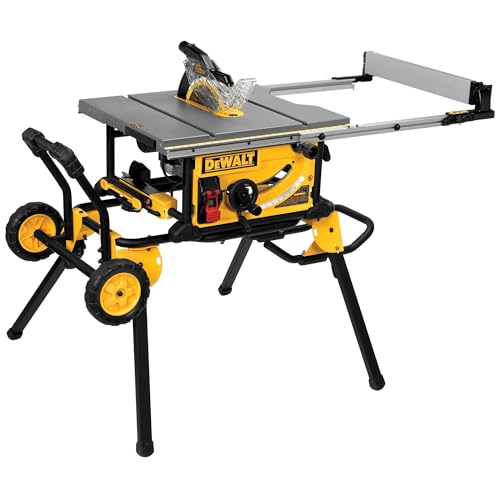
DEWALT 10 Inch Table Saw with Foldable Rolling Stand (DWE7491RS) – not a SawStop
Not a SawStop: this DEWALT jobsite saw is included here as a budget comparison. The title lists a 10 inch blade, a foldable rolling stand, a 15 amp motor, 4800 RPM and a 32-1/2 inch rip capacity. It is useful as a reference for what a conventional jobsite saw offers, but it does not include SawStop’s safety technology, so judge it as a different kind of saw, on stand, fence and power.
Pros
- Rolling folding stand and a 32-1/2 inch rip are stated
- A much simpler, lighter step into a 10 inch saw
Cons
- Not a SawStop, so it lacks the brand’s brake system
- Aimed at job sites, not at a permanent cabinet-saw shop
Who it’s for: readers weighing a conventional jobsite saw against the SawStop jobsite model.
SKIL 15 Amp 10-Inch Jobsite Table Saw with Folding Stand (TS6307-00) – not a SawStop
Also not a SawStop, and listed here as a runner-up for readers working to a smaller budget. The title shows a 10 inch blade, a 15 amp motor, a folding stand and the model number TS6307-00. Rip capacity and fence details are not in the title. Like the DEWALT above, it is a conventional saw, so compare it on stand, fence and power rather than on safety technology.
Pros
- Folding stand included per the title
- Clearly the simplest model on the list
Cons
- Not a SawStop, so no brake system
- Rip capacity and fence details are missing from the title
Who it’s for: buyers who want to see how a basic jobsite saw compares before spending more, or who need a simple second saw for rough work.
How we picked these
We compared each listing title for motor power, fence length, accessories and model codes, alongside published specifications, manufacturer documentation and common themes in buyer reviews. Nobody on the team used or measured these units. Because several titles carry no model number, we flag that and ask you to confirm the exact part on the listing.
Matching a SawStop to your shop
Jobsite, contractor or cabinet: the three tiers
Jobsite saws are small, light and plug into standard power. Contractor saws are larger, with a bigger table and a longer fence, but still more modest than a cabinet saw. Cabinet saws are enclosed, heavy and stationary, generally with the most power and the best dust handling. Moving up the tiers adds capacity and weight together.
Motor power and voltage
The titles quote 1 1/2 HP, 1.75HP and 3HP. Only the jobsite listing states 120V. Higher-horsepower saws often need 230V, which can mean a new circuit. Ask an electrician before you buy, and read the plug and breaker requirements in the manual.
Fence length and rails
A 30, 36 or 52 inch fence number indicates how far from the blade the fence can sit, which determines the widest panel you can rip. Longer fences also need longer rails and a bigger extension table, and every inch comes out of your floor space.
Dust collection and cleanup
Cabinet saws are enclosed, which generally helps dust collection, while open-base jobsite and contractor saws throw more dust into the room. None of the titles describe dust ports, so check the listing and plan on a shop vacuum or dust collector sized to the port, plus a mask for fine dust.
About the safety system
SawStop is known for its flesh-detection brake, described in the manufacturer’s documentation. It adds a layer of protection but does not replace a guard, riving knife, push sticks, eye and ear protection or good habits. Check the manual for how the brake works, what triggers it and what it costs to reset.
A quick floor-plan check
Worked example: a 12 foot wide garage bay with a 52 inch fence. The rip side needs the fence, rails and table to clear a wall or shelf, and the board path needs infeed and outfeed room roughly equal to the stock length. For 8 foot boards that means about 8 feet in front and behind the blade. Tape the footprint on the floor first. If the tape blocks the garage door or a workbench, drop to the 36 or 30 inch version.
Mistakes buyers make
Treating all SawStop saws as one product is the biggest. A jobsite saw and a cabinet saw have little in common beyond the brand name. Ordering from a title without a model number leaves room for the wrong fence or table. Forgetting voltage can add an electrician’s bill. Buying the longest fence without measuring the room is another, and so is assuming that a safety system lets you skip push sticks and guards.
Verdict
Pick by shop, not by name: the Jobsite Saw PRO if the saw has to travel, the 30 inch contractor saw for tight garages, the PCS175 or the 3HP saw for a permanent room. The DEWALT and SKIL saws are here as points of comparison, not as alternatives to the brake system. Whatever you choose, confirm the model code, voltage and fence length on the listing, and plan the floor space and power before the saw arrives.
Related guides
- Table Saw Push Sticks And Featherboards
- Table Saw Blades For Ripping Hardwood
- Jobsite Table Saws For Contractors
Frequently asked questions
Which SawStop is best for a small garage shop?
The 1.75HP contractor saw with the 30 inch Premium Fence is the compact option on this list, since the shorter fence needs less floor space than the 36 and 52 inch versions, which matters in a shared garage. Measure your room, including infeed and outfeed space, and the clearance beside the fence, before you buy.
Do SawStop table saws need 230V power?
Only the Jobsite Saw PRO states 120V in its title. The contractor and cabinet listings do not state voltage in their titles, and the 3HP saw likely needs a higher-voltage circuit. Check each listing and the manual, and talk to a qualified electrician before ordering if a new circuit may be needed.
Is a SawStop worth it compared with a normal jobsite saw?
That depends on how much you value the brake system and the build of the larger machines. The DEWALT and SKIL saws here are cheaper and simpler, but they do not include SawStop’s safety technology. Weigh the safety feature against your budget, how often you cut and who else uses the saw in your shop.
What is the difference between a contractor saw and a cabinet saw?
Contractor saws are lighter, with a smaller footprint and less motor power. Cabinet saws are enclosed, heavier and typically more powerful, with better dust control. Cabinet saws belong in a permanent shop with room for the machine; contractor saws are easier to relocate, though neither is a truck-friendly portable saw.
Why do some listings have no model number?
Several SawStop listings here describe the saw by horsepower and fence length alone. Sellers sometimes shorten titles to fit keyword limits. Open the listing, find the model code, and cross-check it with the manufacturer’s page to make sure you receive the fence, rails and table you expect before the order ships.



Write Your Review
No reviews yet. Be the first to share your experience!