

Key takeaways
- Push-button: Convenient for children and quick self-service, but electronic controls add failure points and can be difficult to replace.
- Lever faucet: Familiar and easy to operate with one hand. It works well for water and chilled tea, provided the nozzle can be removed for cleaning.
- Draft faucet: Best presentation for beer and carbonated beverages, but it requires gas hardware and careful pressure adjustment.
- Gravity spigot: Simple and quiet, but it may dispense slowly and can drip if the seal or washer wears.
The best refrigerated beverage dispensers for home use are usually compact compressor-cooled units with a removable 1–2 gallon reservoir, a stainless or food-safe dispensing path, and enough clearance around the tap for a real glass—not simply the coldest appliance on the shelf.
Our top picks

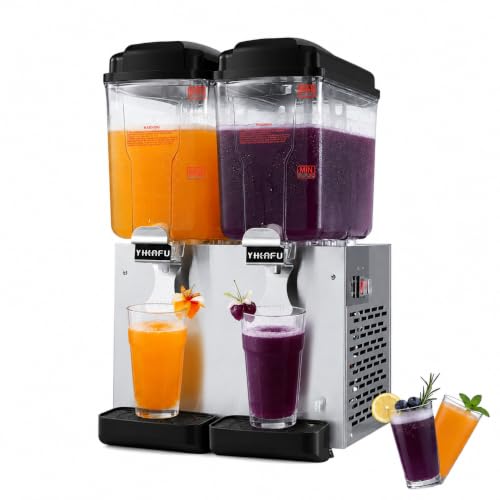

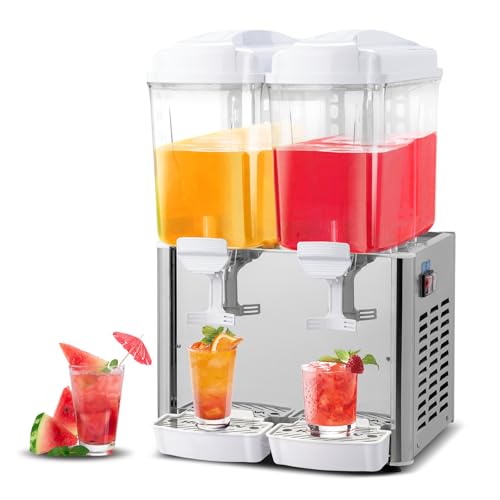
As an Amazon Associate we earn from qualifying purchases at no extra cost to you. Ratings are shown as listed on Amazon.
Quick picks by entertaining situation
| Home situation | Best dispenser type | What to prioritize | Typical budget |
|---|---|---|---|
| Occasional dinner parties in a small kitchen | Countertop chilled reservoir dispenser | Small footprint, removable tank, quiet compressor | $150–$350 |
| Frequent parties with beer drinkers | Single-tap countertop or compact kegerator | Temperature control, CO2 access, drip tray, cleaning kit | $400–$1,000 |
| Water, iced tea, or lemonade for a family | Bottleless water cooler or large chilled drink dispenser | High daily output, easy refill, child-safe controls | $200–$600 |
| Outdoor bar or covered patio | Compact beverage refrigerator with external serving tap | Weather-protected location, ventilation, durable fittings | $350–$1,200 |
What counts as a refrigerated beverage dispenser?
Home products sold under this description fall into three different groups. A chilled reservoir dispenser cools a prepared drink such as water, tea, punch, or lemonade, then serves it through a lever or push button. A bottleless water cooler chills and dispenses drinking water, often with separate cold and room-temperature outlets. A kegerator cools a keg and dispenses beer through a faucet using carbon dioxide.
These designs are not interchangeable. A water cooler is convenient for repeated glasses of water but is not automatically suitable for sugary drinks. Sweet beverages can leave sticky residue in valves and tubing. A kegerator gives the most authentic serving experience, but it requires gas-pressure adjustment, keg storage, and regular line cleaning.
Head-to-head comparison
| Dispenser type | Usable capacity | Typical cold temperature | Approximate footprint | Noise range | Cleaning access |
|---|---|---|---|---|---|
| Countertop chilled reservoir | 1–2 gal | 38–46°F | 10–16 in. wide × 12–18 in. deep | 38–50 dBA | Usually removable tank and drip tray |
| Bottleless water cooler | Continuous supply; 0.5–1.5 gal cold tank | 40–50°F | 11–13 in. wide × 14–18 in. deep | 40–55 dBA | Filter housing, reservoir, and nozzle access vary |
| Countertop kegerator | 1.3–2.6 gal mini keg | 36–42°F | 10–18 in. wide × 17–24 in. deep | 40–55 dBA | Faucet and beer line require disassembly |
| Full-size kegerator | 5 gal standard keg | 34–40°F | 24–25 in. wide × 24–28 in. deep | 42–58 dBA | Good access, but more parts and longer lines |
Temperature figures are practical target ranges rather than guarantees. Room temperature, how often the door or lid is opened, beverage volume, and ventilation can shift the result. For a party, pre-chill the drink or keg overnight; a small compressor cannot rapidly cool several gallons without considerable recovery time.
Best choice for most home entertaining
Countertop chilled reservoir dispenser
This is the most flexible format for noncarbonated drinks. Look for a compressor rather than a thermoelectric cooling system if the unit must hold a drink below 45°F in a warm kitchen. A removable reservoir is more important than a decorative digital display because it lets you wash the container and inspect the intake tube.
Choose a model with a stainless-steel or clearly identified food-contact path, a drip tray that lifts out without tools, and at least 6 inches of clearance above the faucet. A 1.5-gallon tank serves about 12 eight-ounce drinks. That sounds substantial, but a busy gathering can empty it quickly.
Bottleless water cooler
A bottleless cooler is the better long-term choice when the household mainly drinks water. Products such as the Avalon A1WATERCOOLER and Brio Moderna bottleless units represent this category, although exact configurations differ by model. Their advantages are continuous supply and no pitcher refilling. Their drawbacks are filter replacement, installation space, and less suitability for thick or sugary beverages.
Check whether the cold tank, nozzle, and drip tray can be sanitized without moving the appliance. Some units hide the reservoir behind panels, which reduces daily convenience. Also measure the distance to the water connection and electrical outlet before buying.
Kegerator
A kegerator is the clear choice for draft beer, but it is a specialized appliance rather than a general drink dispenser. Countertop models suit mini kegs; full-size models accommodate standard 5-gallon kegs and provide more consistent service for larger gatherings. Brands such as Kegco and EdgeStar offer home kegerator lines, but keg compatibility, coupler type, and included gas hardware must be checked model by model.
The main ownership issue is the beer line. Beer residue can create off flavors and restrict flow, so clean the line whenever a keg is changed and follow the cleaner manufacturer’s directions. A cold cabinet does not compensate for a dirty faucet or incorrectly adjusted CO2 pressure.
Capacity: a useful party calculation
Estimate demand before choosing the tank size. If 15 guests each drink two 8-ounce servings, the requirement is:
15 guests × 2 servings × 8 ounces = 240 ounces, or 1.875 gallons.
A 1-gallon dispenser would need one refill, and its cooling system may not recover quickly between servings. A 2-gallon reservoir is a safer minimum for that gathering. If you will also serve bottled water or other drinks, a 1.5-gallon unit may be adequate.
Footprint and ventilation matter more than advertised width
Measure the counter depth, faucet clearance, lid opening, and rear ventilation area. A unit listed as 12 inches deep may need another 2–4 inches behind it for airflow and power access. Do not push a compressor appliance tightly against a wall or place it directly beside a cooktop.
For a bar cabinet, leave enough room to remove the drip tray and disconnect tubing. For a kitchen island, favor front-access controls and a top-fill reservoir. For a patio, use the dispenser only in a dry, shaded, protected location unless the manufacturer specifically rates it for outdoor use.
Dispensing methods compared
- Push-button: Convenient for children and quick self-service, but electronic controls add failure points and can be difficult to replace.
- Lever faucet: Familiar and easy to operate with one hand. It works well for water and chilled tea, provided the nozzle can be removed for cleaning.
- Draft faucet: Best presentation for beer and carbonated beverages, but it requires gas hardware and careful pressure adjustment.
- Gravity spigot: Simple and quiet, but it may dispense slowly and can drip if the seal or washer wears.
Cleaning and durability checklist
The parts that usually wear first are silicone tubing, faucet seals, push-button switches, drip-tray grilles, and keg coupler washers. Before buying, confirm that replacement tubing and seals are standard sizes or readily available from the manufacturer.
- Unplug the unit and drain all remaining beverage.
- Remove the reservoir, drip tray, nozzle, and tubing where the design permits.
- Wash removable parts with warm water and mild dish detergent.
- Flush internal beverage lines with the manufacturer-approved cleaning solution.
- Rinse until no cleaner remains, then air-dry parts before reassembly.
Do not leave lemonade, sweet tea, or juice sitting in the lines overnight unless the manual explicitly permits it. Sugar attracts residue and can make a valve stick. Avoid abrasive pads on stainless surfaces and avoid immersing electrical bases.
Noise and operating cost
Compressor dispensers commonly make a short hum during cooling and may produce clicks when the thermostat cycles. A 38–45 dBA unit is usually acceptable in a kitchen; above about 50 dBA, the cycling may be noticeable in a quiet dining area. Place the appliance on a firm, level surface because vibration often sounds louder than the compressor itself.
For electricity, a small 100-watt compressor that runs for an average of six hours per day uses roughly 0.6 kilowatt-hours daily. At an electricity rate of $0.18 per kilowatt-hour, that is about 11 cents per day, or approximately $3.25 per month. Actual consumption varies with room temperature, insulation, ventilation, and duty cycle.
Bottom line
Choose a 1.5–2-gallon compressor-cooled countertop dispenser for flexible home entertaining, a bottleless water cooler for continuous water service, and a kegerator only when draft beer is the central use. Compare the entire beverage path—not just the advertised temperature—including tank access, replacement seals, tubing, drip-tray removal, ventilation clearance, and noise. Those details determine whether the dispenser remains convenient after the first few parties.



Write Your Review
No reviews yet. Be the first to share your experience!