

Key takeaways
- 72–76 mm: Low and maneuverable. Suitable for smaller adults, cautious beginners, and practice in compact spaces.
- 80 mm: The safest general-purpose starting point. It provides a useful blend of balance, glide, and control.
- 84–90 mm: A good step up for riders who can stop, turn, and maintain balance reliably.
- 100–110 mm: Efficient over distance and rougher paths, but less forgiving during first lessons and slower-speed maneuvers.
Best Inline Skates for Adults and Beginners
The best inline skates for most adult beginners are fitness skates with 80 mm wheels, a supportive but comfortable cuff, a standard heel brake, and a size chosen from your measured foot length rather than your usual shoe size.
That combination is stable enough for learning, efficient enough for longer rides, and easier to control than large-wheel or aggressive skates. The right choice changes with your experience, riding surface, foot shape, and how often you expect to skate.
Our top picks


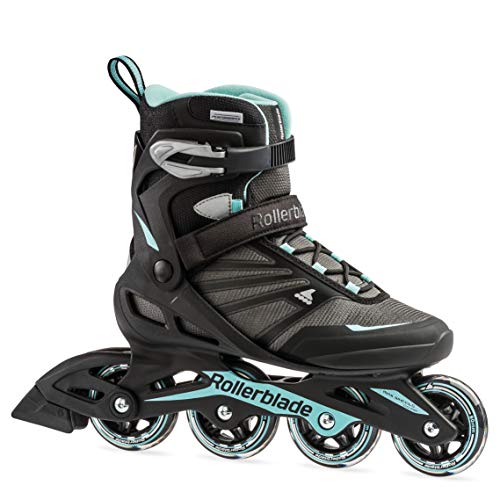
As an Amazon Associate we earn from qualifying purchases at no extra cost to you. Ratings are shown as listed on Amazon.
Quick picks by situation
| Rider situation | Recommended setup | Why it fits | Typical market range |
|---|---|---|---|
| First pair, occasional outdoor use | 80 mm wheels, 80–84A hardness, soft or hybrid boot, heel brake | Balanced stability, comfort, and controllable speed | $80–$160 |
| Beginner with weak ankle control | 76–80 mm wheels, firm cuff, supportive liner, heel brake | Lower height and stronger support make basic turns easier | $100–$200 |
| Regular fitness rider | 84–90 mm wheels, ventilated fitness boot, heel brake or compatible brake mount | Rolls efficiently without becoming excessively fast | $140–$280 |
| Experienced rider seeking speed | 90–110 mm wheels, three-wheel frame, rigid or semi-rigid boot | Higher cruising speed and smoother travel over rough pavement | $180–$400+ |
| Short trips and maneuverability | 72–80 mm wheels, shorter frame, firm cuff | Quicker direction changes and easier low-speed control | $90–$220 |
Wheel size: choose control before speed
Wheel diameter affects more than top speed. Larger wheels roll over cracks and pavement joints more smoothly, but they raise the skater higher above the ground and require more balance. They can also accelerate faster than a new rider expects.
- 72–76 mm: Low and maneuverable. Suitable for smaller adults, cautious beginners, and practice in compact spaces.
- 80 mm: The safest general-purpose starting point. It provides a useful blend of balance, glide, and control.
- 84–90 mm: A good step up for riders who can stop, turn, and maintain balance reliably.
- 100–110 mm: Efficient over distance and rougher paths, but less forgiving during first lessons and slower-speed maneuvers.
Wheel hardness also matters. Outdoor fitness wheels commonly fall around 80A to 85A. Softer wheels absorb some vibration and offer more grip, while harder wheels roll efficiently and last well on smooth surfaces. Very hard wheels can feel slippery on dusty pavement, and very soft wheels wear quickly on rough asphalt.
A useful rule is to learn on 76–80 mm wheels, then move to 84–90 mm only when stopping and turning no longer require conscious effort.
Boot support: secure ankles without creating pressure points
A beginner boot should hold the heel down and prevent the ankle from folding sideways, but it should not crush the top of the foot. A tall cuff is helpful for stability, while a quality liner should wrap the foot without numbness or sharp pressure.
Soft boots
Soft boots use textile panels, padding, and ventilation. They are usually lighter and more comfortable for recreational skating. They suit beginners and fitness riders who value breathability, but inexpensive soft boots may allow the foot to move inside the shell after repeated use.
Hard or semi-rigid boots
Hard shells transfer power more directly and resist ankle movement. They are useful for heavier adults, frequent riders, and people who want precise edging. They can take longer to break in and expose poor sizing more quickly, so try them with the socks you intend to skate in.
The cuff and frame
The cuff should flex slightly forward while resisting side-to-side collapse. A metal or reinforced composite frame generally stays aligned better than a very flexible plastic frame. A longer frame improves straight-line stability; a shorter frame turns more easily. For beginners, moderate frame length is preferable to an extremely short “agility” setup.
How to get the right adult skate size
Inline skate sizing is not reliably identical to casual shoe sizing. Measure both feet at the end of the day while wearing thin skating socks:
- Place your heel against a wall on a sheet of paper.
- Mark the longest toe and measure from the wall to the mark in millimeters.
- Repeat for the other foot and use the longer measurement.
- Compare that number with the manufacturer’s foot-length chart.
- Choose a snug fit with the toes lightly touching or nearly touching when standing.
Do not compensate for excessive looseness by tightening the buckles aggressively. A loose heel causes rubbing and reduces control; an overly short shell causes toe pain that will not disappear through normal break-in. If your feet differ by more than a few millimeters, prioritize the larger foot and use an appropriate thin insole or heel-locking lacing system if the skate design allows it.
| Measured foot length | Approximate US men’s range | Approximate US women’s range | Fit note |
|---|---|---|---|
| 240–250 mm | 6–7.5 | 7.5–9 | Check the brand chart; unisex sizing varies |
| 251–265 mm | 8–9.5 | 9.5–11 | Heel should remain planted when knees bend |
| 266–280 mm | 10–11.5 | 11.5–13 | Look for wide-shell options if the forefoot feels compressed |
| 281–295 mm | 12–13.5 | 13.5+ | Confirm shell length and maximum stated foot measurement |
These shoe equivalents are only orientation points. The millimeter measurement and the individual skate’s chart should decide the size.
Brake setup: the best choice for learning
A heel brake is the most useful stopping aid for a beginner. It lets you learn the heel-brake stop gradually and provides a dependable backup while you practice balance. Most recreational setups place the brake on one skate, commonly the right, but many designs allow it to be moved to the other side.
Check that the brake pad is included, correctly aligned, and not worn nearly flush with its housing. The front edge should contact the ground when you lift the front of the skate and extend the braking leg. Replace the pad when its wear indicator is reached or when stopping requires unusually steep ankle extension.
Brake-free skates can work for experienced riders who use a reliable T-stop, plow stop, or hockey stop. They are a poor first choice unless the skater has already learned those techniques elsewhere. A brake mount may also limit wheel size, so check compatibility before buying larger replacement wheels.
What wears first and how to maintain it
Wheels and bearings are consumables. On outdoor pavement, the inside edges of the wheels often wear first because beginners spend more time leaning or pushing unevenly. Rotate wheels according to the frame manufacturer’s pattern when the profile becomes visibly conical. This extends usable life and keeps both skates feeling similar.
- After each outdoor session: Wipe grit and moisture from the frames, cuffs, and wheel area.
- Every few sessions: Check axle tightness, buckle screws, lace eyelets, and brake-pad wear.
- After wet exposure: Remove and dry the wheels and bearings promptly. Never store damp skates in a closed bag.
- When rolling becomes rough: Inspect bearings for contamination before adding lubricant. Heavy oil attracts grit.
- When the liner compresses: Reassess fit. A boot that was snug can become loose after months of frequent use.
For a simple ownership calculation, suppose an $140 beginner pair lasts 70 outdoor sessions before the wheels and brake require replacement. The skate itself costs about $2 per session, before consumables. If rotating the wheels and drying the bearings extends the pair to 100 sessions, the equipment cost falls to about $1.40 per session. Maintenance therefore affects value more than a small difference in the initial wheel brand.
Common buying mistakes
- Choosing 100 mm or larger wheels because they appear faster, before learning to stop.
- Buying a loose skate for “comfort,” then compensating with excessive buckle tension.
- Ignoring frame length and buying a setup that turns too slowly for the intended path.
- Assuming ABEC numbers alone determine performance; fit, wheel quality, alignment, and maintenance matter too.
- Removing the heel brake before developing an alternative stop.
Final recommendation
For most adults beginning inline skating, choose an 80 mm fitness skate with a supportive cuff, comfortable liner, outdoor-oriented 80A–85A wheels, and a replaceable heel brake. Size it by measured foot length, not by casual shoe size. Move to 84–90 mm wheels after you can stop, turn, and control speed consistently; reserve 100–110 mm setups for riders who already have those skills and want efficient longer-distance skating.


Write Your Review
No reviews yet. Be the first to share your experience!