

Key takeaways
- One active roasting position can usually finish about two s’mores every five minutes.
- Four positions can therefore produce about 48 s’mores in 30 minutes, assuming guests have prepared crackers and chocolate in advance.
- For six guests, four positions are generally comfortable; two positions will create a noticeable queue.
- For eight or more guests, two appliances or a larger unit with at least six usable positions will provide a smoother experience.
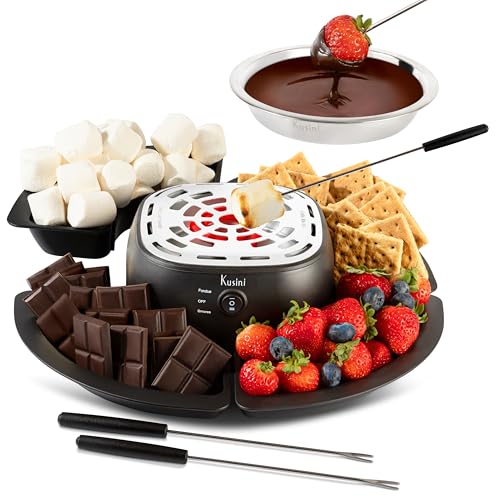
The best indoor smores maker for entertaining is a tabletop electric model with a covered heating element, a removable roasting tray, and enough roasting space for at least four marshmallows at once.
For most homes, an electric s’mores maker is the better group choice than a candle- or gel-fuel unit: it produces steadier heat, avoids an exposed flame, and is easier to supervise around children. A compact fuel-based kit still makes sense for occasional use or very small spaces, while a larger electric unit is worth choosing when six or more people will be serving themselves.
Our top picks



As an Amazon Associate we earn from qualifying purchases at no extra cost to you. Ratings are shown as listed on Amazon.
Quick picks by entertaining situation
| Situation | Best choice | Why it fits | Typical market range |
|---|---|---|---|
| Two to four people, occasional use | Compact electric maker | Small footprint, low setup effort, usually enough roasting room for a couple at a time | $25–$45 |
| Four to six people | Standard tabletop electric model | Better heat distribution and a larger food-safe tray | $35–$70 |
| Six or more people | Large electric model or two compact units | Reduces waiting and lets guests roast simultaneously | $60–$120 total |
| Very limited storage | Small fuel-based kit | No electrical cord and often a narrower serving footprint | $15–$35, excluding replacement fuel |
| Homes with young children or pets | Covered electric heating element | No open flame; still requires active supervision because surfaces and skewers become hot | $35–$80 |
Electric versus fuel: the most important decision
Tabletop electric heat
Electric models typically use a radiant heating element beneath or behind a guard. They are usually the safest option for indoor entertaining because the heat source does not consume fuel in the room and can be switched off immediately. Look for an enclosed element, a stable non-slip base, an indicator light, and a cord long enough to reach a nearby outlet without crossing a walkway.
The tradeoff is that electric units must be positioned near an outlet and may take several minutes to preheat. Their heating area can also be modest, so check the usable roasting space rather than judging capacity by the overall size of the appliance.
Gel-fuel or candle-style heat
Fuel-based kits can work indoors when the manufacturer explicitly permits indoor use, but they involve a live flame, hot fuel container, and more demanding shutdown procedure. Keep them away from curtains, paper napkins, wooden serving boards, and the edge of the table. Never move a lit fuel cup, add fuel to a warm container, or leave the unit unattended.
These kits are attractive for occasional use because they are simple and often inexpensive. However, replacement fuel is a continuing ownership cost, and the flame can be more sensitive to drafts than an electric element. For a party, the extra supervision usually outweighs the portability advantage.
Capacity is about serving rate, not just guest count
A product advertised for four people may not let four people roast simultaneously. A practical tabletop capacity is the number of marshmallows that can be held over the heat without touching one another or the guard. For casual serving, allow roughly one active roasting position per two guests.
Here is a useful estimate for a 30-minute dessert session:
- One active roasting position can usually finish about two s’mores every five minutes.
- Four positions can therefore produce about 48 s’mores in 30 minutes, assuming guests have prepared crackers and chocolate in advance.
- For six guests, four positions are generally comfortable; two positions will create a noticeable queue.
- For eight or more guests, two appliances or a larger unit with at least six usable positions will provide a smoother experience.
These figures are planning estimates, not guaranteed output. Marshmallow size, desired browning, recovery time between batches, and how quickly guests assemble each s’more will change the result.
Specifications that matter on a tabletop
| Feature | Useful target | Why it matters |
|---|---|---|
| Usable roasting positions | 2–3 for small groups; 4–6 for parties | Determines waiting time more accurately than overall appliance dimensions |
| Overall footprint | Approximately 8–14 inches wide | Leaves room for plates, napkins, and ingredients on the table |
| Weight | About 2–6 pounds | Heavier bases are harder to knock over but less convenient to store |
| Preheat time | About 5–10 minutes | Allows you to schedule setup before guests arrive |
| Serving tray material | Stainless steel, ceramic, or removable food-safe plastic | Removable parts make melted chocolate and sugar easier to clean |
| Skewers | At least 4 included; roughly 10–12 inches long | Longer handles keep hands farther from the hot zone |
| Controls | Simple on/off switch or adjustable heat control | Easy controls reduce interruptions during serving |
How the main designs compare
Enclosed electric center-heating models
These are the strongest all-around choice for indoor parties. Guests roast around a central heating area, and the surrounding tray holds graham crackers, chocolate, and marshmallows. Choose one with a broad, weighted base and a protective guard. The main limitation is that the tray can become crowded when several guests reach across it at once.
Electric models with individual roasting wells
Individual wells create clearer personal spaces and can be easier for children to understand. They may, however, heat less evenly and take longer to roast a large batch. Check whether the wells are removable; narrow fixed recesses are difficult to wipe when sugar drips into them.
Fuel-based center burners
These provide a campfire-like flame and usually have no preheat delay. They are best reserved for small, closely supervised gatherings. Their safety depends heavily on placement, ventilation, fuel handling, and an immediate way to extinguish the flame.
Cleanup and durability: what wears out first
Sticky sugar is the main enemy of every s’mores maker. It hardens on metal guards, tray edges, and skewer tips, then attracts crumbs. Removable trays are more valuable than decorative features because they allow soaking without bringing water near the electrical base.
Before buying, confirm that the tray and skewers are dishwasher-safe only if the manufacturer specifically says so. Otherwise, let parts cool completely, remove them, and soak them in warm water with dish soap. A soft sponge is preferable to steel wool, which can scratch stainless steel and create places for residue to collect.
- Do not pour water over an electric base or submerge the cord, switch, or heating assembly.
- Do not scrape baked-on sugar with a knife; it can damage nonstick coatings and leave sharp scratches.
- Inspect wooden skewers for splitting and replace them when the tips become rough or charred.
- Check silicone feet periodically; a loose foot can make a lightweight appliance unstable.
- Store the appliance dry, with the cord loosely coiled rather than tightly wrapped around the body.
For frequent use, stainless steel trays and metal guards generally age better than thin painted surfaces. Nonstick surfaces simplify cleanup at first but can deteriorate if overheated or scrubbed aggressively.
Setup for a safer, less messy party
- Place the maker on a level, heat-resistant table with several inches of clearance around it.
- Set out prepared graham cracker halves, chocolate pieces, marshmallows, napkins, and a bowl for used skewers before turning on the heat.
- Preheat according to the instructions, keeping the cord away from the table edge.
- Give each guest a clear roasting position and demonstrate that marshmallows should stay over the heat, not directly against the element or guard.
- Turn the unit off before cleaning and allow every surface to cool fully.
Preparing the ingredients in advance makes a bigger difference than buying a larger appliance. If chocolate and crackers are already portioned, the heat source can focus on roasting instead of becoming a crowded assembly station.
Bottom line
Choose a compact electric maker for small, occasional gatherings, a four-position electric model for the best balance of capacity and table space, and a larger unit or two appliances when serving eight or more people. Prioritize an enclosed heating element, stable base, removable tray, and clearly stated indoor-use instructions over novelty features. That combination gives the best balance of serving speed, heat-source safety, and cleanup for entertaining at home.


Write Your Review
No reviews yet. Be the first to share your experience!