

Key takeaways
- Wipe the playing surface with a dry or barely damp cloth. Avoid soaking the tapa or spraying cleaner into the sound hole.
- Keep the cajon away from radiators, damp floors, and direct sunlight. Rapid humidity changes can loosen joints or alter snare tension.
- Check the corner screws and rubber feet every few months. Loose hardware can create rattles that sound like a faulty snare.
- If the snare buzzes across the entire face, reduce tension first. Do not immediately tighten every screw, because excessive tension can damage the tapa or make the instrument harsh.
- Inspect the bottom edges for swelling or chipped laminate, especially if the cajon is carried without a bag.
- Replace worn rubber feet when the box rocks or slips. They are inexpensive and protect both the cabinet and the floor.
The best cajons for beginners are usually full-size wood models with adjustable snares, while compact cajons suit travel and practice, and premium birch or beech instruments give performers more control over bass, slap, and snare response.
Our top picks


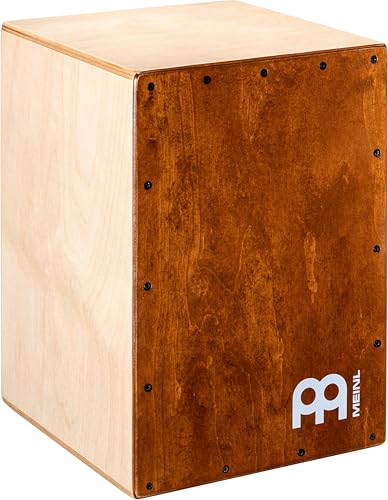
As an Amazon Associate we earn from qualifying purchases at no extra cost to you. Ratings are shown as listed on Amazon.
Quick picks by playing situation
| Situation | Best choice | Why it fits | Typical market range |
|---|---|---|---|
| First cajon for general use | Full-size adjustable-snare cajon | Balanced bass, clear slap, familiar playing height | $90–$180 |
| Lowest-cost beginner option | Basic fixed-snare or entry-level wire-snare model | Simple to learn on and inexpensive to replace | $50–$100 |
| Acoustic pop, rock, and worship | Full-size cajon with adjustable snare wires | More pronounced backbeat and sharper ghost notes | $120–$250 |
| Flamenco and acoustic guitar | Thin playing face with responsive, adjustable snare | Fast finger response and a defined slap | $150–$350 |
| Travel, lessons, or small rooms | Compact cajon or travel cajon | Lower weight and reduced volume | $60–$180 |
| Recording and regular performance | Birch, beech, or premium multi-ply cajon | More consistent tuning, projection, and construction | $250–$600+ |
What separates the best cajons from merely usable ones?
A cajon is a box drum, but small construction differences noticeably affect its sound. The playing face, or tapa, controls finger sensitivity and high-frequency detail. The thicker body panels and internal braces contribute to bass depth. Snare wires or guitar strings placed behind the tapa add the buzzing response heard near the top edge.
For a first instrument, prioritize a stable full-size cabinet, a comfortable seat, a reasonably thin tapa, and a snare system that can be adjusted or muted. Decorative finishes matter much less than a face that sits flat, corners that are secure, and a base that does not rock on the floor.
Size, weight, and construction compared
| Cajon type | Typical dimensions | Typical weight | Sound and use |
|---|---|---|---|
| Compact or travel | About 30–38 cm high, 25–30 cm wide, 25–30 cm deep | 2–4 kg | Quieter, lighter bass; useful for practice and transport |
| Standard full-size | About 45–50 cm high, 29–32 cm wide, 29–32 cm deep | 4–7 kg | Best balance of bass, playing comfort, and portability |
| Large or deep-body | About 50 cm high, 31–35 cm wide, 31–35 cm deep | 6–9 kg | More low-end projection, but less convenient to carry |
| Travel or suitcase-style | Often 40–46 cm high and slimmer front-to-back | 3–5 kg | Easy to pack, with less spacious bass than a deep cabinet |
Most adults will find a cajon close to 48 cm high the most comfortable. A smaller player may prefer a 45 cm model, while a very low cajon can force the knees above the hips and make longer sessions uncomfortable. Before buying, measure the chair height you normally use: the cajon should let you sit upright with both feet flat and your thighs roughly level or slightly sloping downward.
Wood choices: what you can hear and feel
Birch and beech
Birch is common in performance-oriented cajons because it is stiff, consistent, and capable of a focused attack. Beech is also dense and responsive, often producing a clear top end and controlled low frequencies. These woods are particularly attractive for players who need the cajon to cut through acoustic guitars, vocals, or a small ensemble.
Poplar and other lighter hardwoods
Poplar and similar lighter woods are widely used in affordable instruments. They can produce a pleasant, softer sound and keep weight down, although the bass may be less forceful and the cabinet may feel less rigid than a premium multi-ply model. They are suitable for learning, casual accompaniment, and home practice.
MDF and laminate construction
MDF or fiberboard bodies can be economical and dimensionally stable, especially when covered with laminate. The face material matters more than the body label alone: a well-designed MDF-body cajon with a responsive wood tapa can outperform a poorly assembled solid-wood box. Check the edges, screws, adhesive joints, and tapa finish rather than choosing by wood name alone.
Snare response versus bass tone
The main buying decision is often whether you want a crisp snare voice or a broad, deep bass voice. Strong snare tension produces a clear crack near the top edge, which works well for backbeats and detailed finger patterns. Too much tension can make the cajon sound busy and can reduce the contrast between bass and slap. Lower tension gives a drier, more open sound but may feel less exciting for pop or rock.
A snare-adjustment knob is valuable because it lets one instrument cover several styles. Tighten it for rhythmic accompaniment, loosen it for flamenco-style articulation, or disengage it for a more drum-like box tone. Fixed-snare cajons are not necessarily poor choices, but they give you less control when your preferences change.
For bass, look for a cabinet with a properly sealed sound hole, sturdy internal bracing, and enough depth to move air. A very loud cajon is not automatically better: excessive bass can overwhelm vocals in a small room. If you mostly play with an acoustic guitar, a controlled low end is often easier to balance than maximum volume.
Head-to-head: fixed snare, adjustable snare, and string cajons
| Design | Strengths | Limitations | Best for |
|---|---|---|---|
| Fixed metal snare | Simple, affordable, consistent | Little ability to change buzz or mute the snare | Beginners and casual accompaniment |
| Adjustable metal snare | Wide range of crack, buzz, and sensitivity | More parts to maintain and adjust | Players moving between practice and performance |
| Guitar-string system | Fine response, expressive ghost notes, often smooth feel | Can require careful tuning and may buzz if poorly set | Flamenco, acoustic music, and detailed fingerstyle |
| Snareless | Open, dry, drum-like voice; minimal maintenance | Less conventional backbeat sound | Folk, roots, unplugged percussion, and rhythm practice |
Good choices from established cajon makers
Meinl offers a broad range, from accessible Headliner models to more refined professional cajons, making it easy to compare sizes and snare systems within one brand. LP, or Latin Percussion, is another established choice; its Aspire range is commonly aimed at beginners and general-purpose playing. Schlagwerk is known for German-made cajons such as its 2inOne designs, which emphasize adjustable or removable snare systems and a more controlled performance sound.
Pearl’s Primero cajons are worth considering when you want a recognizable percussion brand and a straightforward all-purpose design. Gon Bops also makes cajons with traditional percussion styling and useful options for acoustic performance. Product specifications vary by model, so verify the listed dimensions, body material, snare arrangement, and included accessories before ordering.
Decision matrix for choosing your first instrument
| Your situation | Recommended specification | What to avoid |
|---|---|---|
| Budget under $100 | Compact or entry-level full-size cajon with a stable base | Paying extra for graphics while accepting loose joints |
| Practicing several times a week | Comfortable 45–50 cm seat, padded surface, adjustable snare | Very small body that limits bass development |
| Limited apartment space | Compact body or lower-volume snare setting | Choosing solely by advertised loudness |
| Playing with guitar or vocals | Standard size with controlled bass and clear upper slap | Overly boomy deep-body models in small rooms |
| Frequent public transport | Under 5 kg with a padded carry bag and reinforced corners | Large cabinet that is awkward to carry even if it sounds bigger |
| Recording or paid performance | Birch or beech construction, adjustable snare, consistent tapa | Unadjustable buzz or visibly uneven face tension |
Playing comfort and portability matter more than they appear
You sit on the instrument, so inspect the top surface carefully. A slightly cushioned seat is helpful for long rehearsals, but excessive padding can absorb vibration and feel unstable. Rounded front edges reduce pressure behind the thighs. A carry bag with shoulder straps is worthwhile if you walk to lessons or performances; a 6 kg cajon can feel substantially heavier after a 30-minute journey.
As a simple ownership calculation, carrying a 4 kg compact cajon instead of a 7 kg full-size model saves 3 kg on every trip. On two weekly rehearsals over a 40-week year, that is 80 trips and 240 kg less total load moved. The full-size model may still be the better purchase if its improved comfort means you practice more often, but portability should be treated as a recurring cost rather than a minor specification.
Maintenance and common ownership problems
- Wipe the playing surface with a dry or barely damp cloth. Avoid soaking the tapa or spraying cleaner into the sound hole.
- Keep the cajon away from radiators, damp floors, and direct sunlight. Rapid humidity changes can loosen joints or alter snare tension.
- Check the corner screws and rubber feet every few months. Loose hardware can create rattles that sound like a faulty snare.
- If the snare buzzes across the entire face, reduce tension first. Do not immediately tighten every screw, because excessive tension can damage the tapa or make the instrument harsh.
- Inspect the bottom edges for swelling or chipped laminate, especially if the cajon is carried without a bag.
- Replace worn rubber feet when the box rocks or slips. They are inexpensive and protect both the cabinet and the floor.
The most common beginner mistake is striking the center for every sound. The bass belongs near the middle, while the slap and snare response come closer to the upper corners. A well-built cajon rewards that separation; a poor one may produce nearly the same sound everywhere.
Final buying advice
Choose a standard full-size adjustable-snare cajon if you want one instrument for learning, acoustic accompaniment, and small performances. Choose a compact model when transport and storage dominate your decision. Spend more on birch, beech, or a carefully built multi-ply cabinet when you play frequently, record, or need consistent response. Whichever style you select, prioritize correct height, a stable cabinet, a comfortable top, and a controllable snare over decorative finishes or maximum advertised volume.





Write Your Review
No reviews yet. Be the first to share your experience!