

Key takeaways
- Remove leaves and droppings as soon as practical.
- Keep the water depth near 1 to 2 inches, adding a clean stone if the slope is too deep.
- Inspect metal finishes, mounting screws, and electrical cords each season.
- Replace cracked ceramic, sharp-edged plastic, or unstable brackets rather than repairing them with improvised materials.
- Clean the area beneath the bath so spilled water does not create persistent mud or standing puddles.
The best bird baths for most yards are shallow, stable basins 18 to 24 inches wide, holding 1 to 2 inches of water, while small spaces are better served by a clamp-on or pedestal-free bath and cold climates by a thermostatically heated model.
Our top picks

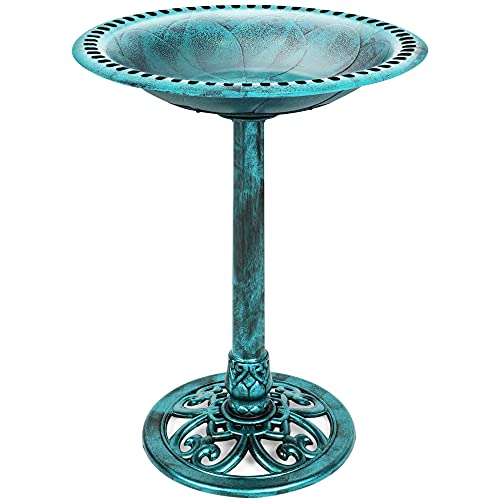


As an Amazon Associate we earn from qualifying purchases at no extra cost to you. Ratings are shown as listed on Amazon.
Best bird baths by yard situation
| Yard or placement | Best type | Recommended size | What matters most | Typical price range |
|---|---|---|---|---|
| Small patio or balcony | Hanging, clamp-on, or deck-mounted basin | 10–16 inches wide | Low weight, secure mounting, spill control | $25–$70 |
| Flower garden | Low pedestal or ground-level basin | 16–22 inches wide | Stable base, natural-looking material, easy cleaning | $35–$120 |
| Large lawn | Heavy pedestal bath | 20–28 inches wide | Wind resistance, replaceable basin, height | $70–$200 |
| Freezing-winter climate | Heated pedestal or heated deck bath | 18–24 inches wide | Thermostatic control, outdoor-rated cord, safe positioning | $60–$180 |
| Frequent wildlife visits | Wide, shallow stone or concrete basin | 22–30 inches wide | Weight, broad landing rim, drainage access | $90–$250 |
What makes a bird bath a good buy?
Birds generally prefer water that is shallow enough for wading and bathing rather than a deep decorative bowl. Look for a basin with a maximum depth of about 2 inches, a gently sloped interior, and a textured surface that gives small feet traction. A wide rim is useful because birds can perch on it before entering, and it also makes scrubbing easier.
Capacity matters less than surface area. A 20-inch basin filled to 1.5 inches holds approximately 2.5 gallons, but evaporation, splashing, and debris mean it may need topping up every day or two in hot weather. A smaller 14-inch basin at the same depth holds roughly 1.2 gallons and is easier to lift, but it can dry out faster.
Stability is more important than decorative height
A tall pedestal places the water where people can see it, but it also creates leverage in strong wind. For an exposed lawn, choose a base weighing at least 25 to 40 pounds, or a pedestal that can be filled with sand or secured to a paver. Lightweight resin and plastic baths are convenient but often need anchoring. A low stone, concrete, or thick ceramic bath is harder to tip, although it may be difficult to move for cleaning.
For a balcony, calculate the filled weight before buying. Water weighs about 8.3 pounds per gallon. A 1.5-gallon basin weighing 5 pounds empty weighs roughly 17.5 pounds when full, before accounting for the mounting bracket. Use the balcony railing or deck manufacturer’s load guidance, and avoid placing a heavy bath where a fall could injure someone below.
Basin materials compared head-to-head
| Material | Typical empty weight for a 20-inch bath | Advantages | Weak points | Best use |
|---|---|---|---|---|
| Plastic or resin | 2–6 pounds | Affordable, light, easy to relocate | Can fade, flex, or blow over | Balconies and renters |
| Glazed ceramic | 8–18 pounds | Smooth surface, attractive colors, easy initial cleaning | Can crack from freezing or impact | Protected gardens in moderate climates |
| Fiberglass | 4–10 pounds | Light for its size, many shapes, corrosion-resistant | Surface can scratch and weather over time | Large decorative baths that must be moved |
| Concrete | 35–80 pounds | Excellent stability and weather resistance | Hard to move; porous versions stain | Permanent lawn placement |
| Natural stone | 25–100+ pounds | Very stable, blends into landscaping | Expensive, irregular surfaces, heavy | Long-term garden installations |
| Metal | 4–15 pounds | Durable and often wall- or deck-mountable | Can heat rapidly in sun; may rust if poorly finished | Shaded patios and compact spaces |
Porous concrete and stone are not automatically unsanitary, but their texture can retain algae and mineral deposits. A removable liner or sealed interior reduces scrubbing. Glazed ceramic is easier to wipe, but inspect it every spring for hairline cracks. In areas with repeated freezing, drain and store ceramic or glass basins unless the manufacturer specifically rates them for freeze-thaw exposure.
Best choices for small yards, gardens, and balconies
Small yards
Choose a 16- to 20-inch shallow bath on a broad, low base. It supplies enough surface area without dominating the space. A lightweight resin model is practical if you need to move it while mowing, but add a hidden paving slab or ground anchor if wind is common. Place it where birds have a clear view of approaching cats, with shrubs nearby but not so close that predators can hide immediately beside the water.
Flower gardens
A low stone, concrete, or textured ceramic bath works well among planting beds. Set the basin on level ground and leave at least 3 feet of open visibility around it. Ground-level baths are accessible to more wildlife but collect more soil, leaves, and insects. A pedestal 18 to 24 inches high usually stays cleaner and is easier to observe, provided the base is stable.
Balconies and decks
Prioritize mounting and drainage over capacity. A rail-mounted bath with a 10- to 14-inch basin is often safer than a freestanding model. Select a bracket with a stated load rating comfortably above the filled weight, and use a basin with an overflow path that will not direct water onto the balcony below. Do not place it directly under a feeder if discarded seed will create a muddy or slippery surface.
Heating options for cold weather
A heated bath is useful where water regularly freezes, but it should be thermostatically controlled and rated for outdoor use. The heater may be built into the basin or attached underneath it. A typical unit uses about 50 to 150 watts while heating; thermostatic models cycle off as conditions change rather than running continuously.
For a rough energy estimate, a 75-watt heater running eight hours per day uses 0.6 kilowatt-hours daily. At an electricity rate of $0.20 per kilowatt-hour, that is about $0.12 per day, or approximately $3.60 for 30 days of operation. Actual cost depends on temperature, wind, insulation, and thermostat cycling.
Keep the cord away from standing water, protect connections with outdoor-rated equipment, and use a ground-fault circuit interrupter. Never add antifreeze, salt, glycerin, or other chemicals to prevent freezing. If a heated basin is not practical, refresh the water with lukewarm water during the coldest part of the day and remove the bath before a hard freeze if its material is vulnerable.
Cleaning access and ownership costs
The easiest bird bath to own is one you can empty without tools. Removable basins are preferable to permanently bonded decorative bowls because you can turn them over, rinse the underside, and inspect the drain. A plug or drain opening is helpful for large concrete baths, but make sure it does not leave a stagnant pocket beneath the basin.
Plan on replacing the water every one to three days, more often during heat, heavy use, or visible contamination. At least once a week, empty the basin and scrub it with a dedicated brush and water. For persistent buildup, use a bird-safe cleaning approach recommended by a local wildlife authority or the bath manufacturer, rinse thoroughly, and allow no cleaner residue to remain. Avoid relying on algae-control chemicals unless the product is specifically labeled for bird baths and used exactly as directed.
- Remove leaves and droppings as soon as practical.
- Keep the water depth near 1 to 2 inches, adding a clean stone if the slope is too deep.
- Inspect metal finishes, mounting screws, and electrical cords each season.
- Replace cracked ceramic, sharp-edged plastic, or unstable brackets rather than repairing them with improvised materials.
- Clean the area beneath the bath so spilled water does not create persistent mud or standing puddles.
A simple decision matrix
| Your priority | Choose | Avoid |
|---|---|---|
| Lowest purchase cost | Shallow plastic basin on a weighted support | Large stone or electrically heated models |
| Least maintenance | Smooth removable liner with a drain and wide rim | Deep, porous, highly ornamented bowls |
| Maximum wind resistance | Concrete or stone basin with a broad base | Lightweight hanging baths in exposed locations |
| Easy seasonal storage | Resin or fiberglass basin under 10 pounds | Fixed masonry installations |
| Cold-weather use | Outdoor-rated thermostatic heated bath | Unrated heating cables or chemical additives |
For most buyers, the best bird baths are not the deepest or most elaborate models. Choose a shallow, textured basin that you can lift or drain easily, then match the base to the location: lightweight and secured for a balcony, low and stable for a garden, and heavy or anchored for an exposed lawn. That combination will usually attract more birds and create less work than a larger bath that is difficult to clean, refill, or protect from wind and winter weather.





Write Your Review
No reviews yet. Be the first to share your experience!