

Key takeaways
- Ten 10-inch table saw blades for ripping hardwood compared from listing specs: 24-tooth rippers, full and thin kerf, plus mixed-use options and caveats.
For ripping hardwood, a 24-tooth, 10 inch rip blade is the right starting point, and the clearest options here are the Freud LM72R010 for full-kerf saws and the Freud LM75R010 for lower-powered saws. The ten listings cover thin kerf and full kerf rippers, a general-purpose DEWALT, a SawStop-branded blade with a thin title, and a two-pack that is not a true ripper. Notes flag where the titles stop short.
Quick picks
Our top picks


As an Amazon Associate we earn from qualifying purchases at no extra cost to you.
- Full-kerf hardwood ripping: Freud LM72R010 or the CMT 24-tooth blades.
- Thin kerf, lower-power saws: Freud LM75R010 or LU87R010.
- Budget rippers: HARDWIN 24T or FOXBC flat tooth.
- Mixed work: DEWALT DWA11024 or the KENDO 2-pack.
All ten blades compared
| Model | Key point from the title | Best for |
|---|---|---|
| Freud LM72R010 | 10 in., 24 teeth, .126 kerf, 5/8 arbor | Powerful saws, thick stock |
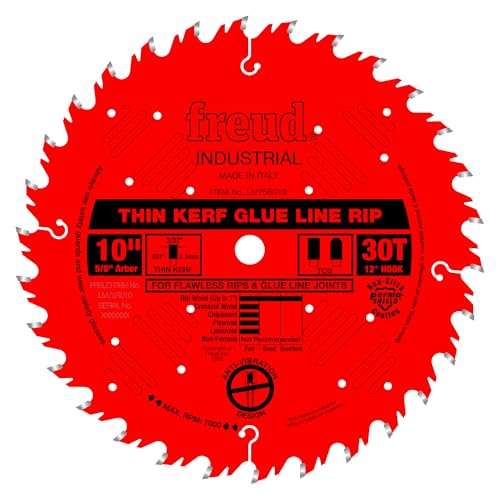
| Freud LM75R010 | 10 in., thin kerf, glue line ripping | Lower-power saws |
| Freud LU87R010 | 10 in., thin kerf rip blade, 5/8 in. | Lower-power saws |
| CMT 201.024.10 | Z24, K=0.126, a=20 | Fast, aggressive rips |
| CMT 285.624.10 | Z24, K=0.126, a=15 | More controlled rips |
| DEWALT DWA11024 | 24 tooth, general purpose | Mixed shop work |
| FOXBC | Flat tooth, 24T, thin kerf, 5/8 arbor | Budget thin kerf |
| HARDWIN | 24T carbide, 5/8 arbor, ripping | Budget replacement |
| SawStop 24-Tooth | 24-tooth ripping; no other specs | SawStop owners, verify fit |
| KENDO 2-pack | 40T and 60T ATB set | Plywood and mixed cuts |
The ten blades in detail
Freud LM72R010 Heavy-Duty Rip Saw Blade, 10-Inch, 24 Teeth
The title lists a 10 inch diameter, 24 teeth, a 5/8 inch arbor, a .126 inch kerf and a TiCo Hi-Density carbide blend, with the code LM72R010. A .126 inch kerf is a full-kerf blade, which suits saws with plenty of motor power. Twenty-four teeth is the standard tooth count for dedicated ripping, giving large gullets to clear long chips. The title does not describe tooth grind, so check the listing.
Pros
- Diameter, tooth count, arbor and kerf are all stated
- Full kerf is stable on powerful saws
Cons
- Full kerf removes more wood and asks more of a small motor
- Tooth grind is not named in the title
Who it’s for: owners of 3HP cabinet saws and heavy contractor saws who rip thick hardwood often, and who prefer a stiff full-kerf blade over a thin plate.
Freud LM75R010 10-Inch Industrial Thin Kerf Glue Line Ripping Blade
The title gives 10 inch, thin kerf, carbide teeth and the phrase glue line ripping, which refers to edges clean enough to glue straight off the saw. Tooth count, arbor size and exact kerf are not in the title, so confirm all three on the listing before ordering. Thin kerf blades remove less wood and put less load on lower-powered saws, but they can flex more in thick stock.
Pros
- Thin kerf lowers the load on smaller motors
- Glue line positioning aims at clean edges for joinery
Cons
- Tooth count and arbor size are not in the title
- Thin kerf blades can deflect in thick hardwood if feed is forced
Who it’s for: owners of 120V contractor and jobsite saws who want clean rips with less cutting resistance, and who plan to glue edges without a jointer pass.
Freud LU87R010 10-Inch Thin Kerf Rip Blade
Freud’s other thin kerf ripper in this list, titled LU87R010: 10 inch, thin kerf, 5/8 inch arbor, carbide. The title also stuffs in generic category words (circular saw blades, ripping blades), which is a reminder to check specifics on the listing. Tooth count is not stated in the title. Compare it directly with the LM75R010 listing, since both are Freud thin kerf rip blades and the differences are not obvious from titles.
Pros
- Thin kerf and 5/8 inch arbor are stated
- Part of a well-known blade brand’s rip range
Cons
- Title is padded with generic terms and lacks a tooth count
- Hard to separate from the LM75R010 without the listing
Who it’s for: buyers with a lower-power saw who want a Freud thin kerf rip option and are prepared to read both Freud listings side by side before choosing.
CMT Orange Tools 201.024.10 Ripping Saw Blade
The title is a code string: D=10 (diameter), B=5/8 (bore), Z24 (24 teeth), K=0.126 (kerf), P=0.087 (plate thickness, likely) and a=20. The a value in these codes is usually the hook angle, but confirm on the listing. A 20 degree hook is aggressive, which cuts fast but demands a firm hold on the stock. Full kerf and 24 teeth are the profile for hardwood rips.
Pros
- Diameter, bore, teeth and kerf are spelled out in the code
- A 24 tooth, full kerf profile for rip work
Cons
- Terse code title is hard to read for newcomers
- Aggressive hook calls for good technique and a riving knife
Who it’s for: experienced woodworkers who read blade codes and want a fast-cutting rip blade on a powerful saw, with a riving knife and a firm feed technique.
CMT Orange Tools 285.624.10 Ripping Saw Blade
The sibling of 201.024.10 with the same code layout: D=10, B=5/8, Z24, K=0.126, P=0.087, but a=15. If a is the hook angle, as is usual in blade codes, this one is a less aggressive 15 degrees, so it should feel more controlled in the cut. The title gives no tooth shape either. Because the two CMT listings look so alike, read them both and note the difference.
Pros
- A gentler hook angle than its 20 degree sibling, if the code reads as expected
- Same 24 tooth, full kerf layout
Cons
- Title does not name the tooth grind
- Near-identical title to another CMT listing invites mix-ups
Who it’s for: woodworkers who want a rip blade with a more controlled bite, run a powerful saw, and like to compare code values before they buy.
DEWALT DWA11024 10 in. 24 Tooth General Purpose Saw Blade
The title says 24 tooth, 10 inch, ultra sharp carbide and general purpose. That last phrase matters: general purpose blades aim to do a bit of everything, which is not the same as a dedicated ripping blade even at 24 teeth. The listing does not give arbor or kerf in the title. It fits mixed-lumber shop work where you switch between rips and crosscuts and want a blade from a widely stocked brand.
Pros
- 24 tooth count suits rough ripping
- Brand with broad availability of replacements
Cons
- Labeled general purpose, so it is not specialized for hardwood rips
- Kerf and arbor are not stated in the title
Who it’s for: weekend woodworkers who do mixed cuts and want one decent all-rounder on the saw, not a hardwood specialist, and who accept slower feeds in thick stock.
FOXBC 10-Inch Flat Tooth Ripping Table Saw Blade, 24-Tooth, Thin Kerf
The title lists a 10 inch blade, flat tooth (flat top) grind, 24 teeth, thin kerf and a 5/8 inch arbor. Flat top teeth are the traditional ripping shape, and a thin kerf keeps resistance down. FOXBC is a lesser-known brand, so the listing’s build details, plate thickness and the seller’s return terms deserve a careful look before you commit. The exact kerf figure is not stated in the title.
Pros
- Flat tooth grind, 24 teeth and 5/8 inch arbor are stated
- Thin kerf suits smaller saws
Cons
- Exact kerf is not given in the title
- Lesser-known brand with limited specifics
Who it’s for: budget-minded owners of lower-power saws who want a flat-top ripper and are willing to check the seller’s return terms and listing details.
HARDWIN 10-Inch 24T Carbide Table Saw Blade for Ripping
A short title: 10 inch, 24 teeth, carbide, 5/8 inch arbor, for ripping. Nothing is said about kerf or tooth grind, so confirm both on the listing and check the plate thickness against your riving knife. As with other lesser-known brands, treat details cautiously and read the listing text before you buy. It is one of the lesser-known names among the dedicated rippers in this group.
Pros
- 10 inch, 24T and 5/8 inch arbor match common table saw setups
- Positioned as a ripping blade in the title
Cons
- No kerf or tooth grind in the title
- Brand has limited specifics to compare
Who it’s for: shoppers replacing a dull blade on a budget who will verify kerf, grind and plate thickness against their saw manual before ordering.
24-Tooth Ripping Table Saw Blade (SawStop brand)
The title is only “24-Tooth Ripping Table Saw Blade”, with SawStop shown as the brand. It gives no diameter, arbor, kerf or tooth grind, so everything needs checking on the listing. If you own a saw with a brake system, compatibility matters, and a brand-matched blade is the simplest route; read your manual for approved blade types. Do not assume this fits your saw just because it is a table saw blade.
Pros
- 24 teeth and a ripping purpose are stated
- Brand-matched option for SawStop owners
Cons
- Diameter, arbor and kerf are all missing from the title
- Compatibility depends on your saw model
Who it’s for: SawStop owners who want a blade from the saw’s own maker, will confirm the diameter, arbor and kerf on the listing, and prefer brand-matched parts.
KENDO 10 Inch Circular Saw Blade Set, 2-Pack 40T 60T
This is a two-blade set, not a dedicated ripper: a 40T for ripping and a 60T for plywood, MDF and laminate finish cuts, both ATB with a 5/8 inch arbor, for table and miter saws. The 40T handles lighter ripping, but thick hardwood is better served by a 24T rip blade. It is listed here as a value pack for mixed jobs, not as a hardwood-ripping specialist, and the title does not mention kerf.
Pros
- Two blades cover ripping and finish cuts
- Works on both table and miter saws, per the title
Cons
- 40T is not a true hardwood rip blade; expect slower feed in thick stock
- ATB teeth are a crosscut-leaning design
Who it’s for: hobbyists who want a general set and cut mostly plywood, MDF and thinner boards, with an occasional rip that does not involve thick, dense hardwood.
How we picked these
We compared the stated diameter, tooth count, kerf, arbor and grind in each listing title, alongside published specifications, manufacturer documentation and common themes in buyer reviews. Nobody on the team used or measured these units. Where a title omitted kerf or diameter, we say so rather than assuming a number.
Reading a rip blade before you buy
Tooth count and grind
Ripping cuts along the grain, so fewer teeth with big gullets clear long chips faster. Twenty-four teeth is the usual count for dedicated rippers, and a flat top grind is the classic shape. Blades with 40 or 60 teeth leave smoother faces but load up and burn in thick hardwood unless you feed slowly.
Full kerf versus thin kerf
Full kerf blades, such as the .126 inch listings, are stiff and favor saws with 3HP motors. Thin kerf blades take less power and waste less wood, which suits 120V saws. Check what your saw manual allows, and make sure the riving knife or splitter is thinner than the kerf and thicker than the plate.
Brake-equipped saws
If your saw has a flesh-detection brake or similar system, check the manual for the blade types and kerf allowed, since the wrong blade may be unsupported.
Worked example: what a thin kerf saves
Suppose a full kerf blade cuts a .126 inch slot and a thin kerf blade cuts about .094 inch (a typical figure; check the listing). That is 0.032 inch less lost per pass. Across 50 rips of a single board’s width the saving is 1.6 inches of stock, close to another strip from your board. If you rip expensive hardwood in volume, the thinner blade pays back in wood, provided your saw runs it without wandering.
Pre-install checklist
- Confirm diameter and arbor match your saw.
- Unplug the saw before changing blades.
- Match the riving knife to the blade’s kerf and plate.
- Install the blade with the teeth facing the cut direction.
- Wear eye and hearing protection and use push sticks.
Mistakes buyers make
Using a 40T or 60T blade for thick hardwood rips leads to burning and slow feeds. Assuming thin kerf means better quality is another; it only means less material removed. Skipping the riving knife check is a safety risk. Ordering a blade with no stated arbor is a gamble. People also keep running dull blades because a new one seems pricey, when a dull blade increases kickback risk and burn marks.
Verdict
For hardwood ripping on a powerful saw, the full-kerf 24-tooth Freud LM72R010 is the clearest listing. For a 120V saw, choose a thin kerf option such as the Freud LM75R010. Budget buyers should read the HARDWIN and FOXBC listings closely, and the DEWALT and KENDO blades are for mixed work, not hardwood specialists.
Related guides
- Table Saw Push Sticks And Featherboards
- Jobsite Table Saws For Contractors
- Cabinet Table Saw For Home Shop
Frequently asked questions
How many teeth should a hardwood ripping blade have?
Twenty-four teeth is the usual count for dedicated ripping on a 10 inch blade, since big gullets clear long chips. More teeth leave smoother edges but load up and burn thick hardwood unless you feed slowly. Dedicated rip blades trade surface finish for speed and low effort, so plan a quick pass with a jointer or sander afterward if you need a glue-ready edge.
Is a thin kerf blade okay for hardwood?
Yes on many saws, particularly 120V models with less power, because it takes less effort and wastes less wood. Feed steadily, as forcing thick stock can flex a thin plate and wander off the line. Check your saw manual, the allowed kerf range and the riving knife fit first, because the wrong combination is a safety issue.
What does the a value mean in CMT blade codes?
In many blade codes the a value refers to hook angle, with a larger angle cutting more aggressively. The two CMT listings here differ only in a=20 versus a=15, but confirm on the listing, since the title does not spell it out. A higher hook angle generally means a more aggressive, faster bite that needs a firm, steady feed.
Can a general-purpose blade rip hardwood?
It will cut, but a general-purpose blade is always a compromise. A dedicated 24-tooth rip blade clears chips better and puts less strain on the saw. A general-purpose 24T like the DEWALT is perfectly fine for mixed jobs, while a true rip blade is the better tool for repeated hardwood work.
Will these blades fit any 10 inch table saw?
Check diameter and arbor size first; most listings here are 10 inch with a 5/8 inch arbor, but the SawStop-branded one gives neither in its title. Also check your manual for any limits on kerf or blade type, and confirm the riving knife still matches before you make a cut.




Write Your Review
No reviews yet. Be the first to share your experience!