

Key takeaways
- The best banjos for beginners and experienced players are the Deering Goodtime for a light, dependable starter instrument, the Recording King RK-R35 for bluegrass players who want a serious flathead sound, and a quality open-back banjo such as the Gold…
The best banjos for beginners and experienced players are the Deering Goodtime for a light, dependable starter instrument, the Recording King RK-R35 for bluegrass players who want a serious flathead sound, and a quality open-back banjo such as the Gold Tone GT-100 for clawhammer and old-time music.
Our top picks

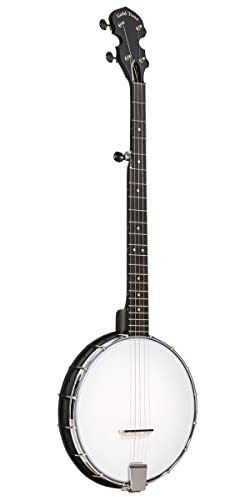


As an Amazon Associate we earn from qualifying purchases at no extra cost to you. Ratings are shown as listed on Amazon.
Quick picks by player and playing style
| Player situation | Best starting point | Why it fits | Typical market range in 2026 |
|---|---|---|---|
| First banjo, uncertain commitment | Deering Goodtime | Simple construction, comfortable neck, light weight, reliable resale | $500–$800 |
| Beginner focused on bluegrass | Gold Tone GT-100 or similar resonator banjo | Fuller projection and an accessible price | $500–$900 |
| Intermediate bluegrass player | Recording King RK-R35 | Maple neck, mahogany rim, tone ring, and a traditional pre-war-inspired layout | $1,200–$1,700 |
| Old-time or clawhammer player | Gold Tone GT-100 or another open-back banjo | Less weight, softer response, and no resonator reflecting the sound forward | $500–$900 |
| Experienced player seeking premium build | Deering Sierra or comparable professional bluegrass banjo | Higher-grade components, strong projection, and extensive adjustment potential | $2,000–$3,500 |
| Travel and frequent carrying | Short-scale or lightweight open-back banjo | Lower carrying weight and reduced left-hand stretch | $400–$1,200 |
These ranges are broad because banjo prices vary with finish, case inclusion, factory setup, and regional availability. A well-adjusted mid-priced instrument is usually a better purchase than a more expensive banjo with high action, a warped neck, or loose hardware.
Banjo types: choose the sound before the decoration
Resonator banjos for bluegrass
A resonator is the wooden back attached behind the pot. It reflects sound toward the audience and is normally paired with a flange, armrest, and a bright, projecting setup. Bluegrass players generally want a resonator banjo because three-finger rolls must remain clear beside guitar, mandolin, and fiddle.
Many bluegrass banjos use a heavy brass tone ring sitting on top of the wooden rim. That ring adds mass and contributes to the focused attack and sustain associated with traditional flathead banjo tone. A tone ring does not automatically make an instrument better: it also adds weight, cost, and more parts that must be fitted accurately.
Open-back banjos for clawhammer and old-time music
Open-back banjos omit the resonator and usually have a lighter, less forceful response. Their sound suits clawhammer, frailing, folk accompaniment, and quieter acoustic ensembles. They are often easier to hold for long sessions, although a wooden rim, tone ring, and neck profile still affect total weight considerably.
Open-back instruments may use a rolled-brass tone ring, a Whyte Laydie-style ring, a simple wooden rim, or no separate tone ring. Simple rims can produce a dry, woody voice; metal rings may add brightness and sustain. The right choice depends more on repertoire and right-hand technique than on price.
Short-scale and specialty banjos
A tenor banjo has four strings and is commonly tuned in fifths for Irish or traditional jazz playing. A plectrum banjo has four strings and a longer scale, often serving chordal accompaniment. A five-string beginner should not accidentally buy one of these simply because it looks similar.
Scale length, neck profile, and tuning stability
Most five-string banjos use a scale length around 26 to 27 inches. This provides the familiar G tuning of gDGBD, but it can feel demanding for a new player, especially when forming chords near the first few frets. A shorter scale around 24 to 25.5 inches reduces the distance between frets and slightly lowers string tension, helping smaller players and children reach notes more comfortably.
Short scale is not automatically easier in every respect. The fifth-string placement, intonation, and available replacement strings must match the instrument. A player moving between lessons or jam sessions may find a standard 26.25-inch scale more convenient because instructional material and setup advice commonly assume that format.
| Feature | Common beginner specification | More demanding or premium specification | Practical effect |
|---|---|---|---|
| Five-string scale | 24–25.5 inches | 26–27 inches | Shorter scale eases reach; longer scale gives familiar spacing and strong projection |
| Neck width at nut | 1.18–1.25 inches | 1.20–1.30 inches | Wider neck gives fingerpicking room; narrower neck can feel quicker for chord changes |
| Typical total weight | 5–7 pounds for light open-back models | 8–13 pounds for resonator models with tone rings | Weight matters during standing performance and travel |
| Typical bridge height | 5/8 inch | 11/16 inch on some setups | Changes action, hand position, and head clearance |
| Common tuning | gDGBD | gDGBD, plus modal tunings such as gDGCD | Standard tuning is easiest for lessons; alternate tunings expand old-time repertoire |
Neck shape is a personal fit issue. A rounded “full” profile can support relaxed thumb positioning, while a slim profile may suit players accustomed to electric guitar. Check whether the thumb can rest behind the neck without squeezing. Excessive gripping causes more beginner frustration than a modest difference in neck width.
Tuning stability depends on the nut, planetary or geared tuners, fifth-string tuner, bridge position, head tension, and string installation. A banjo that drifts sharp after every hard roll may need a setup rather than a replacement. Geared tuners are preferable to friction tuners for most modern five-string beginners because they allow smaller, more predictable adjustments.
Head, tone ring, and construction choices
The head is the banjo’s vibrating membrane. Mylar heads are stable and durable; natural skin heads can provide a warm, responsive sound but react more noticeably to humidity. A tighter head usually produces more attack and brightness, while a looser head can sound warmer and less immediate. Beginners should avoid making large tension changes before learning the instrument’s baseline setup.
Rims are commonly maple, mahogany, or laminated hardwood. Maple often emphasizes clarity and snap, while mahogany can sound rounder, though the head, bridge, strings, tone ring, and setup may outweigh the wood species. A rolled-brass ring is lighter and less expensive than a cast bronze flathead ring. A heavy cast tone ring may suit a bluegrass player who needs projection, but it can make a banjo uncomfortable to carry.
For a first instrument, prioritize a straight neck, functioning tuners, even fretwork, a correctly positioned bridge, and moderate action. Cosmetic binding and ornate inlays do not compensate for poor playability.
Decision matrix: which banjo matches your situation?
| Your priority | Recommended configuration | What to avoid |
|---|---|---|
| Budget under $700 | Light open-back or entry-level resonator with geared tuners | Very cheap decorative instruments with friction tuners and no setup support |
| Bluegrass lessons and jams | Five-string resonator, 26–27-inch scale, 5/8-inch bridge, geared tuners | Tenor or plectrum models and open-back instruments chosen only for low weight |
| Clawhammer at home | Open-back, 25–26-inch scale, scoop optional, moderate or light tone-ring design | Heavy resonator models if extended playing comfort is important |
| Small hands | Short-scale neck or a slim, comfortable standard-scale neck | Buying solely by scale without checking the neck shape and fifth-string reach |
| Frequent travel | Lightweight banjo, padded gig bag, stable geared tuners, removable resonator if applicable | Heavy cast-tone-ring instruments without a protective case |
| Experienced player upgrading tone | Quality tone ring, precise fretwork, adjustable coordinator rods, professional setup | Assuming a tone ring alone will fix poor technique or incorrect head tension |
Accessories that change the buying decision
Confirm what is included before comparing prices. A useful beginner package may include a padded gig bag, tuner, strap, spare strings, bridge, and basic setup. A hard case can cost roughly $150–$400 by itself, depending on fit and construction. A strap is particularly important for a resonator banjo because the instrument can become tiring when supported only by the forearm.
Budget for a clip-on tuner, string sets, a small wrench for head and coordinator-rod adjustments, and a bridge that matches the banjo’s existing height. A typical five-string set costs about $5–$15 and may last several weeks to several months, depending on sweat, playing frequency, and whether the strings are wiped after use.
Ownership realities and basic maintenance
The first parts likely to need attention are strings, the head’s tension, the bridge position, and occasionally the fifth-string tuner. Fret wear develops gradually under frequent playing. Tuning problems are often caused by strings stretching, slipping windings, a poorly cut nut, or a bridge that has moved—not by the tone ring.
-
Wipe the strings and metal parts with a clean, dry cloth after playing. This removes sweat without introducing unnecessary polish to the head.
-
Store the banjo in a case or padded bag away from radiators, direct sunlight, and rapid humidity changes. Sudden changes can affect a skin head, neck, and wooden rim.
-
Check the bridge position whenever intonation sounds wrong. Compare the fretted note at the 12th fret with the harmonic; move the bridge in tiny increments only after loosening string pressure slightly.
-
Replace strings one at a time when possible. This keeps the bridge and tailpiece arrangement from shifting unexpectedly.
-
Have a qualified repair technician inspect persistent buzzing, high action, loose hardware, or a fifth string that will not hold pitch.
For example, a player practicing four times per week for 50 weeks gets about 200 sessions annually. If a $700 banjo lasts five years with $40 per year spent on strings and minor maintenance, the approximate ownership cost is ($700 + $200) ÷ 1,000 sessions, or $0.90 per session, before accessories. This illustrates why a playable instrument with stable hardware can be better value than replacing an uncomfortable bargain banjo.
Final recommendation
Choose the Deering Goodtime when low weight, simple ownership, and a comfortable first step matter most. Choose a Gold Tone GT-100 or similar open-back when clawhammer and old-time music are the goal. Choose the Recording King RK-R35 when bluegrass is your priority and you are ready for a heavier, more adjustable instrument. Experienced players should compare neck feel, tone-ring response, fretwork, and setup quality in person or through a reputable specialist rather than selecting by decoration or hardware quantity alone.



Write Your Review
No reviews yet. Be the first to share your experience!