

Key takeaways
- Wash every one to two weeks when practical, using a pH-balanced shampoo and a clean drying method.
- Do not judge coating health solely by beading. Sheeting, surface cleanliness, gloss, and ease of drying also matter.
- Remove bird droppings, insects, and tree sap promptly rather than allowing them to bake onto hot paint.
- Avoid abrasive polishes unless you intend to remove the coating in that area.
- Use a coating-compatible maintenance spray only as directed; excessive layering can attract dust or create streaks.
- Never apply in direct sun or on hot panels. Temperature changes the flash time and makes high spots harder to detect.
The best ceramic car coatings for most DIY users are Gtechniq Crystal Serum Light for a forgiving, durable base layer, Gyeon Q2 Mohs EVO for a balanced one-bottle finish, and CarPro CQUARTZ UK 3.0 for strong gloss and water behavior when you can control the application environment.
A ceramic coating is not a permanent substitute for washing, paint correction, or careful preparation. It is a thin, chemically bonded protective layer that can make paint easier to clean and more resistant to UV exposure, road grime, and light chemical contamination. The right choice depends less on the highest advertised durability figure and more on your experience, garage conditions, correction work, and willingness to maintain the finish.
Our top picks
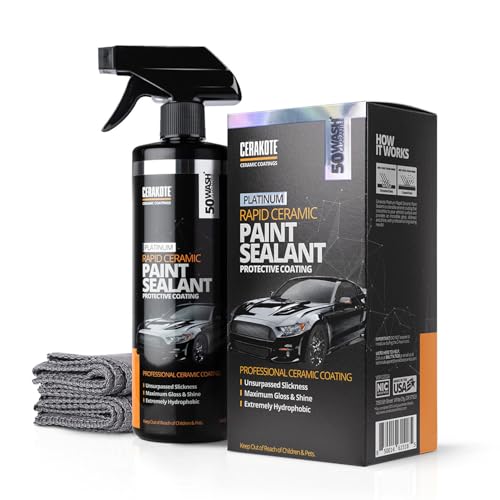


As an Amazon Associate we earn from qualifying purchases at no extra cost to you. Ratings are shown as listed on Amazon.
Best ceramic car coatings by DIY situation
| Situation | Best fit | Why it makes sense | Main compromise |
|---|---|---|---|
| First coating project | Gtechniq Crystal Serum Light | Clear wipe-on behavior, useful working time, and a strong durability-to-difficulty balance | High spots still need to be removed promptly |
| Maximum gloss and slick water behavior | CarPro CQUARTZ UK 3.0 | Distinctive gloss and rapid water beading when applied to properly prepared paint | Can flash quickly in warm or humid conditions |
| One-bottle simplicity | Gyeon Q2 Mohs EVO | Designed for consumer application with good coverage and manageable curing requirements | Longevity depends heavily on prep and maintenance |
| Two-layer durability system | Gtechniq Crystal Serum Light plus EXO v5 | Separate base and topcoat allow a harder foundation with added slickness and water repellency | More product cost, labor, and opportunities for application errors |
| Low-cost learning project | Entry-level DIY coating kit with a 30 ml bottle | Lower initial cost and enough product for one average vehicle | Usually shorter stated life and less forgiving application behavior |
Head-to-head comparison
The figures below are practical planning ranges, not guarantees. Manufacturers describe durability under different washing schedules, climates, and preparation standards, so a “three-year” coating should not be treated as a fixed three-year warranty.
| Product or system | Typical kit size | Practical coverage | Stated durability range | Typical curing guidance | Application difficulty |
|---|---|---|---|---|---|
| Gtechniq Crystal Serum Light | 30 ml or 50 ml | About 1 midsize vehicle from 30 ml; 50 ml suits a large SUV or careful two-coat use | Up to about 5 years under suitable conditions | Keep dry for roughly 12 hours; avoid harsh exposure during the early cure | Moderate |
| CarPro CQUARTZ UK 3.0 | 30 ml or 50 ml | About 1 midsize vehicle from 30 ml, depending on paint absorption and application technique | About 18–24 months in typical consumer use | Protect from water for approximately 12 hours; full cure takes longer | Moderate to high |
| Gyeon Q2 Mohs EVO | 30 ml or 50 ml | About 1 midsize vehicle from 30 ml; larger vehicles may require 50 ml | Up to about 24 months | Keep dry for roughly 12 hours and allow additional time before normal washing | Moderate |
| Gtechniq Crystal Serum Light plus EXO v5 | 30 ml base plus 30 ml topcoat | One complete midsize vehicle, with careful product control | Often marketed at around 5 years for the base system | Follow the product-specific interval between layers; keep dry during initial cure | High |
What separates the leading choices
Gtechniq Crystal Serum Light: the best all-around DIY starting point
Crystal Serum Light is a sensible choice when you want meaningful durability without moving into a professional-only coating. It generally gives the applicator enough time to spread a small section, inspect the reflection, and level the residue before it becomes difficult. That does not mean it is foolproof: using too much product can leave streaks or high spots, especially on dark paint.
Its gloss is strong rather than unusually warm, and water behavior is typically a combination of tight beading and quick runoff on clean panels. Choose it when preparation quality is good but your garage temperature, lighting, or experience is not perfectly consistent.
CarPro CQUARTZ UK 3.0: the gloss-and-beading specialist
CQUARTZ UK 3.0 is attractive to enthusiasts who prioritize a bright, glossy appearance and obvious water behavior. It can flash faster than a beginner expects, particularly on a hot panel or in humid weather. Work on small sections, use a bright inspection light, and level the coating from more than one direction.
This is a strong pick for a sheltered garage project where you can control panel temperature and leave the car undisturbed after application. It is less suitable if you need a very slow, relaxed application pace.
Gyeon Q2 Mohs EVO: the uncomplicated one-bottle route
Q2 Mohs EVO is a good compromise for users who do not want to build a multi-product coating system. Its bottle size is easy to plan around, and the application process is approachable when the vehicle has already been polished and panel-wiped. The finish tends toward a clean, glossy look with strong initial water repellency.
It is a practical choice for a daily driver that receives regular hand washing. As with every coating, apparent durability drops quickly if the surface is repeatedly exposed to mineral deposits, automatic brush washing, or neglected road film.
Preparation matters more than the label
Coating a vehicle does not hide scratches, oxidation, sanding marks, or embedded contamination. Instead, it can lock those defects beneath a durable layer. Budget at least half a day for preparation and another block of time for application on an average sedan.
- Wash thoroughly. Remove loose grit with a pre-rinse and use a clean wash mitt and drying towels. Do not begin coating while the paint is visibly dirty.
- Decontaminate the paint. Use an iron-removing product where appropriate, then remove bonded particles with a suitable clay or synthetic decontamination towel. Excessive claying can create marring.
- Inspect under strong lighting. Look for swirls, water spots, oxidation, and polishing haze from several angles.
- Polish if needed. A light finishing polish may improve gloss; deeper defects may require a more aggressive correction. Every correction step removes some clear coat, so avoid unnecessary abrasion.
- Remove polishing oils. Use the coating manufacturer’s recommended panel wipe or an appropriate surface-preparation solution. Wipe until the paint feels clean and shows no oily smearing.
- Apply in small sections. A common starting point is roughly 40 by 40 cm, adjusted for temperature and flash time. Spread a thin, even film rather than trying to make the panel look wet.
- Level and inspect. Use one towel to level the residue and a second clean towel for the final wipe. Inspect at several angles before moving on.
- Allow the initial cure. Keep the vehicle dry and protected for the time specified by the product. Do not assume a coating is fully hardened simply because it feels dry.
Coverage and cost: a useful planning calculation
Suppose a 30 ml kit costs $60–$90 and covers one midsize car. The coating itself then costs about $60–$90 per application. Add approximately $25–$60 for panel wipe, fresh microfiber towels, applicators, and masking materials, producing a realistic consumables total of $85–$150 before polishing supplies.
If the coating lasts two years, the coating-related cost works out to roughly $3.50–$6.25 per month. A five-year system costing $150–$250 in coating and application consumables works out to about $2.50–$4.15 per month. This calculation excludes machine polishers, correction pads, labor, and replacement towels, which can dominate the budget for a first project.
Durability and ownership realities
The first thing to deteriorate is often not the coating film itself but its water behavior. Mineral deposits, oily traffic film, alkaline cleaners, and neglected contamination can make a healthy coating appear weak. A chemical decontamination wash may restore some beading without recoating the vehicle.
- Wash every one to two weeks when practical, using a pH-balanced shampoo and a clean drying method.
- Do not judge coating health solely by beading. Sheeting, surface cleanliness, gloss, and ease of drying also matter.
- Remove bird droppings, insects, and tree sap promptly rather than allowing them to bake onto hot paint.
- Avoid abrasive polishes unless you intend to remove the coating in that area.
- Use a coating-compatible maintenance spray only as directed; excessive layering can attract dust or create streaks.
- Never apply in direct sun or on hot panels. Temperature changes the flash time and makes high spots harder to detect.
Bottom line
Choose Gtechniq Crystal Serum Light for the safest overall DIY decision, CarPro CQUARTZ UK 3.0 for a controlled-garage project centered on gloss and beading, and Gyeon Q2 Mohs EVO for a simpler one-bottle installation. Spend more effort on correction, panel wiping, lighting, and curing conditions than on chasing the longest advertised lifespan. A modest coating applied to perfectly prepared paint will usually outperform an expensive coating applied over contamination or polishing oils.



Write Your Review
No reviews yet. Be the first to share your experience!