

Key takeaways
- General yard work up to 2 inches of green wood: Fiskars 32-inch PowerGear2 (geared, long handles).
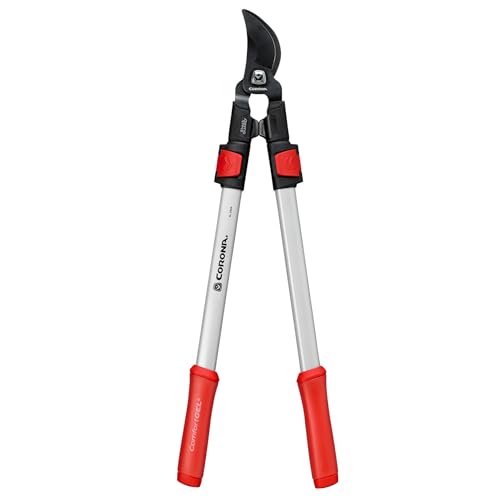
- Heavy-duty, frequent cutting of thick live stems: Corona X Series Pro (rated to 2.25 inches).
- Lifetime tool with replaceable parts: Felco F 221 (aluminum I-beam handles, single-action bypass).
- Branches overhead or behind a hedge: Corona FL 3470 (telescoping 21 to 33 inch handles, 1.5 inch rating).
- Tight shrubs and close work: Fiskars 18-inch PowerGear2 (1.5 inch rating, short and quick).
- Entry-level for a few cuts a year: WORKPRO 27-inch bypass (about 1.6 inch rating).
The best bypass loppers for 1.5 to 2 inch branches are the Fiskars 32-inch PowerGear2 for most yards, the Corona X Series Pro for the thickest live wood, the Felco F 221 for a premium all-metal build, and the Corona FL 3470 telescoping model when reach matters more than raw capacity. All four are real, current bypass designs; the right one depends on how thick, how high and how often you cut.
A bypass lopper works like scissors. One curved blade slides past a hooked, non-cutting blade and shears the branch cleanly. That matters for the work this guide covers, which is cutting living wood in the 1.5 to 2 inch range on fruit trees, hedgerow shrubs, lilacs, crabapples and overgrown ornamentals. A clean shear heals faster than a crushed stub, so a bypass lopper is the right class for live growth. An anvil lopper, which presses a blade down onto a flat plate, is better for dead, dry wood.
Our top picks


As an Amazon Associate we earn from qualifying purchases at no extra cost to you.
Quick answer: which lopper for which job
- General yard work up to 2 inches of green wood: Fiskars 32-inch PowerGear2 (geared, long handles).
- Heavy-duty, frequent cutting of thick live stems: Corona X Series Pro (rated to 2.25 inches).
- Lifetime tool with replaceable parts: Felco F 221 (aluminum I-beam handles, single-action bypass).
- Branches overhead or behind a hedge: Corona FL 3470 (telescoping 21 to 33 inch handles, 1.5 inch rating).
- Tight shrubs and close work: Fiskars 18-inch PowerGear2 (1.5 inch rating, short and quick).
- Entry-level for a few cuts a year: WORKPRO 27-inch bypass (about 1.6 inch rating).
How we chose
This guide is based on research, not personal use of the tools. We compared manufacturer specifications for cut capacity, handle length, handle construction, blade coating and mechanism, then cross-checked how those specs line up with what grounds-keeping and pruning references say about cutting live wood. We favored loppers whose stated capacity covers the 1.5 to 2 inch range, that are widely sold in 2026, and that have a distinct mechanism or build so each pick serves a different buyer. Where a spec could not be confirmed, we describe the tool by class rather than guess a number.
What a cut-capacity rating really means
Most manufacturers state capacity as the thickest green branch the blades can sever. The rating describes the blade opening, not the effort needed. A 2 inch rating on a basic 26-inch lopper can be physically exhausting, while the same cut on a 32-inch geared model feels manageable. Treat the rating as a ceiling and plan to work at about 75 percent of it for daily use.
Worked example: leverage and effort
Cutting force at the blade scales with handle length divided by the distance from the pivot to the cut point. Suppose you grip each handle 4 inches from its end and the branch sits 2 inches from the pivot, in the throat of the blades.
- On a 26-inch lopper, the handle length from the pivot is about 20 inches of lever arm after allowing for the head. Mechanical advantage is roughly 20 divided by 2, or 10 to 1.
- On a 32-inch lopper, the lever arm is about 26 inches. Mechanical advantage is 26 divided by 2, or 13 to 1, about 30 percent more force for the same hand pressure.
- Add a gear or compound linkage that gives roughly 3 times multiplication through part of the stroke, and the effective advantage for the hardest part of the cut climbs well above 30 to 1.
That is why a 2 inch cut with a long geared lopper feels easier than a 1.5 inch cut with a short, single-pivot tool. It is also why cutting at the back of the blades is a bad idea: the pivot distance grows, and advantage falls. Always place the branch deep in the throat, close to the pivot.
Bypass vs anvil: the decision in one table
| Factor | Bypass | Anvil |
|---|---|---|
| Best wood condition | Live, green, sappy | Dead, dry, brittle |
| Cut quality | Clean shear, small wound | Crushing action, rougher stub |
| Effort at the same capacity | Higher unless geared | Lower, especially with ratchet |
| Risk of jamming | Blade can twist if overloaded | Blade can stick in thick dry wood |
| Fit for fruit trees and roses | Yes | No for live cuts |
| Typical blade upkeep | Keep sharp, adjust pivot bolt | Replace worn anvil, keep blade edge true |
If most of what you cut is alive and 1 to 2 inches thick, choose bypass. If you clear dead wood and brush, an anvil or ratchet anvil model is a better second tool.
Best bypass loppers for 1.5 to 2 inch branches
1. Fiskars 32-inch PowerGear2 bypass lopper
Spec line: Bypass · about 2 inch cut capacity · 32 inch overall length · gear-drive mechanism · low-friction coated blade
Best for: Homeowners with fruit trees, mature shrubs and mixed overgrowth who want one lopper that reaches the top of the 2 inch range without a struggle.
Skip if: You work in tight spaces, climb ladders, or want an all-metal tool you can rebuild indefinitely.
- Pros: Gear drive multiplies cutting force through the hardest part of the stroke. Long handles give leverage. The coated blade resists sap build-up and drags less.
- Cons: Longer and heavier than short loppers. The gear housing adds bulk near the head, which can snag in dense foliage.
2. Corona X Series Pro bypass lopper
Spec line: Bypass · rated to 2.25 inches · professional-grade head · compound action for extra leverage
Best for: Landscapers and serious gardeners who regularly cut stems near or above 2 inches and want margin below the rating.
Skip if: Your cuts rarely exceed 1 inch; you are paying for capacity you will not use.
- Pros: The highest stated capacity of the loppers in this guide, so a 2 inch branch sits comfortably inside the blade rather than at its limit. Built for repeated daily use.
- Cons: Premium tier cost and weight. Handle length and weight details vary by version, so confirm before buying.
3. Felco F 221 bypass lopper
Spec line: Bypass · 28 inch aluminum I-beam handles · single-action pivot · replaceable parts
Best for: Orchardists, arborists and anyone who values a precise cut and a tool that can be serviced for decades.
Skip if: You want a gear or compound assist; this is a single-action design, so thick wood takes more arm effort than on geared models.
- Pros: Lightweight aluminum handles reduce fatigue over a long session. Cut quality is excellent when the blade is sharp. Parts can be replaced rather than the whole tool.
- Cons: Premium tier. For a true 2 inch cut you need good technique and a sharp edge, as there is no leverage multiplier.
4. Corona FL 3470 telescoping bypass lopper
Spec line: Bypass · 1.5 inch capacity · 21 to 33 inch telescoping handles · compound action
Best for: Reaching into the middle of dense shrubs or up into a small tree without a ladder, with capacity at the lower end of this guide.
Skip if: You regularly need a full 2 inch cut. The extendable joint also adds a point of possible play at full extension.
- Pros: Adjustable length means one tool covers short and long jobs. Compound action keeps effort reasonable at 1.5 inches.
- Cons: Telescoping handles are less rigid than fixed ones. Lock the collar fully before each cut.
5. Fiskars 28-inch Power-Lever bypass lopper
Spec line: Bypass · 1.75 inch capacity · 28 inch length · compound lever · low-friction coated blade
Best for: Average backyards where cuts mostly land between 1 and 1.75 inches and the tool must store easily.
Skip if: You often meet 2 inch stems, which would sit past the rated capacity.
- Pros: Compound lever cuts effort without the bulk of a longer lopper. Coating helps with sap and cleaning.
- Cons: Handle material is not as light as aluminum builds. Capacity falls short of the 2 inch class.
6. Tabor Tools GG12A bypass lopper
Spec line: Bypass · 2 inch capacity · 30 inch length · compound action · low-friction non-stick blade
Best for: Budget-minded buyers who still want a 2 inch compound-action rating.
Skip if: You want a tool with a long service history and spare parts support.
- Pros: Compound action and a 2 inch rating at a value tier.
- Cons: Less established than the major brands, so long-term blade and pivot durability is harder to judge from specs alone.
7. Fiskars 18-inch PowerGear2 bypass lopper
Spec line: Bypass · 1.5 inch capacity · 18 inch length · gear-drive mechanism
Best for: Cutting inside shrubs, roses and tight clusters of stems, where long handles would hit neighboring branches.
Skip if: You cut mostly above chest height or on branches near the top of the capacity range; short handles limit leverage.
- Pros: Maneuverable and light. Gear drive helps offset the short handles.
- Cons: Not a first choice for 2 inch work. Your hands sit close to the cut, so wear gloves.
8. WORKPRO 27-inch bypass lopper
Spec line: Bypass · about 1.6 inch capacity · 27 inch length · soft PP and TPR grips · low-friction coated blade
Best for: Occasional pruning on a tight budget.
Skip if: You cut thick branches weekly; entry-level pivots and handles loosen faster with heavy use.
- Pros: Comfortable grips and an entry-level tier. Rated above 1.5 inches.
- Cons: No gearing. Real-world comfort tops out below the stated rating.
Comparison table
| Model | Capacity | Length | Mechanism | Tier |
|---|---|---|---|---|
| Corona X Series Pro | 2.25 in | Varies by version | Compound bypass | Premium |
| Fiskars 32-inch PowerGear2 | About 2 in | 32 in | Gear drive | Mid-range |
| Tabor Tools GG12A | 2 in | 30 in | Compound | Entry-level |
| Felco F 221 | About 2 in class | 28 in | Single-action | Premium |
| Fiskars 28-inch Power-Lever | 1.75 in | 28 in | Compound lever | Mid-range |
| WORKPRO 27-inch | About 1.6 in | 27 in | Single-action | Entry-level |
| Corona FL 3470 | 1.5 in | 21 to 33 in | Compound, telescoping | Mid-range |
| Fiskars 18-inch PowerGear2 | 1.5 in | 18 in | Gear drive | Mid-range |
Buying criteria with concrete thresholds
Cut capacity: aim for a full tier above your typical branch
If your typical live branch is 1.5 inches, shop for a 2 inch rating. If it is 2 inches, shop for 2.25 inches or accept that the work will be hard. Capacity measured on straight, green wood drops with dense hardwoods, twisted stems and cold weather.
Handle length: 28 inches for general work, 30 to 32 for thick wood
Below 24 inches, leverage is limited and you will tire quickly on anything above 1.25 inches. Above 34 inches, the tool becomes unwieldy and control suffers. Telescoping handles trade rigidity for reach.
Forged vs tubular handles
Forged or solid handles are heavier and stiff, with less flex under load. Tubular steel is lighter but can bend if you twist the tool while pulling a stuck branch. Aluminum I-beam and extruded aluminum handles cut weight further and can match the stiffness of tubular steel when the profile is well designed. For daily use, a lighter handle often matters more than a theoretical strength edge.
Gearing and compound action
Gear-drive and compound linkages multiply force, usually most noticeably at the start of the stroke when the blades first bite. They help buyers with limited hand strength and anyone cutting at the upper end of the range. The trade is more moving parts, more bulk near the head and a little extra upkeep. Single-action tools are simpler and can be lighter.
Blade coating and sap
Low-friction or non-stick coatings reduce drag and slow resin build-up, though they do not stop it. Coatings wear with sharpening and with grit, so treat them as a convenience, not a substitute for cleaning.
Cutting technique for 1.5 to 2 inch live wood
- Place the cutting blade on the side you keep. The hooked blade sits against the stub that stays on the tree, so the cutting blade leaves a flat face on the wood you are removing.
- Cut deep in the throat. Close to the pivot gives the most force.
- Keep blades square to the branch. Twisting can spring the blades apart and leave a ragged cut.
- Use full-length strokes. Open the handles fully, then close in one smooth motion.
- Stage thick branches. For 2 inch limbs, take a relief cut a foot out from the final cut to prevent the bark from tearing down the trunk.
- Cut at the branch collar. Leave the swollen ridge where the branch joins, rather than cutting flush.
Maintenance: sap, gum and a loose pivot
- Clean after sappy cuts. Wipe blades with a rag and isopropyl alcohol or a citrus-based resin remover. Heavy gum on a blade increases drag and can make the tool bind.
- Sharpen the beveled edge only. Hold the file or whetstone at the factory angle and work away from the cutting edge. Never grind the flat, inner face.
- Check the pivot bolt. It should be snug with no side-to-side play, yet allow the blades to move freely. A loose bolt lets the blades separate and chew branches.
- Oil the pivot and gears. A drop of light machine oil keeps the motion smooth. Wipe off excess so it does not collect grit.
- Inspect the bumpers. The shock absorbers at the top of the handles wear out. Replace them when they harden or crumble, to protect your wrists.
- Disinfect between plants. When cutting diseased wood, wipe blades with alcohol before moving to healthy plants.
- Store dry. Close and latch the blades or hang the tool in a dry shed to prevent rust.
Safety when cutting thick branches
- Wear eye protection and gloves. Springy branches can whip back.
- Look overhead for dead limbs, power lines and wasp nests before reaching up.
- Never use loppers within reach of utility wires, and keep metal and aluminum handles well away from any line.
- Stand on stable ground. Do not lean back on a ladder to reach a cut.
- If a branch needs more than steady pressure, switch to a pruning saw. Forcing a lopper past its capacity bends blades and strains pivots.
Decision matrix: match the lopper to your yard
| Your situation | Choose | Why |
|---|---|---|
| Fruit trees, annual cuts up to 2 inches | Fiskars 32-inch PowerGear2 | Gearing and long handles make 2 inch cuts less tiring |
| Daily professional use | Corona X Series Pro or Felco F 221 | Durable build, margin under capacity, serviceable |
| Dense hedge or tall shrubs | Corona FL 3470 | Adjustable reach |
| Rose beds and tight clumps | Fiskars 18-inch PowerGear2 | Short, maneuverable |
| Occasional cutting, limited budget | WORKPRO 27-inch or Tabor GG12A | Lower tier with adequate capacity |
| Mostly dead wood | Anvil or ratchet anvil lopper | Crushing action suits dry wood |
Frequently asked questions
Can a bypass lopper really cut a 2 inch branch?
Yes, if it is rated for 2 inches and the branch is green and straight. Expect the cut to take real effort without gearing, and use a pruning saw for anything thicker.
Seasoned or dense hardwood, twisted growth and cold weather all reduce practical capacity below the label. When in doubt, make the cut in two stages from both sides.
Is a geared lopper worth it for 1.5 to 2 inch cuts?
Usually, yes, for anyone cutting near the top of the range. Gear or compound mechanisms multiply force at the hardest part of the stroke.
If you only cut up to 1 inch, a simpler, lighter single-action lopper is perfectly adequate and has fewer parts to maintain.
What handle length should I buy?
Choose 28 to 32 inches for general work. Shorter handles give less leverage and longer ones are harder to control.
Telescoping handles help in hedges and overhead work, but lock them fully before cutting since a collar that slips mid-cut can pinch fingers.
Why does my lopper chew the branch instead of cutting cleanly?
The usual causes are a loose pivot bolt, a dull blade, or cutting at the tip of the blades instead of deep in the throat.
Tighten the pivot until there is no side play, sharpen the beveled edge, and clean off dried sap. If the blades are bent, replace them or the tool.
How do I remove sap and gum from the blades?
Wipe with isopropyl alcohol or a citrus resin remover on a rag, then dry and oil lightly.
For hardened sap, soak a rag in the cleaner and let it sit on the blade for a few minutes before scrubbing with a nylon pad. Avoid steel wool on coated blades, which can scratch the coating.
Should I choose bypass or anvil for fruit trees?
Choose bypass for fruit trees. Bypass blades shear live wood cleanly, which leaves a smaller wound that seals better.
Anvil loppers crush tissue on the pressed side, which is acceptable for dead wood but not recommended for living branches you want to heal.
How often should I sharpen loppers?
Sharpen at least once a season, or any time the tool starts to crush or slip. Light honing after heavy use keeps the edge in shape.
Sharpen the beveled side only, keep the original angle, and finish by cleaning and oiling the pivot.
When should I use a pruning saw instead of loppers?
Use a saw when branches exceed the lopper’s rated capacity or feel stiff after you have opened the handles fully.
A saw also works better on awkward angles where blades cannot be squared to the branch. Forcing a lopper past its limit risks bent blades and damaged pivots.
Bottom line
For 1.5 to 2 inch live wood, buy a bypass lopper with a 2 inch or better rating, 28 to 32 inch handles and a mechanism that matches your strength: geared for the Fiskars 32-inch PowerGear2, compound for the Corona X Series Pro, or single-action for the Felco F 221. Pick the Corona FL 3470 only when reach is the priority, keep the blades clean and tight, and switch to a saw when a branch asks for more than steady pressure.





Write Your Review
No reviews yet. Be the first to share your experience!