

Key takeaways
- Find the best woodworking safety vests for visibility, comfort, and storage. Compare five Class 2 mesh vests with pockets, zippers, and reflective tape.
As an Amazon Associate, I earn from qualifying purchases.
A safety vest is a small piece of gear that does a large job in a woodworking shop. It keeps you visible when a delivery truck backs into the driveway, when you carry sheet goods across a yard, and when a helper moves lumber around you. Bright color and reflective tape help other people see where you are before they move a cart, a ladder, or a long board.
The best woodworking safety vests balance visibility, airflow, and useful storage. A vest that is too hot will end up hanging on a hook. A vest with no pockets will leave your pencil, tape measure, and phone in your hands while you try to hold a board steady. A vest that fits poorly will catch on a workbench edge or ride up when you bend over a saw.
This guide compares five high-visibility vests for woodworkers, shop helpers, and site workers. All five use bright fluorescent color and reflective strips, and most use breathable mesh, so they work well over a T-shirt or a light jacket.
How to Choose a Woodworking Safety Vest
Start with the visibility standard. For most shop and site work, look for ANSI/ISEA 107 Class 2, which calls for more fluorescent material and reflective tape than Class 1 and suits work near traffic, forklifts, and delivery vehicles. If you only work inside a closed shop, a simpler high-visibility vest can help, but Class 2 gives you a wider margin outside.
Check the fabric next. Mesh polyester suits warm shops because air moves through it and sweat dries faster. Solid fronts resist snags better but feel warmer. A mesh back with a solid front gives airflow plus durability where tools rub.
Look at the closure. A full front zipper is easy to use over work clothes and keeps the vest from flapping open near a spinning blade. Hook-and-loop closures are quick, but they can collect sawdust over time.
Pockets matter in woodworking. You want a place for a pencil, a small tape measure, safety glasses, and a phone. A clear ID pocket helps on a shared site, and large lower pockets can hold gloves or a dust mask. Choose the layout that matches the tools you actually carry.
Fit is the last big factor. A vest should cover your torso without hanging below your belt line, and the armholes should let you raise both arms to lift a sheet of plywood. Try it over the thickest layer you plan to wear with it, and size up if you wear it over a hoodie. For care, close the zipper, wash on a gentle cycle, and hang it to dry. Replace a vest when its color fades, tape peels, or seams split.
Comparison Table
| Vest | ANSI Class | Material | Pockets | Closure | Best For |
|---|---|---|---|---|---|
| UNINOVA High Visibility Safety Vest | Class 2 | Polyester mesh | Multiple | Zipper | Breathable daily wear |
| Ekkosafety EK175 Mesh Safety Vest | Class 2 | Polyester mesh | 5 | Zipper | Lightweight pocket storage |
| SRsafety 9-Pocket Safety Vest | Class 2 | Polyester mesh | 9 | Zipper | Maximum pocket space |
| Kishigo Premium Black Series S5002 | Class 2 | Polyester front, mesh back | 10 | Zipper | Survey and site work |
| NEIKO 53940A Safety Vest | Class 2 | Polyester mesh | None | Zipper | Simple, light coverage |
UNINOVA High Visibility Safety Vest

The UNINOVA vest is a good starting point if you want a breathable Class 2 vest with room for small essentials. Its mesh body moves air well in a warm shop, and the reflective tape wraps around the torso for visibility from all sides. A microphone tab and several pockets keep a phone, a pen, and a small tool close at hand. The black mesh styling sets it apart from plain lime or orange vests, and the slim, unisex cut layers well over a T-shirt.
- Specs:
- ANSI/ISEA 107 Class 2 compliant
- 100 percent polyester mesh fabric
- Reflective tape for 360-degree visibility
- Multiple pockets, including a mic tab
-
Front zipper closure
Ekkosafety EK175 Mesh Safety Vest
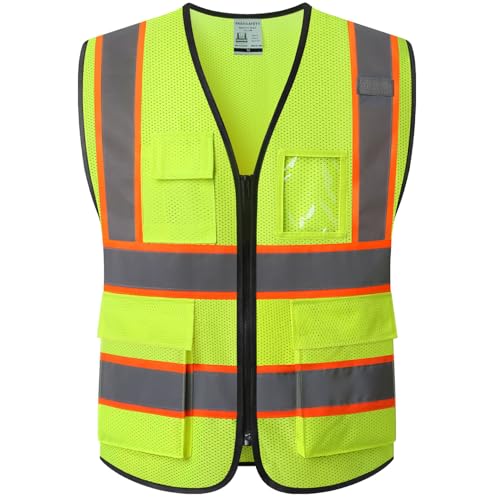
The Ekkosafety EK175 is a straightforward mesh vest with five pockets and a clear PVC window pocket on the chest for an ID badge, handy on a shared job site or at a lumberyard. The two large lower pockets can hold gloves, a dust mask, or a folded cut list. Its mesh fabric keeps the vest light, and the zipper front slips easily over a shop apron or a tool belt.
- Specs:
- Meets ANSI/ISEA standards, Class 2
- Polyester mesh fabric for airflow
- 5 pockets, including a clear ID window pocket
- 2-inch wide reflective strips
-
Front zipper closure
SRsafety 9-Pocket Safety Vest

If you like to keep everything in your vest, the SRsafety 9-pocket model gives you the most storage in this group. Chest pockets hold a phone and pens, lower pockets hold gloves and a tape measure, and inner pockets keep items out of the dust. The mesh fabric keeps the loaded vest from feeling too warm, and the 2-inch reflective material gives strong low-light visibility. Load the pockets evenly so the vest does not pull to one side when you bend.
- Specs:
- ANSI/ISEA 107 compliant, Class 2
- 100 percent polyester mesh fabric
- 9 pockets for tools, phone, and ID
- 2-inch wide reflective strips
-
Front zipper closure
Kishigo Premium Black Series S5002 Surveyors Vest

The Kishigo S5002 is the most work-focused vest in this guide. It pairs a solid polyester front with a breathable mesh back, so it resists wear where pockets and tools rub while still venting heat. Ten pockets include a two-tier chest pocket, lower front pockets, stake pockets, spray-paint can pockets, and a hidden back pouch. It meets ANSI/ISEA 107-2020 Type R Class 2, the roadway and work-zone designation many site managers ask for, and the lime and black two-tone design hides dirt on its lower panels.
- Specs:
- ANSI/ISEA 107-2020 Type R Class 2
- Solid polyester front, breathable mesh back
- 10 pockets, including stake and spray-can pockets
- Hidden back pouch with zipper access
-
Reinforced front zipper closure
NEIKO 53940A Safety Vest

The NEIKO 53940A is the simplest vest here, and that is its strength. It has no pockets, so there is nothing to snag on a clamp, a saw fence, or a stack of lumber. The mesh body is light, the zipper front is easy to use, and the reflective strips give you Class 2 visibility without extra weight. It suits woodworkers who already wear a tool belt or an apron, and it works well as a spare vest by the shop door for visitors and helpers.
- Specs:
- ANSI Class 2 compliant
- Polyester mesh fabric
- No pockets for a snag-free fit
- Reflective strips on front and back
-
Front zipper closure
Which Woodworking Safety Vest Should You Pick
For most woodworkers, the UNINOVA vest or the Ekkosafety EK175 will cover daily shop and yard work. Both are light, breathable, and easy to wear for a full shift, with enough pocket space for the small items you reach for most often.
Choose the SRsafety vest if you want maximum storage and move between tasks all day. Choose the Kishigo S5002 for layout, survey, or site work, where you need a tougher front, specialized pockets, and Type R Class 2 coverage. Choose the NEIKO 53940A if you already carry tools on a belt or apron and want the lightest visibility layer possible.
Whichever vest you pick, wear it every time you step into a shared work area or near moving vehicles. A vest only works when it is on your body, zipped up, and clean enough to stand out.
Frequently Asked Questions
Do I need a Class 2 vest for woodworking?
For most shop and site work, Class 2 is a sensible choice. It gives you more fluorescent area and more reflective tape than Class 1, which helps near delivery trucks, forklifts, and road traffic. If you only work alone in a closed shop, a basic high-visibility vest can help, but Class 2 covers more situations outside.
Are mesh safety vests cool enough for a warm shop?
Yes, mesh polyester vests are made for warm work. Air moves through the open weave, and the light fabric dries faster than solid cotton or heavy canvas. A mesh back with a solid front gives you airflow plus extra durability. In very hot weather, wear the vest over a light shirt and take short breaks in shade.
How should a safety vest fit over work clothes?
A vest should sit flat on your shoulders, cover your torso, and let you raise both arms without riding up. The zipper should close without pulling, and the hem should stay above your belt line when you bend. Try it over the thickest layer you plan to wear, and size up for a hoodie or heavy jacket.
How do I clean a safety vest without ruining the reflective tape?
Close the zipper, wash on a gentle cycle with mild soap, and hang it to dry. Avoid harsh bleach and high dryer heat, which can crack reflective tape and fade fluorescent color. Shake off sawdust first, and replace the vest when its color fades, tape peels, or seams split.
Conclusion
The best woodworking safety vests keep you visible, cool, and organized without getting in the way of your work. The five vests here all meet Class 2 standards, use breathable mesh, and close with a front zipper for a tidy fit around machinery. Pick the pocket layout and fabric that match your daily tasks, check the fit over your normal work layers, and keep the vest clean so its color and tape stay bright.
More from Amazon
Programs that pair well with the guide above. Offers and eligibility are set by Amazon and may change.
A free business account with business pricing and bulk-buying tools for work, shop or home office.
Create a business accountFree shipping on eligible items, Prime Video and more. Eligible new members can start with a free trial.
Start a Prime free trialAudiobooks and podcasts to listen to on the go. Eligible new members can start with a free trial.
Try Audible freeAd-free music streaming. Eligible new subscribers can start with a free trial.
Try Music Unlimited freeAs an Amazon Associate we earn from qualifying purchases.
Write Your Review
No reviews yet. Be the first to share your experience!