

Key takeaways
- Best for long-term everyday use: 18/10 stainless steel from Liberty Tabletop or Oneida, preferably in a simple forged or heavy-gauge pattern.
- Best budget choice: IKEA 18/0 or 18/10 sets, provided you accept lighter pieces and fewer serving utensils.
- Best for a refined table: Robert Welch or Mepra sets with balanced handles and a polished finish.
- Best for contemporary styling: Zwilling or Henckels sets, especially if you prefer clean lines and heavier handles.
- Best for mixed formal and casual use: Oneida or Lenox, which offer patterns ranging from plain modern designs to traditional detailing.
The best flatware sets for everyday dining are usually 18/10 stainless steel sets with substantial but comfortable handles, a durable satin or mirror finish, and at least 20 pieces for four diners; among widely available choices, Liberty Tabletop is a strong durability pick, Oneida offers broad style and price selection, and IKEA is the budget choice.
Our top picks
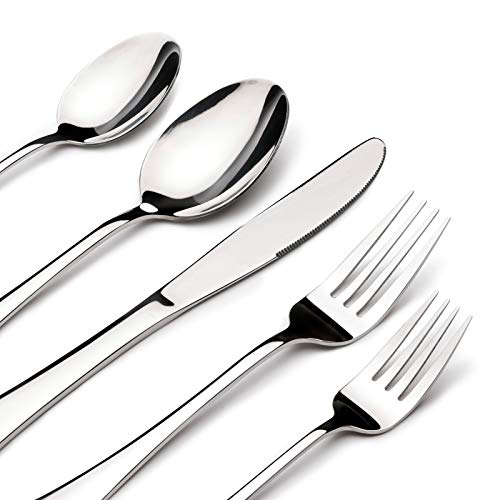
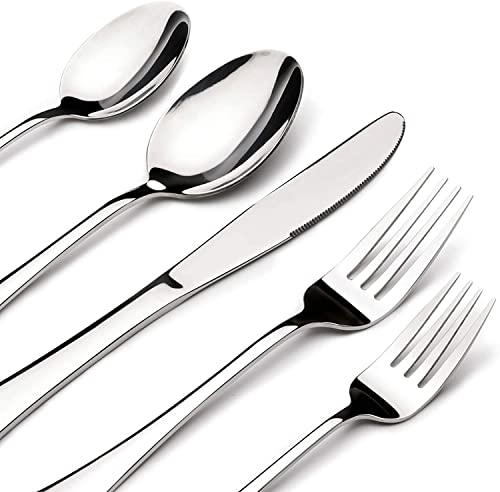


As an Amazon Associate we earn from qualifying purchases at no extra cost to you. Ratings are shown as listed on Amazon.
Best flatware sets by household
- Best for long-term everyday use: 18/10 stainless steel from Liberty Tabletop or Oneida, preferably in a simple forged or heavy-gauge pattern.
- Best budget choice: IKEA 18/0 or 18/10 sets, provided you accept lighter pieces and fewer serving utensils.
- Best for a refined table: Robert Welch or Mepra sets with balanced handles and a polished finish.
- Best for contemporary styling: Zwilling or Henckels sets, especially if you prefer clean lines and heavier handles.
- Best for mixed formal and casual use: Oneida or Lenox, which offer patterns ranging from plain modern designs to traditional detailing.
What matters most in a daily flatware set
Stainless steel grade
The grade is often stamped on the packaging or described as a ratio such as 18/10. The first number indicates the approximate chromium content; the second indicates nickel content. Chromium helps stainless steel resist corrosion, while nickel improves corrosion resistance, luster, and resistance to acidic foods.
| Grade or construction | Typical composition | What it means in daily use | Best fit |
|---|---|---|---|
| 18/10 | About 18% chromium, 10% nickel | Strong corrosion resistance, good shine, premium feel | Daily use and long ownership |
| 18/8 | About 18% chromium, 8% nickel | Very similar performance, sometimes slightly less bright | Most households |
| 18/0 | About 18% chromium, little or no nickel | Usually more affordable and magnetic, but more prone to dulling or spotting | Budget purchases or nickel avoidance |
| 13/0 knife steel | About 13% chromium, little or no nickel | Common in knives because it supports a harder cutting edge | Normal knife construction within a mixed-grade set |
For a set that will go through a dishwasher several times a week, 18/10 or 18/8 is the safest general choice. A set advertised only as “stainless steel” may still be perfectly usable, but the missing grade makes long-term corrosion resistance harder to judge.
Weight, thickness, and balance
Weight is not simply a quality score. Very light flatware is easy for children to handle and fills a drawer efficiently, while very heavy flatware can feel luxurious but awkward for some diners. As a practical guide, a table fork commonly weighs about 35–65 grams, a soup spoon about 40–70 grams, and a dinner knife about 65–110 grams. These are approximate ranges because handles, bolsters, and manufacturing methods vary.
Look for handles that do not twist when you press the tines against food. A good everyday fork should feel balanced near the point where the handle meets the bowl. Knives with hollow or weighted handles can feel substantial without making the entire set excessively heavy.
Finish durability
A mirror finish reflects light and tends to look formal, but it shows fingerprints and fine scratches more clearly. Satin and brushed finishes hide everyday marks better and are often easier to live with in a busy kitchen. Matte finishes can be attractive, though textured surfaces may hold water spots or food residue if pieces are crowded in the dishwasher.
Decorative gold, black, or colored coatings are less forgiving than bare stainless steel. They may eventually show wear at edges, on fork tines, or where spoons contact plates. For maximum service life, choose uncoated stainless steel, particularly if the set will be washed daily.
Comparison of practical set options
| Set type | Typical place setting | Approximate pieces | Typical market range | Main trade-off |
|---|---|---|---|---|
| Entry-level 18/0 set | Fork, salad fork, knife, spoon | 20 pieces for four | $20–$50 | Lower cost, lighter feel, potentially more spotting |
| Everyday 18/8 or 18/10 set | Five-piece setting, often including teaspoon | 20 pieces for four | $50–$150 | Better balance and corrosion resistance, higher initial cost |
| Heavy-gauge or forged set | Five-piece setting | 20–45 pieces | $100–$300 | Substantial feel, more drawer space and weight |
| Designer or specialty-finish set | Four- or five-piece setting | 16–20 pieces for four | $150–$400 or more | Distinctive appearance, coatings may wear sooner |
These ranges describe broad market pricing rather than a guarantee for a particular pattern. Promotions, country of manufacture, and whether serving utensils are included can change the price substantially.
Place settings: how many pieces do you need?
A four-piece place setting usually contains a dinner fork, salad fork, dinner knife, and tablespoon. A five-piece setting adds a teaspoon and is more useful for coffee, cereal, desserts, and everyday cooking. A 20-piece set therefore normally serves four people with five pieces each.
For a household of four, buying only four settings can be inconvenient because one dirty fork can force an early dishwasher cycle. A useful rule is to buy one-and-a-half to two settings per regular diner:
- One or two diners: 8–12 place settings if you want a comfortable buffer.
- Four diners: 8–12 place settings, or 40–60 individual pieces in a five-piece pattern.
- Six diners: 12–14 settings if you entertain occasionally.
- Frequent entertaining: Buy extra teaspoons and tablespoons first; they disappear into cooking, serving, and lunch containers more quickly than knives.
Before buying a large set, measure the flatware tray. A tablespoon is often about 18–21 centimeters long, while a dinner knife may be 22–24 centimeters. Oversized handles can prevent the tray from closing, particularly in narrow dishwasher baskets.
Decision matrix for choosing the best flatware sets
| Your situation | Recommended specification | Why | What to avoid |
|---|---|---|---|
| Lowest practical budget | 18/0, 20-piece set, plain finish | Provides complete coverage at the lowest entry price | Small sets with no teaspoon |
| Daily dishwasher use | 18/8 or 18/10, satin or plain mirror finish | Improves corrosion resistance and hides wear | Unspecified steel grade and fragile coatings |
| Small kitchen or shallow drawer | Light-to-medium weight, handles under 21 cm | Reduces crowding and makes storage easier | Oversized forged handles |
| Frequent entertaining | 40–60 pieces, five-piece settings, extra teaspoons | Reduces shortages between dishwasher cycles | Four-piece sets sold without replacement availability |
| Preference for a premium feel | 18/10, heavy gauge or forged construction | Usually offers better balance and rigidity | Choosing by weight alone without checking handle comfort |
Ownership realities: what wears first
The first visible wear is usually fine scratching on the eating surfaces, followed by water spots and discoloration caused by hard water, detergent residue, or contact with salty food. Knives may develop dull edges long before forks or spoons look worn. Serrated table knives are not intended to replace a kitchen knife, and forcing them through hard foods can damage the teeth.
Dishwasher-safe does not mean damage-proof. To extend the finish, do not leave flatware soaking in salty or acidic water, do not mix stainless steel with silver-plated pieces in the same wash, and remove pieces from the dishwasher once the cycle is complete if the interior remains humid. Separating knives from forks can also reduce rubbing during the wash.
For cloudy marks, wash with a mild detergent and dry thoroughly. Avoid chlorine bleach, abrasive scouring powder, and steel wool. If a manufacturer permits it, a small amount of diluted white vinegar can help with mineral film, but it should be rinsed away rather than left in prolonged contact with the steel.
How to calculate the real value
Suppose a 20-piece set costs $80 and lasts eight years. If four people use the set once per day, that is approximately 11,680 place-setting uses over eight years: four diners multiplied by 365 days multiplied by eight years. The initial cost works out to about 0.7 cents per place-setting use, before replacement or care costs.
This calculation explains why a better 18/10 set can be worthwhile even when it costs twice as much as a budget set. The difference matters less per meal than it does in comfort, matching replacement pieces, corrosion resistance, and the likelihood that you will want to replace the set early.
Final buying recommendation
Choose an uncoated 18/10 or 18/8 set with five-piece settings if you want the best balance for everyday dining. Liberty Tabletop and Oneida are sensible places to compare durable, conventional patterns; Robert Welch, Mepra, Zwilling, and Henckels suit shoppers who prioritize design and a heavier feel; IKEA is a reasonable budget route when low initial cost matters most. Whichever brand you choose, confirm the steel grade, individual piece dimensions, dishwasher guidance, replacement availability, and the number of teaspoons before ordering.


Write Your Review
No reviews yet. Be the first to share your experience!