

The best table saw for most beginners is a 10-inch jobsite saw with a rack-and-pinion fence, a riving knife and a folding or rolling stand, and the DeWalt DWE7491RS is the safest all-round starting point. If budget is tight, the SKIL TS6307 does the same job with fewer refinements, and if you want built-in injury protection, the SawStop Jobsite Saw Pro is the one to stretch for. Fence accuracy, blade guarding and storage footprint matter far more than raw motor power at this level.
Our top picks
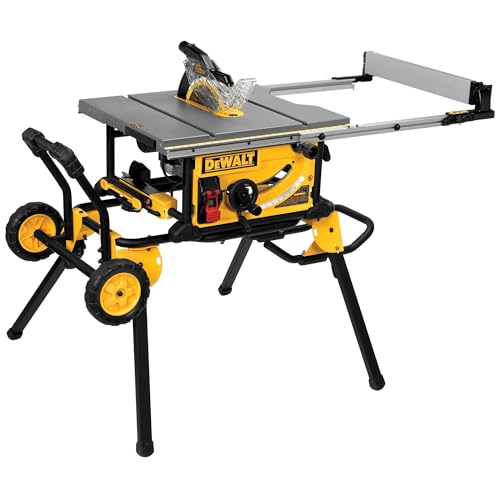 DEWALT Table Saw 10 Inch with Foldable
- Rack & Pinion Telescoping Fence System Make fence…
- Patented material support, can be used for narrow…
- 32-1/2" rip capacity easily cuts a variety of…
 DEWALT 15 Amp 8-1/4 in. Compact Portable
- Site-Pro Modular Guarding System allows for tool-free adjustments…
- 24.5 in
- Rack & pinion telescoping fence rails make fence…
| Product | Key specs | |
|---|---|---|
| DEWALT Table Saw 10 Inch with Foldable | Rack & Pinion Telescoping Fence System Make fence… Patented material support, can be used for narrow… 32-1/2" rip capacity easily cuts a variety of… | Check price |
| DEWALT 15 Amp 8-1/4 in. Compact Portable | Site-Pro Modular Guarding System allows for tool-free adjustments… 24.5 in Rack & pinion telescoping fence rails make fence… | Check price |
 DEWALT Portable Table Saw with Stand | Check price | |
 DEWALT Table Saw | Rack & pinion telescoping fence system make fence… 32-1/2 In Two position flip-over rip fence allows for narrow… | Check price |
As an Amazon Associate we earn from qualifying purchases at no extra cost to you.
Quick Comparison of the Best Beginner Table Saws
| Pick | Best for | Blade / Rip capacity | Motor | Price tier |
|---|---|---|---|---|
| DeWalt DWE7491RS | Best overall | 10 in / 32.5 in right | 15 amp, 4,800 RPM | Mid to upper-mid |
| SKIL TS6307-00 | Best value | 10 in / about 25 in | 15 amp, 4,800 RPM | Budget to mid |
| Metabo HPT C10RJS | Best rip capacity | 10 in / 35 in | 15 amp, 4,800 RPM | Mid |
| Bosch 4100XC-10 | Best stand and guarding | 10 in / 25 in | 15 amp, 5,000 RPM | Upper-mid |
| DeWalt DWE7485 | Best compact and light | 8-1/4 in / 24.5 in | 15 amp, 5,800 RPM | Budget to mid |
| SawStop Jobsite Saw Pro | Best safety | 10 in / about 25 in | 15 amp, 4,000 RPM | Premium |
Specifications above follow the manufacturers’ published spec sheets; confirm the exact model number before buying because retailers sell several close variants.
Best Overall: DeWalt DWE7491RS
This is the saw most beginners should shortlist first. It pairs a 10-inch blade and a 15-amp motor with a rack-and-pinion fence that stays parallel as you wind it across, and the 32.5-inch right-side rip capacity handles full sheets of plywood after a rough breakdown cut. The rolling stand folds in seconds, so it stores against a garage wall.
The trade-off is weight and a stand that is a little wobbly on uneven concrete. It also lacks flesh-sensing technology, so you must build good habits with push sticks and blade guards.
Best Value: SKIL TS6307-00
The SKIL gives you the core beginner package: a 10-inch blade, a self-aligning fence, a quick-mount folding stand and a riving knife that moves with the blade. It is a sensible choice if you want to learn before spending serious money.
The compromise is fence feel. It locks well but does not glide as smoothly as the DeWalt rack, so check squareness to the blade with a combination square when you first set it up.
Best Rip Capacity: Metabo HPT C10RJS
If you plan to rip wide panels for cabinet sides or shelving, the Metabo HPT is the one. The 35-inch rip capacity is the widest in this group, and the fold-and-roll stand makes it easy to move between garage and driveway. A soft-start motor and electric brake add convenience.
It is a bigger saw than the others when assembled, so measure your shop before you commit.
Best Stand and Guarding: Bosch 4100XC-10
Bosch’s Gravity-Rise wheeled stand is among the easiest to set up and collapse of any jobsite saw; one lever raises the saw. The Smart Guard system keeps a clear overhead guard with anti-kickback pawls and a splitter, which is exactly what a new user should leave installed.
The 25-inch rip capacity is adequate rather than generous, and the saw sits in the higher part of the mid-price range.
Best Compact Option: DeWalt DWE7485
For a tight garage or apartment storage unit, the compact DWE7485 uses an 8-1/4-inch blade and weighs far less than its 10-inch siblings. It carries easily and still delivers a rack-and-pinion fence with 24.5 inches of rip capacity.
The smaller blade limits cut depth, so thick stock such as 2x material cannot be cut through in one pass. Most beginners building shelves, boxes and small furniture will not miss it.
Best Safety: SawStop Jobsite Saw Pro
SawStop’s flesh-detection system stops the blade in milliseconds when it senses skin contact, according to the manufacturer. For a first saw, this is the strongest argument for paying more, especially in a household with kids nearby or if you have any hesitation about the machine.
Trade-offs are price, weight and the proprietary brake cartridge that must be replaced after a trigger. It also does not remove the need for sound technique; it reduces the consequence of a mistake, not the cause.
How to Choose Your First Table Saw
Fence quality beats motor power
Nearly every jobsite saw uses a 15-amp motor, so differences are small. The fence decides cut accuracy. A rack-and-pinion fence that locks square at both ends saves hours of frustration and wasted wood.
Look for a riving knife, not just a splitter
A riving knife rises and falls with the blade, staying a fixed distance behind the teeth. That tight gap is what prevents kerf closing and pinching, the main cause of kickback. All saws in the table above include one.
Match rip capacity to your projects
| Typical project | Minimum rip capacity | Good fit |
|---|---|---|
| Picture frames, small boxes | 12 in | Any saw above |
| Bookshelves, workbench parts | 24 in | DWE7485, Bosch, SKIL |
| Cabinet sides, wide shelving | 30 in or more | DWE7491RS, Metabo HPT |
Plan your storage and dust control
Measure the folded footprint and check that the stand fits through your door. Most saws offer a 2.5-inch dust port that fits a shop vacuum, but a dust collector or vacuum with a cyclone separator makes a big difference to air quality.
Cost of Ownership: A Worked Example
A beginner saw plus essentials adds up quickly. Budget for the saw, a quality thin-kerf combination blade, push sticks, a crosscut sled or miter gauge upgrade, hearing and eye protection, and dust collection. A realistic approach is to spend roughly 75 percent of your total budget on the saw and the remaining quarter on blade and safety gear, because a good blade improves cut quality more than a small upgrade in saw price.
- Pick the saw based on fence and rip capacity.
- Replace the stock blade with a 40 to 50 tooth combination blade for cleaner edges.
- Add push sticks and a push block before the first cut.
- Set up dust collection so the port is never left open.
Common Beginner Mistakes
- Removing the blade guard or riving knife to “see better”.
- Standing directly behind the blade instead of slightly to the side.
- Ripping wood with one edge not jointed straight against the fence.
- Using the fence and miter gauge together on the same cut, which traps the offcut.
- Skipping a blade height check; the top of the gullet should clear the wood by about a quarter inch.
Frequently Asked Questions
Is a jobsite table saw good enough for a beginner?
Yes. Modern 10-inch jobsite saws cut accurately enough for furniture, cabinets and home improvement projects. A cabinet saw is quieter and smoother, but it costs several times more and needs permanent floor space.
Should I buy a SawStop as my first table saw?
If the budget allows, it is a reasonable choice because the blade-stopping technology reduces injury severity. If it does not, a well-built conventional saw used with proper technique is still a safe tool.
What size blade do I need?
A 10-inch blade is the standard and gives about 3-1/8 inches of cut depth at 90 degrees. The smaller 8-1/4-inch compact saws are fine for projects with stock up to roughly 2-1/2 inches thick.
Do I need a stand?
Most jobsite saws come with a folding stand, and it is worth using. A stable base prevents tip-over during heavy cuts and keeps the table at a safe working height.
What accessories should I buy first?
Buy a good combination blade, push sticks, a push block and a featherboard. A crosscut sled and a zero-clearance insert come next once you are comfortable with straight rips.



Write Your Review
No reviews yet. Be the first to share your experience!