

Key takeaways
- Best for general woodworking: a 10-inch compound miter saw, such as the DEWALT DWS779 or Makita LS1019L.
- Best for wide wood trim and framing: a 12-inch sliding compound miter saw, such as the Bosch GCM12SD.
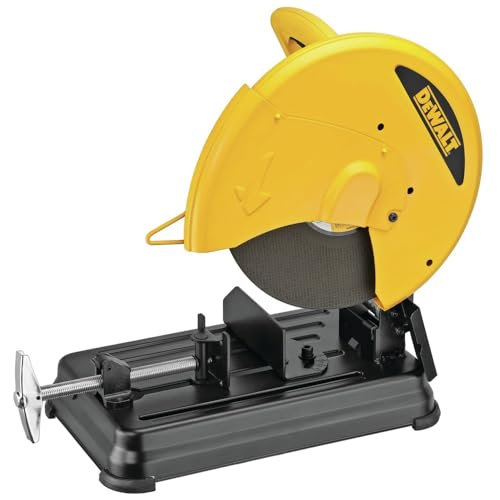
- Best for basic steel cutting: the DEWALT D28730 or Makita LW1401 14-inch abrasive chop saw.
- Best for frequent metal fabrication: a 14-inch metal-cutting saw with a carbide-tipped cold-cut blade, such as the Milwaukee 6177-20 used with a compatible blade.
- Best for limited workspace: a 10-inch non-sliding miter saw for wood, or a compact 12-inch metal chop saw for occasional steel work.
The best chop saws depend on the material: choose a sliding or compound miter saw for clean wood miters, and a 14-inch abrasive or cold-cut metal chop saw when cutting steel, aluminum, or other stock. The most important buying criteria are cutting capacity, motor power, blade size, fence accuracy, and how well the saw controls heat, sparks, and debris.
Our top picks



As an Amazon Associate we earn from qualifying purchases at no extra cost to you. Ratings are shown as listed on Amazon.
Best chop saws by cutting job
- Best for general woodworking: a 10-inch compound miter saw, such as the DEWALT DWS779 or Makita LS1019L.
- Best for wide wood trim and framing: a 12-inch sliding compound miter saw, such as the Bosch GCM12SD.
- Best for basic steel cutting: the DEWALT D28730 or Makita LW1401 14-inch abrasive chop saw.
- Best for frequent metal fabrication: a 14-inch metal-cutting saw with a carbide-tipped cold-cut blade, such as the Milwaukee 6177-20 used with a compatible blade.
- Best for limited workspace: a 10-inch non-sliding miter saw for wood, or a compact 12-inch metal chop saw for occasional steel work.
Although “chop saw” is often used for any saw that pivots down through a workpiece, woodworking and metalworking models are not interchangeable. Wood miter saws use fine-toothed blades and precise angle detents. Metal chop saws use abrasive wheels or specialized carbide blades, have different guards, and are designed around sparks, heat, and clamping.
Wood versus metal: choose the right saw type
For wood miters
A compound miter saw is the better choice for baseboard, casing, framing lumber, decking, and trim. A 10-inch model is usually sufficient for household work and accepts widely available blades. A 12-inch saw offers greater vertical and crosscut capacity, but it is heavier and generally costs more.
Sliding rails increase the width of cut. That is useful for wide baseboards, shelving, and 2x material, but rails also introduce another source of play. For the cleanest repeatable miters, a non-sliding saw with a rigid pivot can outperform a poorly adjusted slider.
For steel and other metals
An abrasive chop saw is economical for rebar, angle iron, square tube, and heavy steel bar. Its wheels are inexpensive, but cuts are slower, hotter, noisier, and less precise than cuts from a carbide cold-cut blade. Abrasive wheels also remove more material and leave a rougher edge that may require grinding.
Cold-cut metal saws produce a cleaner, cooler cut and usually preserve the workpiece better, but the blades cost more and must be matched to the metal. Always use the manufacturer’s guard, vise, wheel or blade specification, and speed rating.
Comparison of capable 2026 choices
| Model or type | Primary material | Blade or wheel | Motor power | Typical capacity or useful feature | Best fit |
|---|---|---|---|---|---|
| DEWALT DWS779 | Wood | 12-inch, 60-tooth wood blade supplied | 15 amp corded motor | About 2 x 14 inches at 90 degrees; dual bevel and sliding rails | Wide trim, framing, and shop work |
| Bosch GCM12SD | Wood | 12-inch wood blade | 15 amp corded motor | About 2 x 14 inches at 90 degrees; axial-glide mechanism and dual bevel | Wide cuts where front-to-back space is limited |
| Makita LS1019L | Wood | 10-inch wood blade | 15 amp corded motor | About 3-5/8 inches vertical capacity; compact sliding design | Accurate trim work and smaller shops |
| DEWALT D28730 | Steel and metal stock | 14-inch abrasive wheel | 15 amp corded motor | Up to roughly 5 inches of round stock at 90 degrees; quick-release vise | Budget-conscious steel cutting |
| Makita LW1401 | Steel and metal stock | 14-inch abrasive wheel | 15 amp corded motor | Approximately 5-inch round capacity at 90 degrees; adjustable fence and vise | General fabrication and jobsite use |
| Milwaukee 6177-20 | Steel and metal stock | 14-inch abrasive wheel | 15 amp corded motor | Approximately 5-inch round capacity at 90 degrees; adjustable vise and fence | Frequent abrasive metal cutting |
Published capacity varies with the blade, material profile, bevel angle, and whether the workpiece is round, square, or rectangular. Treat these figures as a comparison starting point rather than a promise that every shape will fit. A 5-inch round capacity does not mean the saw can cut a 5-inch-wide piece of flat bar in every orientation.
How much motor power do you need?
For corded woodworking models, a 15-amp motor is the normal choice for demanding crosscuts. Power alone does not determine cut quality: a sharp, appropriate blade, a stable stand, and a properly adjusted fence matter just as much. A high-powered saw with a dull blade can burn wood and wander at the cut.
Metal saws also commonly use 15-amp motors, but their performance depends heavily on wheel diameter, abrasive quality, vise rigidity, and the thickness of the stock. When cutting thick-wall tubing repeatedly, a cold-cut saw can be faster overall because it creates less heat and usually needs less cleanup.
Fence accuracy and miter quality
A fence should be straight, firmly attached, and easy to check against the blade. Look for a fence that supports both sides of a narrow workpiece, has a clearly marked centerline, and can be adjusted or shimmed if necessary. Cast or machined fence surfaces generally resist distortion better than thin stamped parts.
Do not assume that factory detents guarantee perfect miters. Before production cuts, make a test cut in scrap, close the joint, and check for a gap. If the two pieces form a gap on the outside or inside of the joint, correct the angle using the saw’s calibration procedure rather than forcing the workpiece against the fence.
For metal, fence accuracy is only half of the equation. The vise must hold stock squarely without allowing it to twist as the wheel exits. Long pieces should be supported at the same height as the saw’s base; otherwise, the material can rotate or lift, producing an angled cut.
Decision matrix: which choice suits your situation?
| Your situation | Recommended choice | Why |
|---|---|---|
| Occasional picture frames, casing, or small trim | 10-inch non-sliding miter saw | Lower cost, simpler setup, and adequate capacity for most trim |
| Regular 2x lumber, deck boards, or wide baseboard | 10-inch or 12-inch sliding miter saw | Sliding travel handles wider stock in fewer passes |
| Very limited shop depth | Compact slider or non-sliding saw | Some front-slide designs need less clearance behind the saw |
| Occasional angle iron and rebar | 14-inch abrasive chop saw | Low entry cost and inexpensive replacement wheels |
| Frequent clean cuts in tubing or sheet-related profiles | Cold-cut metal saw | Less heat, cleaner edges, and better repeatability |
| Mixed wood and metal work | Two purpose-built saws | Changing blades does not make a wood saw suitable for sparks and metal debris |
Setup steps for cleaner, safer cuts
- Verify the blade or wheel. Match tooth count and rake to the wood, or match wheel type and speed rating to the metal. Never install a wheel whose rated speed is below the saw’s no-load speed.
- Square the fence and table. Use a reliable square against the fence and blade, with the teeth positioned so the square does not touch a tooth set.
- Support the material. Keep long stock level with the saw table. Unsupported material can pinch the blade or change the angle during the cut.
- Clamp short or unstable pieces. A clamp improves repeatability and keeps hands away from the blade or wheel path. Metal must be clamped firmly in the built-in vise.
- Let the blade do the work. Lower the head smoothly without forcing it. For metal, excessive pressure increases heat, burrs, and wheel wear.
- Inspect the first cut. Check the angle, burr, tear-out, and fit before cutting the remaining pieces.
Ownership costs and common wear points
Abrasive wheels are the main consumable on a metal chop saw. A general-purpose 14-inch wheel often costs roughly $10 to $25, while specialized carbide metal blades can range from about $80 to more than $200. Wood blades commonly cost about $25 to $100 depending on diameter, tooth count, coating, and carbide quality.
For example, if a $15 abrasive wheel lasts 150 moderate cuts, its wheel cost is about 10 cents per cut. If a $120 cold-cut blade lasts 1,000 comparable cuts, its blade cost is about 12 cents per cut, before considering labor, cleanup, and the value of a smoother edge. The cheaper consumable is not automatically the cheaper process.
Dust and resin can clog wood-saw pivots, rails, and lower guards. Vacuum the saw regularly and wipe resin from the table and fence without flooding the mechanism. Metal sparks can damage nearby plastic, wiring, and dust-collection equipment, so clean metal-cutting areas separately. Check the blade bolt, fence fasteners, pivot play, guard movement, and power cord periodically.
Final buying advice
For most woodworking buyers, a well-calibrated 10-inch miter saw is the best balance of capacity, blade availability, and manageable size. Choose a 12-inch slider when wide stock is a regular requirement. For metal, select a 14-inch abrasive model for economical rough cutting, or step up to a cold-cut machine when clean edges, lower heat, and repeatable production justify the higher blade cost. The best chop saw is the one whose capacity matches your stock, whose fence and vise hold it securely, and whose consumables fit the amount of work you actually do.



Write Your Review
No reviews yet. Be the first to share your experience!