

Key takeaways
- Best all-around choice: A 10-inch wet brick saw with a 1.5 to 2.5 hp motor and at least 2-1/2 inches of cutting depth.
- Best for frequent professional work: A heavy-duty 10-inch wet saw such as the Husqvarna TS 60 or MK-101.
- Best for occasional DIY projects: A compact 10-inch wet saw, including the DEWALT D24000, provided its cutting capacity matches your paver thickness.
- Best for thick block and deep masonry: A 12- or 14-inch masonry saw with a larger table and roughly 4 to 5 inches of cutting depth.
- Best where water is impractical: A dry-cut masonry saw with dust extraction, but only when its dust-control system and your work area are suitable.
The best brick saws for most masonry and paver work are 10-inch wet saws: they provide enough blade depth for common pavers, control dust, and offer a better balance of portability and cutting capacity than larger 12- or 14-inch machines.
Our top picks


As an Amazon Associate we earn from qualifying purchases at no extra cost to you. Ratings are shown as listed on Amazon.
Quick picks by situation
- Best all-around choice: A 10-inch wet brick saw with a 1.5 to 2.5 hp motor and at least 2-1/2 inches of cutting depth.
- Best for frequent professional work: A heavy-duty 10-inch wet saw such as the Husqvarna TS 60 or MK-101.
- Best for occasional DIY projects: A compact 10-inch wet saw, including the DEWALT D24000, provided its cutting capacity matches your paver thickness.
- Best for thick block and deep masonry: A 12- or 14-inch masonry saw with a larger table and roughly 4 to 5 inches of cutting depth.
- Best where water is impractical: A dry-cut masonry saw with dust extraction, but only when its dust-control system and your work area are suitable.
What matters when choosing a brick saw
Blade diameter and actual cutting depth
Blade diameter is only a starting point. A 10-inch blade does not normally cut 5 inches deep because the arbor, blade guard, and table geometry reduce the usable depth. Many 10-inch wet saws cut approximately 2-1/2 to 3-1/2 inches in one pass, depending on the model and whether the blade is set for a straight or bevel cut.
For standard concrete pavers, bricks, thin wall stone, and masonry tile, a 10-inch saw is usually sufficient. Choose a 12-inch or 14-inch model if you regularly cut retaining-wall blocks, thick slabs, large capstones, or material over about 3 inches thick. A larger blade also tends to require a heavier frame and more setup space.
Motor power
Motor power affects how quickly the saw maintains blade speed under load. A 1.5 hp motor is adequate for occasional brick and paver cutting when the blade is sharp and the operator feeds steadily. A 2 to 2.5 hp motor is preferable for long batches, dense concrete pavers, and repeated full-depth cuts.
Do not use horsepower as the only measure. A well-designed saw with a rigid arbor, reliable water delivery, and a stable sliding table can outperform a nominally more powerful machine with excessive vibration. For continuous work, look for thermal overload protection, a sealed or protected motor assembly, and a replaceable water pump.
Wet versus dry cutting
Wet cutting is the normal choice for brick and concrete pavers. Water cools the diamond blade, reduces airborne silica dust, and helps the blade last longer. The disadvantages are setup time, slurry cleanup, electrical safety requirements, and the need to manage runoff.
Dry cutting is faster to deploy and useful for a few cuts at a jobsite where water is unavailable. It produces substantially more dust, heats the blade more quickly, and generally requires a compatible shroud connected to a properly rated dust extractor. A dry-cut saw is not automatically the cleaner or safer option simply because it avoids water.
| Saw category | Typical blade | Approx. one-pass depth | Typical motor | Best use |
|---|---|---|---|---|
| Compact wet paver saw | 7 to 10 in. | 1-3/4 to 2-3/4 in. | 1 to 1.5 hp | Occasional bricks, tiles, and thin pavers |
| Professional 10-inch wet saw | 10 in. | 2-1/2 to 3-1/2 in. | 1.5 to 2.5 hp | Regular paver and masonry work |
| Large masonry saw | 12 to 14 in. | 4 to 5 in. | 2 to 3 hp | Thick block, stone, and large slabs |
| Dry-cut masonry saw | 12 to 14 in. | 4 to 5 in. | 2 to 3 hp | Deep cuts where water cannot be managed |
Head-to-head: the leading saw types
MK-101-style 10-inch wet saws
The MK-101 is a familiar benchmark for professional masonry cutting. Its 10-inch blade format is large enough for most bricks and pavers, while the relatively compact frame is easier to transport than a large block saw. Models in this class commonly provide about 1-3/4 inches of rip-cut depth and substantially more capacity when the workpiece is repositioned for a second cut.
This type is a strong choice for contractors who value a proven repair ecosystem, a rigid table, and repeatable cuts. It is less attractive for a homeowner needing only a handful of cuts because purchase cost, storage, and cleanup exceed the requirements of a small project.
Husqvarna TS 60
The Husqvarna TS 60 is a premium 10-inch wet saw aimed at construction and masonry professionals. Its appeal is the combination of a robust sliding table, substantial cutting capacity, water-management features, and a motor suited to regular jobsite use. It is a good fit when a crew needs accurate repeated cuts rather than the lowest initial price.
Its larger footprint and higher market price make it harder to justify for occasional patio work. Check the current configuration before buying, since included stands, pumps, and accessories can differ by package and region.
DEWALT D24000-class wet saws
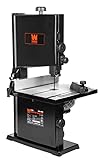
The DEWALT D24000 is a portable 10-inch wet tile and masonry saw with a useful cutting table and a design that suits remodeling and moderate paver work. It is easier to move and store than many contractor-grade masonry saws, making it attractive to homeowners and tradespeople who work across several locations.
It is best matched with bricks, concrete pavers, and other materials within its rated depth. If your project involves thick retaining-wall block or prolonged daily production, a heavier masonry saw will generally offer more rigidity and endurance.
Large 12- and 14-inch masonry saws
Large masonry saws win when depth is the deciding factor. They can make fewer repositioning cuts in thick block and often have long tables for large workpieces. The trade-offs are weight, transport difficulty, higher water consumption, and more demanding storage.
Buy this category only when you can name the material that requires the extra capacity. A large blade does not improve a job that consists mainly of ordinary 2-1/4-inch pavers; it adds bulk without necessarily improving accuracy.
Decision matrix: match the saw to the job
| Your situation | Recommended configuration | Why |
|---|---|---|
| One patio or walkway, fewer than 50 cuts | Compact 10-inch wet saw | Enough depth with lower storage and rental-like ownership burden |
| Several paver projects each season | 10-inch wet saw, 1.5 to 2.5 hp | Good balance of speed, accuracy, and consumable cost |
| Daily contractor use | Heavy-duty 10-inch wet saw or large masonry saw | More rigid components and better tolerance for repeated cutting |
| Thick block over 3 inches | 12- or 14-inch saw | Reduces two-pass cutting and workpiece repositioning |
| Apartment, finished garage, or indoor-adjacent work | Wet saw only with controlled runoff, or professionally managed dry cutting | Dust and slurry are the main constraints, not blade size |
| Very limited experience | Wet saw with a stable sliding table and clear fence | Table support makes straight, controlled feeding easier |
A practical capacity calculation
Suppose a paver is 2-3/8 inches thick and your saw has a 2-3/4-inch maximum straight-cut depth. That leaves only 3/8 inch of nominal clearance. The saw may technically cut the paver, but worn blade segments, a slight table misalignment, or a bevel setting can eliminate that margin. For reliable production, choose at least 1/4 to 1/2 inch more capacity than the material thickness, rather than buying exactly to the published limit.
For a 3-1/2-inch retaining-wall block, a 10-inch saw rated at 2-3/4 inches will require a two-pass cut: cut from one side, turn the block, align the second cut with the first, and finish. A 12- or 14-inch saw capable of cutting about 4 inches in one pass may save time and reduce alignment errors, even if its purchase price is higher.
Blade and ownership costs
The diamond blade is the consumable that most directly affects results. Use a continuous-rim or segmented diamond blade specifically rated for the material and cutting method. A blade intended for tile may cut soft brick acceptably but can wear quickly in abrasive concrete pavers. Conversely, an aggressive masonry blade can leave a rougher edge than necessary.
Typical market pricing in 2026 ranges from roughly $250 to $700 for compact or midrange wet saws, $700 to $1,500 for heavier professional 10-inch models, and $1,000 to more than $2,000 for large masonry saws, depending on configuration. Diamond blades commonly range from about $40 to $200. A lower-priced saw can become expensive if it needs frequent blade changes, replacement pumps, or table repairs.
Before buying, price the pump, blade, stand, water tray, and transport case separately. A saw that includes a good pump and stable stand may be better value than a cheaper bare machine.
Setup and maintenance that prevent common failures
- Inspect the blade and arbor. Confirm the blade is rated for the material, sits flat, and is tightened correctly. A bent blade or dirty flange creates wobble and uneven cuts.
- Level the table. Check the fence against the blade with the power disconnected. Even a small error becomes visible as the cut progresses through a long paver.
- Use clean water. Sediment can clog the pump and restrict the spray nozzles. Place the pump in a clean container or use the saw’s filtered tray system.
- Feed at a steady rate. Forcing the paver can stall the motor, glaze the diamond segments, and overheat the blade. Let the diamonds remove material rather than pushing harder.
- Clean slurry immediately. Drain and rinse the tray after each session. Dried cement slurry can lock pumps, seize sliding surfaces, and make the table inaccurate.
- Inspect wear points. Check guide rollers, table bearings, water lines, the power cord, and the blade guard. Replace damaged electrical or water components before the next job.
Final buying recommendation
Choose a 10-inch wet saw if your work is mainly brick, standard concrete pavers, and masonry pieces up to roughly 2-1/2 or 3 inches thick. Step up to a 12- or 14-inch masonry saw when thick block, deep one-pass cuts, or daily production justifies the added weight and cost. Select dry cutting only when water management is the limiting problem and you can provide effective dust extraction. For most buyers, cutting capacity, table stability, water control, and replacement-part availability matter more than the largest advertised horsepower figure.



Write Your Review
No reviews yet. Be the first to share your experience!