

Key takeaways
- Best overall for frequent home-shop use: DeWalt DW788. Its 20-inch throat, variable-speed operation, tool-free blade clamps, and comparatively smooth direct-drive design make it a balanced choice for fretwork, intarsia, signs, and small furniture details.
- Best for large patterns and serious production: Excalibur EX-21. The 21-inch throat and tilting-head design make it easier to position wide work without constantly reorienting the material. It is expensive and takes up substantial bench space, but its layout favors demanding users.
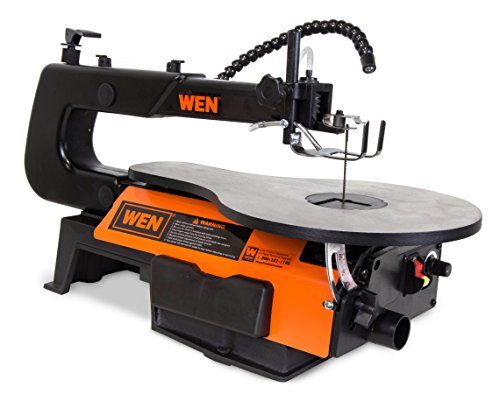
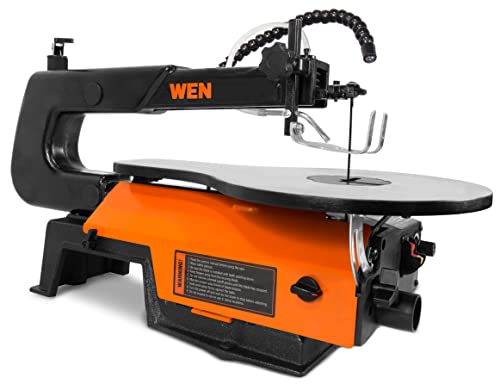
- Best budget option: WEN 3921. Its 16-inch throat, variable speed, work light, and dual blade orientation cover many beginner projects. The lower price is attractive, although the fit and finish, vibration behavior, and blade-clamp feel are not in the same class as premium machines.
- Best compact occasional-use choice: a 16-inch variable-speed scroll saw such as the Ryobi SS13. This type suits a hobbyist who makes ornaments and occasional small patterns rather than running the saw for hours every week.
- Best upgrade for precision-focused users: Jet JWSS-22B. Its 22-inch throat and substantial cast-iron table suit large workpieces and frequent use. It makes the most sense when stability and capacity justify a higher purchase price.
The best scroll saws for detailed woodworking projects are the DeWalt DW788 for quiet, dependable all-around work, the Excalibur EX-21 for demanding large-pattern cutting, and the WEN 3921 for beginners on a limited budget.
A scroll saw is most useful when accuracy, tight inside corners, and thin stock matter more than speed. The right choice depends less on maximum motor power than on throat depth, blade-changing ergonomics, vibration control, and how easily you can keep the cut line visible.
Our top picks


As an Amazon Associate we earn from qualifying purchases at no extra cost to you. Ratings are shown as listed on Amazon.
Best scroll saws by woodworking situation
- Best overall for frequent home-shop use: DeWalt DW788. Its 20-inch throat, variable-speed operation, tool-free blade clamps, and comparatively smooth direct-drive design make it a balanced choice for fretwork, intarsia, signs, and small furniture details.
- Best for large patterns and serious production: Excalibur EX-21. The 21-inch throat and tilting-head design make it easier to position wide work without constantly reorienting the material. It is expensive and takes up substantial bench space, but its layout favors demanding users.
- Best budget option: WEN 3921. Its 16-inch throat, variable speed, work light, and dual blade orientation cover many beginner projects. The lower price is attractive, although the fit and finish, vibration behavior, and blade-clamp feel are not in the same class as premium machines.
- Best compact occasional-use choice: a 16-inch variable-speed scroll saw such as the Ryobi SS13. This type suits a hobbyist who makes ornaments and occasional small patterns rather than running the saw for hours every week.
- Best upgrade for precision-focused users: Jet JWSS-22B. Its 22-inch throat and substantial cast-iron table suit large workpieces and frequent use. It makes the most sense when stability and capacity justify a higher purchase price.
Comparison of leading scroll saws
The figures below are useful for separating genuinely different machine classes. Dimensions and included accessories can vary by revision or package, so confirm the current specification before ordering.
| Model | Throat depth | Speed range | Table tilt | Blade system | Approx. weight | Typical market range |
|---|---|---|---|---|---|---|
| WEN 3921 | 16 in. | 400–1,600 SPM | Up to 45° | Pinned and plain-end | About 25 lb | $150–$220 |
| DeWalt DW788 | 20 in. | 400–1,750 SPM | Up to 45° | Plain-end | About 56 lb | $500–$750 |
| Excalibur EX-21 | 21 in. | 400–1,550 SPM | Tilting head, up to 30° | Plain-end | About 70 lb | $900–$1,200 |
| Jet JWSS-22B | 22 in. | 400–1,550 SPM | Up to 45° | Plain-end | About 70 lb | $1,000–$1,400 |
What matters most when choosing a scroll saw
Throat depth and workpiece size
Throat depth is the distance from the blade to the rear frame. It does not describe the maximum outside size of a project; it describes how far a board can extend to the side of the blade while you cut. A 16-inch saw can handle most ornaments, toys, plaques, and small fretwork. A 20- to 22-inch saw gives more freedom with furniture panels, large portraits, and long interior cuts.
Do not pay for a deeper throat simply because the number is larger. If your largest regular project is a 12-inch wall sign, a 16-inch machine may leave more money for blades, lighting, and a sturdy stand.
Variable-speed control
Variable speed is more valuable than a small difference in motor horsepower. Fast settings work well for softwood and straight cuts. Slower settings give you more control in hardwood, plastic, veneer, and delicate areas where heat or a rushed turn can damage the pattern.
As a starting point, use roughly 700–1,000 strokes per minute for thin hardwood and 1,200–1,600 for softwood, then adjust according to blade size, material thickness, and cut quality. A speed dial is preferable to a narrow two-position switch because small changes are easier to repeat.
Blade changes and tensioning
Detailed scroll-saw work involves frequent blade changes, especially when a pattern contains many enclosed areas. Plain-end blades are common on higher-end machines because they pass through a small drilled hole and clamp securely. Pinned blades can be convenient for beginners but require a larger entry hole and restrict blade selection.
Tool-free upper and lower clamps save time, but clamp design matters more than the phrase “quick change.” Look for clamps that hold the blade squarely, leave room for fingers, and maintain tension after repeated changes. A poorly aligned blade can make the saw appear inaccurate even when the table is correctly set.
Table tilting versus a tilting head
A tilting table is familiar and useful for basic bevels, but tilting the workpiece can make a large pattern slide or require awkward hand positioning. A tilting-head design keeps the material flatter while the blade assembly angles through it. That can be an advantage for large compound-cut projects, though it adds cost and a different setup routine.
For ordinary fretwork, a rigid table that stays square is more important than a wide angle range. Check that the table locks firmly at 90 degrees and can be recalibrated with a small square.
Vibration control
Vibration causes wandering cuts, rough edges, noisy operation, and fatigue. Weight helps, but a heavy saw on a flexible bench can still shake. Direct-drive or carefully balanced mechanisms generally feel smoother than inexpensive machines with more basic linkages.
Before comparing motor specifications, plan the support. A solid stand, rubber isolation feet, and four firmly tightened mounting bolts often improve results more than a modest motor upgrade. Leave enough clearance around the saw that its frame and table cannot contact a wall or cabinet.
Dust management and visibility
Scroll saws create fine dust directly at the cut, where it can hide the pattern. A movable dust blower is therefore more useful than a remote dust port alone. The best arrangement combines a blower aimed just ahead of the blade with a vacuum connection that captures dust beneath the table.
Dust collection will not remove every particle, particularly with open-backed designs. Use a shop vacuum where practical, keep the blade area clear, and avoid allowing dust to build around the motor vents. A bright adjustable task light is also valuable; it helps you see the line without leaning into the blade.
Decision matrix: which type fits your shop?
| Your situation | Recommended class | Why | What to compromise on |
|---|---|---|---|
| First saw, occasional projects, under $250 | 16-inch variable-speed benchtop model | Low entry cost and enough capacity for ornaments and small signs | More vibration and less refined blade clamping |
| Weekly projects, mixed hardwoods, limited space | 20-inch direct-drive model such as the DW788 | Good capacity, smoother operation, and practical plain-end blade changes | Higher initial cost and a deeper bench footprint |
| Large patterns or frequent production | 21- to 22-inch heavy-duty model | More room to rotate work and greater mass for stability | Price, weight, and permanent floor or bench space |
| Compound cutting and large flat panels | Tilting-head design | Keeps the workpiece flatter while changing the cutting angle | Different operating technique and a smaller selection of models |
Setup choices that improve accuracy
- Level the table. Place a small square against the blade before cutting valuable stock. Correct the table or blade alignment rather than compensating by twisting the workpiece.
- Choose the blade for the material. Fine-tooth blades suit thin hardwood and delicate detail; coarser blades clear softwood dust faster. Too fine a blade can overheat, while too coarse a blade can tear fragile edges.
- Set moderate tension. The blade should produce a clear, tight note when lightly plucked, but excessive tension can break blades or stress clamps. Follow the machine’s tension guidance and check it after each change.
- Drill entry holes narrowly. Use the smallest hole that allows the blade and clamp to pass. A large hole makes inside corners visibly loose and reduces the finished detail.
- Let the blade do the cutting. Pushing harder than the teeth can cut encourages deflection. Feed slowly through tight turns and rotate the material while maintaining gentle forward pressure.
Ownership costs and common failure points
Blades are the main consumable. A hobbyist might use several dozen blades per year, while detailed weekly work can consume hundreds. If a pack costs $8–$15 and contains 12–18 blades, a project using three blades has a blade cost of roughly $1.30–$3.75. That makes blade selection and correct tension more economical than trying to extend a dull blade.
The parts most likely to need attention are blade clamps, tension hardware, table inserts, and dust-blower hoses. Clean resin and dust from the table and clamps, vacuum the motor vents periodically, and inspect the power cord and mounting bolts. Replace a blade when it begins requiring extra force, leaves burn marks, or wanders despite correct alignment.
Common mistakes include running every material at maximum speed, using a dull blade to save pennies, ignoring table alignment, and mounting a smooth-running saw on a flimsy stand. These problems can make a capable machine appear defective.
Final recommendation
Choose the WEN 3921 if you are learning and expect modest project sizes. Choose the DeWalt DW788 when you want the safest balance of capacity, smoothness, controls, and long-term usability. Move to the Excalibur EX-21 or Jet JWSS-22B when large workpieces, frequent operation, and maximum stability justify the added cost and shop space. Whichever model you select, budget for quality plain-end blades, a bright task light, and proper support—the accessories and setup have a noticeable effect on detailed results.




Write Your Review
No reviews yet. Be the first to share your experience!