

Key takeaways
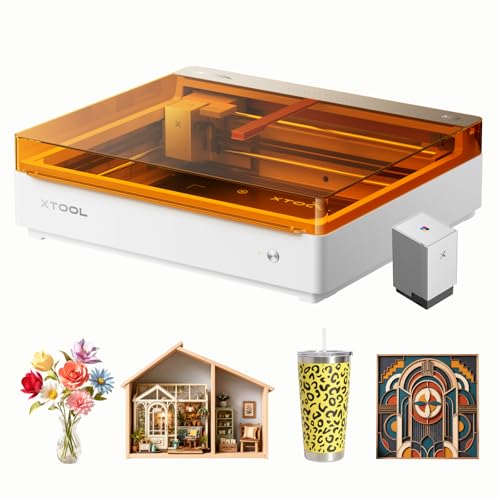
- Best all-round diode option: xTool S1 in the 20W or 40W configuration, especially when you need a relatively compact machine for wood, leather, coated metals, and occasional cutting.
- Best for transparent acrylic and faster cutting: a 50W–55W CO₂ machine such as the xTool P2S or OMTech Polar 350.
- Best for beginners who value guided software: Glowforge Aura for light-duty engraving and small craft projects.
- Best for larger, frequent production: a 45W–55W enclosed CO₂ engraver with a dedicated exhaust path and water-cooling system.
- Best for a tight budget: an enclosed 10W–20W diode engraver, provided you also budget for extraction, an air-assist pump, and a honeycomb bed.
The best laser engraver for most makers is a fully enclosed machine with a 20W–40W diode laser, but a CO₂ model is the better choice if you regularly cut acrylic, plywood, or larger sheets.
Quick picks by situation
- Best all-round diode option: xTool S1 in the 20W or 40W configuration, especially when you need a relatively compact machine for wood, leather, coated metals, and occasional cutting.
- Best for transparent acrylic and faster cutting: a 50W–55W CO₂ machine such as the xTool P2S or OMTech Polar 350.
- Best for beginners who value guided software: Glowforge Aura for light-duty engraving and small craft projects.
- Best for larger, frequent production: a 45W–55W enclosed CO₂ engraver with a dedicated exhaust path and water-cooling system.
- Best for a tight budget: an enclosed 10W–20W diode engraver, provided you also budget for extraction, an air-assist pump, and a honeycomb bed.
Best laser engravers compared
| Machine or class | Laser type and power | Approximate work area | Materials and strengths | Ventilation and setup |
|---|---|---|---|---|
| xTool S1 | Diode, 20W or 40W | 498 × 319 mm; height depends on the riser setup | Wood, leather, paper, cardboard, slate, anodized metal, coated metal, and some dark acrylic | Enclosed; use an exhaust hose or filtration system, with air assist recommended for cutting |
| xTool P2S | CO₂, 55W | Approximately 600 × 305 mm | Wood, acrylic including many clear sheets, leather, rubber, glass marking, and coated metals | Enclosed; requires exhaust, water cooling, and more substantial installation |
| Glowforge Aura | Diode, approximately 6W optical power | Approximately 305 × 305 mm | Thin wood, leather, paper, craft materials, and prepared or coated surfaces | Enclosed; designed around guided software and an exhaust or filtration accessory |
| Glowforge Pro | CO₂, 45W | Approximately 495 × 279 mm | Wood, acrylic, leather, glass marking, paper, and many craft materials | Enclosed; needs ventilation or the compatible filtration solution |
| Typical open-frame diode engraver | Diode, 10W–20W | 400 × 400 mm to 410 × 400 mm | Excellent value for wood, leather, slate, cardboard, and dark or coated surfaces | Needs a certified enclosure, exhaust, air assist, fire precautions, and more hands-on setup |
Working areas are nominal figures rather than a promise that every project will fit without repositioning. Check the manufacturer’s current dimensions before buying, particularly when a rotary attachment, riser base, or pass-through slot is important.
Our top picks


As an Amazon Associate we earn from qualifying purchases at no extra cost to you. Ratings are shown as listed on Amazon.
Diode versus CO₂: the decision that matters most
Laser wattage is not directly comparable between diode and CO₂ machines. A 20W diode laser and a 20W CO₂ laser do not provide the same cutting behavior. CO₂ lasers are generally better at cutting and engraving non-metallic materials, particularly clear acrylic. Diode lasers are usually simpler, less expensive, and more efficient for wood, leather, slate, and dark surfaces.
Choose a diode laser when
- Your main materials are plywood, solid wood, leather, paper, slate, and coated metal.
- You want lower purchase and operating costs.
- You have limited space or do not want a water-cooling system.
- You primarily engrave and only occasionally cut.
Choose CO₂ when
- You need to cut clear acrylic rather than merely mark it.
- You cut thicker wood or acrylic repeatedly.
- You need faster production and a larger usable bed.
- You can provide reliable exhaust, cooling, and a nonflammable installation area.
Neither category is a universal metal-cutting machine. Most hobby lasers mark anodized or painted metal by removing the surface coating. Cutting bare metal normally requires a fiber laser or specialized industrial equipment, not a typical diode or CO₂ engraver.
Engraving area and power: size the machine around your work
A 300 × 300 mm bed provides 90,000 square millimetres of nominal area. A 600 × 300 mm bed provides 180,000 square millimetres—twice the area, but not necessarily twice the productivity if the design is small and setup time dominates. For signs, panels, cutting boards, and batches of small products, the larger bed quickly becomes more useful.
As a rough planning example, suppose a 20W diode takes 12 minutes to engrave one 100 × 100 mm coaster, including positioning and unloading. A 10-piece batch uses approximately 120 minutes. If a jig lets you load ten pieces at once and reduces handling to 10 minutes, the same job may take close to 85–100 minutes depending on the engraving pattern. The bed size and workflow can matter more than another increment of laser power.
Higher power helps with cutting, but it does not automatically improve fine engraving. Resolution, focus, motion control, material flatness, and a clean lens often have a larger effect on small text and photographs.
Software and setup differences
Beginner-focused machines usually combine a camera, material presets, automatic alignment, and cloud or desktop software. This can reduce setup errors, but it may require an internet connection, an account, or a narrower list of supported workflows. More open machines often work with LightBurn, which offers powerful layer control, nesting, jigs, variable-power engraving, and camera alignment, but demands more learning.
Before choosing, check whether the software can:
- Import SVG, DXF, PNG, JPG, and PDF files in the formats you use.
- Control separate speed and power settings by layer.
- Resume safely after a pause or recover from a communication error.
- Use a camera or coordinate system for repeatable positioning.
- Drive a rotary attachment if you plan to engrave tumblers or bottles.
A practical first setup includes a level, nonflammable surface; the manufacturer’s enclosure; an exhaust route; an air-assist pump; a honeycomb or knife-blade bed; and a fire extinguisher suitable for the installation. CO₂ machines additionally need their specified cooling system and careful alignment of mirrors or beam delivery, depending on the design.
Ventilation and safety are buying criteria, not accessories
Laser smoke contains particulates and chemical vapours from the material being heated. An enclosure that recirculates air without effective filtration is not the same as exhausting outdoors. Follow the manufacturer’s instructions and local rules, and do not assume that a pleasant-smelling material is safe to laser.
- Never cut PVC, vinyl, unknown plastics, or materials containing chlorine. They can release corrosive and hazardous gases.
- Do not leave an operating laser unattended, even when it has a lid or flame sensor.
- Use an enclosure with a properly interlocked lid where possible.
- Keep the exhaust hose short, sealed, and free of sharp bends.
- Use air assist to reduce flare-ups and improve cut quality, but do not treat it as fire protection.
- Keep the lens, mirrors, bed, and exhaust path clean.
- Use the correct eye protection for the laser class and never defeat safety interlocks.
Ownership realities: what wears out first
The first maintenance problems are usually not the laser module itself. Smoke residue can cloud a diode lens or CO₂ optics, reducing power and creating uneven cuts. Fans and air pumps accumulate dust, honeycomb beds collect resin, and exhaust hoses become coated with soot. Replace or clean these parts according to the manufacturer’s schedule rather than increasing power to compensate for a dirty optical path.
Diode modules are often simpler to replace, while CO₂ machines add a tube, mirrors, cooling components, and alignment work. A CO₂ tube is a consumable with a finite service life, and replacement cost depends heavily on the tube and machine design. An inexpensive open-frame machine can therefore become less economical after adding an enclosure, exhaust, air assist, honeycomb bed, rotary tool, and safety equipment.
How to choose without overbuying
| Your situation | Recommended specification | Why |
|---|---|---|
| Occasional labels and small gifts | 10W–20W enclosed diode; roughly 300 × 300 mm bed | Lower cost and adequate engraving power without a large installation |
| Weekly wood projects and light cutting | 20W–40W diode with air assist and at least 400 × 300 mm usable area | Good balance of cutting depth, detail, and material flexibility |
| Clear acrylic, signs, and regular production | 45W–55W enclosed CO₂; roughly 500 × 300 mm or larger bed | Better cutting performance and compatibility with clear acrylic |
| Very limited indoor ventilation | Delay purchase or choose only a properly filtered, manufacturer-approved enclosure | A laser without a safe extraction plan is not a suitable bargain |
| Batch work and repeatable products | Camera alignment, jig support, air assist, and LightBurn-compatible or equivalent software | Reduces handling time and improves consistency |
Final recommendation
For most woodworking-focused buyers, an enclosed 20W or 40W diode engraver is the sensible starting point: it handles common wood species, offers useful cutting ability, and avoids the complexity of a CO₂ cooling loop. Move to a 45W–55W CO₂ machine when clear acrylic, thicker stock, larger signs, or frequent production justifies the extra ventilation and maintenance. Whichever type you choose, reserve part of the budget for extraction, air assist, a stable bed, and safe installation; those items have more practical impact than a headline power number alone.


Write Your Review
No reviews yet. Be the first to share your experience!