

Key takeaways
- What wears first: drive belts, tool-rest surfaces and the spur-center points. Keep spares of consumables like tool-rest polish.
- Dust: fine sanding dust damages electronics and lungs; use a dust collector, a hood and a respirator.
- Safety gear: a full face shield is critical. Never wear gloves or loose sleeves near the spinning work.
- Tooling cost: a basic set of gouges, a parting tool, chuck and live center can cost as much as the lathe, so budget for it.
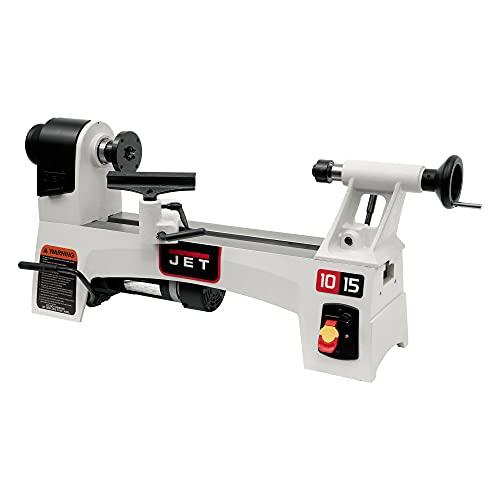
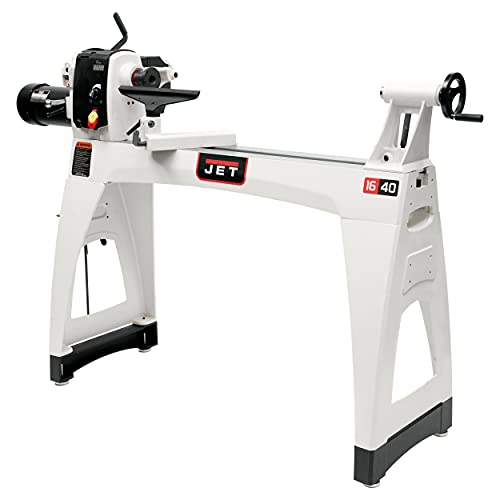
The best midi lathe for most small shops is a variable-speed 12-inch swing model with about 16 to 21 inches between centers, a 1 hp class motor and a Morse taper 2 headstock, which handles pens, bowls up to about 10 inches and table legs without taking the floor space of a full-size lathe. Popular choices in this class include the Jet JWL-1221VS, the Laguna Revo 12|16 and the Rikon midi lathes. Pick by swing, bed length, motor power and bed-extension options rather than by price alone.
Our top picks


As an Amazon Associate we earn from qualifying purchases at no extra cost to you.
Quick comparison of midi lathe picks
| Pick | Best for | Key specs (approximate, per maker spec sheets) | Price range |
|---|---|---|---|
| Jet JWL-1221VS | Best overall midi | 12 in swing, about 21 in between centers, about 3/4 hp, variable speed | Mid-range to upper mid-range |
| Laguna Revo 12|16 | Best for features and swivel head | 12 in swing, 16 in between centers, about 1 hp, swiveling headstock | Upper mid-range |
| Rikon midi lathe (70-series) | Best value for bowls and spindles | 10-12 in swing, 16-18 in between centers, variable speed | Mid-range |
| NOVA Comet II | Best for portability | 12 in swing, about 16 in between centers, compact cast frame | Mid-range |
| Delta 46-460 style midi | Best for classic design and bed extension | 12.5 in swing, 16-18 in between centers, 3/4 hp class | Mid-range |
| Mini lathe (WEN or similar) | Best budget starter | 8-10 in swing, 12-15 in between centers, 1/2 hp class | Budget |
Best overall: Jet JWL-1221VS class midi lathe
A 12-inch swing midi with electronic variable speed (typically around 60 to 3,600 rpm), a quiet motor, and a cast-iron bed is the sweet spot for hobbyists. The Jet JWL-1221VS is a widely recommended example. It handles spindle work such as table legs, and it can turn bowls of about 10 inches in diameter when you work outboard. The bed is long enough for chair legs and small stool rungs.
The trade-off: the motor is smaller than a full-size lathe, so aggressive cuts on large green wood can bog. You also have limited weight, so heavy blanks may cause vibration unless the lathe is bolted to a heavy stand.
Best for features: Laguna Revo 12|16
The Revo 12|16 offers a 12 inch swing, 16 inches between centers, an approximately 1 hp motor, a swivel headstock for outboard turning, and easy belt-range changes. The sliding tailstock and rotating headstock are favored by turners who do both bowls and spindles.
The trade-off: it costs more than entry-level midis, and the shorter bed (16 inches) needs an extension for long pieces.
Best value: Rikon midi lathe
Rikon’s midi-class machines are common in small shops, typically with a 10 to 12 inch swing and variable speed. They provide a good mix of features for the cost.
The trade-off: models vary a lot, so check the exact swing, bed length and motor spec on the sheet before ordering. Some have lighter beds that benefit from added sandbags or a heavy bench.
Best portable option: NOVA Comet II
The Comet II is a compact cast-iron lathe with 12 inch swing and a short bed, and can be set on a workbench. It suits turners who want to move the lathe out of the way.
The trade-off: limited bed length and motor power. It works best for pens, small bowls and spindle projects.
Best classic design: Delta midi lathe class
Delta’s midi-class models, such as the 46-460 type, give a 12.5 inch swing and are known for solid castings and optional bed extensions. Used examples appear often, which can lower your cost.
The trade-off: older models may lack features like reverse and may require belt moves for speed changes. Check parts availability.
Best budget starter: mini lathe
A mini lathe with 8 to 10 inch swing is plenty for pens, bottle stoppers, and small spindle work. These machines are light and low-cost, with a Morse taper 1 or 2 headstock.
The trade-off: low power and a short bed limit growth. If you expect to turn bowls, moving up to a midi saves buying twice.
How to choose a midi lathe
Swing and bed length
Swing is the largest diameter that clears the bed: a 12 inch swing turns a 12 inch disc over the bed but bowls up to about 10 inches because of tool clearance in practice. Distance between centers is the longest spindle you can turn. For 18 to 20 inch table legs and tool handles, aim for 16 inches minimum, 20 inches or more for comfort.
Motor power
Midi lathes range from 1/2 to 1 hp. Under 3/4 hp, heavy roughing may stall. For bowls, 3/4 hp or above is helpful. DC motors offer smooth torque at low speeds; AC motors with inverters are common as well.
Speed range and changes
Electronic variable speed beats stepped belts. Large or out-of-balance blanks need slow speeds (300 to 600 rpm), while pens need 2,000 rpm or more. A digital readout helps match speed to diameter.
Headstock and tailstock details
Check for a Morse taper 2 headstock and tailstock, a 1 inch by 8 tpi spindle thread (very common), and an indexing feature. A swivel headstock or a sliding headstock helps with outboard turning.
Weight and stand
Mass reduces vibration. A midi lathe weighing 70 to 100 pounds sits better when bolted to a sturdy stand and weighted with sand. Plan for a bench height near your elbow.
Worked example: what size blank fits
Suppose you want to turn a 10 inch diameter, 3 inch tall bowl. With a 12 inch swing lathe, the blank clears the bed, but the tool rest needs room in front of the bowl, which in practice limits you to roughly 10 to 11 inches. The blank, if made from green oak, might weigh 8 to 10 pounds. A 3/4 hp midi will manage it at 500 rpm, but out-of-balance wood demands a slow start. If you aim for 14 inch bowls, plan on a swivel head or a full-size lathe.
Ownership and durability realities
- What wears first: drive belts, tool-rest surfaces and the spur-center points. Keep spares of consumables like tool-rest polish.
- Dust: fine sanding dust damages electronics and lungs; use a dust collector, a hood and a respirator.
- Safety gear: a full face shield is critical. Never wear gloves or loose sleeves near the spinning work.
- Tooling cost: a basic set of gouges, a parting tool, chuck and live center can cost as much as the lathe, so budget for it.
Decision matrix by situation
| Your situation | Best match | Why | Watch out for |
|---|---|---|---|
| Pens, stoppers, small boxes only | Mini lathe | Lowest cost, tiny footprint | Stalls on bowl blanks |
| Bowls to 10 in plus spindles to 16 in | Laguna Revo 12|16 | Swivel head, 1 hp class | Short bed |
| Table legs, handles, and bowls | Jet JWL-1221VS | About 21 in between centers | Moderate power for green wood |
| Limited bench space, portable use | NOVA Comet II | Compact cast frame | Short bed |
| Hunting for a used bargain | Delta midi lathe | Solid castings, lower used prices | Belt changes, parts |
Speed guide by diameter
A rule of thumb used by turners is to keep rim speed under roughly 3,000 surface feet per minute for safety, which works out to the following starting points for a roughing cut on balanced stock. Always begin lower and increase gradually.
| Workpiece diameter | Starting speed (rpm) | Finishing speed (rpm) | Notes |
|---|---|---|---|
| 1-2 in (pens, spindles) | 1,500-2,000 | 2,500-3,500 | Check for whip on long thin stock |
| 3-6 in (small bowls, boxes) | 800-1,200 | 1,200-1,800 | Keep tool rest close |
| 8-10 in (bowls) | 400-600 | 600-900 | Wet or out-of-round blanks need the low end |
| 10-12 in (platters, large bowls) | 300-450 | 450-700 | Stand out of the line of fire |
Common mistakes to avoid
- Starting too fast: out-of-balance blanks shake the lathe and can come loose. Start at the lowest speed and step up.
- Tool rest too far from the work: a gap of more than about 1/8 inch invites catches. Move the rest in often.
- Ignoring grain direction: cutting uphill tears fibers; cut from large to small diameter on spindles and from rim to center on bowl exteriors.
- Dull tools: a dull gouge scrapes and tears. Sharpen on a slow-speed grinder with a jig as soon as cutting feels rough.
Frequently Asked Questions
What is a midi lathe?
A midi lathe sits between a mini lathe and a full-size lathe. Typically it has a 10 to 12 inch swing and 12 to 20 inches between centers, enough for bowls and spindles in a small shop.
Can I turn bowls on a midi lathe?
Yes, up to roughly 10 to 12 inches in diameter, depending on swing and tool clearance. Larger bowls need a swiveling head or a full-size machine.
Is a variable-speed lathe worth it?
Yes. Being able to change speed without moving belts saves time and improves safety, especially when starting a rough blank.
What accessories do I need first?
A four-jaw chuck, a faceplate, a live center and a set of three or four turning tools get you started. Sharpening gear is also essential.
How much space does a midi lathe need?
Plan about 4 feet of bench length and 3 feet of free space around it for tool movement. Add room for dust collection and a sharpening station.


Write Your Review
No reviews yet. Be the first to share your experience!