

Key takeaways
- What wears first: belts, bearings in budget machines, and tool rest edges. Rest edges should be filed smooth.
- Dust and shavings: clean the bed ways and spindle regularly to prevent corrosion.
- Safety: wear a full face shield, avoid loose clothing, and stand out of the line of fire when starting a rough blank.
- Balance: start slow, check the lathe for wobble, and increase speed gradually.
The best wood lathe for most serious hobbyists is a full-size, variable-speed machine with a 16 to 18 inch swing, about 1.5 to 2 hp and a Morse taper 2 spindle, such as the Laguna Revo 18|36, the Jet 1642EVS-2 or the Powermatic 3520C. Smaller shops can step down to a midi lathe, and beginners can start with a mini model for pens and small spindles. Pick by the largest bowl you want to turn, the longest spindle you plan to make, and the motor power that keeps rough blanks from stalling.
Our top picks

As an Amazon Associate we earn from qualifying purchases at no extra cost to you.
Quick comparison of wood lathe picks
| Pick | Best for | Key specs (approximate, per maker spec sheets) | Price range |
|---|---|---|---|
| Laguna Revo 18|36 | Best overall full-size | 18 in swing, 36 in between centers, about 2 hp, swivel head, variable speed | Premium |
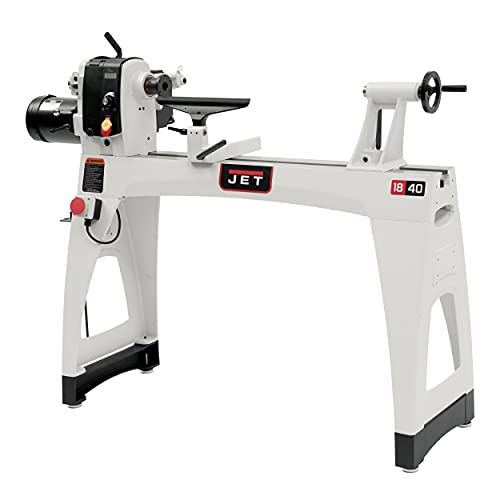
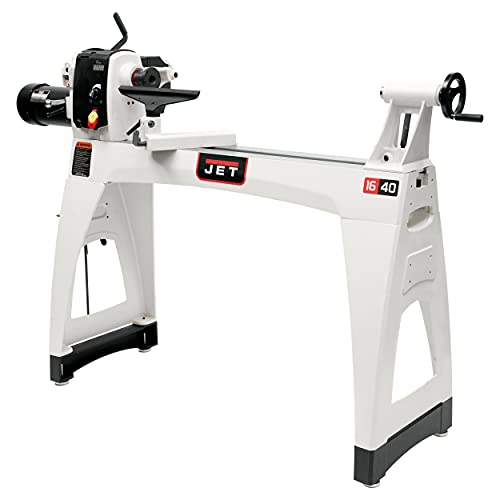
| Jet 1642EVS-2 | Best for bowl and spindle versatility | 16 in swing, 42 in between centers, 2 hp, electronic variable speed | Upper mid-range to premium |
| Powermatic 3520C | Best for heavy production turning | 20 in swing, 35 in between centers, 2 hp, very heavy cast iron | Premium |
| Midi lathe (Jet 1221VS, Laguna Revo 12|16) | Best for small shops | 12 in swing, 16-21 in between centers, 3/4-1 hp | Mid-range |
| NOVA Galaxi DVR | Best for quiet motor and digital control | 16 in swing, about 1.75 hp DVR motor, smart controls | Premium |
| Mini lathe (WEN or similar) | Best budget for pens and small spindles | 8-10 in swing, 12-15 in between centers, 1/2 hp | Budget |
Best overall: Laguna Revo 18|36
The Revo 18|36 offers 18 inches of swing, 36 inches between centers and a motor around 2 horsepower. The headstock swivels, so you can turn large bowls outboard, and the bed handles table legs and posts. Variable speed with a digital display and reversing is standard. This machine is a long-term investment for turners who plan to make bowls, vessels and furniture parts.
The trade-off: its size and weight (over 300 pounds on the stand) demand a dedicated spot and a solid floor, and the cost is at the high end.
Best versatile choice: Jet 1642EVS-2
The 1642EVS-2 provides a 16 inch swing, a 42 inch bed and a 2 hp motor. The longer bed is useful for spindle work like balusters and posts, and the headstock rotates for outboard turning. It is a long-time favorite in school shops and hobby shops.
The trade-off: the 16 inch swing limits bowl size compared with 18 or 20 inch lathes, though outboard turning extends that capacity.
Best for heavy production: Powermatic 3520C
With a 20 inch swing, a heavily built cast-iron bed and a 2 hp motor, the 3520C stays calm when roughing big, out-of-round blanks. Weight is the key: more mass means less vibration.
The trade-off: cost, size, and the need for good dust and chip control. It is overkill for pens and small boxes.
Best midi alternative: Jet 1221VS or Laguna Revo 12|16
If space or budget rules out a full-size machine, a midi lathe handles bowls up to roughly 10 inches and spindles up to 16 to 21 inches. They are a strong step up from mini lathes.
The trade-off: less power and mass. Large green blanks can cause vibration, so choose smaller wood.
Best for quiet digital control: NOVA Galaxi DVR
The Galaxi DVR uses a digital variable-reluctance motor that is notably quiet and provides strong torque at low speeds. The system offers programmable speed and reverse, plus a swivel head.
The trade-off: price, and repair needs more specialized service than a conventional motor.
Best budget: mini lathe
For pens, stoppers, small boxes and tool handles, a mini lathe is enough. It takes little room and uses small chucks.
The trade-off: it is unsuitable for bowls larger than a few inches, and the motor stalls under heavy cuts.
How to choose a wood lathe
Swing determines bowl size
A lathe’s swing is double the distance from the spindle center to the bed. A 16 inch swing turns a 16 inch disc if it clears the bed, but working inboard you’ll realistically go to about 14 inches because of the banjo and tool rest. Outboard turning with a swivel head can reach 20 inches or more depending on the stand.
Bed length determines spindle length
Distance between centers is the longest piece you can turn. 16 to 20 inches is enough for tool handles and legs, 36 inches covers table legs and balusters, and 42 inches or more handles posts and newel stock.
Motor power and speed control
Bowls need torque at low speeds. 1.5 to 2 hp motors with electronic variable speed work well. Pens and small turnings need 2,000 to 4,000 rpm; large bowls begin at 300 to 500 rpm. Reverse helps with sanding.
Mass and stability
A heavy cast-iron bed absorbs vibration. A 300 pound lathe on a good stand with sand or weights runs smoother than a 100 pound one, especially with green wood.
Thread and taper standards
Most full-size lathes use a 1-1/4 inch by 8 tpi spindle and MT2 tapers. Mini and midi lathes often use 1 inch by 8 tpi. Check your chuck compatibility before buying accessories.
Worked example: budgeting a first setup
Suppose you buy a lathe and need a starter kit. Expect to add: a four-jaw scroll chuck, a faceplate, a live center, a spur center, a set of five or six tools (roughing gouge, spindle gouge, bowl gouge, parting tool, scraper), a sharpening system, a face shield and dust collection. In total, accessories commonly equal 40 to 70 percent of the lathe price. If your lathe is mid-range, plan to nearly double the budget over the first year as you add chucks and jaws.
Decision matrix by situation
| Your situation | Best match | Why | Watch out for |
|---|---|---|---|
| Pens and stoppers in an apartment | Mini lathe | Small, cheap, light | Cannot grow into bowls |
| Garage shop, bowls up to 10 in | Midi lathe | Fits a bench, handles most hobby work | Vibration with big green blanks |
| Bowls to 14-18 in and table legs | Jet 1642EVS-2 or Revo 18|36 | Power and swivel head | Needs floor space and 220 V on some models |
| Production turning, big platters | Powermatic 3520C | Mass and a 20 in swing | Cost and weight |
| Quiet shop near neighbors | NOVA Galaxi DVR | Quiet, strong low-speed torque | Price and service |
Ownership and durability realities
- What wears first: belts, bearings in budget machines, and tool rest edges. Rest edges should be filed smooth.
- Dust and shavings: clean the bed ways and spindle regularly to prevent corrosion.
- Safety: wear a full face shield, avoid loose clothing, and stand out of the line of fire when starting a rough blank.
- Balance: start slow, check the lathe for wobble, and increase speed gradually.
Lathe size classes compared
| Class | Swing | Between centers | Motor | Weight (typical) | Typical work |
|---|---|---|---|---|---|
| Mini | 8-10 in | 12-15 in | 1/3-1/2 hp | 35-60 lb | Pens, stoppers, small spindles |
| Midi | 10-13 in | 16-21 in | 3/4-1 hp | 70-110 lb | Bowls to 10 in, chair legs |
| Full-size | 16-20 in | 35-42 in | 1.5-2 hp | 250-500 lb | Large bowls, table legs, posts |
| Production | 20 in and up | 35-60 in | 2-5 hp | 500 lb and up | Platters, columns, commercial work |
Common mistakes to avoid
- Buying too small: many turners outgrow a mini or midi lathe within a year if they discover bowls. Think about where your interest is heading.
- Skipping a sturdy stand: mass equals smoothness. Fill the stand legs with sand or add a shelf with weights.
- Mounting wet, unbalanced blanks at full speed: always start slowly and stand to the side.
- Neglecting lighting: raking light on the workpiece reveals tool marks and tearout that overhead light hides.
- Letting rust build up: wipe the bed with paste wax occasionally so the banjo slides smoothly.
Frequently Asked Questions
What size wood lathe should I buy?
For bowls and furniture parts, a 16 to 18 inch swing and 36 inch bed is a flexible choice. If you only make pens and small items, a mini lathe is enough. If you want to turn bowls in a small shop, a midi lathe is the compromise.
Is variable speed necessary?
It is strongly recommended. Changing belts for each speed is slow and interrupts your work. Electronic variable speed makes it simple to start slow and increase as the piece balances.
How much horsepower do I need?
One to 1.5 hp suits most hobby work; 2 hp is better for large bowls and wet wood. More power also helps with continuous sanding and heavier tools.
Can a wood lathe turn metal?
Not recommended. Wood lathes run at speeds and with tool rests unsuitable for metal, and chips can damage the machine. Metal needs a metal lathe.
Do I need a chuck?
You can turn with a faceplate and spur drive, but a scroll chuck makes bowls much easier and safer. Most turners buy one early.


Write Your Review
No reviews yet. Be the first to share your experience!