

Key takeaways
- Best all-purpose choice: A 1.25–1.5-inch oval hot air brush with ceramic or tourmaline-coated plates, three heat settings, and at least two speed settings.
- Best for long, thick hair: A 2-inch oval brush or a high-airflow brush with a large ceramic barrel and a cool-shot button.
- Best for short hair and bangs: A 1-inch or 1.25-inch round brush attachment that can get close to the roots without overwhelming shorter sections.
- Best for fine or fragile hair: A brush with a genuinely low heat setting, moderate airflow, and nylon-and-boar-style bristles rather than maximum heat.
- Best for multiple looks: A modular system with interchangeable oval, round, smoothing, and concentrator attachments, such as the Dyson Airwrap or Shark FlexStyle.
- Best budget approach: A fixed oval hot air brush from a mainstream brand such as Revlon or Conair, provided it has separate heat and speed controls.
The best hot air brushes depend on your hair length, desired volume, and tolerance for heat: choose a 1.25–1.5-inch oval brush for the most versatile blowout, a 2-inch barrel for long hair and smooth waves, or a smaller 1-inch barrel for shorter layers and tighter shape.
Our top picks
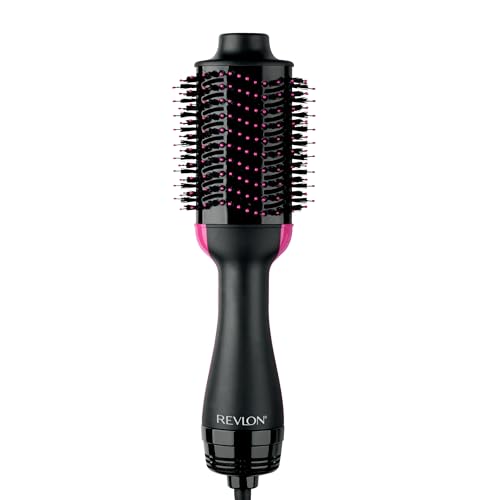

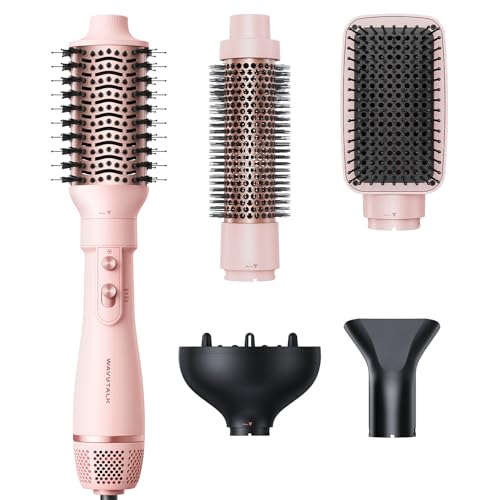

As an Amazon Associate we earn from qualifying purchases at no extra cost to you. Ratings are shown as listed on Amazon.
Quick picks by styling goal
- Best all-purpose choice: A 1.25–1.5-inch oval hot air brush with ceramic or tourmaline-coated plates, three heat settings, and at least two speed settings.
- Best for long, thick hair: A 2-inch oval brush or a high-airflow brush with a large ceramic barrel and a cool-shot button.
- Best for short hair and bangs: A 1-inch or 1.25-inch round brush attachment that can get close to the roots without overwhelming shorter sections.
- Best for fine or fragile hair: A brush with a genuinely low heat setting, moderate airflow, and nylon-and-boar-style bristles rather than maximum heat.
- Best for multiple looks: A modular system with interchangeable oval, round, smoothing, and concentrator attachments, such as the Dyson Airwrap or Shark FlexStyle.
- Best budget approach: A fixed oval hot air brush from a mainstream brand such as Revlon or Conair, provided it has separate heat and speed controls.
What separates a good hot air brush from a frustrating one?
A hot air brush combines a blow dryer and a brush, so its performance depends on more than wattage. The barrel must be an appropriate size for your hair length, the bristles must provide enough tension, and the airflow must dry the section without blasting it out of shape.
Oval brushes generally give more root lift and a smoother, fuller finish. Round brushes create more bend and are useful for flicked ends, bangs, and defined waves. A larger barrel makes softer bends but needs longer hair to wrap around it. A smaller barrel creates more shape, although it can make thick hair take longer to dry.
Hot air brush comparison
| Brush type | Typical barrel size | Best hair length | Typical heat and speed controls | Strengths | Trade-offs |
|---|---|---|---|---|---|
| Compact round brush | 1–1.25 inches | Short to medium | 2 heat, 2 speed | Bang shaping, curls, precise ends | Slow on long or very thick hair |
| Standard oval brush | 1.25–1.5 inches | Short to long | 2–3 heat, 2 speed, cool shot | Volume, smoothing, everyday blowouts | Can be bulky around short layers |
| Large oval brush | 1.75–2 inches | Medium to very long | 2–3 heat, 2 speed | Fast drying, loose waves, smooth ends | Limited curl and root precision |
| Interchangeable system | 0.75–2 inches, depending on attachments | All lengths | 3–4 heat, 2–3 speed, cool shot | Blowouts, curls, smoothing, root lift | Higher price and more storage |
These are useful buying ranges rather than universal specifications. A brush with a nominally large barrel may have a smaller heated core once the bristles are included, while a powerful motor can make a smaller brush dry faster than expected.
Barrel size: the decision most buyers underestimate
Choose 1 inch to 1.25 inches for short hair
A smaller brush can reach roots on chin-length bobs, pixie-grown-out styles, bangs, and layers. It also gives more control when turning the ends under or away from the face. The limitation is efficiency: if your hair reaches well below the shoulders, a small brush requires more sections and more passes.
Choose 1.25 inches to 1.5 inches for versatility
This is the safest size for medium-length hair and the most practical compromise for households with several hair types. It can create root lift without producing an exaggerated curl, and the oval shape can smooth the surface while leaving movement at the ends.
Choose 1.75 inches to 2 inches for long hair
A large barrel is better when your goal is a polished, loose blowout rather than defined curls. It holds a wider section and reduces the number of passes needed. However, it may not grip short layers effectively, and it cannot create much bend unless the hair is long enough to wrap around the core.
Brush materials and bristle design
- Ceramic: Ceramic-coated barrels distribute heat more evenly than exposed metal surfaces. They are a sensible choice for repeated styling, but the coating can eventually chip or wear.
- Tourmaline: Tourmaline-coated surfaces are commonly paired with ceramic and are marketed for smoother results and reduced static. Treat this as a design feature, not a guarantee that frizz will disappear.
- Nylon bristles: Nylon pins provide grip and detangling. They are particularly useful for thick or coarse hair, but aggressive tension can pull at knots.
- Boar-style bristles: These help distribute natural oils and smooth the outer layer, but they may not penetrate dense hair as effectively as nylon.
- Mixed bristles: A combination of nylon pins and softer bristles often offers the best balance of grip, smoothing, and comfort.
- Vent spacing: Open vents improve airflow through a section. Very tightly packed bristles can create more tension but may slow drying and catch tangled hair.
Heat and speed settings for different hair types
| Hair situation | Recommended starting setting | Useful features | What to avoid |
|---|---|---|---|
| Fine, bleached, or easily flattened hair | Low heat, low or medium speed | Cool shot, gentle bristles, separate controls | Holding high heat on one section |
| Medium, straight, or wavy hair | Medium heat, medium speed | Oval barrel, ceramic surface, two-direction airflow if available | Oversized barrel on short layers |
| Thick or coarse hair | Medium-high heat, high speed while drying | Powerful airflow, larger vents, firm nylon bristles | Trying to style soaking-wet hair |
| Curly or textured hair | Low to medium heat with controlled speed | Diffuser or smoothing attachment, ample section control | Brushing large wet sections aggressively |
Separate heat and speed controls matter. A low-heat, high-airflow combination can remove moisture without forcing you to use the hottest temperature. A cool-shot button is also useful for setting a finished section, although it does not replace proper drying technique.
Fixed brush or interchangeable styling system?
A fixed oval brush is usually lighter, simpler, and less expensive. It is the better choice if you mainly want a smooth blowout and root volume. Products such as the Revlon One-Step Volumizer and comparable Conair or Hot Tools oval brushes fit this category, though exact versions differ in barrel size, controls, and power.
An interchangeable system costs more but earns its space when you regularly change styles. The Dyson Airwrap offers multiple barrels and brushes, while the Shark FlexStyle combines a dryer body with brushes, concentrators, and curling attachments. These systems are more adaptable for short layers, long hair, waves, and smoothing, but they also require more attachment storage and a longer learning curve.
Drybar’s Double Shot is another example of a dedicated oval blow-dry brush aimed at smoothing and volume rather than a full collection of curling styles. Its format makes sense for someone who wants a salon-style blowout tool without buying a multi-attachment system.
A practical buying matrix
| Your situation | Best configuration | Why |
|---|---|---|
| First hot air brush, limited budget | 1.25–1.5-inch oval, 2 heat and 2 speed settings | Easy to learn and suitable for the widest range of medium-length styles |
| Daily use in a small bathroom | Fixed brush under about 2 pounds with a swivel cord | Less storage and fewer parts to clean or misplace |
| Occasional styling for several people | Interchangeable system with 1-inch and 2-inch options | One tool can accommodate different lengths and preferences |
| Long, thick hair | Large oval brush or high-airflow modular system | Reduces section count and drying time |
| Short cut with bangs and layers | 1-inch round attachment or narrow oval brush | Provides root and edge control that a large barrel cannot |
How to use one without sacrificing smoothness
- Blot first. Remove excess water with a towel rather than beginning on dripping-wet hair. Most hot air brushes are styling tools, not replacements for a full rough-dry on very wet hair.
- Apply heat protectant according to its directions. Comb through gently so the product is distributed instead of concentrated in one patch.
- Rough-dry the roots. Bring hair to roughly 70–80% dry before using a brush for shaping, especially if your hair is thick.
- Use sections no wider than the brush. Smaller sections dry and smooth more evenly. If the brush stalls, the section is probably too large or still too wet.
- Lift at the root, then rotate slowly. Keep the brush moving. Holding it stationary creates unnecessary heat and can produce tangles.
- Finish with cool air. Run the cool setting over the completed section before releasing it, then allow the hair to cool before brushing it out.
Ownership, cleaning, and common failure points
Lint, styling product, and shed hair are the main enemies of airflow. Unplug the tool and remove trapped hair after each few uses; use a dry, soft brush or cloth around the vents, following the manufacturer’s cleaning instructions. Never immerse the handle, and do not block the intake while styling.
The first parts likely to show wear are the bristle tips, the coating on a heated barrel, the filter or intake grille, and the power cord near the handle. A replaceable filter or clearly available replacement attachments can matter more than a slightly higher maximum wattage. Store the tool fully cool, avoid wrapping the cord tightly around the body, and stop using it if the cord, plug, housing, or thermal controls appear damaged.
For most buyers, the strongest choice is a ceramic or tourmaline-coated 1.25–1.5-inch oval brush with mixed bristles, three heat options, two speeds, and a cool shot. Move to a 2-inch brush for long hair and fast loose blowouts, or choose an interchangeable system when changing barrel sizes and styling methods is worth the additional cost and storage.

Write Your Review
No reviews yet. Be the first to share your experience!