

Key takeaways
- Compare the best mini lathes for small shops, from the budget WEN LA3421 to the 1 HP Delta 46-460, and pick the right swing and bed length for you.
A mini lathe is the smallest real wood lathe you can buy. It sits on a bench, plugs into a standard outlet, and turns pens, bottle stoppers, small bowls, handles, and spindles. It will not turn a 16-inch salad bowl or a full-length table leg. Each pick below lists a verified swing and bed length, so you can match the machine to the work you actually plan to do.
As an Amazon Associate, I earn from qualifying purchases.
How to Choose a Mini Lathe
Swing over the bed is the largest diameter the lathe can turn. An 8-inch swing handles pens and small spindles. A 10-inch swing opens up small bowls up to about 9 inches across. A 12.5-inch swing, like the Delta below, is the top end of the mini class.
Distance between centers is the longest spindle the lathe can hold. A 13-inch bed suits pens, stoppers, and short handles. An 18-inch bed covers pepper mills, rolling pins, and short table legs. Buy the longer bed now if you plan to turn anything long.
Speed control matters more than raw power on a small lathe. Variable speed lets you dial down for an out-of-balance bowl blank and dial up for a finish cut on a pen. Belt-change speed is cheaper, but you stop the machine and move a belt every time you change ranges.
Motor power on a mini lathe runs from about a third of a horsepower to a full horsepower. Half a horsepower is plenty for pens and spindles. For bowls near the swing limit, a full horsepower holds its speed under a heavy cut.
Weight and build decide how much the lathe vibrates. Cast iron beds absorb vibration, which shows up as a smoother surface on your work. A 40-pound lathe must be bolted down, while a 70-pound lathe stays put on its own.
Spindle thread and tapers decide which chucks and faceplates fit. Nearly every mini lathe here uses a 1-inch by 8 TPI spindle thread with MT2 tapers, the standard for the class, so accessories are easy to find.
Comparison Table
| Lathe | Swing | Between Centers | Speed Control | Motor |
|---|---|---|---|---|
| WEN LA3421 | 8 in | 13 in | Variable speed | 3.2 amp |
| JET JWL-1015VS | 10 in | 15 in | Variable speed | 1/2 HP |
| PSI KWL-1018VS | 10 in | 18 in | Variable speed, reverse | 3/4 HP |
| RIKON 70-105 | 10 in | 18 in | 5-speed belt change | 1/2 HP |
| Delta 46-460 | 12.5 in | 16.5 in | Variable speed, reverse | 1 HP |
WEN LA3421 Mini Benchtop Wood Lathe

The WEN LA3421 is the cheapest way into real woodturning, and the machine most beginners should start with. It replaces the long-running WEN 3420, keeping the same compact footprint and adding a variable speed dial instead of stepped pulleys. At 8 inches of swing and 13 inches between centers, it is sized for pens, bottle stoppers, small handles, and short spindles. It will not turn a bowl much wider than a coffee mug. The 3.2-amp motor is modest, so take light cuts in dense hardwood, and bolt the lathe down before turning anything out of balance.
- Specs:
- Swing over bed: 8 in
- Distance between centers: 13 in
- Speed control: variable speed
- Motor: 3.2 amp
- Spindle thread: 1 in x 8 TPI
- Tapers: MT2 headstock and tailstock
JET JWL-1015VS Variable Speed Wood Lathe
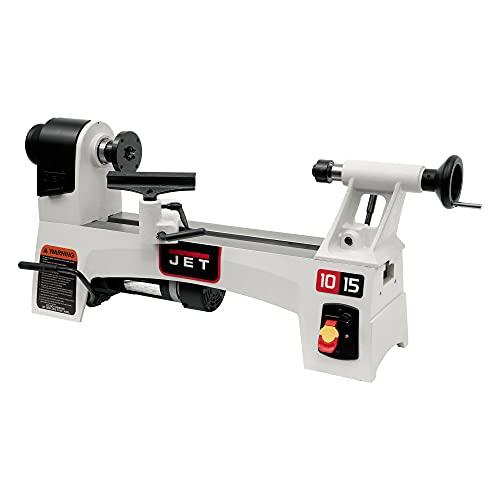
The JET JWL-1015VS is the premium compact pick in this guide, and the one to buy if you want a machine that feels like a full-size lathe in miniature. It has a 10-inch swing and 15 inches between centers, a cast iron bed, and a variable speed dial that runs from about 500 to 3600 RPM. At 72.6 pounds it is heavy enough to sit still on the bench during spindle work, yet light enough for one person to move. The half-horsepower motor is the honest limit here: it turns spindles and small bowls beautifully, but it will stall on a heavy cut in a large, dense bowl blank.
- Specs:
- Swing over bed: 10 in
- Distance between centers: 15 in
- Speed control: variable speed, 500 to 3600 RPM
- Motor: 1/2 HP, 4 amp
- Spindle thread: 1 in x 8 TPI
- Tapers: MT2 headstock and tailstock
- Weight: 72.6 lb
PSI Woodworking KWL-1018VS Turncrafter Commander Midi Lathe

The PSI KWL-1018VS, sold as the Turncrafter Commander, is the feature-packed pick in this guide. It pairs a 10-inch swing with a full 18 inches between centers, so it handles pepper mills and rolling pins that the shorter lathes cannot. It adds forward and reverse rotation, which helps when sanding, and a digital readout that shows the exact spindle speed. Running in reverse while sanding cuts the fibers from the other direction and leaves a cleaner surface. The 3/4-horsepower motor is a good match for the size of work this lathe is built for.
- Specs:
- Swing over bed: 10 in
- Distance between centers: 18 in
- Speed control: variable speed with forward and reverse
- Motor: 3/4 HP
- Spindle thread: 1 in x 8 TPI
- Tapers: MT2 headstock and tailstock
- Digital RPM readout
RIKON 70-105 Mini Lathe
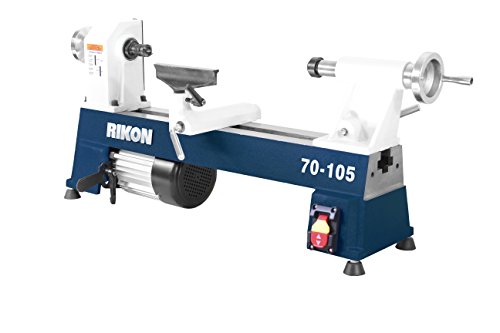
The RIKON 70-105 was designed at the request of pen turners, and it shows. It is a 10-inch by 18-inch lathe with a cast iron frame that weighs about 74 pounds, which damps vibration and leaves a clean surface on small work. The 5-year warranty is the longest in this guide. The trade-off is speed control: the 70-105 uses a five-step belt change instead of a variable speed dial, with speeds from 500 to 3200 RPM. Changing speeds means stopping the lathe and moving the belt, which takes a minute each time. If you turn mostly pens and small spindles at one speed, you will rarely notice.
- Specs:
- Swing over bed: 10 in
- Distance between centers: 18 in
- Speed control: 5-speed belt change, 500 to 3200 RPM
- Motor: 1/2 HP
- Spindle thread: 1 in x 8 TPI
- Tapers: MT2 headstock and tailstock
- Weight: about 74 lb
- Warranty: 5 years
Delta 46-460 Variable Speed Midi Lathe

The Delta 46-460 is the biggest machine in this guide, and the closest a benchtop lathe gets to a floor-standing machine. It has a 12.5-inch swing and 16.5 inches between centers, a full 1-horsepower motor, and electronic variable speed from 250 to 4000 RPM with forward and reverse. If you want to turn bowls up to about 12 inches across without buying a full-size lathe, this is the machine to buy. The extra swing and power come with extra weight, at nearly 100 pounds, so plan on a permanent spot on a strong bench. The low speed range is what makes this lathe work for bowls: start an out-of-balance blank at 250 RPM, then bring the speed up as the blank comes round.
- Specs:
- Swing over bed: 12.5 in
- Distance between centers: 16.5 in
- Speed control: variable speed, 250 to 4000 RPM, with reverse
- Motor: 1 HP
- Spindle thread: 1 in x 8 TPI
- Tapers: MT2 headstock and tailstock
- Weight: nearly 100 lb
Which Mini Lathe Should You Pick
If you are just starting out and mostly want to turn pens, bottle stoppers, and small gifts, buy the WEN LA3421. It is the cheapest real lathe in this guide, it has variable speed, and it will teach you the craft without a big investment.
If you want a machine you will still be happy with in five years, buy the JET JWL-1015VS. It is the best-built compact lathe here, with smooth variable speed and a cast iron bed that keeps vibration down.
If you want the longest bed and the most features, buy the PSI KWL-1018VS. The 18-inch bed, digital readout, and reverse rotation make it the most capable machine for its size.
If you turn pens all day, buy the RIKON 70-105. The cast iron frame and 5-year warranty are built for steady daily use, and the belt-change speeds are a fair trade for the price.
If you want to turn bowls as large as a benchtop lathe allows, buy the Delta 46-460. The 12.5-inch swing and 1-horsepower motor are the top of the mini class.
FAQ
Can a mini lathe turn bowls?
Yes, within its swing. A 10-inch lathe turns bowls up to about 9 inches across, and the 12.5-inch Delta turns bowls up to about 12 inches across. Keep the blank balanced, start slow, and take light cuts.
Do I need a chuck for a mini lathe?
Not to start. A spur center and live center handle spindle work, and a faceplate handles small bowls. A scroll chuck makes bowl work much easier and is the first accessory most turners buy.
What is the difference between a mini lathe and a midi lathe?
The terms overlap. Mini usually means an 8-inch swing with a short bed, while midi usually means a 10-inch or 12-inch swing with a longer bed. Judge by swing and bed length, not by the name on the box.
Can I turn table legs on a mini lathe?
Only short ones. An 18-inch bed turns legs up to about 18 inches long, which covers stool legs and short table legs. Full-length table legs need a longer bed or a bed extension.
Conclusion
A mini lathe is a bench-sized machine with honest limits, and the best one for you is the one whose swing and bed length match the work you actually do. The WEN LA3421 is the best starting point, the JET JWL-1015VS is the best-built compact lathe, the PSI KWL-1018VS packs the most features into a 10-inch frame, the RIKON 70-105 is the pen turner’s workhorse, and the Delta 46-460 is the most capable benchtop lathe in this class.
More from Amazon
Programs that pair well with the guide above. Offers and eligibility are set by Amazon and may change.
A free business account with business pricing and bulk-buying tools for work, shop or home office.
Create a business accountFree shipping on eligible items, Prime Video and more. Eligible new members can start with a free trial.
Start a Prime free trialAudiobooks and podcasts to listen to on the go. Eligible new members can start with a free trial.
Try Audible freeAd-free music streaming. Eligible new subscribers can start with a free trial.
Try Music Unlimited freeAs an Amazon Associate we earn from qualifying purchases.
Write Your Review
No reviews yet. Be the first to share your experience!