

Key takeaways
- Compare the best woodworking axes for hewing, splitting, and carving. We cover head weight, handle length, steel, and sheaths to help you choose.
A good axe is one of the oldest tools in the woodshop, and it still earns its place beside the table saw and the hand plane. Whether you are hewing a beam flat, splitting billets for turning blanks, shaping a chair leg, or knocking out kindling for the shop stove, the right axe turns heavy work into clean, controlled cuts.
This guide covers five axes and hatchets that suit woodworking tasks, from full-size splitting axes to compact carving hatchets. Each pick below is a real tool with a distinct job, and the buying advice up front will help you match the tool to the work you actually do.
As an Amazon Associate, I earn from qualifying purchases.
How to Choose a Woodworking Axe
Start with the job, not the brand. Splitting, hewing, and carving each ask for a different head shape, handle length, and weight, and one axe rarely does all three well.
Head shape and weight. A splitting axe has a wide, wedge-shaped head that forces fibers apart, so the head is heavy and the edge is fairly blunt. A hewing or felling axe has a thinner, sharper bit that slices across the grain, and the head is lighter for control. For rough shaping and carving, a short hatchet with a thin edge and a light head gives you the most control, since you guide the cut with your wrist rather than your shoulders.
Handle length. Longer handles deliver more power, which is what you want when splitting rounds or felling small trees. A 36-inch handle suits splitting firewood, a 26-inch handle suits general chopping, and 13 to 19-inch hatchets suit one-handed work at the bench.
Handle material. Hickory is the classic choice: it absorbs shock, feels warm in the hand, and can be replaced when it wears out. A one-piece forged steel handle never loosens and shrugs off overstrikes, but it transmits more vibration. Modern composite handles are light, weatherproof, and nearly unbreakable, which makes them a practical choice for a shop axe that lives near the woodpile.
Steel and edge. Look for a forged steel head with a stated hardness that holds an edge without chipping. Hand-forged Swedish steel is prized for carving and hewing because it takes a keen edge, while hardened modern steel with a low-friction coating resists sticking in wet wood when splitting. Whatever you buy, plan to keep a file and a sharpening stone nearby, since even the best edge dulls with use.
Sheath and safety. A leather or heavy-duty sheath protects the edge and your hands when the axe is stored or carried. Before each session, check that the head is tight on the handle, clear the area around your chopping block, and keep your feet and free hand out of the swing path. A dull axe is more dangerous than a sharp one, because it bounces and glances instead of biting.
Comparison Table
| Axe | Length | Total Weight | Handle | Best For |
|---|---|---|---|---|
| Fiskars X27 Super Splitting Axe | 36 in | About 6 lb | FiberComp | Splitting large rounds |
| Gransfors Bruks Small Forest Axe | 19 in | 2.2 lb | Hickory | Hewing and general camp work |
| Husqvarna 26-Inch Wooden Multi-Purpose Axe | 26 in | 2.1 lb | Hickory | Felling, limbing, and chopping |
| Estwing Sportsman’s Axe E24A | 14 in | 1.9 lb | Leather-wrapped steel | Kindling and camp chores |
| Fiskars X7 Hatchet | 14 in | 1.5 lb | FiberComp | Kindling and light splitting |
Fiskars X27 Super Splitting Axe

The X27 is the workhorse of this group, built for splitting medium to large rounds with as few swings as possible. Its long FiberComp handle and heavy forged head generate serious force, while the low-friction blade coating helps the head pass through the wood instead of sticking. The flared knob at the end of the handle keeps the axe secure in your grip. If your woodworking starts with a pile of unsplit logs, this is the axe that turns them into usable stock.
- Specs:
- Overall length: 36 inches
- Head weight: 4.3 pounds
- Total weight: About 6 pounds
- Handle material: FiberComp composite
- Blade: Forged steel with low-friction coating
- Sheath: Included blade cover
Gransfors Bruks Small Forest Axe
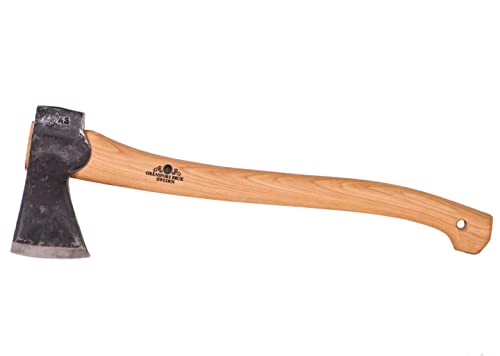
Hand-forged in Sweden from recycled steel, the Small Forest Axe is the most refined tool here. Its 19-inch hickory handle and 2.2-pound total weight strike a balance between a hatchet and a full axe, so it handles limbing, light felling, and rough hewing with equal ease. The thin, keen edge bites cleanly across the grain, which makes it a fine choice for shaping green wood and trimming stock before it reaches the bench.
- Specs:
- Overall length: 19 inches
- Head weight: About 1.5 pounds
- Total weight: 2.2 pounds
- Handle material: American hickory
- Blade: Hand-forged Swedish steel
- Sheath: Leather edge cover included
Husqvarna 26-Inch Wooden Multi-Purpose Axe
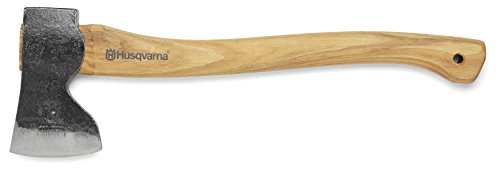
The Husqvarna multi-purpose axe is a classic boy’s axe pattern: a 26-inch hickory handle, a hand-forged Swedish steel head, and a leather edge cover. It is long enough to fell small trees and limb logs with two hands, yet short enough to carry to the woodpile or the job site. The head is secured with wooden and steel wedges, and the grain of the hickory handle runs along its length for strength.
- Specs:
- Overall length: 26 inches
- Head weight: About 2 pounds
- Total weight: 2.1 pounds
- Handle material: American hickory
- Blade: Hand-forged Swedish steel
- Sheath: Leather edge cover included
Estwing Sportsman’s Axe E24A

Estwing forges the Sportsman’s Axe from a single piece of American steel, so there is no head to loosen and no handle joint to fail. The 14-inch tool weighs 1.9 pounds and carries a genuine leather grip that feels secure in the hand. Its 3.25-inch cutting edge handles kindling, small branches, and light splitting, and the poll works as a hammer for tent stakes and wedges. A ballistic nylon sheath with a belt loop keeps the edge covered between jobs.
- Specs:
- Overall length: 14 inches
- Cutting edge: 3.25 inches
- Total weight: 1.9 pounds
- Handle material: One-piece forged steel with leather grip
- Blade: Forged American steel
- Sheath: Ballistic nylon with belt loop
Fiskars X7 Hatchet

The X7 is the lightest tool in this guide at 1.5 pounds, and its 14-inch FiberComp handle makes it easy to carry and control with one hand. The forged steel head uses an advanced blade geometry that cuts deeper with each swing, and the low-friction coating keeps it from binding in the wood. A textured, non-slip grip and a flared handle end add control, while the included sheath protects the edge in storage.
- Specs:
- Overall length: 14 inches
- Total weight: 1.5 pounds
- Handle material: FiberComp composite
- Blade: Forged steel with low-friction coating
- Grip: Textured, non-slip
- Sheath: Included blade cover
Which Woodworking Axe Should You Pick
Match the axe to the heaviest job you do most often. If you split firewood and rough stock, start with the Fiskars X27 and add a hatchet later. If you hew beams, shape green wood, or want one premium tool for precise work, the Gransfors Bruks Small Forest Axe is the best all-around choice. The Husqvarna 26-inch axe is the right middle ground for felling and limbing with a traditional feel. For a compact hatchet, choose the Estwing Sportsman’s Axe when you want one-piece steel durability, or the Fiskars X7 when you want the lightest tool that still splits kindling cleanly. Whichever you pick, keep the edge sharp, store it sheathed, and let the weight of the head do the work.
FAQ
What size axe is best for woodworking?
A 19 to 26-inch axe covers most woodworking tasks, from hewing and limbing to rough shaping. Longer axes suit splitting, while 14-inch hatchets suit kindling and fine trimming at the bench.
What is the difference between a splitting axe and a hewing axe?
A splitting axe has a wide, wedge-shaped head that forces wood fibers apart, while a hewing axe has a thinner, sharper bit that slices across the grain for a flat surface. Splitting heads are heavier and blunter, hewing heads are lighter and keener.
Is a hickory handle or a composite handle better?
Hickory absorbs shock and can be replaced, which suits traditional axes and carving work. Composite handles are lighter, weatherproof, and resist breaking, which suits a hard-use splitting axe that lives outdoors.
How do I keep my axe sharp?
File the edge at the factory bevel angle, then finish with a sharpening stone and a light coat of oil to prevent rust. Check the head for looseness before each use and tighten or re-wedge it if it moves.
Conclusion
A woodworking axe is a simple tool, but the details matter: head shape, handle length, steel, and balance all decide whether the work feels easy or exhausting. The five axes in this guide cover the full range, from the heavy splitting power of the Fiskars X27 to the refined edge of the Gransfors Bruks Small Forest Axe, with the Husqvarna multi-purpose axe, the Estwing Sportsman’s Axe, and the Fiskars X7 filling the gaps in between. Pick the one that matches your heaviest regular job, keep its edge sharp, and it will serve your woodworking for years.
More from Amazon
Programs that pair well with the guide above. Offers and eligibility are set by Amazon and may change.
A free business account with business pricing and bulk-buying tools for work, shop or home office.
Create a business accountFree shipping on eligible items, Prime Video and more. Eligible new members can start with a free trial.
Start a Prime free trialAudiobooks and podcasts to listen to on the go. Eligible new members can start with a free trial.
Try Audible freeAd-free music streaming. Eligible new subscribers can start with a free trial.
Try Music Unlimited freeAs an Amazon Associate we earn from qualifying purchases.
Write Your Review
No reviews yet. Be the first to share your experience!