

Key takeaways
- iPadOS: Best for polished tablet applications, creative work, accessories, and long-term performance. It is less flexible than desktop operating systems for file management and external-monitor workflows.
- Android: Best for home-screen customization, expandable storage on some models, broad hardware choice, and easy integration with Google services. Samsung DeX is especially useful for windowed work.
- Windows: Best when you need full desktop applications, business software, or compatibility with existing Windows workflows. Windows tablets are often heavier, less efficient on battery, and less comfortable for casual touch use than iPads or Android tablets.
The best tablets for most people are the iPad Air for long-term value, the Samsung Galaxy Tab S10+ for Android productivity and media, and the OnePlus Pad 2 for high performance at a lower price; your ideal choice depends mainly on software, screen size, accessory needs, and whether you already use Apple, Android, or Windows devices.
Our top picks

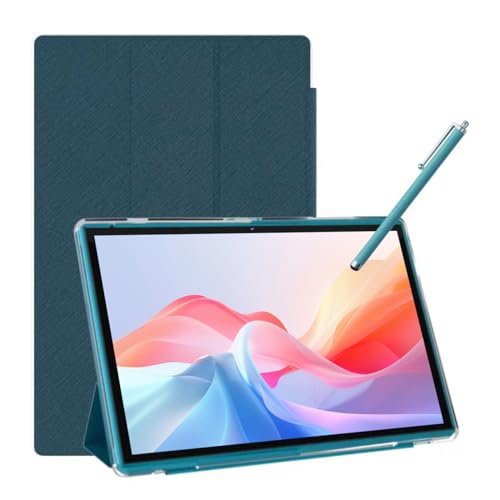
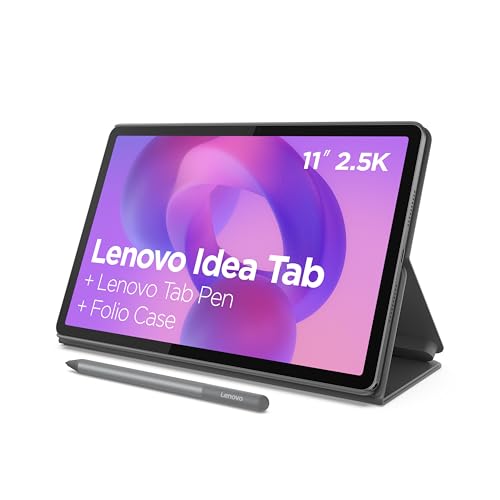

As an Amazon Associate we earn from qualifying purchases at no extra cost to you. Ratings are shown as listed on Amazon.
Best tablets by situation
| Situation | Best choice | Why it fits | Typical price range |
|---|---|---|---|
| One tablet for work, study, and entertainment | iPad Air (M3) | Strong performance, excellent app support, optional keyboard and Pencil Pro | $599–$949, before accessories |
| Large OLED screen and Android multitasking | Samsung Galaxy Tab S10+ | 12.4-inch AMOLED display, DeX desktop mode, included S Pen | $999–$1,199 |
| Fast performance for less money | OnePlus Pad 2 | 144Hz display, Snapdragon performance, useful keyboard option | $399–$599, before accessories |
| Simple streaming and light browsing | iPad (A16) | Reliable software support and a broad selection of tablet apps | $349–$499 |
| Google services and smart-home convenience | Google Pixel Tablet | Clean Android interface and optional charging speaker dock | $399–$599, depending on bundle |
| Large, affordable screen for reading and video | Lenovo Tab P12 | 12.7-inch display and optional pen or keyboard at a moderate cost | $299–$499 |
Our top pick: iPad Air (M3)
The iPad Air is the safest recommendation when you want one tablet to cover work documents, video calls, drawing, web browsing, gaming, and streaming. Its M3 processor has substantially more headroom than entry-level tablet chips, so it should remain responsive as apps become more demanding. It is available in 11-inch and 13-inch sizes, with 128GB, 256GB, 512GB, and 1TB storage options.
The 11-inch model is easier to hold and carry, while the 13-inch version is better for split-screen documents and spreadsheets. Both use a high-quality LCD rather than OLED. That means Samsung’s premium tablets deliver deeper blacks and stronger contrast, but the iPad Air still provides a sharp, bright image for normal indoor use.
Accessory support is a major advantage. The Apple Pencil Pro is useful for handwritten notes, illustration, and marking up PDFs, while the Magic Keyboard turns the tablet into a compact laptop-style workstation. Those accessories are expensive, so include them in the budget rather than comparing only tablet prices.
Head-to-head: iPad Air versus Galaxy Tab S10+
| Feature | iPad Air (M3) | Galaxy Tab S10+ |
|---|---|---|
| Screen | 11-inch or 13-inch LCD, 60Hz | 12.4-inch Dynamic AMOLED 2X, up to 120Hz |
| Approximate weight | About 460g for 11-inch Wi-Fi; about 616g for 13-inch Wi-Fi | About 571g for Wi-Fi model |
| Storage | 128GB to 1TB; no microSD slot | Typically 256GB or 512GB; microSD expansion up to 1.5TB |
| Processor | Apple M3 | MediaTek Dimensity 9300+ |
| Pen support | Apple Pencil Pro and Apple Pencil USB-C | S Pen included |
| Keyboard and desktop features | Magic Keyboard; iPadOS multitasking | Book Cover Keyboard; Samsung DeX |
| Battery capacity | Apple rates it for up to 10 hours of Wi-Fi use | 10,090mAh; advertised video runtime varies by configuration and use |
Choose the iPad Air if you prioritize polished tablet apps, creative software, long-term performance, or integration with an iPhone and Mac. Choose the Galaxy Tab S10+ if you want OLED contrast, a 120Hz refresh rate, expandable storage, an included stylus, or Samsung DeX for a more desktop-like layout.
Best Android alternative: OnePlus Pad 2
The OnePlus Pad 2 is one of the strongest value choices for demanding Android users. Its Snapdragon 8 Gen 3 processor is suitable for large documents, gaming, multitasking, and image editing. The 12.1-inch LCD has a 3K resolution and a 144Hz refresh rate, making scrolling and compatible games look particularly fluid.
Its weaknesses are more practical than performance-related. Storage is fixed at 128GB or 256GB depending on the version, there is no microSD slot, and the keyboard and Stylo 2 pen cost extra. Android tablet app optimization is also less consistent than iPadOS optimization, although Samsung’s software is generally stronger for productivity.
Best budget and streaming choices
iPad (A16)
The entry-level iPad is a good choice when you want dependable streaming, reading, casual games, video calls, and schoolwork without paying for pro-level performance. Its 11-inch display is suitable for everyday use, and iPadOS gives it access to a mature tablet app library. The main compromises are its non-laminated screen, basic accessory design, and limited storage at the lower end. Select at least 128GB if you expect to keep downloaded shows, games, photos, or school files.
Google Pixel Tablet
The Pixel Tablet makes sense for people already invested in Google Photos, YouTube, Google Drive, and Android. Its optional charging speaker dock gives it a second role as a stationary household screen and keeps it charged between uses. It is less compelling as a premium productivity tablet because its processor and accessory ecosystem do not match Apple’s or Samsung’s high-end offerings.
Lenovo Tab P12
The Lenovo Tab P12 offers a large 12.7-inch 3K LCD at a relatively low price. It is well suited to Netflix, ebooks, recipes, web research, and occasional note-taking. It is not the best option for demanding games or professional creative work, but it can be excellent value when discounted and bundled with a keyboard or pen.
Which operating system is best?
- iPadOS: Best for polished tablet applications, creative work, accessories, and long-term performance. It is less flexible than desktop operating systems for file management and external-monitor workflows.
- Android: Best for home-screen customization, expandable storage on some models, broad hardware choice, and easy integration with Google services. Samsung DeX is especially useful for windowed work.
- Windows: Best when you need full desktop applications, business software, or compatibility with existing Windows workflows. Windows tablets are often heavier, less efficient on battery, and less comfortable for casual touch use than iPads or Android tablets.
How much storage should you buy?
Storage requirements grow faster than most buyers expect. A practical starting point is 128GB for streaming, browsing, notes, and cloud-based work. Choose 256GB if you download several games, keep offline video, edit photos, or expect to use the tablet for four or more years. Choose 512GB or more for video projects, large illustration libraries, professional audio, or a substantial local media collection.
Here is a simple example: if downloaded video uses 20GB, games use 35GB, photos and documents use 15GB, and the operating system plus app overhead occupies about 20GB, a 128GB tablet may have only around 38GB of comfortable working space left. On a model without microSD expansion, moving to 256GB can be cheaper and less inconvenient than relying on external drives later.
Battery life, durability, and ownership costs
Most premium tablets advertise approximately 10 hours of web browsing or video playback, but keyboard use, high brightness, cellular radios, gaming, and video calls can reduce that figure. OLED screens may use more power on bright content, while high refresh rates can also affect runtime. For frequent travel, prioritize USB-C charging, a battery rating near 10 hours or more in manufacturer estimates, and a protective case with a stable stand.
The parts most likely to show wear are the charging port, screen coating, keyboard hinges, and battery. Do not leave a tablet in a hot car, charge it under a pillow, or use a sharp metal tool to clean the port. Wipe the screen with a soft, lightly dampened microfiber cloth; avoid spraying cleaner directly onto the device. A case that protects corners and leaves room around the USB-C port is usually more valuable than an ultra-thin case.
Accessories also change the value calculation. An iPad Air with a keyboard and Pencil can cost several hundred dollars more than the tablet alone. Samsung includes the S Pen with the Galaxy Tab S10+, which narrows the real-world price gap. If you only stream video, spend less on accessories and prioritize screen quality, speakers, and storage instead.
Bottom line
Buy the iPad Air (M3) for the best all-around balance of performance, software, and accessory support. Choose the Galaxy Tab S10+ for the best screen and Android productivity experience. Pick the OnePlus Pad 2 when speed matters but your budget is tighter. For basic streaming and browsing, the iPad (A16), Pixel Tablet, or Lenovo Tab P12 can provide better value than paying for hardware you will rarely use.
Write Your Review
No reviews yet. Be the first to share your experience!