

Key takeaways
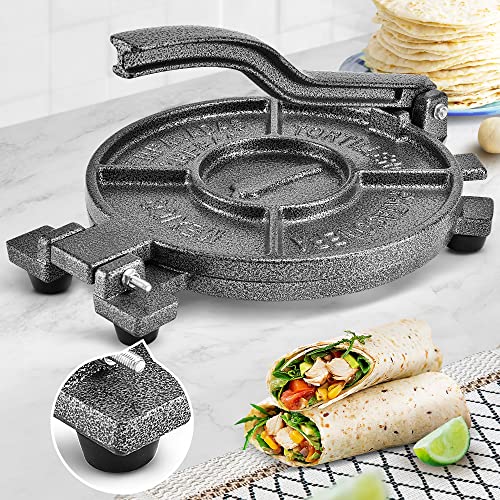
- For most home cooks, the best home tortilla presses are 8-inch cast-iron models: they provide enough weight for even pressing, fit standard tortilla sizes, and require less technique than lighter aluminum or wooden presses. Our top picksTop pickIMUSA USA Tortilla…
For most home cooks, the best home tortilla presses are 8-inch cast-iron models: they provide enough weight for even pressing, fit standard tortilla sizes, and require less technique than lighter aluminum or wooden presses.
Our top picks


As an Amazon Associate we earn from qualifying purchases at no extra cost to you. Ratings are shown as listed on Amazon.
Best Home Tortilla Presses at a Glance
| Press type | Typical diameter | Typical weight | Best for | Main trade-off |
|---|---|---|---|---|
| Cast iron | 6–10 inches | 4–8 pounds | Even pressing, frequent use, beginners | Heavy and needs rust prevention |
| Aluminum | 6–8 inches | 1.5–3 pounds | Small kitchens, occasional use, easy handling | Usually needs more hand pressure |
| Wood | 8–12 inches | 3–10 pounds | Traditional use, large tortillas, decorative kitchens | Can press less uniformly if warped |
These figures describe common household presses rather than one universal standard. Hinge design, plate thickness, lever length, and the flatness of the pressing surfaces matter as much as the material.
Our Main Pick: An 8-Inch Cast-Iron Press
An 8-inch cast-iron press is the most balanced choice for corn tortillas. The diameter is large enough for typical taco tortillas without taking up the counter space of a 10- or 12-inch model. Its weight also does much of the work: once the top plate is lowered, the press compresses the dough with steady force instead of relying entirely on the user’s arms.
Recognized examples include the Victoria 8-inch cast-iron tortilla press and the 8-inch cast-iron models sold under the Lodge name in some markets. Availability and exact design can vary by region, so compare the actual plate diameter, hinge construction, and handle before buying.
Cast iron is particularly forgiving for beginners. If one edge of the tortilla is slightly thicker, closing the press again with the dough rotated 180 degrees often corrects the imbalance. A good press should produce a round disk with a fairly consistent edge, although the final thickness still depends on dough hydration and how evenly the masa ball is shaped.
Where cast iron falls short
Weight is its advantage and its inconvenience. A 6-pound press is not difficult to operate, but it is awkward to move repeatedly and may be too much for a narrow cupboard. Bare or lightly seasoned cast iron also cannot be left wet. Dry it immediately and wipe on a very thin film of neutral cooking oil when the surface looks dry or dull.
Aluminum: The Practical Choice for Small Kitchens
Aluminum presses are easier to lift, store, and carry. A typical 8-inch aluminum model weighs roughly 2 pounds, compared with 5 or 6 pounds for many cast-iron presses. That difference matters if the press must be put away after every use or if several people are pressing tortillas together.
Brands such as IMUSA sell aluminum tortilla presses in common household sizes. Aluminum is also less troublesome if exposed briefly to moisture, though it should still be washed and dried promptly. Many models have a coated or polished surface, so abrasive scouring pads can damage the finish.
The main limitation is leverage. A lightweight press does not automatically generate enough force to flatten stiff masa. You may need to press the handle firmly or apply pressure twice, rotating the tortilla between presses. For occasional taco night, that is usually acceptable. For a large batch, the extra effort becomes noticeable.
Choose aluminum when storage matters most
Aluminum makes sense for renters, apartment kitchens, and cooks who prepare tortillas only a few times per month. It is also a sensible choice when the press will be used by someone who finds a heavy cast-iron tool difficult to lift. Look for a thick, rigid base and a handle that does not flex at the hinge. Thin plates can bow slightly, producing a thicker center or uneven edges.
Wood: Large Diameter and Traditional Character
Wooden presses are available in sizes from about 8 inches to 12 inches or more. Their larger plates are useful for oversized tortillas, burritos, quesadillas, and flatbreads that would extend beyond a standard taco press.
Wood does not have one predictable weight range. A small hardwood press may weigh 3 or 4 pounds, while a thick 12-inch model can approach 10 pounds. Dense hardwood and thick plates can provide excellent pressure, but wood is more vulnerable to swelling, warping, and joint movement than metal.
Use parchment or food-safe plastic between the dough and the plates, rather than placing wet masa directly on unfinished wood. Wash with a damp cloth instead of soaking the press, then dry it completely. Do not put a wooden press in a dishwasher. A press that develops a visible twist or a gap at one corner will struggle to produce evenly thin tortillas regardless of how much pressure is applied.
Wood is best for cooks who value a broad pressing surface and traditional appearance, and who are willing to give the tool more careful storage. It is not automatically better at even pressing than cast iron.
Cast Iron vs. Aluminum vs. Wood: What Actually Determines Evenness?
Weight and leverage
Weight helps start compression, but the hinge and handle amplify the force applied by the user. A heavy press with a short, poorly aligned handle may perform worse than a lighter model with a strong hinge and longer lever. For most households, 4–6 pounds is a useful middle ground: substantial enough to stabilize the dough but still manageable to move.
Diameter
Choose the press size based on the tortillas you want, not only the available counter space. An 8-inch press normally makes tortillas around 6–7 inches after cooking because the dough contracts slightly and the raw disk is rarely pressed to the absolute edge. A 10-inch press gives more room for 8-inch tortillas, while a 12-inch model is better for large wraps but takes more effort to close evenly.
Plate flatness
Flat, parallel plates are more important than a polished finish. When closed, the plates should meet evenly around the perimeter. If the hinge allows the top plate to tilt, the tortilla will be thinner on one side. This is especially common with inexpensive presses assembled from thin metal or poorly fitted wood.
Decision Matrix: Which Press Fits Your Situation?
| Your situation | Best choice | Why | What to check |
|---|---|---|---|
| Making tortillas weekly or in batches | 8-inch cast iron | Weight reduces repeated hand pressure | Comfortable handle and stable hinge |
| Very limited storage | 6- or 8-inch aluminum | Light enough for a cupboard or shelf | Rigid plates; avoid visibly thin castings |
| First tortilla press | 8-inch cast iron | Forgiving size and consistent compression | Pre-seasoned or easy-to-season surface |
| Large tortillas or flatbreads | 10- or 12-inch wood or cast iron | Provides a wider pressing area | Counter space and enough handle leverage |
| Occasional use and easy lifting | Aluminum | Lower weight and simple storage | Coating condition and hinge alignment |
| Traditional look and careful maintenance | Hardwood | Large, attractive, and durable when kept dry | Warp-free plates and strong fasteners |
How to Get Evenly Pressed Tortillas
- Mix the masa with enough water that it feels soft and pliable, not crumbly. Dry dough resists compression and encourages cracked edges.
- Rest the dough for 15–30 minutes. This allows moisture to distribute through the masa, reducing splitting.
- Divide into equal balls. For an 8-inch press, 25–35 grams is a useful starting range for thin taco tortillas; adjust according to the desired thickness.
- Line both plates with plastic cut from a food-storage bag or use sheets of parchment. The liner should extend beyond the dough but not bunch up near the hinge.
- Place the dough ball slightly behind the center of the lower plate. Close the press gradually, then rotate the tortilla 180 degrees and press again if the edge looks uneven.
- Peel the tortilla from the liner and cook it promptly on a hot, dry griddle. A pressed tortilla left exposed can dry at the edge and crack.
If tortillas are thick in the center, use a slightly smaller dough ball or press a second time after rotating it. If they are thin on one side, inspect the press for a tilted top plate rather than simply pressing harder.
Ownership Costs and Maintenance
Typical household prices range from about $20–$45 for basic aluminum presses, $25–$70 for many cast-iron presses, and $35–$100 or more for larger hardwood or heavy-duty models. The most useful cost calculation is cost per use: a $40 press used twice a month for five years costs about $0.33 per use before liners and ingredients. A $25 press used only five times costs $5 per use, so the cheaper tool is not necessarily the better value.
On cast iron, the finish usually needs more attention than the hinge. Wash without prolonged soaking, dry over low heat if necessary, and apply a thin oil film. On aluminum, the coating or polished surface can wear from metal utensils and harsh cleaners. On wood, moisture and heat are the main threats; store it flat in a dry place and do not leave it beside a steaming cooktop.
For most buyers, choose an 8-inch cast-iron press unless low weight or large tortillas is the overriding concern. Choose aluminum for easy storage and occasional use, or wood for a larger traditional press that you are prepared to maintain carefully. In every case, prioritize parallel plates, a solid hinge, and a handle with enough leverage over decorative finishes or extra weight alone.

Write Your Review
No reviews yet. Be the first to share your experience!