

The DeWalt DWE7491RS and the Bosch GTS15-10 are the best portable 10-inch table saws for most job sites and small shops, because both pair a 15-amp motor with a rip capacity of roughly 32 inches and a rolling, fold-away stand. The Skil TS6307 is the lighter pick if you carry the saw often, the Metabo HPT C10RJSM offers the widest published rip capacity in this group, and the SawStop Compact is the choice when you want flesh-detection braking in a portable 10-inch format.
This guide is research-based. It compares published specifications from manufacturers and large review roundups and groups saws by the criteria that actually decide a purchase: rip capacity, fence type, dust collection, weight and stand design, and safety systems. Where a figure could not be confirmed for a current model it is described as a spec class or flagged as something to check on the product page. Nothing here is based on bench work or personal use.
Our top picks
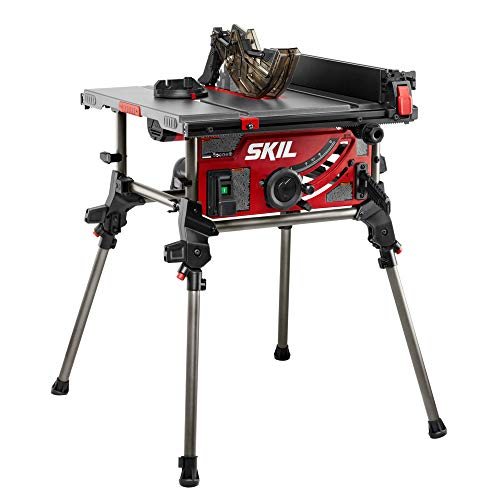 SKIL 15 Amp 10-Inch Jobsite Table Saw
- Ensures fence stays parallel to blade for fast…
- Legs quickly fold in to provide portability and…
- Available micro-adjustment of blade so that it is…
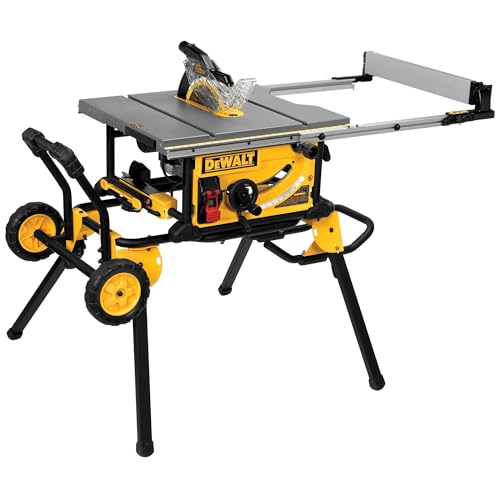 DEWALT Table Saw 10 Inch with Foldable
- Rack & Pinion Telescoping Fence System Make fence…
- Patented material support, can be used for narrow…
- 32-1/2" rip capacity easily cuts a variety of…
| Product | Key specs | |
|---|---|---|
| SKIL 15 Amp 10-Inch Jobsite Table Saw | Ensures fence stays parallel to blade for fast… Legs quickly fold in to provide portability and… Available micro-adjustment of blade so that it is… | Check price |
| DEWALT Table Saw 10 Inch with Foldable | Rack & Pinion Telescoping Fence System Make fence… Patented material support, can be used for narrow… 32-1/2" rip capacity easily cuts a variety of… | Check price |
 MarvTool 15Amp Portable Table Saw 10 inch | Check price | |
 DEWALT 15 Amp 8-1/4 in. Compact Portable | Site-Pro Modular Guarding System allows for tool-free adjustments… 24.5 in Rack & pinion telescoping fence rails make fence… | Check price |
As an Amazon Associate we earn from qualifying purchases at no extra cost to you.
Quick picks by buyer type
- Job site carpenter who rips sheet goods: DeWalt DWE7491RS or Bosch GTS15-10 (about 32 inches of rip).
- Remodeler who loads the saw in and out of a truck daily: Skil TS6307 (published weight about 51 pounds).
- Cabinet and furniture maker with a small shop who needs the widest rip: Metabo HPT C10RJSM (35 inches published).
- Home shop with kids or new users nearby: SawStop Compact (flesh-detection braking, 10-inch blade).
- Budget-minded owner who wants a heavy, stable base: Ridgid R4514 (30 inches of rip, heavier frame).
- Tight storage and light trim work: an 8-1/4-inch compact such as the DeWalt DWE7485 rather than a 10-inch saw.
How we chose these saws
Selection came from specification comparison and from reading how published roundups rank saws against the same criteria. A saw was included only when it is a 10-inch portable or compact design with a stated rip capacity, is listed by its maker as a current product, and has documented fence, weight and safety details. We weighted seven criteria:
- Rip capacity to the right of the blade. It decides which sheet-good cuts are possible without a track saw.
- Fence design. A rack-and-pinion fence stays parallel as you adjust it and reads accurately; a basic T-style fence is lighter but slower to set.
- Dust collection. A 2-1/2-inch or 4-inch port helps, but the shroud design matters more than the port size.
- Weight and fold. Weight with and without the stand, and whether the stand folds without tools.
- Depth of cut at 90 degrees. A 3-1/8-inch cut is enough for most dimensional lumber work; a 3.5-inch cut handles two layers of thick stock.
- Safety systems. Riving knife, guard, tool-free blade changes, and whether a flesh-detection brake is offered.
- Motor and speed. A 15-amp universal motor running at roughly 4,800 to 5,000 RPM is the norm in this class.
Specifications compared
| Model | Blade | Rip capacity | Weight (published) | Depth at 90 degrees | Fence | Stand |
|---|---|---|---|---|---|---|
| DeWalt DWE7491RS | 10 in | 32.5 in | About 90 lb | 3.125 in | Standard fence | Rolling folding stand |
| Bosch GTS15-10 | 10 in | 32.125 in | About 91 lb | 3.56 in | Rack and pinion | Wheeled gravity-rise stand |
| Skil TS6307 | 10 in | 25.5 in | About 51 lb | 3.5 in | Rack and pinion | Foldable legs |
| Ridgid R4514 | 10 in | 30 in | About 95 lb | 3.5 in | Standard fence | Wheeled base |
| Metabo HPT C10RJSM | 10 in | 35 in | About 96 lb | 3.125 in | Rack and pinion | Fold-and-roll legs |
| SawStop Compact | 10 in | 24.5 in | About 68 lb | 3.125 in | Standard fence | Check current kit |
| Evolution R10TBLX | 10 in | About 26 in | Check manufacturer | Check manufacturer | Check manufacturer | Check manufacturer |
Weights are rounded, are drawn from published review tables and may differ with the stand or accessories included. Confirm the number on the product page before ordering if your vehicle or stairs make weight a limit.
Picks in detail
DeWalt DWE7491RS
Spec line: 10-inch blade · 15-amp motor · 32.5-inch rip capacity · 3.125-inch depth of cut · rolling stand · dust port
Best for: Carpenters and remodelers who need wide rip capacity, a rolling stand and a saw that tolerates being moved through mud and over thresholds.
Skip if: You load the saw by hand into a car or up stairs. At about 90 pounds with the stand it is among the heaviest in the group.
- Pros: Wide rip, folding rolling stand, riving knife and guard system, and a well-established parts and service network.
- Cons: The fence is not a rack-and-pinion design in published specs, so setting width takes more care; weight.
Bosch GTS15-10
Spec line: 10-inch blade · 15-amp motor · 32.125-inch rip capacity · 3.56-inch depth of cut · rack-and-pinion fence · gravity-rise stand
Best for: Users who care about fence accuracy and a stand that rises and rolls with minimal fuss.
Skip if: You need the lightest carry weight. At about 91 pounds it is a heavy portable.
- Pros: Rack-and-pinion fence, the deepest cut in this list, and a gravity-rise stand that deploys quickly.
- Cons: Heavy; the older GTS1031 is a different, smaller-capacity saw, so do not confuse the model numbers when comparing listings.
Skil TS6307
Spec line: 10-inch blade · 15-amp motor · 25.5-inch rip capacity · 3.5-inch depth of cut · rack-and-pinion fence · foldable legs · about 51 pounds
Best for: Home workshops and tradespeople who carry the saw to the work area and need to rip stock up to roughly 24 inches.
Skip if: You regularly rip full-width sheet material in a single pass without first breaking it down.
- Pros: Light for a 10-inch saw, rack-and-pinion fence, entry-level cost class and a deep 3.5-inch cut.
- Cons: Narrower rip capacity; lighter frame means less mass to damp vibration on heavy cuts.
Ridgid R4514
Spec line: 10-inch blade · 15-amp motor · 30-inch rip capacity · 3.5-inch depth of cut · wheeled base · about 95 pounds
Best for: A mostly stationary job site saw that gets moved occasionally and needs a stable, heavy base.
Skip if: You need a rack-and-pinion fence or a light saw for frequent loading.
- Pros: 30-inch rip, 3.5-inch depth of cut, a heavy base that stays planted.
- Cons: Standard fence and a heavy frame; published details on dust collection are limited, so check the shroud and port on the current model.
Metabo HPT C10RJSM
Spec line: 10-inch blade · 35-inch rip capacity · 3.125-inch depth of cut · rack-and-pinion fence · fold-and-roll legs · about 96 pounds
Best for: Woodworkers and finish carpenters who need the widest rip capacity in a portable format and want a rack-and-pinion fence.
Skip if: Weight or carrying across uneven ground is a daily concern.
- Pros: The widest published rip capacity here, rack-and-pinion fence, folding stand.
- Cons: Heaviest in this list; shallower cut than the Bosch and Skil.
SawStop Compact (10-inch)
Spec line: 10-inch blade · 24.5-inch rip capacity · 3.125-inch depth of cut · skin-contact detection brake · about 68 pounds
Best for: Small shops, schools and homes where reducing the severity of a blade-contact injury is the priority and rip capacity beyond about 24 inches is not essential.
Skip if: You need to rip wide panels, or you cannot accept the cost of replacing a brake cartridge and blade after a trigger.
- Pros: Flesh-detection braking is the headline safety feature in this class; a comparatively moderate weight.
- Cons: Narrower rip capacity; cost class is above entry-level; the brake system requires you to use compatible blades and follow the maker’s guidance on wet or conductive stock.
SawStop also lists a larger Jobsite Saw PRO. This guide does not quote its specifications because they could not be verified; compare its rip capacity and weight against the table above on the maker’s page.
Evolution R10TBLX
Spec line: 10-inch blade · about 26-inch rip capacity · multi-material blade design (check blade type)
Best for: Mixed-material work where the saw may cut wood and, with the right blade, thin non-ferrous materials. Confirm the blade compatibility and safety notes in the manual.
Skip if: You need a detailed dust shroud or a rolling stand, since several details are not confirmed here.
- Pros: Approximately 26-inch rip capacity and a design aimed at versatility.
- Cons: Limited verified detail; check weight, stand and fence type before you commit.
Job site saw versus compact benchtop saw
| Factor | Job site saw | Compact benchtop saw |
|---|---|---|
| Typical weight | About 90 to 96 lb with stand (large models) | About 51 to 68 lb |
| Typical rip capacity | 30 to 35 inches | About 24 to 26 inches |
| Stand | Folding rolling stand | Folding legs or bench-mount |
| Best for | Wide rips, repeated moves on site | Small shops, carrying to a room or truck |
| Trade-off | Heavy to lift | May need a track saw for full sheets |
Worked example: what rip capacity you really need
Use this decision logic before you compare models.
- List your widest regular rip. A standard sheet of plywood is 48 inches wide. Cutting it down the middle needs 24 inches to the right of the blade.
- Add the fence clearance. Add about 1 inch for setup tolerance so you are not at the physical limit of the fence rail. A 24-inch cut therefore wants a saw rated 25 inches or more.
- Check the Skil and SawStop. At 25.5 and 24.5 inches they handle a half-sheet rip on paper, but the SawStop leaves almost no margin. Verify the actual usable rip with your fence.
- Check sheet breakdown. If you cut a 4 by 8 foot sheet into 16-inch strips, every saw above works; if you cut 30-inch panels for cabinet sides, you need a rating of 31 inches or more, which points to the DeWalt, Bosch, Ridgid or Metabo.
- Check support. A 96-inch sheet needs outfeed support regardless of rip capacity. Add roller stands or a second support surface; a saw with the longest rip capacity still tips a sheet if it is not supported.
- Add weight. If you will lift the saw into a truck bed alone, anything above about 70 pounds should be a rolling-stand model that you can fold and roll to the tailgate.
Buying criteria with concrete thresholds
- Rip capacity: at least 25 inches for half-sheet rips; at least 30 inches for wide panels; 35 inches for the widest portable work.
- Fence: rack-and-pinion if you reset the fence often; a standard fence is acceptable for repeat cuts at a single width.
- Dust collection: a port plus a shroud around the blade; plan on a shop vacuum with a hose that fits the port.
- Weight with stand: under about 55 pounds for single-person loading; over 85 pounds expect a rolling stand and two people for stairs.
- Depth of cut: at least 3.125 inches for common lumber; 3.5 inches if you rip thick stock.
- Safety: riving knife, blade guard and anti-kickback pawls as a minimum; consider flesh-detection braking if the saw will be used around inexperienced users.
Safety guidance for portable table saws
- Use the guard, riving knife and push stick every time. Remove them only for cuts that require it and replace them immediately after.
- Stand to the side of the blade line to avoid kickback.
- Never reach over the blade and never cut freehand without a fence or miter gauge.
- Use eye and hearing protection and a dust mask; wood dust is a respiratory irritant.
- Set blade height so that the teeth rise about one-quarter inch above the workpiece.
- Unplug the saw before changing blades or making adjustments.
- Secure the stand on level ground, lock the wheels and support long stock so the saw does not tip.
- Do not rely on a brake system as permission to take risks. Treat any flesh-detection feature as a backup, not as a substitute for correct technique.
Frequently asked questions
What is the best portable 10-inch table saw overall?
The DeWalt DWE7491RS and Bosch GTS15-10 are the best all-round portable 10-inch saws, offering about 32 inches of rip capacity and rolling stands.
Choose the Bosch if you want a rack-and-pinion fence and a deeper cut; choose the DeWalt if you prefer its service network and stand design.
Which portable table saw has the widest rip capacity?
Of the saws here, the Metabo HPT C10RJSM has the widest published rip capacity at about 35 inches, followed by the DeWalt DWE7491RS at 32.5 inches.
Check the number on the product page, since capacities can vary by fence rail length and kit.
Is a rack-and-pinion fence worth it?
Yes if you change rip widths often. It keeps the fence parallel to the blade and makes width settings faster and more repeatable.
If you cut the same width repeatedly, a standard fence is adequate and may reduce cost and weight.
Is a SawStop-style safety system available on portable saws?
Yes. The SawStop Compact uses a skin-contact detection brake in a 10-inch format. Other brands in this list rely on guards and riving knives.
Confirm cartridge costs and compatible blades before buying, because a brake trigger usually means replacing the cartridge and blade.
How much does a portable job site table saw weigh?
Larger 10-inch saws with stands weigh roughly 90 to 96 pounds; lighter compact models weigh about 51 to 68 pounds.
Use a rolling stand and a second person for stairs or truck beds if the saw is above about 70 pounds.
Can a portable table saw rip a full sheet of plywood?
It can cut a sheet in half if rip capacity is at least 24 inches, but you will need outfeed and side support for the 96-inch length.
Many users break down sheets with a circular saw or track saw first, then finish cuts on the table saw.
Do I need a dust collection setup?
Yes. A shop vacuum on the dust port reduces airborne dust, though no portable saw collects all of it.
Wear a dust mask, and consider a separator or a vacuum with a fine filter for long sessions.
Is an 8-1/4-inch compact saw a good substitute?
It suits light trim and small stock and is easier to carry, but it limits depth of cut and rip capacity, so a 10-inch saw is better for general framing and furniture.
The DeWalt DWE7485 is an example of the compact class, with a published rip capacity of about 24.5 inches.
Bottom line
Pick by the widest cut you make and the heaviest load you can lift. The DeWalt DWE7491RS and Bosch GTS15-10 cover most job site needs, the Metabo HPT C10RJSM adds the widest rip, the Skil TS6307 is the portable lightweight, the Ridgid R4514 is a heavy, stable base, and the SawStop Compact is the choice for flesh-detection braking. Confirm weight, rip capacity and what the stand includes on the maker’s page, then set up outfeed support and follow the safety steps above before the first cut.
More from Amazon
Programs that pair well with the guide above. Offers and eligibility are set by Amazon and may change.
A free business account with business pricing and bulk-buying tools for work, shop or home office.
Create a business accountFree shipping on eligible items, Prime Video and more. Eligible new members can start with a free trial.
Start a Prime free trialAudiobooks and podcasts to listen to on the go. Eligible new members can start with a free trial.
Try Audible freeAd-free music streaming. Eligible new subscribers can start with a free trial.
Try Music Unlimited freeAs an Amazon Associate we earn from qualifying purchases.





Write Your Review
No reviews yet. Be the first to share your experience!