

Key takeaways
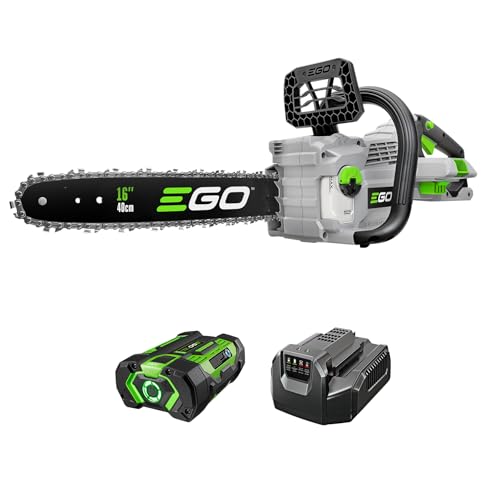
- Best overall for homeowners: EGO CS1804 (56V, 18 in., brushless, tool-free tensioning).
- Best for existing DeWalt owners: DeWalt DCCS670 (60V FlexVolt, 16 in.).
- Most powerful for dense wood: Greenworks 80V GCS80420 (18 in., brushless).
- Best budget tier: Ryobi RY405100 40V HP (14 in., brushless, low-kickback chain).
- Best 16-inch all-rounder: EGO CS1613 (56V, 16 in.).
- Best for Milwaukee M18 owners: Milwaukee M18 FUEL 2727-20 (16 in., bare tool).
For most homeowners the EGO CS1804 (56V, 18 in.) and the DeWalt DCCS670 (60V FlexVolt, 16 in.) are the best battery chainsaws: the EGO for the strongest all-round yard performance, the DeWalt for anyone who already owns FlexVolt batteries. The Greenworks 80V GCS80420 is the pick for dense hardwood and storm cleanup, the Ryobi RY405100 40V HP is the best budget-tier saw, and the Milwaukee M18 FUEL 2727-20 makes sense only if you already own M18 batteries. Whichever you choose, the battery platform matters as much as the saw itself.
Battery chainsaws now handle the jobs most homeowners actually have: limbing, cutting fallen branches into firewood lengths, clearing storm debris and trimming small trees. They start instantly, need no fuel mixing and run far quieter than gas saws. What they do not do is run all day without a battery swap, and they differ widely in bar length, chain speed and how many cuts one pack delivers. This guide compares nine saws across the criteria that decide those results.
Our top picks



As an Amazon Associate we earn from qualifying purchases at no extra cost to you.
Quick picks
- Best overall for homeowners: EGO CS1804 (56V, 18 in., brushless, tool-free tensioning).
- Best for existing DeWalt owners: DeWalt DCCS670 (60V FlexVolt, 16 in.).
- Most powerful for dense wood: Greenworks 80V GCS80420 (18 in., brushless).
- Best budget tier: Ryobi RY405100 40V HP (14 in., brushless, low-kickback chain).
- Best 16-inch all-rounder: EGO CS1613 (56V, 16 in.).
- Best for Milwaukee M18 owners: Milwaukee M18 FUEL 2727-20 (16 in., bare tool).
How we chose
This list is built from manufacturer specification sheets and from how multiple independent 2026 buying guides rank the same saws, not from our own bench work. We kept saws aimed at homeowners rather than full-time loggers, then compared voltage platform, bar length, chain speed, brushless motor design, tool-less chain tensioning, battery capacity and what the box includes. Where a spec appeared in only one source, we flagged it or described the saw by class instead of quoting a doubtful number. Prices are described only as tiers: entry-level, mid-range or premium.
What matters when you choose
Voltage platform and ecosystem lock-in
The platform decides which batteries, chargers and other tools you will own. Common homeowner systems are 40V (Ryobi 40V HP, Greenworks 40V), 56V (EGO), 60V (DeWalt FlexVolt), 80V (Greenworks) and 18V (Milwaukee M18). Voltage by itself does not equal power: a 40V HP pack and an 80V pack can both feed a brushless motor, and capacity (amp-hours) plus pack discharge ability matter too. The practical rule is simple. If you already own mowers, trimmers or blowers on one platform, buy a chainsaw on that platform and use the batteries you have. If you own nothing, pick the platform that offers the tools you want next, since battery packs are the most expensive part of switching later.
Bar length
For homeowners the useful range is 12 to 18 inches. A 14-inch bar suits limbing and branches up to about 10 inches. A 16-inch bar handles most yard logs and small trees. An 18-inch bar adds reach for larger firewood rounds. A longer bar does not mean a stronger saw: it needs more chain speed and power to cut efficiently, and it is heavier on a tired wrist. A good rule is to buy a bar about 2 inches longer than the typical log diameter you cut.
Chain speed
Chain speed is reported in feet per second or meters per second. Published figures include 67 ft/sec for the EGO CS1804 and Milwaukee M18 FUEL 2727-20, and 25.2 m/sec (about 83 ft/sec) for the DeWalt DCCS672B. Higher is not automatically better, because real cutting speed depends on torque under load, but a very low chain speed makes a saw feel slow in hardwood.
Battery capacity and runtime
Pack energy in watt-hours equals pack voltage times amp-hours. A 56V 5.0Ah pack holds about 280 Wh, an 80V 2.0Ah pack about 160 Wh, and a 60V FlexVolt 2.0Ah pack about 120 Wh. Runtime scales with watt-hours, so a small bundled battery can limit a powerful saw. Check what comes in the box: some kits include a battery and charger, others are bare tools.
Tool-less tensioning, oiling and kickback features
Tool-less chain tensioning lets you adjust the chain with a knob instead of a wrench. Look for a transparent oil reservoir so you can see the level, an automatic oiler, a chain brake and a low-kickback chain, which is standard on homeowner models. Do not buy a saw without a chain brake.
Weight
Weighing about 9 to 12 pounds with a battery, battery saws are lighter than most gas saws of similar capacity. The EGO CS1804 is listed at about 12 pounds with its battery. A lighter saw is easier to control for overhead limbing, but you should not cut above shoulder height with any chainsaw.
Comparison table
| Saw | Platform | Bar | Chain speed | Tool-less tension | In the box | Tier |
|---|---|---|---|---|---|---|
| EGO CS1804 | 56V | 18 in. | 67 ft/sec | Yes | 5.0Ah battery | Premium |
| EGO CS1613 | 56V | 16 in. | See spec sheet | Check listing | Varies by kit | Mid-range to premium |
| DeWalt DCCS670 | 60V FlexVolt | 16 in. | About 6,500 ft/min (single source) | Check listing | 2.0Ah kit available | Premium |
| DeWalt DCCS672B | 60V FlexVolt | 18 in. | 25.2 m/sec | Yes | Bare tool | Premium |
| Greenworks GCS80420 | 80V | 18 in. | See spec sheet | Yes | 2.0Ah battery | Mid-range to premium |
| Greenworks 40V 16 in. | 40V | 16 in. | See spec sheet | Check listing | Varies by kit | Entry to mid-range |
| Ryobi RY405100 | 40V HP | 14 in. | See spec sheet | Yes | 4.0Ah battery | Entry-level |
| Milwaukee 2727-20 | M18 (18V) | 16 in. | 67 ft/sec | Check listing | Bare tool | Mid-range to premium |
| Stihl MSA 60 | 36V AK | 12 in. | See spec sheet | Check listing | Varies by kit | Mid-range |
The best battery chainsaws for homeowners
1. EGO CS1804: best overall
Specs: 56V ARC Lithium · 18 in. bar · 67 ft/sec chain speed · brushless motor · tool-less tensioning · about 12 lb with battery · 5.0Ah battery included
Best for: homeowners with a large yard who want one saw that handles limbing, storm cleanup and firewood rounds without a gas engine.
Skip if: you want a compact saw for light pruning, or you want to stay on a different battery platform.
- Pros: long bar; high chain speed; a generous bundled battery; tool-less tensioning.
- Cons: premium tier; heavier than 12- and 14-inch saws; ties you to the EGO 56V platform.
2. EGO CS1613: best 16-inch all-rounder
Specs: 56V platform · 16 in. bar · brushless motor · battery capacity varies by kit
Best for: homeowners who want an easier-to-handle saw on the same platform as the CS1804, for logs up to roughly 12 to 14 inches thick.
Skip if: you need an 18-inch bar for large rounds. Exact chain speed and kit contents vary, so confirm the listing.
- Pros: several guides rate it as the best pick for most homeowners; lighter than the 18-inch model; shares batteries with other EGO tools.
- Cons: kit contents vary; premium-leaning pricing tier.
3. DeWalt DCCS670: best for FlexVolt owners
Specs: 60V FlexVolt · 16 in. bar · low-kickback chain · about 9 lb with battery (one guide) · 2.0Ah kit option
Best for: anyone who already owns 60V FlexVolt batteries or DeWalt 20V MAX tools and wants a pro-grade saw.
Skip if: you plan to cut a lot of firewood on a single small pack. A 2.0Ah kit battery is small, so budget for a larger battery.
- Pros: named a top pick by a major review site; light for a 16-inch saw; part of a very wide tool platform.
- Cons: small bundled battery in the kit; chain speed and weight come from a single source, so confirm them on the spec sheet.
4. DeWalt DCCS672B: best pro-grade bare tool
Specs: 60V MAX FlexVolt · 18 in. bar · 25.2 m/sec chain speed · brushless motor · tool-less tensioning · sold without battery
Best for: shops and homeowners with several FlexVolt packs who need an 18-inch bar.
Skip if: you do not own FlexVolt batteries, because a bare tool plus a large battery quickly raises the total cost.
- Pros: long bar and fast chain; tool-less tensioning; works with the DeWalt ecosystem.
- Cons: no battery included; premium tier.
5. Greenworks 80V GCS80420: most powerful in its class
Specs: 80V · 18 in. bar · brushless 1.8 kW motor · tool-less tensioning · .050 in. chain gauge · transparent oil reservoir · 2.0Ah battery included
Best for: dense hardwood, storm cleanup and larger trees where raw power matters.
Skip if: you want long runtime from the kit battery. The bundled 2.0Ah pack holds about 160 Wh, so plan on buying a second pack.
- Pros: strong motor; long bar; visible oil level.
- Cons: small included battery for an 18-inch saw; tied to the Greenworks 80V platform.
6. Greenworks 40V 16 in.: balanced value
Specs: 40V platform · 16 in. bar · brushless design (confirm per kit)
Best for: homeowners already using Greenworks 40V tools who want a mid-size saw at a lower tier. We describe this saw by class because model numbers vary by kit.
Skip if: you cut a lot of hardwood or need the 80V saw’s power.
- Pros: described by guides as a good balance of price and performance; shares batteries with a wide set of yard tools.
- Cons: less power than the 80V model; kit batteries vary.
7. Ryobi RY405100 40V HP: best budget tier
Specs: 40V HP · 14 in. bar · brushless motor · tool-less tensioning · low-kickback Oregon chain · 4.0Ah battery included
Best for: first-time buyers with light limbing, branch cleanup and kindling-size work.
Skip if: you regularly cut logs over about 12 inches thick.
- Pros: entry-level tier; includes a 4.0Ah battery (about 160 Wh); a good platform for a Ryobi yard-tool family.
- Cons: shortest bar here; limited for firewood volume.
8. Milwaukee M18 FUEL 2727-20: for existing M18 owners
Specs: 18V M18 FUEL · 16 in. bar · 67 ft/sec chain speed · brushless · automatic oiler · bare tool
Best for: people who already own several M18 batteries and want a saw for occasional yard work.
Skip if: you do not own M18 packs. Check the manufacturer’s safety notices and recall pages before you buy any chainsaw, including this one, because one guide mentions a chain-brake notice that we could not confirm.
- Pros: uses the large M18 battery family; fast chain; automatic oiler.
- Cons: bare tool; an 18V platform draws high current, so it generally needs large packs for steady cutting.
9. Stihl MSA 60: light-duty option from a chainsaw specialist
Specs: 36V AK system · 12 in. bar class · light-duty design (one guide)
Best for: homeowners who want a small, light saw for pruning and limbing and prefer a chainsaw-brand dealer network.
Skip if: you need a 16-inch or longer bar. Specs come from a single guide, so confirm bar length and kit contents with the maker.
- Pros: light; backed by a chainsaw specialist.
- Cons: short bar; fewer cutting-capacity details published in the guides we reviewed.
Battery ecosystem: the lock-in math
Lock-in is the real cost of a battery saw. Use this decision logic.
- Count what you own. List every battery tool in the garage and its platform. Each additional tool on the same platform reduces the effective cost of a new saw because you reuse packs.
- If you own two or more packs on one platform, buy a bare tool. The DeWalt DCCS672B and Milwaukee 2727-20 are sold bare, which saves money when you have packs.
- If you own nothing, buy the kit that has the biggest pack. The EGO CS1804 (5.0Ah) and Ryobi RY405100 (4.0Ah) ship with larger packs than the Greenworks 80V (2.0Ah) or the DeWalt DCCS670 kit (2.0Ah).
- Add the cost of a second pack. A single pack rarely covers a full afternoon of firewood, so plan on two.
Cuts-per-charge model
Manufacturers publish cuts-per-charge numbers under different conditions, so they are hard to compare. Here is an illustrative planning model you can reproduce. It assumes one cut through a 6-inch seasoned softwood log uses about 1.0 Wh, which is a planning figure, not a measurement; change it to match your wood. Cuts per pack equal pack watt-hours divided by watt-hours per cut.
| Pack | Energy (V x Ah) | Approx. 6 in. cuts at 1.0 Wh each | Same pack, 10 in. hardwood at 3.0 Wh each |
|---|---|---|---|
| 56V 5.0Ah (EGO CS1804 kit) | 280 Wh | about 280 | about 93 |
| 80V 2.0Ah (Greenworks kit) | 160 Wh | about 160 | about 53 |
| 40V 4.0Ah (Ryobi kit) | 160 Wh | about 160 | about 53 |
| 60V 2.0Ah (DeWalt kit) | 120 Wh | about 120 | about 40 |
Real results fall below these numbers because chain dullness, motor and battery losses, cold weather and bar pinching all cost energy. Use the table to compare relative capacity, not to promise a cut count. The ranking is clear: a large 280 Wh pack carries about twice the work of a 120 to 160 Wh pack.
Safety essentials
- Wear protective gear: eye protection, hearing protection, cut-resistant chaps or pants, sturdy gloves and non-slip boots. A helmet with a face shield is recommended for any overhead work.
- Control kickback: keep the bar tip clear of contact, hold the saw with both hands and a full wrap grip, stand slightly to the side of the cutting line, and never cut with the tip.
- Keep the chain brake working: engage it when carrying or moving between cuts, and check that it stops the chain before each session.
- Remove the battery before adjusting, cleaning or changing the chain, and when carrying the saw between jobs.
- Know your limits: avoid felling large trees, cutting near power lines, cutting above shoulder height or working on a ladder. Hire a qualified arborist for large or hazardous trees.
- Maintain the chain: keep it sharp, correctly tensioned and oiled; a dull chain forces the saw and raises kickback risk.
Frequently asked questions
What is the best battery chainsaw for homeowners?
The EGO CS1804 is the best overall choice for most homeowners, with the DeWalt DCCS670 the best for FlexVolt owners.
The EGO combines an 18-inch bar, a high chain speed and a 5.0Ah battery in the box. The DeWalt suits anyone already invested in its battery platform.
What bar length do I need?
A 14- to 16-inch bar covers most homeowner jobs, including limbing and cutting logs up to about 12 inches thick. Choose 18 inches for larger firewood rounds.
A longer bar is heavier and demands more power, so do not buy more length than you will use.
Are 40V, 56V, 60V and 80V saws really different in power?
Voltage alone does not determine power, because motor design, battery discharge ability and capacity all matter. Compare the saw’s bar length, chain speed and the battery’s amp-hours instead.
In practice 56V, 60V and 80V saws are aimed at heavier work, while 40V saws such as the Ryobi 40V HP suit lighter jobs.
How long does a battery last on a chainsaw?
Runtime depends on pack size and wood. A 5.0Ah 56V pack holds about 280 Wh, roughly twice the energy of a 2.0Ah 60V or 80V pack.
For firewood plan on two packs or one large pack, and expect fewer cuts in dense hardwood than in softwood.
Is it better to buy a bare tool or a kit?
Buy a bare tool if you already own compatible batteries; buy a kit if you do not. A bare tool saves money only when you reuse existing packs.
The DeWalt DCCS672B and Milwaukee 2727-20 are sold bare, so first-time buyers on those platforms must add the battery and charger.
Can a battery chainsaw replace a gas saw?
For typical yard work, yes. Battery saws handle limbing, storm cleanup and moderate firewood cutting. Gas saws still win for all-day cutting of large trees.
If you cut large timber for hours at a time, a gas saw or a pro-grade battery saw with several large packs is the safer choice.
How do I maintain a battery chainsaw?
Keep the chain sharp and correctly tensioned, fill the bar oil reservoir before each use, clean sawdust from the bar and sprocket, and store the battery indoors away from extreme heat or cold.
Replace the chain or bar when worn, and follow the maker’s guidance for sharpening or replacement intervals.
Are battery chainsaws safe for beginners?
They are easier to start than gas saws but just as dangerous. Beginners should wear full protective gear, learn kickback control and stay with ground-level cuts on small material.
Avoid felling trees, cutting above shoulder height and working near power lines. Call a qualified arborist for large or hazardous trees.





Write Your Review
No reviews yet. Be the first to share your experience!