

Key takeaways
- Empty bins before they are two-thirds full to keep airflow steady.
- Tap or brush the canister filter pleats outdoors.
- Ground the hose or use anti-static hose to reduce shocks and fine dust cling.
- Use blast gates so suction is directed to the active tool.
- Never use a standard dust collector for metal grinding; sparks can ignite wood dust.
For a small shop, the best dust collector is a 1 to 2 horsepower single-stage unit with a 1-micron canister filter, and the JET DC-1100VX-CK is a proven pick. On a budget, a cyclone separator like the Oneida Dust Deputy on a shop vacuum captures most chips cheaply, while a 2 horsepower collector such as the Grizzly G0442 suits full ducted systems. Airflow measured in cubic feet per minute (CFM) at the tool, plus fine-dust filtration, matters more than the motor rating on the box.
Our top picks


As an Amazon Associate we earn from qualifying purchases at no extra cost to you.
Quick Comparison of Woodworking Dust Collectors
| Pick | Best for | Rated airflow | Power | Filter | Price tier |
|---|---|---|---|---|---|
| JET DC-1100VX-CK | Best overall for small shops | About 1,100 CFM | 1.5 HP, 115/230 V | Canister, 1 micron | Upper-mid |
| Grizzly G0442 | Best for ducted shop | About 1,550 CFM | 2 HP, 220 V | Bag or canister kit | Mid |
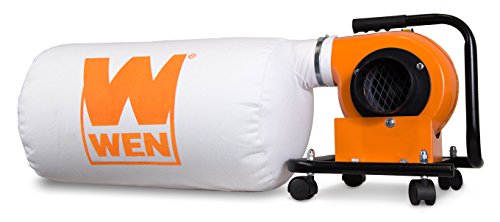
| WEN 3410 | Best budget | About 660 CFM | 12.5 amp, 120 V | Bag, 5 micron class | Budget |
| Oneida Dust Deputy cyclone + shop vac | Best low-cost fine dust | Matches vacuum (typically 100-ish CFM) | Existing vacuum | Vacuum filter, HEPA optional | Budget |
| Harbor Freight 2 HP collector | Best budget big-chip | About 1,200 CFM | 2 HP, 120 V | Bag | Budget to mid |
| Festool CT 15 extractor | Best for sanding and handheld tools | Suction-focused | 120 V | HEPA-class | Premium |
Airflow figures are manufacturer ratings at the blower inlet; real airflow at the tool is lower after hoses and fittings.
Best Overall: JET DC-1100VX-CK
A compact 1.5 horsepower collector with a 1-micron canister filter and a wall-mount or cart configuration. It collects chips from a table saw, planer or jointer, and the finer filter keeps the visible fines out of the air. The 1,100 CFM rating is sufficient for one machine at a time on short runs of 4-inch hose.
Trade-off: it can only serve one tool at a time, and the cost sits at the upper-mid end for a hobby budget.
Best for Ducted Shops: Grizzly G0442
A 2 horsepower collector with 220-volt power and a 12-inch-class impeller offers enough airflow for 5 or 6 inch main duct with short branch lines. It works well when you want one central collector with blast gates for each tool.
The trade-off is the need for a 220-volt circuit and a floor footprint of several square feet. Upgrade the bag filter to a canister for better fine-dust capture.
Best Budget Pick: WEN 3410
Small, light and affordable, this 12.5-amp unit runs on a standard household outlet. It is adequate for a lone table saw or a small planer, and it moves around the shop easily.
Its airflow is modest and the bag filter passes finer dust, so wear a respirator and consider a better filter upgrade. It is not suited to long duct runs.
Best Low-Cost Fine Dust: Oneida Dust Deputy and a Shop Vacuum
A cyclone separator mounted on a bucket pulls out chips before they reach the vacuum, which keeps the filter from clogging. It is a great fit for sanders, routers, miter saws and small table saw setups. A HEPA-rated vacuum makes the system suited for fine dust.
The trade-off is limited airflow. It is not enough for a planer or thickness sander.
Best Big-Chip Value: Harbor Freight 2 HP Dust Collector
This type of 2 horsepower collector moves lots of air for a modest price. It handles planers and jointers well. Add a canister filter or filter bag with a finer micron rating, since the stock bags leak fine dust.
Best for Sanding and Handheld Tools: Festool CT 15
A high-suction extractor with a HEPA-class filter and a hose that connects to sanders and track saws. Auto-start tool sync makes it practical. It costs far more than hobby-grade vacuums, so it fits professionals and serious finish work.
How to Choose a Dust Collector
Airflow needs by tool
| Tool | Typical airflow need | Port size |
|---|---|---|
| Table saw | 350 to 450 CFM | 4 in |
| Router table | 200 to 300 CFM | 2.5 to 4 in |
| Band saw | 350 CFM | 4 in |
| Jointer (6 to 8 in) | 400 to 600 CFM | 4 in |
| Thickness planer (13 in) | 400 to 800 CFM | 4 in |
Add the number for your biggest machine, then add margin for hose length and bends. Every 10 feet of flexible hose and each 90-degree elbow cuts delivered airflow noticeably.
Filtration: micron rating and why it matters
Fine dust under 10 microns stays in the air and is the main health concern. Bag filters often rate around 5 to 30 microns, while canister filters reach 1 micron or better. Health agencies suggest limiting exposure to wood dust, so combine collection with a respirator and an air filter. See a professional if you have breathing concerns.
Single stage versus two stage
Single-stage units pull chips through the fan, so they are loud and need larger bags. Two-stage and cyclone systems drop chips into a drum first, keeping the filter clean and the airflow steady.
Worked Example: Sizing for a Garage Shop
A garage shop with a 10-inch table saw, a 13-inch planer and a 6-inch jointer needs the highest single demand, which is the planer at around 600 to 800 CFM. Using 10 feet of 4-inch hose and one elbow can cut that by about 20 to 30 percent. A collector rated near 1,100 CFM, such as the JET, leaves a comfortable margin, while the 660 CFM WEN would starve the planer.
Maintenance and Ownership
- Empty bins before they are two-thirds full to keep airflow steady.
- Tap or brush the canister filter pleats outdoors.
- Ground the hose or use anti-static hose to reduce shocks and fine dust cling.
- Use blast gates so suction is directed to the active tool.
- Never use a standard dust collector for metal grinding; sparks can ignite wood dust.
Which Setup Fits Your Shop
| Shop situation | Recommended setup | Why |
|---|---|---|
| Apartment or shared garage, hand tools and a sander | HEPA shop vacuum with cyclone separator | Quiet enough, small footprint, captures fine dust |
| Garage shop on 120 V, table saw and planer | 1.5 HP canister collector | Enough airflow without a new circuit |
| Dedicated shop with 220 V | 2 HP collector with duct and blast gates | Serves several machines from a central point |
| Sanding-heavy furniture finishing | HEPA-class extractor plus ambient air filter | Fine dust is the main concern |
Duct Layout Basics
Use smooth-wall pipe where you can, because corrugated hose can lose far more airflow over the same distance. Keep the main trunk as short and straight as possible, use gradual 45-degree turns instead of tight 90-degree elbows, and place the collector near the machine that needs the most air. Branch lines should join the main trunk at a shallow angle. A common rule is to keep the trunk diameter at least as large as the collector inlet and size branches to match each machine port.
Seal joints with foil tape rather than caulk so you can disassemble the system when the layout changes. Ground metal ducts if the manufacturer recommends it.
Noise and Placement
Single-stage collectors can run around 80 to 90 decibels, so place the unit in a closet or on the far side of a partition if you can, and wear hearing protection. Venting the exhaust outdoors with a baffled opening is possible with some setups, but keep in mind that heated or cooled air is lost.
Frequently Asked Questions
How many CFM do I need for a table saw?
Plan on about 350 to 450 CFM at the dust port, which usually means a collector rated for 600 CFM or more once hoses are included. A saw with an overarm collection guard needs extra capacity.
Is a shop vacuum enough for woodworking?
For sanders, routers and small tools, yes, especially with a cyclone separator. For planers, jointers or table saws that make large chips, it is usually not enough.
What is better, a bag or a canister filter?
A canister filter generally filters finer particles and is easier to clean. Bags are cheaper but often let fine dust through.
Do I need ducting?
Not at first. Many hobbyists move a collector between machines using flexible hose. Ducting makes sense once you have three or more stationary tools and a permanent layout.
Is wood dust dangerous?
Fine wood dust is a respiratory irritant and some species are sensitizers. Collect at the source and wear a respirator, and speak to a health professional if you have symptoms.


Write Your Review
No reviews yet. Be the first to share your experience!