

Key takeaways
- 12-inch blades: Easier to control and lighter, useful for many masonry cuts and moderate-depth work.
- 14-inch blades: The common choice for deeper metal and construction cuts, but they require more clearance and cost more per replacement.
- 15-amp corded motors: Suitable for high-load metal cutting when connected to a properly sized circuit and extension cord.
- Gasoline engines: Better for mobile outdoor masonry work, but they bring exhaust, fuel, and higher noise.
- Battery models: Convenient where cords and exhaust are undesirable, though runtime and recharge time become part of the workflow.
The best cut off saws in 2026 are the DEWALT D28715 for general shop and jobsite metal cutting, the Makita LW1400 for a lighter portable corded option, the Milwaukee 6177-20 for frequent steel work, and the Husqvarna K 770 for serious masonry cutting. Choose by material first: a metal chop saw and a gasoline or battery construction cut-off saw may share a 14-inch blade diameter, but they are designed for very different loads, dust conditions, and cutting positions.
Our top picks
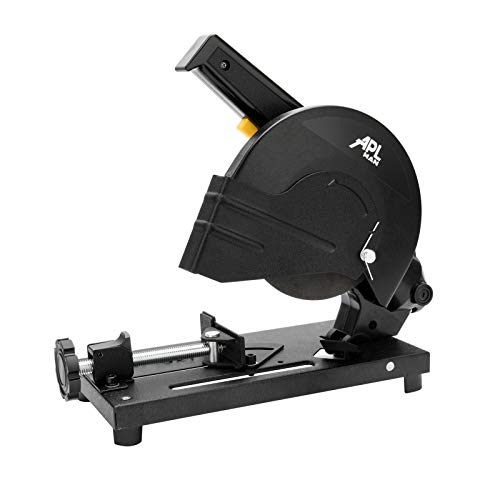

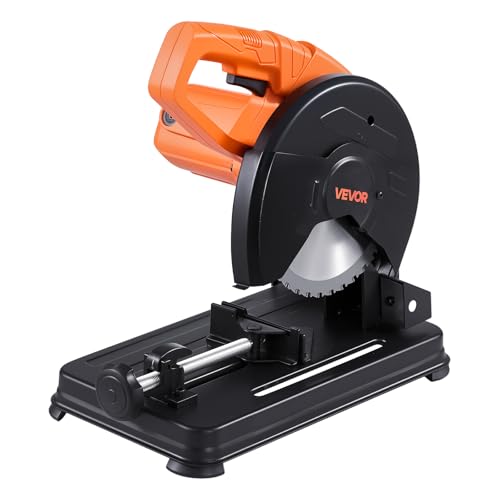

As an Amazon Associate we earn from qualifying purchases at no extra cost to you. Ratings are shown as listed on Amazon.
Best cut off saws at a glance
| Best for | Recommended model or type | Blade | Motor | Maximum cutting capacity | Approx. weight |
|---|---|---|---|---|---|
| General metal fabrication | DEWALT D28715 | 14 in. | 15 amp, 1,300 rpm | About 5 in. round stock; up to roughly 4-1/2 in. square | About 35 lb |
| Portable corded metal cutting | Makita LW1400 | 14 in. | 15 amp, 3,800 rpm no-load | About 5 in. round stock | About 38 lb |
| Heavy shop use | Milwaukee 6177-20 | 14 in. | 15 amp, 3,900 rpm no-load | About 5 in. round stock | About 42 lb |
| Dusty masonry and concrete work | Husqvarna K 770 | 12 or 14 in., depending on version | Approximately 5 hp gasoline engine | Roughly 4 to 5 in. cutting depth | About 22 to 25 lb, without fuel and blade |
| Lower-emission indoor masonry work | Battery construction cut-off saw | 12 in. typical | Battery-powered brushless motor | Roughly 3-1/2 to 4 in. | Usually 20 to 30 lb with battery |
Capacity figures vary with the blade guard, workpiece shape, blade type, and the exact regional version of a saw. Treat them as buying comparisons rather than a promise that every cut will reach the listed maximum.
Our picks by cutting situation
Best all-around metal saw: DEWALT D28715
The DEWALT D28715 is a strong choice for a fabrication shop, maintenance department, or contractor who repeatedly cuts steel tube, angle iron, rebar, and threaded rod. Its 15-amp motor is typical of full-size corded abrasive saws, while its quick-release vise and adjustable fence make repeated cuts less tedious.
The most useful feature is not the headline horsepower but the way the vise and fence support consistency. A rigid setup reduces the tendency of thin-wall tubing to twist into the abrasive wheel. The saw’s approximately 5-inch round capacity also covers common structural and plumbing stock without moving to a larger, less portable machine.
Expect a general-market price in the roughly $250–$400 range, depending on the package and retailer. Budget separately for quality abrasive wheels; the included disc, if one is supplied, should not determine your long-term cutting strategy.
Best lighter corded option: Makita LW1400
The Makita LW1400 suits users who need a full-size 14-inch blade but move the saw between a garage, trailer, and jobsite. It is a conventional metal chop saw rather than a masonry saw, so it should be paired with wheels rated for ferrous metal and used with strong spark control.
Its high no-load speed is useful for abrasive metal cutting, but speed alone does not make a cut faster. Excessive downward force overheats the wheel, increases burrs, and can make a thin workpiece vibrate. The LW1400 makes more sense for occasional and moderate-frequency fabrication than for an automated production line.
Best for frequent steel cutting: Milwaukee 6177-20
The Milwaukee 6177-20 is aimed at demanding metal-cutting work where a robust base, powerful 15-amp motor, and repeatable vise adjustment matter more than minimum weight. It is a sensible choice for a shop that cuts substantial quantities of angle, channel, bar, and tubing throughout the week.
A saw in this class is only as durable as its consumables and maintenance. Keep the pivot and vise area clear of abrasive grit, inspect the wheel before every shift, and avoid using the motor’s power to compensate for a dull or incorrectly rated disc.
Best for masonry: Husqvarna K 770
For concrete block, brick, asphalt, pavers, and similar materials, the Husqvarna K 770 is a more appropriate tool than a metal chop saw. Its gasoline engine and construction-saw layout allow cutting away from a bench, including vertical and ground-level work. It can use abrasive discs for masonry or compatible diamond blades for longer life and cleaner, more economical cutting in suitable materials.
The trade-off is noise, exhaust, fuel handling, vibration, and substantially more airborne dust. A gasoline cut-off saw should not be used in an enclosed area without an appropriate professional plan for ventilation and silica-dust control. Wet cutting or a properly engineered dust-extraction setup is preferable where the equipment and material allow it.
Blade diameter, power, and actual cutting depth
A 14-inch blade does not automatically cut 14 inches deep. The guard, arbor position, blade wear, and the workpiece’s shape limit usable depth. A new 14-inch wheel on a typical metal chop saw usually cuts around 5 inches of round stock, while a 12-inch construction saw commonly reaches around 3-1/2 to 4 inches.
- 12-inch blades: Easier to control and lighter, useful for many masonry cuts and moderate-depth work.
- 14-inch blades: The common choice for deeper metal and construction cuts, but they require more clearance and cost more per replacement.
- 15-amp corded motors: Suitable for high-load metal cutting when connected to a properly sized circuit and extension cord.
- Gasoline engines: Better for mobile outdoor masonry work, but they bring exhaust, fuel, and higher noise.
- Battery models: Convenient where cords and exhaust are undesirable, though runtime and recharge time become part of the workflow.
For a simple runtime estimate, assume a battery saw uses a 36-volt, 8-Ah pack. Its nominal energy is 288 watt-hours. If the saw averages 1,200 watts while cutting and spends only 40 percent of the work period under load, the theoretical cutting-and-idling duration is approximately 288 ÷ (1,200 × 0.40), or 0.6 hour. Real results are lower or higher depending on material, blade condition, temperature, and battery age. This is why battery cut-off saws are excellent for intermittent cuts but less convenient for uninterrupted production.
Metal abrasive wheels versus masonry diamond blades
Use a wheel specifically labeled for the material and saw speed. Abrasive metal wheels wear down rapidly but are relatively inexpensive and leave a cut suited to many fabrication tasks. They also generate sparks, hot debris, and a narrow kerf.
Diamond blades generally last much longer in concrete, brick, and block, but the correct bond and segment design matter. A blade intended for masonry is not a substitute for a metal-cutting wheel. Never install a blade whose maximum rpm is below the saw’s rated speed, and do not remove a guard to accommodate a different disc.
Decision matrix: which type fits your work?
| Your situation | Best fit | Why | What to avoid |
|---|---|---|---|
| Occasional garage metal work and limited budget | 14-inch corded metal saw | Low operating complexity and inexpensive abrasive wheels | Paying for a gasoline masonry saw you will rarely use |
| Daily steel fabrication | Heavy 15-amp chop saw with rigid vise | Better repeatability and less downtime from awkward clamping | Light portable models with flexible bases |
| Outdoor brick, block, or concrete work | Gasoline or high-voltage battery construction saw | Portable cutting depth and no bench required | Metal chop saws used with improvised masonry discs |
| Indoor renovation with strict emissions limits | Battery masonry saw with wet cutting or engineered extraction | No gasoline exhaust at the point of use | Gasoline operation in enclosed spaces |
| Small workspace and infrequent use | 12-inch saw or compact metal-cutting solution | Less storage space and easier transport | A large saw that cannot be securely supported |
Dust control and jobsite safety
Metal spark control and masonry dust control require different approaches. For metal, orient the spark stream away from people, fuel, lumber, vehicles, and finished surfaces. Remove combustible dust before cutting, and keep a suitable fire extinguisher nearby. Sparks can travel farther than expected and may remain hot after the cut is complete.
For masonry, use wet cutting where permitted or connect the tool to a dust-control system designed for the saw. Ordinary shop-vac arrangements may not provide the filtration, water management, or airflow required for fine mineral dust. Wear eye and hearing protection, use respiratory protection selected for the actual hazard, and follow the material supplier’s and equipment manufacturer’s requirements.
Setup and maintenance that extend wheel life
- Inspect the disc. Reject wheels with cracks, damaged edges, expired markings, or an incompatible speed rating.
- Check the arbor and guard. Remove packed debris and confirm that the flange fits the blade correctly.
- Clamp the workpiece close to the cut. Unsupported material can pinch the wheel as the cut closes.
- Let the wheel do the cutting. Apply steady pressure rather than forcing the motor through the stock.
- Complete a cooldown routine. Allow the wheel to stop before lifting the head, then clear abrasive dust from the pivot, vise, and motor vents.
- Replace worn consumables early. A thin, glazed, or damaged wheel increases heat and reduces control.
On metal saws, the vise and pivot hardware commonly become frustrating before the motor fails. On masonry saws, air filters, recoil starters, drive belts, water systems, and dust-loaded cooling passages are frequent ownership concerns. Keeping the machine clean after each shift is usually cheaper than diagnosing overheating or inconsistent cuts later.
Bottom line
Buy the DEWALT D28715 for a versatile, repeatable 14-inch metal-cutting setup; choose the Makita LW1400 when portability and occasional use matter; step up to the Milwaukee 6177-20 for frequent steel work; and select the Husqvarna K 770 or a comparable battery construction saw for mobile masonry. The right blade, secure clamping, adequate dust control, and a realistic cutting-depth requirement matter more than choosing the highest advertised motor power.



Write Your Review
No reviews yet. Be the first to share your experience!