

Key takeaways
- A standard soup serving is about 10 to 12 fluid ounces.
- Six servings at 11 ounces each require 66 fluid ounces, or just over 2 quarts.
- Allowing room for stirring, ladling, and chunky ingredients brings the useful target to about 3 quarts.
- For six generous servings or leftovers, choose a 4-quart model.
Best Ceramic Soup Tureen with Ladle: Stylish Serving
The best ceramic soup tureen with ladle for most family meals is a 3- to 4-quart glazed stoneware tureen with a close-fitting lid, a deep ladle, and a dishwasher-safe finish that tolerates everyday cleaning.
That capacity serves approximately six to eight bowls without making the tureen unnecessarily heavy or difficult to store. For smaller households, a 2- to 2.5-quart tureen is easier to lift and refrigerate; for holidays or large gatherings, look for 5 quarts or more, but check the filled weight before buying.
Our top picks


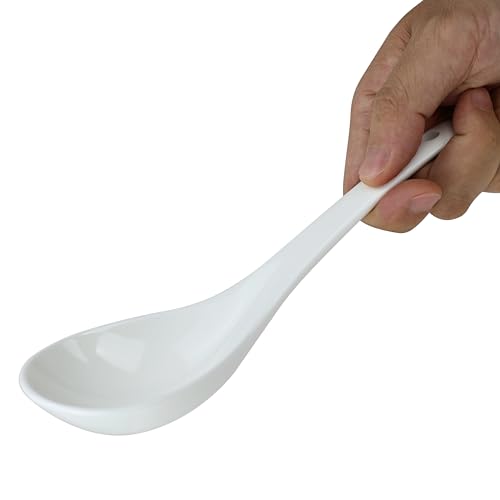

As an Amazon Associate we earn from qualifying purchases at no extra cost to you. Ratings are shown as listed on Amazon.
Quick Picks by Serving Situation
| Situation | Best choice | Recommended specifications | Why it fits |
|---|---|---|---|
| Two to four people | Compact ceramic tureen | 2–2.5 qt capacity, 9–11 in. long, under 6 lb empty | Uses less storage space and is easier to carry when full |
| Regular family dinners | Medium stoneware tureen | 3–4 qt capacity, fitted lid, 10–13 in. long | Balances serving capacity, stability, and manageable weight |
| Holiday meals | Large serving tureen | 5–6 qt capacity, two side handles, 12–15 in. long | Provides generous portions and room for chunky soups |
| Elegant table presentation | Decorative glazed ceramic | High-gloss or patterned glaze, matching ladle, 3–4 qt capacity | Looks like a centerpiece while remaining practical |
| Frequent dishwasher use | Plain glazed stoneware | Smooth interior, minimal raised decoration, dishwasher-safe label | Less likely to trap food around relief work or metallic trim |
Capacity: Choose by Portions, Not Just Quarts
A tureen’s stated capacity is usually measured to the rim. In real use, you should leave about 10 to 15 percent of the volume empty to prevent sloshing while carrying it. A 4-quart tureen therefore holds about 3.4 to 3.6 quarts comfortably.
Here is a practical sizing calculation:
- A standard soup serving is about 10 to 12 fluid ounces.
- Six servings at 11 ounces each require 66 fluid ounces, or just over 2 quarts.
- Allowing room for stirring, ladling, and chunky ingredients brings the useful target to about 3 quarts.
- For six generous servings or leftovers, choose a 4-quart model.
Do not judge capacity from exterior dimensions alone. A wide, shallow tureen may be easier to ladle from, while a tall, narrow model can hold the same volume but be harder to reach into. For soups containing beans, pasta, dumplings, or large vegetables, a mouth opening of at least 8 inches is more useful than a tall profile.
Lid Fit Matters More Than Decorative Detail
A good lid should sit securely without requiring force. Look for a broad rim, a shallow locating lip, and a knob large enough to grasp with a towel or oven mitt. A lid that wobbles excessively can spill hot soup, while one that fits too tightly may be difficult to remove as steam escapes.
For serving, a small vent or a slightly relaxed fit is helpful because it lets steam escape and reduces condensation dripping onto the table. The lid does not need to form an airtight seal; ceramic tureens are serving vessels rather than pressure containers.
How to check the fit before buying
- Place the lid on the tureen and gently rotate it. A slight, even movement is normal; a pronounced rocking motion suggests an uneven rim.
- Check that the handle is centered and does not touch the table when the lid is upside down.
- Look for a lid that overlaps the rim rather than merely balancing on a narrow edge.
- Confirm that the lid and bowl can be stored together without stressing the knob or rim.
Ladle Material: Ceramic, Stainless Steel, or Silicone?
The ladle is often the first accessory to disappoint. A decorative ceramic ladle matches the tureen and resists staining, but it is heavier and more vulnerable to chipping if it knocks against the bowl. A stainless-steel ladle is durable, light, and easy to clean, although its handle may become hot if left in a steaming tureen. A food-grade silicone ladle is quiet against the glaze and useful with delicate finishes, but lower-quality silicone can retain odors or soften with prolonged heat.
| Ladle material | Typical weight | Advantages | Limitations |
|---|---|---|---|
| Glazed ceramic | 8–14 oz | Coordinated appearance, stain-resistant surface, no metallic contact | Can chip or break; heavier in a full serving bowl |
| Stainless steel | 3–7 oz | Strong, lightweight, dishwasher-friendly, long service life | Can scratch a damaged glaze and may conduct heat |
| Food-grade silicone | 4–8 oz | Quiet, gentle on glaze, comfortable for frequent serving | May absorb odors if poorly made; inspect for seams and cracking |
For everyday family use, stainless steel or silicone is usually the more practical choice. Select a ladle bowl of roughly 3 to 4 fluid ounces: large enough to serve efficiently, but not so large that it overloads plates or strains the tureen rim. A hanging hook or resting notch is useful because it keeps the ladle from sliding into the soup.
Glaze Durability and Easy Cleaning
A smooth, fully glazed interior is easier to clean than an unglazed or heavily textured surface. The glaze should appear continuous around the food-contact area, with no pinholes, rough patches, or exposed porous clay. Dark soups and tomato-based broths can reveal weak or uneven finishes quickly.
Dishwasher safety is convenient, but it does not make ceramic indestructible. Large tureens can collide with racks, plates, or the dishwasher door. If the piece is valuable, oversized, painted, or decorated with metallic trim, hand-washing is safer. Never assume that a gold or platinum rim is dishwasher- or microwave-safe.
A low-stress cleaning routine
- Let the tureen cool until it is warm rather than scorching hot.
- Remove leftover soup and rinse away solids before they dry onto the glaze.
- Wash with a soft sponge and mild dish detergent; avoid abrasive powders and metal scouring pads.
- Clean around the lid knob, underside rim, and ladle hook, where grease and starch collect.
- Dry both pieces completely before stacking them to prevent trapped moisture and odors.
Thermal shock is a greater risk than ordinary heat. Do not pour boiling soup into a cold tureen straight from a cool cupboard, place a hot tureen on a wet stone countertop, or add cold liquid to a heated ceramic bowl. Warming the tureen with hot tap water for a few minutes can reduce the temperature change.
What Wears First During Ownership
- Rim chips: Usually caused by contact with metal utensils, sink edges, or other dishes. A chipped food-contact rim is difficult to clean and is a reason to retire the piece from serving.
- Lid knobs: Screwed or attached knobs can loosen over time. Check the attachment periodically and avoid lifting a full tureen by the lid.
- Decorative trim: Metallic edging and raised patterns often show wear before the main glaze, especially with frequent dishwasher cycles.
- Staining: Porous unglazed areas around the base or underside can absorb color and odors. This is mostly cosmetic, but it makes maintenance less convenient.
- Hairline cracks: A crack can expand after repeated heating and cooling. Stop using a cracked tureen for hot food because it may leak or fail while being carried.
Best Materials for Different Priorities
Glazed stoneware is the best all-around option for most households. It is substantial, attractive, and available in practical sizes, though it can be heavy when full. Porcelain gives a lighter, more refined appearance and often has a thinner profile, but a large porcelain tureen can still chip if handled carelessly. Earthenware offers traditional color and texture, but it is generally more porous and may require more careful cleaning and temperature management.
Established ceramic makers such as Le Creuset, Emile Henry, and Staub produce durable ceramic cookware and serving pieces, but the specifications vary by collection. Check the individual model’s capacity, care instructions, lid design, and whether the ladle is included rather than assuming every item in a brand’s range has the same features.
Final Buying Checklist
- Choose 3–4 quarts for a typical family of four to six.
- Leave 10–15 percent of the stated capacity unused when serving.
- Prefer a smooth glazed interior and a stable, broad base.
- Test that the lid sits evenly and the knob is easy to grip.
- Select stainless steel or silicone for a durable everyday ladle.
- Confirm dishwasher, microwave, and oven guidance separately; these ratings are not interchangeable.
- Avoid metallic trim if easy cleaning and microwave use are priorities.
- Measure your cabinet, dishwasher opening, and table space before choosing a large model.
The best ceramic soup tureen with ladle is not necessarily the most ornate one. It is the model whose useful capacity matches your portions, whose lid remains stable during serving, whose ladle suits your handling preferences, and whose glaze can survive the cleaning routine you will actually use.

Write Your Review
No reviews yet. Be the first to share your experience!