

Key takeaways
- Narrow blades, about 1/8 to 1/4 inch: Best for tight curves and template work. They turn easily but can deflect in thick stock.
- Medium blades, about 3/8 to 1/2 inch: A useful compromise for furniture parts, general cutting, and moderate curves.
- Wide blades, about 3/4 to 1 inch: Better for straight resawing because they resist twisting, but they require a stronger frame, sufficient tension, and a generous curve radius.
The best band saws for woodworking are the ones whose throat depth and resaw capacity match your largest workpieces, while their motor, blade guides, and frame remain appropriate for the curve cutting you actually do.
Our top picks

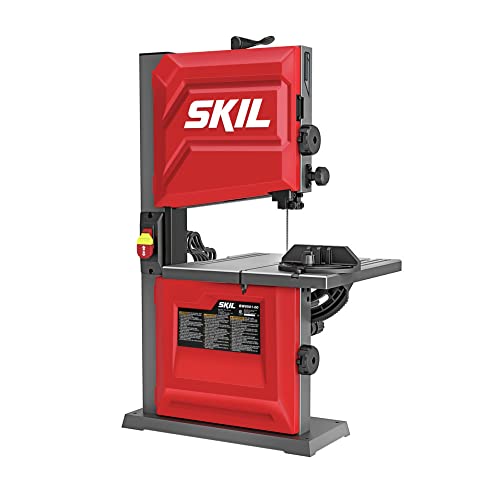

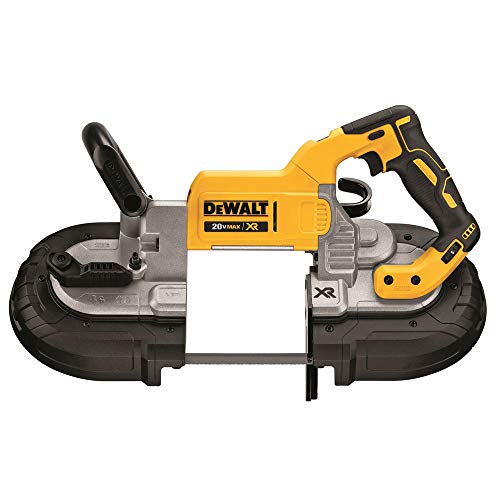
As an Amazon Associate we earn from qualifying purchases at no extra cost to you. Ratings are shown as listed on Amazon.
Best band saws by woodworking situation
| Best for | Recommended type or model | Why it fits | Main compromise |
|---|---|---|---|
| Small shop and occasional curves | Rikon 10-305 | Compact 10-inch format, roughly 4 5/8-inch resaw capacity, and a modest footprint | Limited power and capacity for thick hardwood or repeated resawing |
| Furniture parts and general-purpose work | Rikon 10-326 or Grizzly G0555 | 14-inch wheels, larger tables, and enough capacity for most furniture projects | Heavier and more expensive than a benchtop saw |
| Frequent resawing | Laguna 14|12, Jet JWBS-14L, or a comparable 14-inch saw | Approximately 12-inch resaw capacity, rigid frames, and stronger motors | Requires more floor space, dust collection, and careful blade setup |
| Large stock and production-style use | Powermatic PM1500 or a similar 15-inch class saw | Large throat, robust guides, and greater stability under continuous load | High purchase cost, substantial weight, and more shop infrastructure |
What matters most when choosing a band saw
Throat depth determines the width of a cut
Throat depth is the distance from the blade to the vertical frame. A 14-inch band saw does not necessarily provide a full 14 inches of usable cutting width; the actual throat is often closer to 13 1/2 inches. That dimension matters when cutting curved chair parts, cabriole-style components, wide panels, or irregular furniture templates.
For most furniture work, 12 to 14 inches of throat depth is a useful target. A smaller throat can still cut excellent curves, but the frame may contact a wide workpiece before the blade reaches the intended line. More throat depth does not automatically improve a narrow curve cut, so avoid paying for a large machine if your stock is usually small.
Resaw capacity is a practical limit, not a recommendation
Resaw capacity is the maximum distance between the table and the upper blade guide. A saw advertised with 12 inches of capacity may not resaw a full 12-inch hardwood board comfortably. The board must be straight, the blade must be sharp and correctly tensioned, and the fence must keep the cut aligned.
For repeatable furniture resawing, leave a margin of about 1 to 2 inches below the stated capacity. If you regularly need to split 10-inch boards, a saw with around 12 inches of published capacity gives you useful room for setup errors and uneven stock. A 6-inch machine is better suited to occasional thinner veneers, small box parts, and narrow boards.
Motor power helps, but the blade and frame decide how much reaches the wood
Motor horsepower is only one part of cutting performance. A 1-horsepower motor on a rigid 14-inch frame can outperform a nominally stronger motor on a flexible saw with poor blade tracking. For general furniture work, roughly 1 to 1 3/4 horsepower is a sensible range. Frequent resawing in dense hardwood benefits from 1 1/2 horsepower or more, particularly when the saw uses a broad blade.
A 1/3-horsepower benchtop saw can be entirely adequate for curves in pine, poplar, plywood, and small hardwood components. It becomes frustrating when asked to push thick oak or maple through a wide resaw blade. The motor may slow, the cut may wander, and the blade can overheat.
Blade guides affect accuracy and maintenance
Lower-cost band saws commonly use guide blocks or basic bearing guides. They can work well after careful adjustment, but they generally need more frequent checking. Premium systems use larger bearings, ceramic guides, or more rigid guide assemblies that stay aligned under heavier cutting pressure.
For tight curves, the guide assembly should be close to the workpiece without interfering with the cut. For resawing, rigidity matters more: side guides and thrust bearings must support the blade without forcing it sideways. Ceramic guides can resist wear and remain compact, while bearing guides are familiar and easy to replace. Neither compensates for a dull, incorrectly selected blade.
Head-to-head: compact, mid-size, and resaw-focused saws
| Example | Wheel class | Motor | Approx. throat | Approx. resaw | Typical weight | Best use |
|---|---|---|---|---|---|---|
| Rikon 10-305 | 10 inch | 1/3 hp | 9 5/8 inches | 4 5/8 inches | About 70 lb | Curves, small parts, and compact shops |
| Grizzly G0555 | 14 inch | 1 hp | About 13 1/2 inches | About 6 inches | About 240 lb | General furniture work and moderate curves |
| Rikon 10-326 | 14 inch | 1 3/4 hp | About 13 inches | About 13 inches | About 215 lb | Furniture work and serious resawing |
| Laguna 14|12 | 14 inch | 1 3/4 hp | About 13 5/8 inches | About 12 inches | About 250 lb | Frequent resawing and demanding hardwood work |
| Jet JWBS-14L | 14 inch | 1 3/4 hp | About 13 1/2 inches | About 12 inches | About 250–260 lb | Rigid, general-purpose furniture work |
Specifications can vary by electrical configuration and production revision, so check the manufacturer’s current manual before purchase. The important comparison is the relationship between capacity and intended work. The Rikon 10-305 saves space and money, but its smaller frame limits thick stock. The Grizzly G0555 is a capable general-purpose saw, though its resaw capacity is modest compared with the Rikon 10-326 or Laguna 14|12. The latter two are better choices when resawing is a recurring operation rather than an occasional experiment.
Blade width changes the character of the saw
- Narrow blades, about 1/8 to 1/4 inch: Best for tight curves and template work. They turn easily but can deflect in thick stock.
- Medium blades, about 3/8 to 1/2 inch: A useful compromise for furniture parts, general cutting, and moderate curves.
- Wide blades, about 3/4 to 1 inch: Better for straight resawing because they resist twisting, but they require a stronger frame, sufficient tension, and a generous curve radius.
Do not use a wide resaw blade for every job. It can make a simple curved leg difficult to steer and may leave more blade marks. Conversely, a narrow blade that is excellent for scroll-like curves is a poor choice for slicing a thick board into veneers.
Setup procedure that prevents most cutting problems
- Choose the blade for the operation. Use a narrow blade for tight curves and a wide, low-tooth-count blade for resawing. Aim for at least three teeth engaged in the material at any point.
- Inspect the blade path. Unplug the machine, rotate the wheels by hand, and confirm that the blade sits correctly on the tire crowns. A damaged tire or improperly seated blade causes tracking problems.
- Set tension according to the blade and saw. The scale on many saws is only a starting point. Too little tension allows wandering; too much can strain the frame and blade.
- Adjust the thrust bearing and side guides. Set them just behind and beside the blade, not pressing against it while it is unloaded. Lower the guide assembly close to the workpiece.
- Align the fence to the actual blade drift. Make a test cut in scrap, observe the direction the blade naturally travels, and angle the fence so the stock feeds without being forced sideways.
- Feed steadily. Pushing too slowly can burn wood; pushing too quickly can stall the motor or bend the blade. Let the teeth cut rather than forcing the workpiece.
Ownership costs and durability realities
The blade is the first consumable to budget for. A quality blade may last through many small projects, but resinous wood, dirty reclaimed lumber, and abrasive plywood shorten its life. Keep at least one curve blade and one resaw blade available so a dull blade does not dictate the wrong setup.
Guide bearings, tires, and drive belts eventually wear. Tires can harden or develop grooves; bearings can become noisy or develop play; belts can glaze or crack. Dust packed around the lower wheel and motor also increases heat and can interfere with tracking. Vacuum the wheel housings periodically, clean resin from the table, and inspect the blade after cutting reclaimed wood for hidden nails or staples.
A useful buying calculation is to compare the saw with the work it replaces. If a $1,000 saw is used for 50 substantial projects over five years, the machine cost alone is about $20 per project before blades and electricity. That can be reasonable for a furniture maker who repeatedly resaws boards, but excessive for someone who makes only a few small curved parts each year. Infrequent users may be better served by a compact saw or by having thick stock resawn elsewhere.
Final buying recommendation
Choose a compact 10-inch band saw when space, portability, and curve cutting matter most. Choose a 14-inch, approximately 1-horsepower saw for broad general woodworking and furniture parts. Choose a 14-inch machine with roughly 1 3/4 horsepower and 12 inches of resaw capacity when resawing is central to your projects. For continuous heavy work, move up to a 15-inch class saw with a rigid frame and stronger guide system.
Before buying, measure the largest board you expect to cut, confirm the machine’s real throat and resaw dimensions, check whether your shop can supply the required circuit and dust collection, and price replacement blades. The best band saw is not the one with the largest number on its specification plate; it is the one that provides enough capacity and rigidity without making everyday curve cuts unnecessarily awkward.



Write Your Review
No reviews yet. Be the first to share your experience!