

Key takeaways
- The best sharpening stones for woodworking compared: King, Shapton, DMT, Suehiro and Sharp Pebble picks with grit, size and soaking specs for bench tools.
- Top Pick: Shapton Kuromaku Ceramic Whetstone, #1000
- Runner-up: Sharp Pebble Premium Whetstone Kit, 1000/6000
- Also consider: Suehiro Dual-Sided Sharpening Stone, #1000/#3000
A dull chisel tears grain instead of slicing it, and a dull plane iron turns smoothing into sanding practice. Water stones suit woodworking especially well: they cut tool steels cleanly, work with water instead of oil, and cover everything from grinding out a nicked bevel to polishing the back of a plane iron.
This guide compares five stones for the bench: a classic soaking combination stone, a splash-and-go ceramic stone, a starter kit with a base and angle guide, a compact dual-grit stone, and a diamond plate for repairs and flattening. Every pick is pinned to one grit and one listing, and every specification below is stated by the maker.
As an Amazon Associate, we earn from qualifying purchases.
Quick answer
For most bench-tool users, the King KW65 1000/6000 combination stone is the simplest start: one soaking stone that sharpens and polishes. The Shapton Kuromaku 1000 cuts faster with no soak, the DMT D8C plate handles repairs and flattening, and the Sharp Pebble kit adds a base and angle guide for first-time sharpeners.
1. King KW65 1000/6000 Combination Whetstone
The King KW65 is the traditional first water stone, and it still earns that spot. One side is 1000 grit for restoring a working edge on chisels and plane irons; the other is 6000 grit for refining that edge before stropping. King rates the stone at 8 by 2.5 by 1 inches in its product description, enough face for a standard 2-inch plane iron with room for slight sideways drift that keeps wear even.
This is a soaking stone: the maker directs users to soak it and keep it wet during use, and the included manual puts the soak at roughly five to ten minutes, until bubbles stop rising. The soft bond keeps releasing fresh abrasive, which feels forgiving while you learn consistent pressure. The trade-off is wear: soft stones dish in the middle over time and need periodic flattening, which is where the diamond plate further down this list earns its keep. A plastic base is included.
Choose the KW65 if you want one budget-tier stone that teaches the full sharpen, refine, polish sequence without a shelf of separate grits.
Specs
- Grit: 1000 and 6000 combination, two-sided
- Type: Ceramic water stone, soaking
- Size: 8 x 2.5 x 1 inches
- Base: Plastic base included
- Weight: 1 pound
- Model: KW65 (HT-65)
2. Shapton Kuromaku Ceramic Whetstone, #1000
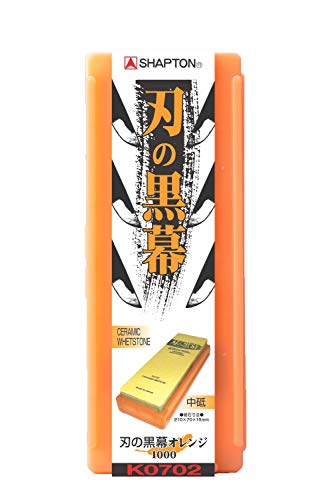
The Shapton Kuromaku 1000, model K0702 in the orange case, is the premium step up for woodworkers who sharpen often. It is a ceramic stone sized 210 by 70 by 15 millimeters, and Shapton builds the Kuromaku series as splash-and-go stones: wet the surface and start working, with no pre-soak and no tub of water living on the bench.
Ceramic abrasive in a hard bond cuts quickly and wears slowly, so the face stays flatter for longer than a soft soaking stone. A single 1000 grit is the right center of a bench setup: coarse enough to re-establish a bevel on a hard-working chisel, fine enough to hand off to a strop or a finer polishing stone. The storage case doubles as a stone holder, keeping the thin stone stable under pressure. Each grit in this series is its own stone under its own listing, so confirm you are looking at the orange 1000 before ordering.
Choose the Kuromaku 1000 if you sharpen weekly or more and value speed of setup over a two-grit bargain.
Specs
- Grit: #1000, medium, single grit
- Type: Ceramic water stone, splash-and-go
- Size: 210 x 70 x 15 mm (about 8.3 x 2.8 x 0.6 inches)
- Case: Storage case doubles as a stone holder
- Model: K0702
3. Sharp Pebble Premium Whetstone Kit, 1000/6000

The Sharp Pebble Premium kit wraps the same practical grit pairing as the King, 1000 for sharpening and 6000 for polishing, into a box that includes the two accessories beginners actually need. The stone is aluminum oxide, sized 7.25 by 2.25 by 1 inches, sitting in a bamboo base with a non-slip silicone insert. An angle guide clips onto the blade spine to hold a repeatable angle while muscle memory develops.
Sharp Pebble recommends a ten to twelve minute soak before use, keeping the stone wet while you work. The 2.25-inch width handles chisels and most plane irons, though owners of wide 2 and 3/8-inch irons will work closer to the stone’s edges than on the wider King or Shapton faces. As a budget-tier kit it removes the two usual starter mistakes: a skating stone and a wandering angle.
Choose the Sharp Pebble kit if this is your first stone and you want the base and guide included rather than bought separately later.
Specs
- Grit: 1000 and 6000 combination, two-sided
- Type: Aluminum oxide (corundum) water stone, soaking
- Size: 7.25 x 2.25 x 1 inches
- Included: Bamboo base with non-slip insert, angle guide
- Model: KA-QMSX-Q7FN
4. Suehiro Dual-Sided Sharpening Stone, #1000/#3000
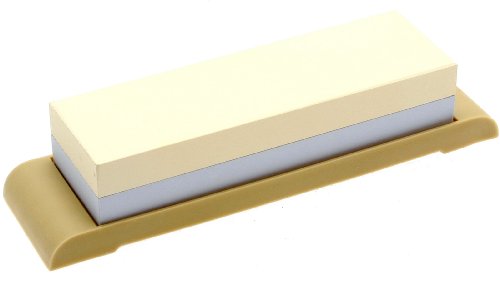
Suehiro is one of Japan’s long-established stone makers, and this dual-sided stone pairs the standard 1000 grit sharpening face with a 3000 grit finishing face on a compact block: 7.2 by 2.48 by 1.06 inches, with a non-slip rubber base included. The 3000 grit step is a useful middle ground that many 1000/6000 combinations skip: it refines a chisel edge to honest working sharpness, and it shortens the jump when you move on to a finer polish.
The honest limitation is in the maker’s own description: this is a compact stone, pitched at small blades and portability. The 2.48-inch width just covers a standard plane iron, with little margin for angled strokes, and the shorter face means more strokes per edge. Treat it as the small-shop or travel pick, or as a second stone that lives where the main bench stones do not.
Choose the Suehiro if bench space is tight, your widest iron is 2 inches, or you want the 1000-to-3000 progression in one small block.
Specs
- Grit: 1000 and 3000, dual-sided
- Type: Japanese water stone
- Size: 7.2 x 2.48 x 1.06 inches
- Base: Non-slip rubber base included
- Weight: 0.58 pounds
- Model: 440-952
5. DMT D8C Dia-Sharp Bench Stone, Coarse 325

The DMT D8C is not a water stone at all, and that is exactly why it belongs in a woodworking sharpening kit. It is a continuous monocrystalline diamond surface on a steel plate, rated coarse at 325 mesh, or 45 micron. DMT states the plate will not hollow or groove, which makes it two tools in one: a fast cutter for repairing chipped edges and regrinding damaged bevels, and a flattening plate for truing dished water stones.
The plate measures 8 by 3 inches, the widest face in this guide, which matters when you lap the back of a wide plane iron or flatten a stone without rocking. It works dry or with water, needs no soaking, ships with non-skid rubber feet, and is made in the USA. What it will not do is finish an edge: 325 mesh leaves a scratch pattern that needs the 1000 grit step and finer to remove, so treat the D8C as the foundation of the system, not a replacement for it.
Choose the D8C if your edges suffer real damage, or if your water stones have already dished and need a reliable way back to flat.
Specs
- Grit: Coarse, 325 mesh (45 micron), single side
- Type: Continuous monocrystalline diamond plate
- Size: 8 x 3 x 0.38 inches
- Included: Non-skid rubber feet
- Lubricant: Water or dry, no soaking
- Origin: Made in the USA
How to choose
Start with grit coverage, not brand. A working bench setup needs three steps: a coarse step for damage and flattening, a 1000 grit step for everyday sharpening, and a finishing step somewhere between 3000 and 6000. A 1000/6000 combination stone covers two of the three in one purchase, which is why combination stones anchor this guide.
Match stone width to your widest tool. A standard plane iron is 2 to 2 and 3/8 inches wide, and the stone face should be at least that wide so the whole edge registers on every pass. The DMT plate at 3 inches and the Shapton at about 2.8 inches give the most margin; the compact Suehiro at 2.48 inches is the minimum that still covers a standard iron.
Then decide how much setup your routine tolerates. Soaking stones need a tub and five to twelve minutes of patience before the first stroke, rewarded with a softer, more forgiving feel. Splash-and-go ceramic and diamond plates are ready the moment water touches them, which suits short, frequent touch-up sessions. Finally, plan for flatness: every water stone here will eventually dish, and a coarse diamond plate extends the life of the finer stones.
Who should skip these
Skip bench stones entirely if you sharpen on a guided system or a powered sharpener and have no interest in freehand work; every pick here assumes a blade guided by hand or honing guide. Skip the water stones if your routine is built around oil stones, since switching lubricant systems mid-collection adds clutter, not benefit. Skip the compact Suehiro if your widest plane iron is a full 2 and 3/8 inches and you dislike working at the very edge of a stone. Skip the fine finishing sides if your real problem is damage: a nicked or rolled edge needs the coarse diamond step first. Carvers whose edges are mostly gouges and sweeps should look at slip stones and shaped strops instead, since flat bench stones serve flat bevels best.
Frequently asked questions
What grit do I need for chisels and plane irons?
For routine maintenance, 1000 grit does most of the work: it restores a dull edge and re-establishes the bevel. Follow with 3000 to 6000 grit to refine the edge before stropping. Drop to a coarse step around 325 only when the edge is chipped or being reground to a new angle.
Do all water stones need to be soaked?
No. Traditional soaking stones such as the King and Sharp Pebble here need several minutes submerged before use, per their makers’ guidance. The Shapton Kuromaku is a splash-and-go ceramic that takes water on the surface only, and the DMT plate works dry or with water and never soaks.
How do I keep a water stone flat?
Draw a pencil grid across the face, then lap the stone on a coarse diamond plate or flattening stone until the lines disappear evenly, and rinse away the slurry. Flattening a little and often is far easier than rescuing a deeply dished stone, and a flat stone keeps bevels flat.
Can these stones sharpen turning tools and carving gouges?
Flat bench stones suit flat bevels: bench chisels, plane irons, and knives. Gouge interiors and curved sweeps need slip stones or shaped strops that match the curve. High-speed steel turning tools are usually ground on a grinder with a jig instead.
Final verdict
Buy the King KW65 if you want the classic one-stone answer at a budget tier, or the Sharp Pebble kit if the included base and angle guide will get you started sooner. Buy the Shapton Kuromaku 1000 if sharpening is a weekly habit and setup speed matters. Add the DMT D8C the first time an edge comes back chipped, or the first time a water stone dishes. Keep the Suehiro in mind for small benches and travel kits.
More from Amazon
Programs that pair well with the guide above. Offers and eligibility are set by Amazon and may change.
A free business account with business pricing and bulk-buying tools for work, shop or home office.
Create a business accountFree shipping on eligible items, Prime Video and more. Eligible new members can start with a free trial.
Start a Prime free trialAudiobooks and podcasts to listen to on the go. Eligible new members can start with a free trial.
Try Audible freeAd-free music streaming. Eligible new subscribers can start with a free trial.
Try Music Unlimited freeAs an Amazon Associate we earn from qualifying purchases.


Write Your Review
No reviews yet. Be the first to share your experience!