

Our Top Picks



Ziricote forces a decision most hardwoods never ask for: whether to buy one blade that handles the whole board or two blades that each do half the job well. This hardwood is dense, oily, and prone to burning when a dull blade drags through it. A combination blade rips a blank and crosscuts it to length, yet leaves a faint ridge that shows under finish. A fine-finish blade solves that edge problem but feeds slowly through thick stock. The real choice is which trade-off fits your boards and your finish.
This guide serves three kinds of buyers. Furniture makers cutting ziricote panels and drawer fronts need crosscuts that take oil without heavy sanding. Instrument builders and box makers working with thin, costly blanks need a blade that wastes little material and never tears the show face. Hobbyists buying their first ziricote board need one dependable blade for rips and crosscuts without burning. Every blade below was picked from its Amazon listing.
Quick Picks
As an Amazon Associate we earn from qualifying purchases.
| Product | Best for | Key spec from title |
|---|---|---|
| Diablo D1050X 10-Inch 50-Tooth Combination Blade | One blade for ripping and crosscutting ziricote boards | 10-inch, 50-tooth ATB combination blade |
| Diablo D1060X 10-Inch 60-Tooth Fine Finish Blade | Clean crosscuts on ziricote panels and drawer fronts | 10-inch, 60-tooth Hi-ATB fine finish blade |
| Freud LU83R010 10-Inch 50-Tooth Thin Kerf Combination Blade | Thin-kerf cuts that save expensive ziricote stock | 10-inch, 50-tooth thin kerf combination blade |
| Diablo D1080X 10-Inch 80-Tooth Ultra Finish Blade | Chip-free edges on ziricote veneer and thin blanks | 10-inch, 80-tooth Hi-ATB ultra finish blade |
| CMT 221.060.10 10-Inch 60-Tooth Cabinetshop Blade | Long sessions cutting dense ziricote without burning | 10-inch, 60-tooth TCG cabinetshop blade |
How to Choose
Match Tooth Count to the Cut You Make Most
Tooth count decides whether a blade shears ziricote cleanly or chews it. A 50-tooth combination blade is the middle ground: enough teeth to crosscut without heavy tear-out, few enough gullets to clear chips while ripping a 3/4-inch board. If your work is mostly crosscutting ziricote for drawer fronts or box lids, step up to 60 or 80 teeth, since each tooth takes a smaller bite and leaves a smoother edge. Ripping long boards calls for the opposite, a 24-tooth rip blade with deep gullets, because fine teeth pack with dust and overheat in a long rip. Count the cuts you make in a week, then buy the tooth count that serves the majority.
Pick the Tooth Grind for the Edge You Need
Tooth grind matters more on ziricote than on softer hardwoods because the wood is oily and the grain can run wild. ATB teeth, with alternate teeth beveled left and right, slice across the grain and leave the cleanest crosscut edge on a ziricote panel. Hi-ATB teeth use a steeper bevel, often around 25 degrees, which shears surface fibers even more cleanly and suits thin veneer and show faces. TCG teeth, with a flat raker tooth between chamfered teeth, resist chipping in dense stock and hold up better when a blade meets a hard mineral streak. If you only buy one blade, choose ATB for balance; if you cut veneer, choose Hi-ATB.
Choose Kerf to Balance Waste Against Saw Power
Kerf is the width of material the blade removes, and on ziricote it is both a waste question and a power question. A thin kerf blade removes about 0.091 to 0.098 inches per cut, so resawing a costly blank into two thin panels loses less wood than a full kerf blade that removes 0.125 inches. Thin kerf blades also demand less from the motor, which helps a contractor saw or a jobsite saw keep speed through dense stock. Full kerf blades run steadier and deflect less in thick boards, so they suit cabinet saws with plenty of power. Check your saw first: a full kerf blade on a weak jobsite saw will bog down and burn.
Look for Coatings and Vibration Control
Ziricote is oily, and that oil plus heat makes pitch build up on a bare steel plate, which drags the cut and invites burning. A nonstick coating such as Perma-Shield or PTFE keeps the plate cleaner longer and lets the blade slide through a long rip without grabbing. Laser-cut expansion slots and stabilizer vents also matter, because they let the plate expand as it heats instead of warping, and they cut the ringing that shows up as washboard marks on the edge. A thicker plate resists deflection in dense stock, though it removes more material. When two blades look equal on tooth count, pick the one with the better coating and plate design.
The 5 Best Options
Diablo D1050X 10-Inch 50-Tooth Combination Blade
The D1050X is the blade to buy when you want one blade that rips a ziricote board and crosscuts it without a blade change. Its 50 ATB teeth alternate left and right, so the same blade shears across the grain for drawer fronts and clears chips fast enough for a rip along a 3/4-inch edge. The thin kerf suits saws that are not cabinet-grade, and the TiCo carbide holds an edge through the hard, oily fibers that dull softer carbide. Furniture makers who cut a mix of parts from each ziricote board will get the most from this blade.
Specs
- 10-inch diameter, 50-tooth ATB combination grind
- 0.098-inch thin kerf, 5/8-inch arbor
- TiCo high-density carbide teeth
- Perma-Shield nonstick coating
- 6000 max RPM
Best for: A single blade that handles both rips and crosscuts in ziricote boards.
Watch out for: The edge after a crosscut may need light sanding before an oil finish, since a 50-tooth blade is not a dedicated finish blade.
Diablo D1060X 10-Inch 60-Tooth Fine Finish Blade

The D1060X earns its place when the edge itself is the product, such as a ziricote drawer front or a box lid where the cut face stays visible. Its 60 Hi-ATB teeth take small, steep-angled bites that shear the oily surface fibers instead of tearing them, so crosscuts come off the saw nearly ready for finish. The thin kerf keeps waste low on expensive boards, and the same Perma-Shield coating as its combination cousin keeps pitch from building up. It feeds more slowly than a combination blade in thick stock, so pair it with a steady feed and let the teeth do the work.
Specs
- 10-inch diameter, 60-tooth Hi-ATB fine finish grind
- 0.098-inch thin kerf, 5/8-inch arbor
- TiCo high-density carbide teeth
- Perma-Shield nonstick coating
- 6000 max RPM
Best for: Smooth crosscuts on ziricote panels, drawer fronts, and box lids.
Watch out for: The fine teeth can overheat and burn if you push thick ziricote through too slowly or force the feed.
Freud LU83R010 10-Inch 50-Tooth Thin Kerf Combination Blade
The LU83R010 is the thriftiest choice for anyone cutting ziricote that costs a lot per board foot. Its kerf measures 0.091 inches, the slimmest in this group, so each cut turns less of your ziricote into dust and leaves more wood for the next part. The 50-tooth ATB layout still crosscuts cleanly enough for cabinet parts, while the thin plate and anti-vibration slots keep the blade steady through dense grain. It is a strong match for contractor saws and jobsite saws, since the slim kerf asks less of a smaller motor. Buy this blade when every sixteenth of an inch of ziricote counts.
Specs
- 10-inch diameter, 50-tooth ATB combination grind
- 0.091-inch thin kerf, 5/8-inch arbor
- TiCo high-density carbide teeth
- Anti-vibration slots in the plate
- 10-degree hook angle
Best for: Saving material when cutting costly ziricote boards on a mid-power saw.
Watch out for: A thin plate can flex in very thick stock, so check the cut for drift on boards over an inch thick.
Diablo D1080X 10-Inch 80-Tooth Ultra Finish Blade
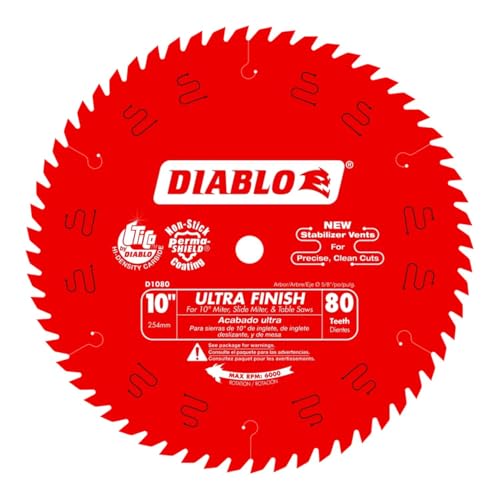
The D1080X is the blade for the thinnest, most visible ziricote work: veneer, inlay strips, and the show face of a small box. Eighty Hi-ATB teeth take the smallest bite of any blade here, which is what a brittle ziricote edge needs to avoid chipping. The 0.071-inch plate runs true, and the laser-cut stabilizer vents keep the blade quiet and flat as it warms up. This is a specialist, not a daily driver, and it shines when the cut edge goes straight to finishing with almost no sanding. Keep it for the final cuts and let a combination blade do the rough work.
Specs
- 10-inch diameter, 80-tooth Hi-ATB ultra finish grind
- 0.098-inch thin kerf, 5/8-inch arbor
- TiCo high-density carbide teeth
- Perma-Shield nonstick coating, laser-cut stabilizer vents
- 15-degree hook angle, 6000 max RPM, 0.071-inch plate
Best for: Chip-free crosscuts on ziricote veneer, inlay, and thin show pieces.
Watch out for: Eighty teeth feed slowly in thick stock and can burn ziricote if you stall the feed mid-cut.
CMT 221.060.10 10-Inch 60-Tooth Cabinetshop Blade
The CMT 221.060.10 suits long shop sessions where the blade stays in the saw all day and cuts ziricote alongside other hardwoods. Its 60 TCG teeth combine chamfered cutters with a flat raker tooth, a grind that resists chipping when it hits the hard, dark streaks ziricote is known for. The PTFE coating sheds the oily pitch that builds up during repeated cuts, and the sintered carbide holds up through dozens of boards before it needs sharpening. Cabinet makers who cut ziricote panels in batches will value how steadily this blade runs from the first board to the last.
Specs
- 10-inch diameter, 60-tooth TCG grind
- 5/8-inch bore
- PTFE nonstick coating
- Sintered carbide teeth
- Industrial cabinetshop plate design
Best for: Batch cutting of ziricote panels in a cabinet shop setting.
Watch out for: TCG teeth leave a slightly rougher crosscut edge than Hi-ATB teeth, so plan a light pass with sandpaper on visible faces.
Which One Fits Your Situation
You Want One Blade for Every Ziricote Cut
Pick the Diablo D1050X. Its 50-tooth ATB layout is the best compromise in the group, ripping a 3/4-inch board without bogging down and crosscutting cleanly enough for most cabinet parts. The thin kerf also suits a wide range of saws, from jobsite models to cabinet saws. You give up the glass-smooth edge of a dedicated finish blade, but you gain a blade that never needs swapping mid-project.
You Are Cutting Drawer Fronts and Visible Panels
Pick the Diablo D1060X. The 60 Hi-ATB teeth shear the surface fibers of ziricote cleanly, so the crosscut edge needs little sanding before oil or lacquer goes on. This is the blade for the parts people actually see and touch. Keep a combination blade nearby for ripping, since the D1060X feeds slowly through thick stock.
Your Ziricote Board Cost More Than the Blade
Pick the Freud LU83R010. At 0.091 inches, it has the slimmest kerf here, which means less of an expensive board turns into sawdust with every cut. Over a whole project, the saved wood adds up to real money, especially when resawing ziricote into thin panels. The thin kerf also asks less of a smaller motor, so it pairs well with contractor saws.
You Work With Veneer, Inlay, or Thin Blanks
Pick the Diablo D1080X. Eighty Hi-ATB teeth take tiny bites that will not chip the brittle edge of ziricote veneer or a thin inlay strip. The cut face comes off the saw smooth enough to finish with minimal sanding, which matters when the piece is too thin to sand aggressively. Reserve this blade for final cuts and use a combination blade for rough sizing.
Common Mistakes
- Using a rip blade for crosscuts on ziricote, which leaves a rough edge that shows through an oil finish.
- Feeding the board too slowly through a fine-tooth blade, which builds heat and burns a dark line along the cut.
- Choosing a full kerf blade for a low-power jobsite saw, which bogs the motor down and scorches dense ziricote.
- Skipping a zero-clearance insert, which lets the thin edge of a ziricote veneer chip on the underside.
- Ignoring pitch buildup on the plate, since oily ziricote coats the blade and drags the cut until it burns.
Frequently Asked Questions
What tooth count works best for cutting ziricote?
A 50-tooth combination blade covers most ziricote work, handling rips and crosscuts in one setup. Step up to 60 or 80 teeth when the cut edge stays visible, such as drawer fronts or veneer, because more teeth take smaller bites and leave a smoother face. Use a 24-tooth rip blade only for long rips in thick stock.
Does ziricote burn easily on a table saw?
Yes, ziricote burns more readily than many hardwoods because it is dense and oily, so heat builds up fast when the blade drags. A sharp blade, a steady feed, and a nonstick coating all help. If you see a dark line forming, stop and check whether the blade is dull or pitch has built up on the plate.
Should I use a thin kerf or full kerf blade for ziricote?
Thin kerf suits most buyers, since it wastes less of an expensive board and asks less of the saw motor. Full kerf suits cabinet saws cutting thick stock, because the heavier plate resists deflection. Match the kerf to your saw: thin kerf for jobsite and contractor saws, full kerf for strong cabinet saws.
Can one blade handle both ripping and crosscutting ziricote?
Yes, a 50-tooth ATB combination blade such as the Diablo D1050X or the Freud LU83R010 does both jobs well enough for most projects. Dedicated blades cut cleaner in their own role, so add a fine-finish blade later if your visible parts demand a smoother edge.
More from Amazon
Programs that pair well with the guide above. Offers and eligibility are set by Amazon and may change.
A free business account with business pricing and bulk-buying tools for work, shop or home office.
Create a business accountFree shipping on eligible items, Prime Video and more. Eligible new members can start with a free trial.
Start a Prime free trialAudiobooks and podcasts to listen to on the go. Eligible new members can start with a free trial.
Try Audible freeAd-free music streaming. Eligible new subscribers can start with a free trial.
Try Music Unlimited freeAs an Amazon Associate we earn from qualifying purchases.










Write Your Review
No reviews yet. Be the first to share your experience!