

Key takeaways
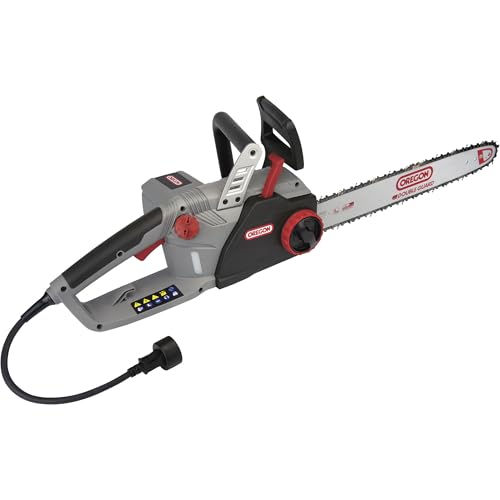
- Most power and longest bar (18 inch): Oregon CS1500.
- All-round 16-inch saw with auto-tension and oiler: Worx WG303.1.
- Value 16-inch saw: Greenworks 20332.
- Lightweight limbing and kindling: Worx WG305.1 or Remington RM1425 (both 14 inch).
- Mid-size 15-inch, 15 amp motor: Black+Decker CS1518.
The best corded electric chainsaws for light yard work are the Oregon CS1500 for the most power and self-sharpening, the Worx WG303.1 for a well-equipped 16-inch saw, the Greenworks 20332 for a value 16-inch option, and the Worx WG305.1 for a light 14-inch saw used mostly for limbing. A corded saw is a good fit when the work is near an outlet, runs in short bursts and involves branches and small logs, not felling large trees.
Corded electric chainsaws are quieter and simpler than gas saws, start with a trigger pull, and do not run out of charge. The trade-offs are the cord itself, which limits range and creates a cut hazard, and lower sustained power than a gas saw. This guide explains how to match amp rating and bar length to the work, what extension cord to use, and how to run the saw safely.
Our top picks



As an Amazon Associate we earn from qualifying purchases at no extra cost to you.
Quick answer: pick by the job
- Most power and longest bar (18 inch): Oregon CS1500.
- All-round 16-inch saw with auto-tension and oiler: Worx WG303.1.
- Value 16-inch saw: Greenworks 20332.
- Lightweight limbing and kindling: Worx WG305.1 or Remington RM1425 (both 14 inch).
- Mid-size 15-inch, 15 amp motor: Black+Decker CS1518.
How we chose
This guide is based on research, not personal use of the tools. We compared published specs for motor amperage, bar length, weight, oiling method, chain tensioning and chain brake across corded models widely sold in 2026, and grouped them by the size of job each is realistic for. Where a spec such as weight was not confirmed for a model, we leave it out and describe the saw by class instead. Safety guidance follows general chainsaw practice: protective gear, stable footing and cord management.
Amps, bar length and what they mean for the job
Amperage is the simplest indicator of power on a corded saw. On a standard 120-volt household circuit, power is roughly amps times volts, so a 15 amp motor draws up to about 1,800 watts at peak, while an 8 amp motor draws about 960 watts.
Worked example: how much saw for the wood you cut
- Measure the largest log you cut. Say 8 inches across.
- Pick a bar at least 2 inches longer than the log so the chain can complete the cut without the saw body hitting the wood. That points to a 10 inch minimum, so a 14 inch bar has margin and a 16 inch bar has more.
- Match amps to the wood. For limbs under 4 inches and green softwood, 8 amps is enough. For 6 to 12 inch hardwood logs, look at 12 to 15 amps, because lower-power motors bog down and overheat.
- Check the circuit. A 15 amp saw on a 15 amp household circuit leaves no headroom if anything else is running. Use a dedicated outlet.
Result: a 14 inch, 8 amp saw suits trimming, limbing and small firewood. For anything regularly above 8 inches, step up to a 12 to 15 amp saw with a 16 inch bar.
Best corded electric chainsaws for light yard work
1. Oregon CS1500
Spec line: 15 A · 18 inch bar · self-sharpening chain · automatic oiler · chain brake
Best for: Homeowners with bigger limbs and logs who hate stopping to file a chain. Has the strongest motor and longest bar in this guide.
Skip if: You mainly trim small branches; an 18 inch bar on a 15 amp saw is more tool than you need, and heavier than a compact model.
- Pros: The most powerful motor and longest bar of the group. A built-in grinding wheel touches up the chain when the brake is engaged, which keeps the cut crisp without a file.
- Cons: Higher cost tier and more weight at the end of your arms. A 15 amp draw is demanding on shared circuits and thin extension cords.
2. Worx WG303.1
Spec line: 14.5 A · 16 inch bar · 3/8 inch pitch, 0.05 inch gauge, 57-link chain · auto-tension · automatic oiler with level window · chain brake · about 11 lb
Best for: A general-purpose yard saw: storm cleanup, firewood bucked from 10 to 14 inch logs, and trimming.
Skip if: You need a long cord attached; the built-in cord is only about 14 inches and requires an extension cord.
- Pros: Auto-tensioning chain and an oil reservoir with a level indicator reduce upkeep. Strong motor for a 16 inch saw. Three-year warranty.
- Cons: Heavier than 14 inch saws. A short cord means you must manage a connection point.
3. Greenworks 20332
Spec line: 12 A · 16 inch bar · automatic oiler · tool-free tensioning · chain brake
Best for: Budget buyers who want a 16 inch bar and a moderate motor for fallen branches and small logs.
Skip if: You cut dense hardwood often; the 12 amp motor has less reserve than the 14.5 to 15 amp saws.
- Pros: Value tier with the main safety and convenience features: brake, tool-free tension, automatic oiling.
- Cons: Lower amp rating than premium picks, so push the saw less on larger cuts.
4. Black+Decker CS1518
Spec line: 15 A · 15 inch bar · automatic oiler · tool-free tensioning · chain brake
Best for: Buyers who want a 15 amp motor in a slightly shorter, handier package.
Skip if: You need a 16 inch bar for wider logs.
- Pros: Strong amp rating with a manageable bar length. Standard safety features.
- Cons: The 15 inch bar is less common, so replacement chain and bar parts need an exact match to the model.
5. Worx WG305.1
Spec line: 8 A · 14 inch bar · about 6 lb · automatic oiler · tool-free tensioning · chain brake
Best for: Limbing, pruning and cutting kindling, especially for users who tire quickly with heavier saws.
Skip if: You cut logs above 8 inches regularly.
- Pros: One of the lightest options here, which helps control at the end of a reach. Easy to set up.
- Cons: Lowest power in the guide. Pushing it through thick wood heats the motor and wastes effort.
6. Remington RM1425
Spec line: 8 A · 14 inch bar · automatic oiler · tool-free tensioning · chain brake
Best for: A basic entry-level saw for occasional cleanup of limbs up to roughly 6 inches thick.
Skip if: You want a self-sharpening chain or more power for firewood.
- Pros: Entry-level tier with the same convenience set as other 8 amp saws.
- Cons: Same power ceiling as the other 8 amp saws. Spare chains and bars are model-specific.
7. Makita UC4051A
Spec line: 16 inch bar class · mid-teens amp class · chain brake · automatic oiling
Best for: Users who want a more serious brand and a durable motor for regular yard and firewood work.
Skip if: You want the lowest cost; it sits in the premium tier. Confirm current specs before buying, as listings vary by region.
- Pros: Established tool brand with wide parts and service availability.
- Cons: Premium cost for work that cheaper saws handle in light use.
Comparison table
| Model | Amps | Bar | Oiler | Tensioning | Tier |
|---|---|---|---|---|---|
| Oregon CS1500 | 15 | 18 in | Automatic | Not confirmed | Premium |
| Worx WG303.1 | 14.5 | 16 in | Automatic, level window | Auto-tension | Mid-range |
| Greenworks 20332 | 12 | 16 in | Automatic | Tool-free | Entry-level |
| Black+Decker CS1518 | 15 | 15 in | Automatic | Tool-free | Mid-range |
| Worx WG305.1 | 8 | 14 in | Automatic | Tool-free | Entry-level |
| Remington RM1425 | 8 | 14 in | Automatic | Tool-free | Entry-level |
| Makita UC4051A | Mid-teens class | 16 in class | Automatic | Not confirmed | Premium |
Extension cord guidance
An undersized or overly long cord starves the motor of voltage, which causes overheating and weak cutting. Use an outdoor-rated, grounded cord marked for outdoor use (look for a W in the jacket marking such as SJTW).
| Saw current | Cord up to 50 ft | Cord 50 to 100 ft |
|---|---|---|
| 8 A | 16 gauge | 14 gauge |
| 12 A | 14 gauge | 12 gauge |
| 14.5 to 15 A | 14 gauge, 12 gauge preferred | 12 gauge |
Lower gauge numbers mean thicker wire. When in doubt, choose the thicker cord and keep it as short as the job allows. Never join several thin cords end to end.
Corded vs battery: the trade-offs
| Factor | Corded | Battery |
|---|---|---|
| Runtime | Unlimited while plugged in | Limited to battery capacity |
| Sustained power | Steady, no fade | Depends on battery voltage and charge |
| Range | Cord length | Anywhere |
| Weight | Lighter, no battery | Heavier with battery |
| Cost to buy | Lower for the same power | Higher, plus batteries |
| Trip and cut hazard | Cord must be managed | None |
Choose corded if you work within about 100 feet of an outlet and want steady power at a lower cost. Choose battery if you cut far from outlets or want to avoid a cord altogether, accepting the limit on runtime.
Safe use for limbing and small logs
- Wear protection. Eye and hearing protection, cut-resistant chaps or pants, sturdy boots and gloves.
- Keep the cord behind you. Drape it over your shoulder or position it so the saw cannot reach it. Cutting the cord is a shock and fire risk.
- Use a ground-fault circuit interrupter. Plug into a GFCI outlet or use a portable GFCI. Do not use the saw in rain or on wet ground.
- Two hands, firm stance. Keep a thumb wrapped around the front handle. Do not cut above shoulder height.
- Beware of kickback. Do not cut with the tip of the bar. Engage the chain brake when moving between cuts.
- Support the wood. Use a sawhorse for logs and cut so the kerf stays open. Do not cut with the log on the ground, because contact dulls the chain instantly.
- Unplug before service. Always disconnect the cord before changing a chain, checking tension or clearing a jam.
- Know the limits. Do not fell trees, work from a ladder or cut near power lines with a homeowner saw. Hire a professional for that.
Maintenance basics
- Keep the oil reservoir filled with bar and chain oil, not motor oil, and check the level before each use.
- Check chain tension when cold. The chain should sit snug on the bar but pull around by hand.
- Sharpen or replace the chain when it produces fine dust instead of chips. A self-sharpening system such as the Oregon unit reduces but does not remove this task.
- Clean the bar groove and oil port regularly.
- Store dry with the guard on, away from moisture.
Which saw fits which yard
| Your yard | Pick | Reason |
|---|---|---|
| Small lot, ornamental trees, branches under 4 inches | Worx WG305.1 or Remington RM1425 | Light and sufficient |
| Medium lot with a few mature trees, storm cleanup | Worx WG303.1 or Greenworks 20332 | 16 inch bar with moderate power |
| Firewood from logs up to 12 inches | Oregon CS1500 or Black+Decker CS1518 | 15 amp motors |
| Large property far from outlets | Consider battery or gas | Cord range becomes the limit |
Frequently asked questions
How many amps do I need in a corded chainsaw?
For limbs and small logs up to about 8 inches, 8 to 12 amps is enough. For regular firewood or hardwood, choose 14 to 15 amps.
Higher amperage gives the motor more reserve when the chain loads up in thick wood, but also draws more from the household circuit.
What bar length is best for light yard work?
A 14 to 16 inch bar fits most yard work. Pick a bar at least 2 inches longer than the widest log you cut.
Longer bars add weight and kickback leverage, so do not buy more length than the work needs.
What extension cord should I use?
Use an outdoor-rated, grounded cord. For 12 to 15 amp saws, choose 14 gauge for runs up to 50 feet and 12 gauge beyond that.
Thinner or longer cords cause voltage drop, which overheats the motor and weakens cutting. Do not chain multiple light cords together.
Is a corded chainsaw powerful enough to cut firewood?
Yes, a 14.5 to 15 amp saw handles firewood logs up to about 12 inches. An 8 amp saw is better for kindling and limbs.
For daily firewood processing or large hardwood, a gas saw or a high-voltage battery saw is usually a better match.
Can I use a corded chainsaw in the rain?
No. Do not use a corded saw in rain, on wet ground, or in standing water. Moisture combined with electricity creates a shock hazard.
Use a GFCI-protected outlet, keep cord connections off the ground, and move work indoors or wait for dry conditions.
Is corded or battery better for yard work?
Corded suits work near an outlet where you want steady power at a lower price. Battery suits work far from outlets.
If your cuts are short and spread across a large yard, battery avoids cord handling. If you cut for an hour at a time near the house, corded is more practical.
Does a corded saw need a chain brake?
Yes, look for one. A chain brake stops the chain quickly if the saw kicks back and is a standard feature on the models in this guide.
Test the brake function by reading the manual, and engage it any time you move between cuts or set the saw down.
How often should I oil and sharpen a corded chainsaw?
Check oil before each use. Sharpen or replace the chain as soon as cutting slows or produces dust instead of chips.
Automatic oilers still need a full reservoir of bar and chain oil. A dry bar and chain wear out quickly and can damage the motor.
Bottom line
For most yards, a 16 inch corded saw in the 12 to 15 amp class is the right fit: the Worx WG303.1 for features, the Greenworks 20332 for value, or the Oregon CS1500 for the strongest motor and a self-sharpening chain. Choose a 14 inch, 8 amp saw such as the Worx WG305.1 only if your work is trimming and small limbs. Use a properly sized outdoor extension cord, plug into a GFCI outlet, keep the cord behind you and leave tree felling to professionals.





Write Your Review
No reviews yet. Be the first to share your experience!