

Key takeaways
- One diapering area and daily emptying: A compact pail or a standard-bag model is usually sufficient. Smaller liners are less likely to sit long enough for odors to build.
- Nursery far from the outside bin: Choose a taller or higher-capacity model, but do not leave a full liner indoors for many days. Capacity is convenient, not a reason to postpone disposal indefinitely.
- Twins or two children in diapers: A continuous-liner model or a pail with inexpensive bags reduces the cost and frequency of changes. Check that the lid and pedal remain accessible when the pail is used repeatedly.
- Cloth diapers: Look for a washable, waterproof liner and enough ventilation to let damp items dry between washes. A conventional odor-sealing disposable-diaper pail is not automatically suitable for storing wet cloth diapers.
The best diaper pails for odor control and easy use depend on three numbers: how many diapers your nursery produces each day, how much floor space you have, and whether you prefer inexpensive ordinary liners or proprietary refills.
Our top picks

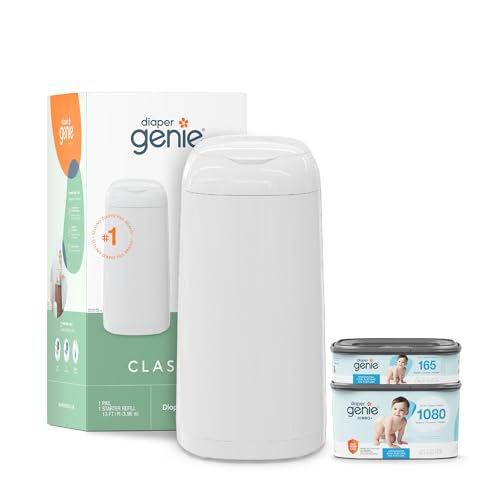


As an Amazon Associate we earn from qualifying purchases at no extra cost to you. Ratings are shown as listed on Amazon.
Quick picks by nursery situation
| Situation | Best fit | Why | Main compromise |
|---|---|---|---|
| Lowest long-term refill cost | Ubbi Steel Diaper Pail | Uses standard 13-gallon trash bags or reusable cloth liners | Odor control depends on closing the lid promptly and replacing the bag before it is overfilled |
| Strongest odor-focused design | Munchkin STEP | Foot pedal, self-sealing refill system, and odor-control cartridge | Proprietary bags and cartridges cost more |
| Hands-free everyday operation | Diaper Genie Complete | Foot pedal, built-in carbon filter, and contained multi-layer refill | Refills are a continuing ownership expense |
| High diaper volume | Dekor Plus | Tall body and continuous liner that can be cut at any point | The liner system is less convenient if you prefer ordinary bags |
Head-to-head comparison
The figures below are useful for comparison rather than a promise of exact diaper counts. Actual capacity varies with diaper size, how tightly each diaper is rolled, and how long you leave the liner in the pail.
| Model | Body and seal approach | Approximate capacity | Approximate dimensions | Refill cost reality |
|---|---|---|---|---|
| Ubbi Steel Diaper Pail | Powder-coated steel body, sliding lid, rubber seals | About 13 gallons; roughly 40–60 newborn-size diapers per bag | About 20 × 12.5 × 11 inches | Standard trash bags: generally $0.15–$0.50 each; reusable liners cost more initially |
| Munchkin STEP | Foot pedal, self-sealing refill, odor-control puck | Roughly 25–30 newborn-size diapers per liner section | About 27 × 12 × 12 inches | Proprietary refills commonly work out to about $0.20–$0.45 per diaper, depending on pack size |
| Diaper Genie Complete | Foot pedal, multi-layer refill, carbon filter | Typically about 30–40 newborn-size diapers between changes | About 27 × 10 × 12 inches | Proprietary refills commonly cost about $0.15–$0.35 per diaper |
| Dekor Plus | Step-open lid, continuous liner, triple-seal closure | Manufacturer claims can reach several hundred newborn diapers per liner; practical household use is lower | About 29 × 13 × 10 inches | Continuous refills often work out to about $0.10–$0.25 per diaper |
How the seal types differ
Steel canister with a sliding lid
The Ubbi’s steel body is resistant to absorbing odors compared with some porous plastics, and its rubber gasket helps contain smell while the lid is shut. It does not individually seal every diaper. Opening the lid releases the accumulated odor, and a full bag can smell stronger than a segmented liner. This design is a good choice when you want flexible bag options and can empty the pail regularly.
Self-sealing refill systems
Munchkin STEP and similar systems pull the liner closed around each deposited diaper or create a tight barrier as the bag advances. This reduces the odor burst when the lid opens, particularly in a small room. The trade-off is that the refill film, rather than the pail itself, does most of the odor-control work. Running out of refills makes the pail unusable until you buy more.
Continuous liners
Dekor Plus uses a long liner that can be tied and cut at any point. You do not have to wait for a fixed bag size, so it can reduce wasted liner when the pail is only partly full. It also makes changing the bag quick. The liner is not individually sealed around every diaper, so prompt closing and regular emptying still matter.
Worked refill-cost calculation
Assume a baby uses eight disposable diapers per day. Over a year, that is approximately 2,920 diapers. A standard-bag pail using $0.30 trash bags and holding 45 diapers per bag would consume about 65 bags, or roughly $20 for the year. Add occasional bags for wipes and miscellaneous waste, and the practical total may be closer to $25–$40.
Now compare a proprietary system at $0.25 per diaper. The same 2,920 diapers would require about $730 in liners. Even if the proprietary pail offers better odor containment, the difference is substantial. A household producing fewer diapers, using cloth diapers, or emptying a pail before it is full may see a smaller gap, but refill cost should be part of the purchase decision rather than an afterthought.
Capacity: match the pail to your emptying schedule
- One diapering area and daily emptying: A compact pail or a standard-bag model is usually sufficient. Smaller liners are less likely to sit long enough for odors to build.
- Nursery far from the outside bin: Choose a taller or higher-capacity model, but do not leave a full liner indoors for many days. Capacity is convenient, not a reason to postpone disposal indefinitely.
- Twins or two children in diapers: A continuous-liner model or a pail with inexpensive bags reduces the cost and frequency of changes. Check that the lid and pedal remain accessible when the pail is used repeatedly.
- Cloth diapers: Look for a washable, waterproof liner and enough ventilation to let damp items dry between washes. A conventional odor-sealing disposable-diaper pail is not automatically suitable for storing wet cloth diapers.
Ownership details that matter after purchase
The first parts likely to need attention are the lid gasket, pedal mechanism, cutting blade, and odor-control filter—not the main container. A gasket that collects residue may stop sealing well. A pedal can become stiff when wipes or packaging fall into the mechanism. On continuous-liner models, the cutting area may accumulate film scraps.
For routine maintenance, empty the pail before the liner is stretched tight, wipe the lid and rim with a mild household cleaner, and dry the surfaces before fitting a new bag. Replace a carbon filter according to the manufacturer’s schedule or sooner if odors persist. Avoid pouring bleach or strong solvents into the mechanism; they can damage seals and finishes. Never put loose wipes, clothing, or toys into the pail, since these can obstruct the closure path.
Common buying mistakes
- Comparing only advertised diaper counts: Counts usually use small newborn diapers. Larger toddler diapers occupy much more volume.
- Ignoring the opening height: A pail may fit beside a changing table but still be awkward if the lid hits a shelf or the pedal is blocked.
- Assuming “odor locking” means odor elimination: Every system releases some smell when opened. Frequent emptying and a clean rim remain important.
- Buying a proprietary system without pricing refills: Calculate cost per diaper before choosing the pail, especially for a baby expected to use disposable diapers for several years.
- Overfilling to save a liner: This can prevent the lid from closing, strain the mechanism, and make bag removal messier.
Bottom line
Choose the Ubbi Steel Diaper Pail if low ongoing cost and ordinary bags matter most. Choose the Munchkin STEP if you prioritize a strong odor-control system and accept proprietary consumables. The Diaper Genie Complete is a practical middle ground for hands-free nursery use, while the Dekor Plus makes the most sense for higher diaper volume or households that value a cut-to-length continuous liner. The best diaper pails are not simply the largest or most heavily sealed; they are the ones whose emptying schedule, refill price, and operating space fit your daily routine.


Write Your Review
No reviews yet. Be the first to share your experience!