

Key takeaways
- Buy the T-fal FR8000 if you fry often and value filtration and easier cleanup. Choose the Presto DualDaddy if low cost, simple operation, and two-basket flexibility matter more than automation. Pick the Hamilton Beach 35034 or another 3-liter removable-bowl fryer when counter space and manageable…
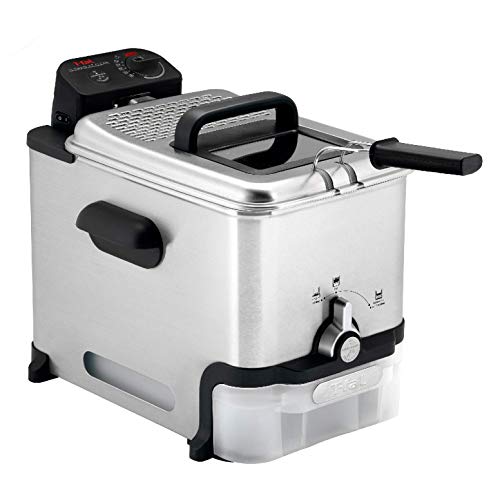
The best deep fryers for most home cooks are the T-fal FR8000 for its filtration and large batch capacity, the Presto 05466 DualDaddy for inexpensive family-size frying, and the Hamilton Beach 35034 for a smaller kitchen that still needs a removable oil tank.
Choose by the amount you cook in one batch, not by the largest advertised oil capacity. A fryer that holds 3 liters of oil but leaves little room for food may recover heat more slowly than a slightly smaller model with a well-sized basket and strong heating element.
Our top picks



As an Amazon Associate we earn from qualifying purchases at no extra cost to you. Ratings are shown as listed on Amazon.
Best deep fryers by kitchen and cooking style
| Best for | Recommended type or model | Oil capacity | Approximate food capacity | Why it stands out |
|---|---|---|---|---|
| Frequent family meals | T-fal FR8000 | 3.5 L | About 1 kg per batch | Automatic oil filtration, adjustable thermostat, large removable parts |
| Lowest-cost large batches | Presto 05466 DualDaddy | About 8 cups | Up to about 1.1 kg, depending on food | Simple electric design, two baskets, compact rectangular footprint |
| Small kitchens | Hamilton Beach 35034 | 3 L | About 0.7 kg | Small footprint, removable oil container, adjustable temperature |
| Occasional cooking | Small 1.5–2 L countertop fryer | 1.5–2 L | About 0.4–0.6 kg | Uses less oil and stores more easily, but requires smaller batches |
| Cooking several foods at once | Two-basket 3–4 L fryer | 3–4 L | Two small batches | Separates foods and can finish different items independently |
Capacity figures are practical estimates rather than promises. Food shape, moisture, coating, and the manufacturer’s maximum-fill line all affect how much you can fry safely.
Head-to-head: the three most useful countertop formats
T-fal FR8000: best for repeated frying and easier oil management
The T-fal FR8000 is a strong choice when frying is a regular part of your cooking rather than an occasional project. Its 3.5-liter oil capacity is large enough for family portions, while the adjustable thermostat reaches approximately 374°F. The most useful feature is the integrated filtration system, which strains cooled oil into a storage container.
Filtration does not make oil permanent. It removes crumbs and some coating particles, but oil still darkens and breaks down with repeated high-heat use. The system does, however, reduce the messy task of pouring oil through a separate strainer. The removable cooking bowl and dishwasher-safe components also make cleanup less intimidating.
Its disadvantages are size and storage. Expect a footprint of roughly 18 by 11 inches, plus enough vertical clearance to lift the lid and basket. The plastic exterior is easier to wipe than a fully exposed metal housing, but the lid, filter parts, and basket add several pieces to wash and dry.
Presto 05466 DualDaddy: best value for straightforward batch cooking
The Presto DualDaddy takes a simpler approach. It uses a rectangular aluminum cooking vessel with a built-in heating element and two baskets. The design is useful for fries, chicken pieces, fish, or vegetables when you want to separate foods without buying a second fryer.
With roughly 8 cups of oil, it suits moderate family batches while using less oil than many 3.5- or 4-liter fryers. Its simplicity also means fewer components to fail. There is no automatic filtration system, digital control panel, or removable oil tank, so you will need to cool the oil, strain it separately, and wipe the vessel carefully.
This model is less convenient for cooking very wet foods or making several consecutive batches. The heating element is modest compared with larger professional-style countertop fryers, so temperature recovery depends heavily on not overcrowding the baskets.
Hamilton Beach 35034: best compromise for limited counter space
The Hamilton Beach 35034 provides approximately 3 liters of oil capacity in a relatively compact format. Its removable oil container makes draining and cleaning easier than on a fixed-vessel fryer, and its adjustable temperature control covers common frying temperatures up to about 375°F.
This is a sensible choice for one or two people who occasionally fry enough food for a meal but do not want a large appliance occupying the counter. The trade-off is basket area: a 3-liter fryer may hold plenty of oil while still offering only enough surface area for a modest layer of food. Narrow baskets can make long items or large chicken pieces awkward.
For the crispest results, treat its practical capacity as closer to 0.5–0.7 kg per batch than to the total weight of food you might theoretically fit inside the basket.
What matters more than the advertised capacity
Temperature recovery
Oil temperature falls when cold food enters the fryer. A useful fryer brings the oil back toward its set temperature without making you wait several minutes between batches. Heating-element wattage, food quantity, starting temperature, and basket design all affect recovery.
As a rough calculation, frying 1 kg of refrigerated food in one crowded batch may cause a much larger temperature drop than frying two 500-gram batches. The second approach takes longer overall, but it usually produces less greasy, more evenly browned food because the oil stays hotter. Never use the basket’s physical capacity as a reason to exceed the manufacturer’s food guidance.
Basket size and shape
A wide, shallow basket is better for fries, onion rings, and battered vegetables because pieces have more room to separate. A deeper, narrower basket conserves counter space but encourages stacking. For chicken wings, look for enough surface area to keep pieces in one loose layer; for long foods, check the basket’s usable length rather than only its volume.
Filtration and storage
Automatic filtration is valuable if you fry weekly or reuse oil several times. It is less important if you fry once every few months and discard the oil afterward. A filter should be removable and easy to dry. Trapped water is a bigger nuisance than a filter that is merely slow.
Before storing oil, allow it to cool completely, strain out crumbs, and keep it covered in a cool, dark place. Discard oil when it smells stale, smokes at normal frying temperatures, becomes unusually thick, or develops persistent foam.
Footprint and storage
Measure the counter, not just the cupboard. Leave clearance around the fryer, keep it away from the edge, and make sure the lid can open without hitting an upper cabinet. A fryer that is difficult to lift and clean is likely to be used less often, even if its specifications look attractive.
Decision matrix for choosing your fryer
| Your situation | Prioritize | Best fit | Accept the trade-off |
|---|---|---|---|
| Fry once a month in a small kitchen | 1.5–2 L capacity, compact storage, removable parts | Small countertop fryer | Two or more batches for a family meal |
| Fry weekly for three or more people | 3–3.5 L oil, wide basket, strong recovery | T-fal FR8000 or similar large fryer | More oil to store and more parts to clean |
| Want the least complicated appliance | Simple controls, fixed heating system, few seals | Presto DualDaddy-style fryer | Manual straining and less precise temperature control |
| Need to separate two foods | Two baskets and independent batch handling | Two-basket fryer | Each basket is smaller than a single large basket |
| Cleaning is your main concern | Removable oil tank and dishwasher-safe accessories | Hamilton Beach or T-fal-style removable-bowl fryer | More detachable components to keep track of |
Safety and cleanup details that determine ownership
Look for cool-touch handles, a stable base, a breakaway magnetic power cord, a locking or covered lid, and clear minimum and maximum oil markings. These features reduce the consequences of bumps and splashes, but they do not make deep frying unattended cooking.
Set the fryer on a level, heat-resistant surface away from water. Dry food thoroughly before lowering it into oil, lower baskets slowly, and keep the lid available for covering the appliance if oil ignites. Never pour water onto an oil fire; turn off the heat if it is safe to do so and use a lid or an appropriately rated fire extinguisher.
After each use, unplug the fryer and wait until the oil is fully cool. Remove loose crumbs, strain reusable oil, and wipe the exterior. Wash baskets and removable bowls according to the manual. Keep the heating element and electrical controls dry. The parts most likely to become troublesome are basket coatings, plastic handles, filter seals, and power-cord connections, so avoid abrasive pads, twisting detachable parts, and storing components while damp.
Bottom line
Buy the T-fal FR8000 if you fry often and value filtration and easier cleanup. Choose the Presto DualDaddy if low cost, simple operation, and two-basket flexibility matter more than automation. Pick the Hamilton Beach 35034 or another 3-liter removable-bowl fryer when counter space and manageable oil volume are the deciding factors. For occasional use, a 1.5–2-liter model is usually the more sensible purchase: smaller batches are a limitation, but lower oil use and easier storage can make the appliance far more practical.



Write Your Review
No reviews yet. Be the first to share your experience!