

Key takeaways
- Best trail choice: Ski-Doo MXZ or Polaris Indy in a 600-class configuration with a 120- to 129-inch track.
- Best trail-and-off-trail compromise: Ski-Doo Renegade or Polaris Switchback with a 137- to 146-inch track.
- Best deep-snow choice: Ski-Doo Summit or Polaris RMK with an 850-class engine and a 154- to 165-inch mountain track.
- Best utility format: a fan-cooled or liquid-cooled two-up utility snowmobile with a 20- to 24-inch-wide track, reverse, hitch, and an available cargo rack.
- Best value for occasional riders: a clean, recent used 600-class trail sled with documented service, rather than an older high-output mountain sled.
Best Snowmobiles for Trail, Utility, and Deep Snow
The best snowmobiles in 2026 are situation-specific: choose a lightweight 600-class trail sled for groomed routes, a long-track crossover for mixed terrain, an expedition-style utility sled for hauling, and a 154- to 165-inch mountain sled for deep snow.
Quick picks by riding situation
- Best trail choice: Ski-Doo MXZ or Polaris Indy in a 600-class configuration with a 120- to 129-inch track.
- Best trail-and-off-trail compromise: Ski-Doo Renegade or Polaris Switchback with a 137- to 146-inch track.
- Best deep-snow choice: Ski-Doo Summit or Polaris RMK with an 850-class engine and a 154- to 165-inch mountain track.
- Best utility format: a fan-cooled or liquid-cooled two-up utility snowmobile with a 20- to 24-inch-wide track, reverse, hitch, and an available cargo rack.
- Best value for occasional riders: a clean, recent used 600-class trail sled with documented service, rather than an older high-output mountain sled.
Those categories matter more than peak horsepower. A long, tall mountain track can be excellent in powder but cumbersome on a groomed trail, while a short-track trail sled is efficient and predictable but can trench or bury itself away from packed snow.
Our top picks


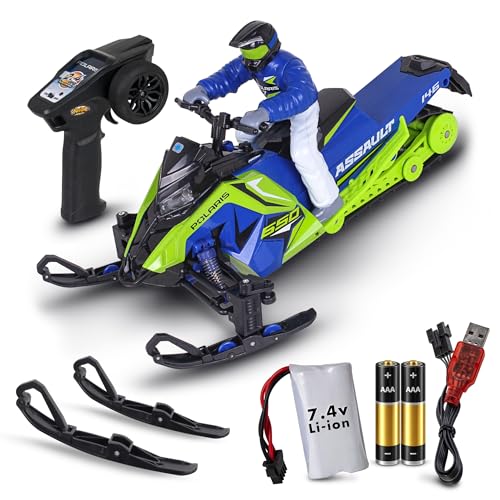

As an Amazon Associate we earn from qualifying purchases at no extra cost to you. Ratings are shown as listed on Amazon.
Head-to-head: trail, crossover, utility, and mountain sleds
| Snowmobile type | Typical engine | Typical track | Fuel capacity | Useful strengths | Main compromise |
|---|---|---|---|---|---|
| Trail performance | 600–850 cc, usually two-stroke | 120–129 in, 1.0–1.5 in lug | 8–11 gal | Quick steering, efficient handling, strong braking | Limited flotation in unpacked snow |
| Crossover | 600–850 cc | 137–146 in, 1.35–2.0 in lug | 9–12 gal | Stable trail manners with better off-trail traction | Heavier and less nimble than a short-track sled |
| Utility or touring | 600–1000 cc, two- or four-stroke | 136–154 in, often 15–20 in wide | 10–13 gal | Towing, cargo, passenger comfort, low-speed control | Weight and width reduce playful handling |
| Mountain or deep snow | 800–900 cc two-stroke | 154–165 in, 2.5–3.0 in lug | 9–12 gal | Flotation, climbing, sidehilling, technical maneuvering | High purchase and operating cost; poor fit for flat trails |
Trail: Ski-Doo MXZ versus Polaris Indy
The Ski-Doo MXZ and Polaris Indy are the clearest choices for riders whose season is mostly groomed trail. A 600-class engine is generally enough for recreational riding and usually costs less to feed than an 850-class engine. The 850-class versions provide stronger acceleration and more authority in deep snow, but they also make it easier to ride faster than conditions allow.
Look closely at suspension calibration rather than only engine output. Trail-focused suspensions are designed to absorb repeated bumps while keeping ski pressure controlled. Adjustable compression or coupling settings can help heavier riders and those carrying luggage, but a complicated suspension is only useful if the owner is willing to learn its adjustments.
For frequent long-distance trail use, compare windshield height, hand protection, heated controls, fuel range, and dealer access. A slightly slower sled with a comfortable riding position can be the better purchase after several hundred miles in a day.
Crossover: Ski-Doo Renegade versus Polaris Switchback
The Ski-Doo Renegade and Polaris Switchback occupy the useful middle ground. Their 137- to 146-inch tracks add flotation and improve stability in loose snow without making the sled as specialized as a mountain machine. Choose a shorter crossover track if trail riding dominates; choose the longest available track when your routes regularly include ungroomed forest roads, fields, or lake-effect snow.
Pay attention to lug height. A 1.35- to 1.5-inch lug is a sensible mixed-use specification. Around 2 inches gives more bite in loose snow but can increase steering effort, rolling resistance, and wear on hard-packed trails. If the sled will spend most of its time on groomed routes, an aggressive track can be unnecessary expense.
Utility: prioritize work features over acceleration
Utility snowmobiles are the right tool for ice fishing, property access, trapline work, and hauling supplies. A wide track, reverse, low-range gearing where available, a hitch, and a rack are more valuable than a high-output engine. Two-up seats improve passenger comfort, but they add weight and can make loading and unloading more difficult.
For towing, compare the stated hitch rating and the expected load. A sled pulling a light utility trailer on level packed snow has very different needs from one hauling firewood through wet, deep snow. Choose a machine with enough cooling capacity and suspension travel for the load, and avoid treating a cargo rack’s static capacity as a towing rating.
Deep snow: Ski-Doo Summit versus Polaris RMK
The Ski-Doo Summit and Polaris RMK are specialized mountain sleds. Their tall tracks, narrow chassis, elevated handlebars, and lightweight construction make them easier to keep on top of powder and to tip onto edge. A 154-inch track is a versatile mountain length; 165 inches improves flotation and climbing but requires more room to turn and can be harder to maneuver in tight trees.
An 850-class engine is the practical starting point for many mountain riders because it supplies the torque needed to maintain track speed in deep snow. A 600-class mountain sled can be easier to control and less expensive, but it may require more momentum and careful line selection in steep or heavy snow.
Do not buy a mountain sled for occasional trail riding simply because it has the highest horsepower. Tall lugs drag on packed surfaces, narrow skis can feel nervous on rough trails, and mountain suspension settings are not optimized for repeated high-speed bump travel.
Decision matrix: match the sled to your actual use
| Your situation | Best configuration | Why | Avoid |
|---|---|---|---|
| New rider, mostly groomed trails | 600 cc, 120–129 in track | Manageable power, predictable steering, lower running cost | 850–900 cc performance models |
| Experienced rider, mixed trails and fields | 600–850 cc, 137–146 in track | Better flotation without giving up trail manners | 165 in mountain tracks unless powder is common |
| Frequent deep-snow riding | 800–900 cc, 154–165 in track | Track speed and flotation reduce trenching | Short-track trail sleds |
| Ice fishing or property work | 600–1000 cc utility sled, hitch and rack | Designed for low-speed pulling and cargo | Lightweight mountain models |
| Limited garage space | Short-track sled, about 10–11 ft long | Easier to store, move, and trailer | 165 in sleds and wide utility models |
| Only 5–10 riding days per year | Recent used 600-class trail or crossover sled | Lower depreciation and sufficient capability | Highly modified used mountain sleds |
How to calculate whether the range is enough
Fuel capacity alone does not tell you whether a snowmobile has adequate range. A practical estimate is:
Usable range = fuel capacity × 0.8 ÷ fuel consumption per mile.
The 0.8 factor reserves approximately 20 percent for detours, soft snow, idling, and an inaccurate fuel gauge. For example, a sled with a 10-gallon tank averaging 12 mpg has an estimated usable range of 96 miles: 10 × 0.8 × 12. Deep snow, aggressive throttle use, and towing can reduce that figure substantially.
When comparing models, also check whether the quoted fuel capacity includes a separate oil reservoir and whether the machine requires two-stroke oil. A two-stroke sled may carry less fuel than a touring sled but still have higher fluid costs over a season.
Ownership details that listings often omit
Inspect the wear items
Track hyfax wear, drive-belt condition, carbides, skis, idler wheels, and suspension bushings are more informative than cosmetic plastic. A track with torn lugs or missing clips can turn an apparently inexpensive sled into a major repair. Check the heat exchanger for damage, look for tunnel dents, and confirm that reverse and electric start operate before buying.
Service access matters
Ask where routine service is performed and how far the nearest qualified dealer is. Modern fuel-injected sleds reduce cold-start fuss, but diagnostics, electronic reverse systems, turbochargers, and specialized suspension components can require brand-specific equipment. Keep receipts for belt changes, drive-clutch service, engine fogging or storage preparation, and suspension lubrication.
Prevent avoidable damage
- Do not run a tall-lug mountain track on bare pavement; it can overheat hyfax and damage the track.
- Clear snow from the engine compartment and tunnel before storage so trapped moisture does not promote corrosion.
- Use the correct two-stroke oil or four-stroke oil specified for the engine; do not substitute by viscosity alone.
- Check track tension and alignment after the first few rides, especially on a new or recently serviced sled.
- Carry a belt, spare spark plugs where appropriate, tow strap, tools, and emergency communication equipment.
Bottom line
For most buyers, the best snowmobile is a 600-class trail sled if riding is mainly groomed, or a 137- to 146-inch crossover if conditions vary. Choose a utility machine when towing and cargo are central to the job, and reserve an 850-class 154- to 165-inch mountain sled for regular deep-snow use. Before choosing a brand or trim, compare the track length, lug height, suspension purpose, fuel range, cargo provisions, and local service support. Those details determine whether the machine fits your riding—not the engine badge on the side panel.


Write Your Review
No reviews yet. Be the first to share your experience!