

Key takeaways
- Compare five table saw blades for pink ivory, from Diablo 80- and 90-tooth finish blades to Freud thin-kerf picks, with tooth and kerf guidance.
Pink ivory arrives in small, costly boards, and every cut either protects that pink heartwood or ruins it. The real decision is not which brand to buy but how much finish quality you need from the saw itself: a fine-tooth blade leaves an edge that goes straight to glue-up, while a coarse general blade chips the face and forces you to sand away wood you cannot replace. Because pink ivory is dense and hard, a dull or wrongly ground blade also heats up fast, and heat darkens the cut line on pale pink wood.
This guide is for box makers, knife-handle makers, luthiers, and furniture makers who cut pink ivory in small pieces and want the cut edge to look finished. It also suits turners who mill pink ivory blanks square before mounting them. Each blade below was picked from the name and listed details on its Amazon product page, so you can check the tooth count, kerf, and arbor against your own saw before ordering.
Quick Picks
As an Amazon Associate we earn from qualifying purchases.
| Product | Best for | Key spec from title |
|---|---|---|
| Diablo D1080X 10-Inch 80-Tooth Ultra Finish | Chip-free crosscuts in pink ivory boards | 80 Hi-ATB teeth |
| Diablo D1090X 10-Inch 90-Tooth Ultimate Polished Finish | Glass-smooth edges on small pink ivory pieces | 90 teeth, ASFG grind |
| Diablo D1060X 10-Inch 60-Tooth Fine Finish | Everyday finish cuts in pink ivory and other hardwoods | 60 Hi-ATB teeth |
| Freud LU88R010 10-Inch 60-Tooth Thin Kerf Fine Finish Crosscut | Thin-kerf crosscuts on a portable or lower-powered saw | 60 teeth, thin kerf |
| Freud LU83R010 10-Inch 50-Tooth Thin Kerf Combination | Rips and crosscuts with one blade | 50 teeth, thin kerf |
How to Choose
Match Tooth Count to the Edge You Need
Pink ivory shows every chip, so tooth count decides how much sanding the edge needs. An 80-tooth or 90-tooth blade takes small bites and leaves a near-polished edge on crosscuts, which suits box lids and visible joints. A 60-tooth blade still leaves a clean edge but works faster and clears waste better, so it fits general furniture parts. A 50-tooth combination blade leaves a rougher edge that needs light sanding, and it suits rough sizing. If the edge will show in the finished piece, start at 60 teeth and go higher for the final trim.
Pick the Grind for the Cut Direction
Tooth grind shapes how the blade meets dense wood. Hi-ATB teeth slice with steep alternate bevels and shear the fibers cleanly, which keeps crosscuts in pink ivory free of splinters. Standard ATB teeth cut well in both directions and suit a blade that must rip and crosscut. The axial shear face grind on the 90-tooth Diablo adds angled tooth faces that shear the surface instead of scraping it, which helps on the hardest pink ivory. For rip cuts along the grain, a flat-top or triple-chip grind clears waste without binding.
Choose Kerf for Your Saw and Your Stock
Kerf is the width of the slot the blade cuts, and it matters twice with pink ivory. A thin kerf near 0.087 to 0.098 inches removes less wood from each small board, so you keep more of a costly stick, and it asks less of the motor, which helps portable saws and lower-powered cabinet saws. A full kerf near 0.126 inches runs steadier and resists deflection on long rips, but it wastes more wood and loads the motor harder. Match the kerf to the saw first, then to the size of your pink ivory boards.
Check Coating, Plate, and Vibration Control
Dense wood builds heat, and heat dulls teeth and darkens the cut. A non-stick coating such as Perma-Shield keeps pitch and resin from sticking to the plate, so the blade stays cooler and feeds smoothly through pink ivory. Laser-cut stabilizer vents and expansion slots let the plate flex slightly as it warms, which cuts down on wobble and noise. A thicker plate resists deflection on deep cuts, while a thin plate feeds easier. Before ordering, confirm the 5/8-inch arbor fits your saw and that the blade diameter matches the saw.
The 5 Best Options
Diablo D1080X 10-Inch 80-Tooth Ultra Finish
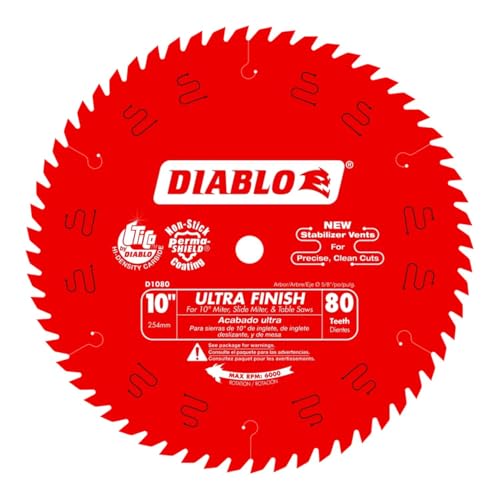
This blade suits woodworkers who crosscut pink ivory for parts that will show, such as box lids, drawer fronts, and inlay strips. Its 80 Hi-ATB teeth take fine, shearing cuts that leave the edge smooth enough for glue-up with little sanding, which matters when each board costs so much. The thin kerf feeds easily through dense wood without loading the motor, and the coating keeps the plate clean between cuts. It works on table saws and miter saws, so one blade can serve both machines in a small shop.
Specs
- 10-inch diameter, 80 Hi-ATB teeth
- 0.098-inch kerf, 0.071-inch plate
- 5/8-inch arbor, 15-degree hook angle
- TiCo Hi-Density Carbide teeth
- Perma-Shield non-stick coating
- Maximum speed 6,000 RPM
Best for: Chip-free crosscuts in pink ivory boards for visible parts.
Watch out for: The high tooth count feeds slowly, so forcing the board can scorch dense pink ivory; let the blade set the pace.
Diablo D1090X 10-Inch 90-Tooth Ultimate Polished Finish

This blade suits makers who cut small pink ivory pieces for knife handles, jewelry boxes, and inlay, where the edge must look polished straight off the saw. Its 90 teeth and axial shear face grind slice the surface rather than tearing it, which leaves a glossy edge on hard pink ivory with almost no tear-out. The very thin kerf saves wood from narrow blanks and keeps the feed light, so a small saw can still push it through dense stock. It shines on crosscuts and trim work where the finish matters most.
Specs
- 10-inch diameter, 90 teeth
- Axial Shear Face Grind (ASFG) tooth geometry
- 0.087-inch kerf, 0.063-inch plate
- 5/8-inch arbor, 10-degree hook angle
- TiCo Hi-Density Carbide teeth
- Maximum speed 6,000 RPM
Best for: Glass-smooth edges on small pink ivory pieces for handles and inlay.
Watch out for: The thin plate and high tooth count suit finish cuts, not heavy ripping; use a rip blade for long cuts along the grain.
Diablo D1060X 10-Inch 60-Tooth Fine Finish

This blade suits woodworkers who cut pink ivory often but also cut oak, maple, and plywood with the same blade. Its 60 Hi-ATB teeth leave a smooth edge that needs only light sanding, and the tooth count is low enough to feed at a normal pace through dense boards. The thin kerf and laser-cut vents keep the cut cool and steady, which helps when you move from crosscuts to miters in the same session. It is the most versatile finish blade in this list for a shop that works pink ivory alongside other hardwoods.
Specs
- 10-inch diameter, 60 Hi-ATB teeth
- 0.098-inch kerf
- 5/8-inch arbor
- TiCo Hi-Density Carbide teeth
- Perma-Shield non-stick coating
- Laser-cut stabilizer vents
Best for: Everyday finish cuts in pink ivory and other hardwoods with one blade.
Watch out for: Check the arbor and blade size against your saw, since this blade fits 10-inch saws with a 5/8-inch arbor only.
Freud LU88R010 10-Inch 60-Tooth Thin Kerf Fine Finish Crosscut

This blade suits owners of portable or lower-powered table saws who still want a clean edge in pink ivory. Its thin kerf removes less wood and asks less of the motor, so a jobsite saw can crosscut dense boards without bogging down. The 60 ATB teeth cut cleanly across the grain, and the thin plate feeds with little drag, which helps when the saw has limited power. It is a strong pick for a small shop where the saw, not the blade, is the limiting factor.
Specs
- 10-inch diameter, 60 ATB teeth
- 0.090-inch thin kerf, 0.071-inch plate
- 5/8-inch arbor, 15-degree hook angle
- TiCo Hi-Density Carbide teeth
- Perma-Shield non-stick coating
Best for: Thin-kerf crosscuts on a portable or lower-powered saw.
Watch out for: A thin plate can flex if pushed hard, so keep the feed steady and avoid forcing thick boards through it.
Freud LU83R010 10-Inch 50-Tooth Thin Kerf Combination

This blade suits woodworkers who want one blade for both rips and crosscuts in pink ivory, rather than swapping blades between cuts. Its 50 ATB teeth handle rip cuts along the grain and crosscuts across it, so you can size boards and trim them without changing setup. The thin kerf saves wood and eases the load on the motor, which matters with dense stock. It leaves an edge that needs light sanding, so it fits rough sizing and shop jigs better than final visible joints.
Specs
- 10-inch diameter, 50 ATB teeth
- 0.091-inch thin kerf
- 5/8-inch arbor, 10-degree hook angle
- TiCo Hi-Density Carbide teeth
- Perma-Shield non-stick coating
- Laser-cut anti-vibration slots
Best for: Rips and crosscuts with one blade when sizing pink ivory boards.
Watch out for: The edge needs light sanding before glue-up, so plan a finish pass with a higher-tooth blade for visible joints.
Which One Fits Your Situation
You Cut Small Pieces for Handles and Inlay
Pick the Diablo D1090X. Its 90 teeth and shear-face grind leave the smoothest edge in this list, which suits tiny pink ivory pieces where sanding would round the corners. The thin kerf also saves wood from narrow blanks, so more of each costly stick ends up in the finished piece.
You Crosscut Boards for Visible Furniture Parts
Pick the Diablo D1080X. Its 80 Hi-ATB teeth leave crosscuts clean enough for glue-up, which suits box lids, drawer fronts, and panel edges. The thin kerf feeds easily through dense boards without loading the motor on a cabinet saw, and the coating keeps the plate clean between cuts.
You Own a Portable Saw and Need a Clean Edge
Pick the Freud LU88R010. Its thin kerf asks the least of the motor, so a jobsite saw can crosscut pink ivory without slowing down. The 60 ATB teeth still leave a clean edge, and the thin plate feeds with little drag, which suits a small shop with limited saw power.
You Want One Blade for Rips and Crosscuts
Pick the Freud LU83R010. Its 50-tooth combination design handles both cut directions, so you can size pink ivory boards and trim them without swapping blades. It fits shops that value a simple setup over a flawless edge, and a finish blade can follow for visible joints.
Common Mistakes
- Using a low-tooth general blade on pink ivory and chipping the face of a costly board.
- Forcing the feed through dense wood, which scorches the cut line and dulls the teeth.
- Fitting a blade with the wrong arbor size or diameter and finding it does not mount on the saw.
- Skipping a thin-kerf blade on a portable saw and stalling the motor mid-cut.
- Cutting pink ivory with a dirty, pitch-coated blade that drags, heats up, and leaves burn marks.
Frequently Asked Questions
What tooth count works best for pink ivory?
A 60-tooth to 90-tooth blade works best for pink ivory. Higher tooth counts take smaller bites and leave a smoother edge with less tear-out, which matters because pink ivory is dense and its boards are costly. Use 60 teeth for general finish work and 80 or 90 teeth for visible edges.
Can one blade rip and crosscut pink ivory?
Yes, a 50-tooth combination blade such as the Freud LU83R010 handles both rips and crosscuts in pink ivory. The edge needs light sanding before glue-up, so use a higher-tooth finish blade for final visible joints. Keep the feed steady to avoid scorching the dense wood.
Does kerf width matter with pink ivory?
Yes, kerf width matters because pink ivory boards are small and costly. A thin kerf near 0.087 to 0.098 inches wastes less wood per cut and asks less of the motor, which helps portable saws. A full kerf runs steadier on long rips but removes more wood from each board.
How do I keep pink ivory from scorching during a cut?
Use a sharp, high-tooth blade and let the blade set the feed pace instead of forcing the board. A non-stick coating and clean plate keep heat down, and a thin kerf reduces friction through dense wood. If the cut line darkens, slow the feed and check the blade for pitch buildup.
More from Amazon
Programs that pair well with the guide above. Offers and eligibility are set by Amazon and may change.
A free business account with business pricing and bulk-buying tools for work, shop or home office.
Create a business accountFree shipping on eligible items, Prime Video and more. Eligible new members can start with a free trial.
Start a Prime free trialAudiobooks and podcasts to listen to on the go. Eligible new members can start with a free trial.
Try Audible freeAd-free music streaming. Eligible new subscribers can start with a free trial.
Try Music Unlimited freeAs an Amazon Associate we earn from qualifying purchases.










Write Your Review
No reviews yet. Be the first to share your experience!