

Key takeaways
- A forgiving first purchase for bread and pizza.
- More thermal-shock resistance than basic ceramic.
- A surface that can stay in the oven during normal baking.
- Moderate heat retention without the weight and cost of a very thick slab.
Best Pizza Stones for Crisp, Even Crusts
The best pizza stones for most home ovens are 15- to 16-inch cordierite stones that are at least 5/8 inch thick, while baking steel is the better choice for fast recovery and ceramic is best when low weight and easy handling matter more than maximum durability.
Quick picks by situation
| Your situation | Best surface | Recommended specification | Why it fits |
|---|---|---|---|
| First pizza stone on a budget | Cordierite | 14–16 inches, 5/8-inch thick | Good heat retention, moderate price, and better thermal-shock resistance than many basic ceramic stones |
| Several pizzas in succession | Baking steel | 1/4- to 3/8-inch thick, 14–16 inches wide | Recovers quickly between launches and transfers intense heat to the dough |
| Small oven or limited storage | Thin ceramic or cordierite | 12–14 inches, 3/8- to 1/2-inch thick | Lower weight and easier storage, though it gives up some heat capacity |
| Frequent high-temperature outdoor cooking | Thick cordierite or steel rated for the cooker | 14–16 inches; verify the appliance temperature rating | Designed around high heat and repeated use, but fit and manufacturer limits are critical |
| Very delicate, thin-crust pizza | Steel or thick cordierite | Steel at 1/4 inch or cordierite at 5/8–3/4 inch | Both can produce strong bottom browning; steel generally shortens the bake |
Cordierite: the best all-round stone material
Cordierite is a ceramic material formulated to tolerate repeated heating and cooling with less risk of thermal shock than ordinary pottery. It is the safest default for a conventional home oven because it balances heat retention, price, thickness options, and cracking resistance.
Our top picks


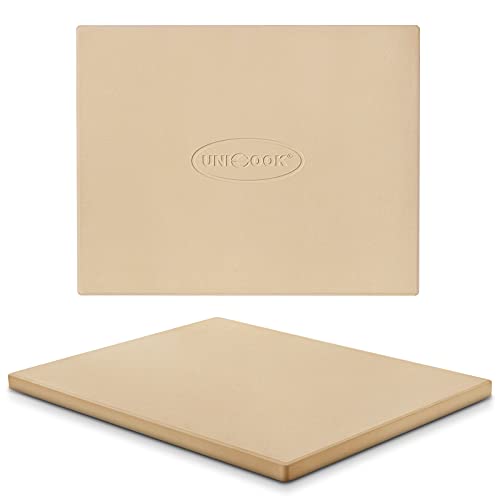
As an Amazon Associate we earn from qualifying purchases at no extra cost to you. Ratings are shown as listed on Amazon.
A 5/8-inch cordierite slab typically needs 45–60 minutes to preheat thoroughly at 500°F. Thicker 3/4-inch models can hold heat more steadily during multiple bakes, but may need 60–75 minutes and can weigh 15–25 pounds depending on size. That extra mass is useful when making several pizzas, because the surface temperature drops less when a room-temperature dough is placed on it.
Cordierite does not recover as quickly as steel. After one pizza, allow roughly 10–20 minutes for the surface to regain its peak temperature, depending on the oven and the amount of dough used. For a family making one or two pizzas at a time, that limitation is usually minor.
Choose cordierite if you want:
- A forgiving first purchase for bread and pizza.
- More thermal-shock resistance than basic ceramic.
- A surface that can stay in the oven during normal baking.
- Moderate heat retention without the weight and cost of a very thick slab.
Steel: fastest recovery and strongest bottom heat
Baking steel is a solid carbon-steel or similar steel plate rather than a porous stone. Steel conducts heat far more efficiently, so it delivers energy to the dough quickly and typically produces a darker, crisper underside in a shorter bake. It is particularly effective in ovens that cannot reach the extreme temperatures of commercial pizza ovens.
A 1/4-inch steel plate usually preheats in about 35–50 minutes at 500°F and recovers in approximately 3–8 minutes between pizzas. A 3/8-inch plate stores more heat but can weigh 20–30 pounds in a large rectangular format. That mass improves consistency but makes it less convenient to remove and harder on an oven rack.
The trade-off is that steel can burn the underside before the toppings finish if the oven is very hot or the dough is thin. It also requires rust prevention. Wipe it dry after cleaning, apply a thin film of cooking oil, and store it in a dry place. Never soak an uncoated steel plate for long periods. Surface discoloration is normal; orange rust should be removed and the plate reseasoned according to its care instructions.
Well-known baking-steel makers include Baking Steel and NerdChef, but the material specification matters more than the logo. Look for food-safe carbon steel, a stated thickness, rounded or eased edges, and dimensions that leave clearance inside your oven.
Ceramic: light and inexpensive, but less forgiving
“Ceramic pizza stone” covers a wide range of clay and ceramic products. Some are perfectly suitable for occasional pizza, but inexpensive thin stones can crack when exposed to sudden temperature changes. Ceramic also tends to lose heat more quickly than a thick cordierite slab.
A 3/8-inch ceramic stone may reach working temperature in 30–45 minutes and weigh only 5–10 pounds at 14 inches. That makes it attractive for apartment kitchens or anyone who must lift the stone frequently. However, the lighter mass means a larger temperature drop after launching a pizza, followed by a longer wait before the next one is ready.
Do not place a cold ceramic stone into a fully heated oven unless the manufacturer explicitly allows it. Do not set a hot stone on a wet countertop, rinse it with cold water, or use it over a direct gas flame unless it is designed for that purpose. Those are common causes of cracking, even with products advertised as heat resistant.
Head-to-head comparison
| Surface | Typical thickness | Preheat at 500°F | Recovery between pizzas | Heat retention | Cracking or rust risk |
|---|---|---|---|---|---|
| Cordierite | 1/2–3/4 inch | 45–75 minutes | 10–20 minutes | High | Low cracking risk when handled correctly |
| Carbon-steel baking steel | 1/4–3/8 inch | 35–60 minutes | 3–8 minutes | Very high for its size | No cracking; can rust without drying and oiling |
| Ceramic | 3/8–1/2 inch | 30–60 minutes | 10–25 minutes | Low to medium | Moderate to high thermal-shock risk |
Fit matters more than a one-inch size difference
Measure the oven rack, not just the oven’s interior width. A rectangular stone may be 14 by 16 inches, but the usable opening can be reduced by rack supports, side walls, a rear convection fan, or an exposed heating element. Leave at least 1 inch of clearance on each side for air circulation and safe handling; 2 inches is preferable in a narrow oven.
For a round stone, a 14-inch model is usually the practical choice for ovens with a 15- to 16-inch usable width. A 16-inch stone requires approximately 18 inches of clear diagonal or horizontal space, depending on how the rack slides. Before buying, measure:
- The narrowest usable rack width.
- The front-to-back rack depth.
- The distance from the rack to the upper heating element.
- The stone’s handles, frame, or lip, not just its cooking surface.
A 12-inch pizza needs a little working room around it for launching. A 14-inch stone can bake a 12-inch pizza comfortably, whereas a 12-inch stone leaves almost no margin for a stretched edge or a slightly oversized crust.
Thickness, surface temperature, and pizza output
Thickness is a practical proxy for heat capacity. As a simplified example, suppose a 16-inch round cordierite stone is 5/8 inch thick and weighs about 18 pounds. Increasing the thickness to 3/4 inch may add roughly 4–6 pounds. If you bake four pizzas with only five minutes between launches, the thicker stone is more likely to maintain a stable cooking surface. If you bake one pizza on a weeknight, the additional heating time and weight may provide little benefit.
Steel changes the calculation because it conducts heat more efficiently. A 1/4-inch steel can outperform a thicker stone for bottom browning, but it also transfers heat aggressively. Use a slightly thicker dough, a shorter bake, or a higher rack position if the crust darkens before the cheese is ready.
How to use and maintain a pizza stone
- Place it in a cold oven. This reduces thermal shock and lets the stone heat gradually.
- Preheat fully. Set the oven to its highest suitable baking temperature and allow the stone 45–60 minutes after the oven signals that it is hot.
- Use a lightly floured or cornmeal-dusted peel. Excess flour burns and creates bitter smoke; parchment can interfere with browning at high heat.
- Launch quickly. A pizza that sits on the peel too long can stick, forcing you to add excess flour or reshape the dough.
- Cool completely before cleaning. Scrape away baked-on residue with a plastic or wooden scraper, then wipe with a barely damp cloth.
- Avoid soap and soaking unless the manufacturer permits them. Porous stones can absorb moisture and cleaning chemicals, and trapped moisture increases cracking risk.
Never oil a porous stone. Oil can soak in, smoke during later bakes, and leave a permanent dark patch. Darkening from normal use is not a defect and does not need to be scrubbed away.
Bottom line
Choose a 14- to 16-inch, 5/8-inch cordierite stone for the best balance of even crusts, durability, and cost. Choose 1/4-inch baking steel if you regularly make multiple pizzas and want the fastest recovery and strongest bottom browning. Choose ceramic only when low weight, low cost, or occasional use outweighs the higher risk of thermal shock. Whichever surface you buy, verify the dimensions against your actual oven rack and preheat it gradually—fit and handling habits have more effect on ownership satisfaction than a small difference in brand or finish.





Write Your Review
No reviews yet. Be the first to share your experience!