

Key takeaways
- Compare the best sanding belts by size, grit and abrasive grain, from 3x18 and 3x21 assortment packs to 4x24 belts for heavy-duty belt sanders.
A belt sander is only as good as the belt wrapped around its platens. The machine supplies speed and pressure, but the belt decides how fast stock comes off, how clean the scratch pattern looks, and how long the abrasive cuts before loading up with resin and dust. Worn or low-grade belts glaze over, wander off track, or split at the seam. Because belts are consumables, choosing the right size, grit, and grain matters more than squeezing another session out of a belt that stopped cutting boards ago.
This guide compares five sanding belt listings across the three most common portable sizes: 3 x 18 inch, 3 x 21 inch, and 4 x 24 inch. The picks were compared on maker-stated specifications only: dimensions, grit, abrasive, backing, joint, and pack count. Two picks are single-grit packs built around 80 grit, the workhorse grade for stock removal, and the rest are assortments covering a full sanding sequence. Match the belt size to your sander first, then use the grit notes to narrow the choice.
As an Amazon Associate, we earn from qualifying purchases.
Quick answer
For most woodworkers, the BOSHCRAFT 21-pack is the most complete single purchase: its 3 x 21 inch belts span 40 to 400 grit in one box. Owners of 3 x 18 inch sanders should start with the POWERTEC 110810 80-grit pack, while 4 x 24 inch sander owners get an original-equipment option in the Makita 742322-9 and a mid-range alternative in the POWERTEC 110090.
POWERTEC 3 x 18 Inch Sanding Belts, 80 Grit, 10-Pack (110810)
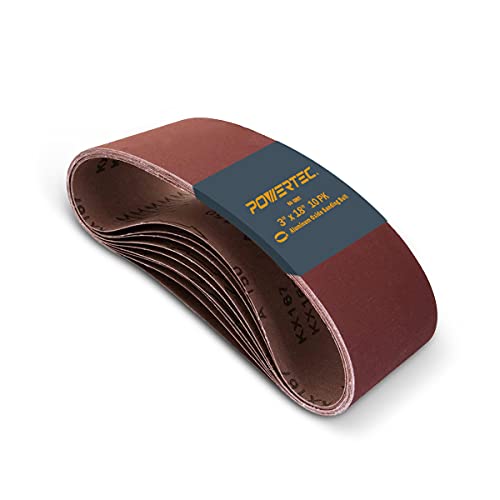
This mid-range pack is the straightforward choice for the large installed base of 3 x 18 inch belt sanders. Every belt is 80 grit, the maker’s grade for removing small imperfections after stripping and before finer smoothing grits. The abrasive is open-coat aluminum oxide, a coating pattern that leaves space between grains so dust and resin clear instead of packing into the surface. That open structure is why the listing also rates the belts for light and non-ferrous metals, weld blending, fiberglass, plastic, and rubber.
The belts use an X-weight cloth backing, the heavier cloth class intended for machine sanding, with a resin-on-resin bond and a butt joint seam. POWERTEC lists compatibility with 3 x 18 inch sanders from Makita, Skil, DeWalt, Ridgid, Porter-Cable, Black+Decker, Bosch, Triton, Hitachi, and Metabo. Ten belts of one grit suit shops that already own coarser and finer grades.
Specs:
- Belt size: 3 x 18 inches
- Grit: 80
- Abrasive: Open-coat aluminum oxide
- Backing: X-weight cloth
- Joint: Butt joint, resin-on-resin bond
- Pack count: 10 belts
- Maker part number: 110810
BOSHCRAFT 21 Pack 3 x 21 Inch Sanding Belts Assortment

The BOSHCRAFT assortment is the widest grit ladder in this guide. The 21 belts are split evenly across seven grades, three each of 40, 60, 80, 120, 180, 240, and 400 grit, so one box covers stripping, stock removal, and the fine end of belt work. That spread makes it a sensible first purchase for a new 3 x 21 inch sander. The listing describes aluminum oxide belts with a bi-directional tape joint, so each belt mounts in either direction of travel.
BOSHCRAFT also names knife sharpening and metal polishing in the listing title, which fits the 240 and 400 grit belts at the fine end. The trade-off of any assortment is depth: three belts per grit covers a project or two, not a production run of cabinet doors. Treat this mid-range pack as a sampler, then restock your working grits in bigger single-grit boxes.
Specs:
- Belt size: 3 x 21 inches
- Grits included: 40, 60, 80, 120, 180, 240, 400 (3 belts each)
- Abrasive: Aluminum oxide
- Joint: Bi-directional tape joint
- Pack count: 21 belts
- Maker model: 3*21 inch Sander belts
Taokyid 24 Pack 3 x 21-Inch Sanding Belts

Taokyid takes a different assortment strategy: fewer grits, more belts of each. The 24-pack holds six belts each of 40, 80, 120, and 240 grit, all in the 3 x 21 inch size and all aluminum oxide. The jump from 120 to 240 is manageable on softwoods and paint-grade work, where the belt flattens and smooths rather than producing a show finish. Six belts per grade gives this budget-tier pack more depth than three-per-grit assortments, which matters at 40 and 80 grit, the fastest-wearing grades.
The listing is spare with construction details: it states the abrasive and the model number TA-3X21-24M4, but publishes no backing weight or joint type, so seam style cannot be confirmed from the listing alone. What the pack offers is a repeatable restock unit for shops running a fixed four-step sequence. Woodworkers who rely on 60 or 180 grit as intermediate steps, though, will find the gaps in this ladder harder to work around.
Specs:
- Belt size: 3 x 21 inches
- Grits included: 40, 80, 120, 240 (6 belts each)
- Abrasive: Aluminum oxide
- Pack count: 24 belts
- Maker part number: TA-3X21-24M4
POWERTEC 4 x 24 Inch Sanding Belts, 80 Grit, 10-Pack (110090)

Moving up to the 4 x 24 inch size changes the job profile. Sanders in this class, such as the Makita 9403 and 9404, are heavy stock-removal tools for flattening glued panels, leveling boards, and stripping finishes. POWERTEC’s 110090 pack matches that role with ten 80-grit belts, the grade the maker recommends for general material removal and smoothing rough-sawn lumber. The abrasive is premium open-coat aluminum oxide, which helps the wider belt shed the dust a 4-inch cut generates.
The maker’s manual lists compatibility with Makita 9403 and 9404 sanders, plus 4 x 24 inch machines from Craftsman, Skil, and WEN. As a mid-range pack, it keeps the same stated size and grit as original-equipment belts, making it a practical restock for a sander that lives on 80 grit. The limitation mirrors the smaller POWERTEC pack: one grit per box, so finish prep needs companion packs in other grades.
Specs:
- Belt size: 4 x 24 inches
- Grit: 80
- Abrasive: Premium open-coat aluminum oxide
- Pack count: 10 belts
- Maker model: 110090
- Stated compatibility: Makita 9403 and 9404, plus 4 x 24 inch sanders from Craftsman, Skil, and WEN
Makita 742322-9 4-Inch x 24-Inch Abrasive Sanding Belt, 80 Grit (10/Pk)

The premium pick in this guide is the original-equipment belt Makita supplies for its own 4 x 24 inch sanders. The 742322-9 is the same belt Makita includes in the box with the 9403 sander, sold here as a 10-pack of 80-grit belts. Buying the sander maker’s own consumable removes the guesswork about dimensions and tracking, since the belt was specified alongside the tool’s platen and roller geometry. For a heavy sander used on flooring, large glue-ups, and finish stripping, that consistency is the main argument for the OEM listing.
Makita rates it at 80 grit for general stock removal, the same grade as the other 4 x 24 pick here, so the choice is brand specification versus the mid-range alternative. The 10-pack suits owners who run the sander regularly.
Specs:
- Belt size: 4 x 24 inches
- Grit: 80
- Pack count: 10 belts
- Maker model: 742322-9
- Fits: Makita 4 x 24 inch belt sanders, including the 9403 and 9404
How to choose
Start with size, because nothing else matters if the belt does not fit. Belt size is written as width by circumference, so a 3 x 21 inch belt fits a different sander than a 3 x 18 inch belt even though the widths match. Check the size on your old belt or in the manual before ordering; the three sizes here are not interchangeable.
Next, plan the grit sequence. Coarse 40 to 60 grit strips paint, levels cupped boards, and removes stock quickly while leaving deep scratches. The 80 to 120 range is the general working band for flattening and smoothing, 180 to 240 grit refines the surface, and grades at 320 and 400, found in the BOSHCRAFT assortment, serve metal polishing and between-coat work more than raw wood prep. Single-grit packs suit a known routine; assortments suit owners still learning their grades.
Finally, compare construction. Aluminum oxide is the standard grain for wood; zirconia and ceramic grains, sold under separate listings, target heavier removal and metal. X-weight cloth is the heavier backing class for machine sanding, and the joint style, butt or tape, affects how smoothly the seam passes over the platen. More belts per grit means reordering fast-wearing grades less often.
Who should skip
Skip this guide if your sanding is done entirely with an orbital, detail, or sheet sander, since none of these belts fits those tools. Bench belt and disc sanders (4 x 36 inch belts) and 2 x 72 inch knife grinders need different sizes than the portable belts compared here. If your belt sander is a narrow band file that runs 1/2 x 18 inch belts, look for that specialty size instead. Anyone who only needs a belt or two for one repair may find a full pack excessive, and anyone chasing a finish-ready surface should plan on a random orbital sander afterward.
FAQ
What size sanding belt does my sander need?
The size is the belt’s width and full loop length, such as 3 x 18, 3 x 21, or 4 x 24 inches, printed in the sander manual and usually on the back of the old belt. Width alone is not enough: a 3 x 18 belt will not track on a 3 x 21 sander.
Which grit should I start with on rough lumber?
Maker grit guides group 40 to 60 grit as heavy sanding and stripping grades, 80 to 180 for removing small imperfections, and 240 to 400 for fine finishing. On rough or painted stock, start coarse enough to level the surface, then step through each finer grade so each belt only erases the previous scratch pattern.
What is the difference between open-coat and closed-coat belts?
Open-coat belts leave part of the backing uncovered by grain, which gives dust and resin room to escape and slows loading on softwood, paint, and glue lines. Closed-coat belts cover the backing fully and cut faster on clean, hard material. The POWERTEC picks here are open-coat, the common choice for mixed woodshop work.
How do I make sanding belts last longer?
Store belts flat or hanging in a dry shop, since humidity and heat age the joint adhesive. Let the abrasive cut without forcing the sander down, because excess pressure glazes the grain. An abrasive cleaning stick run against a moving belt pulls out loaded dust and pitch, extending useful cutting life between changes.
Final verdict
The right belt matches your sander’s size and covers the grits your work passes through, with a grain and backing suited to the material. For a single versatile purchase, the BOSHCRAFT 21-pack spans the full 40 to 400 grit range for 3 x 21 inch sanders. For a fixed working grade, the POWERTEC 110810 covers 3 x 18 inch sanders at 80 grit, the Taokyid 24-pack restocks a four-grit 3 x 21 routine in depth, and 4 x 24 inch sander owners can choose between the mid-range POWERTEC 110090 and the original-equipment Makita 742322-9. Confirm the size against your manual; the rest is grit and pack count.
More from Amazon
Programs that pair well with the guide above. Offers and eligibility are set by Amazon and may change.
A free business account with business pricing and bulk-buying tools for work, shop or home office.
Create a business accountFree shipping on eligible items, Prime Video and more. Eligible new members can start with a free trial.
Start a Prime free trialAudiobooks and podcasts to listen to on the go. Eligible new members can start with a free trial.
Try Audible freeAd-free music streaming. Eligible new subscribers can start with a free trial.
Try Music Unlimited freeAs an Amazon Associate we earn from qualifying purchases.


Write Your Review
No reviews yet. Be the first to share your experience!