

Key takeaways
- The swivel pad is the first part to loosen or fall off; check that it is staked or peened to the screw.
- Powder-coated frames chip but rarely affect function; bare cast iron rusts in a humid garage.
- Over-tightening is the usual cause of bent screws. A C clamp does not need a pipe over the handle for woodworking.
- C clamps are not ideal for wide glue-ups, where parallel-jaw or bar clamps keep panels flat.
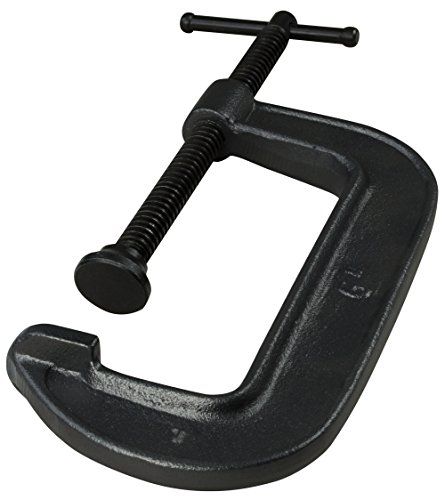
The best C clamp for most woodworking shops is a 4-inch forged-steel clamp with a 2-inch throat depth, with a locking-plier style C clamp as the runner-up for one-handed work. Both fit comfortably inside a budget of sixty dollars for a starter set, and neither needs to be a premium brand to hold a jig, a fence or a stop block securely. The real decision is not brand but size, frame material and whether the swivel pad can mar your workpiece.
This guide groups C clamps by the job they do in a woodshop, explains which specs matter, and shows how to spread a limited budget across sizes. Product classes and brands below are based on manufacturer specifications and published roundups; this is research-based, not a bench trial.
Our top picks


As an Amazon Associate we earn from qualifying purchases at no extra cost to you.
Quick Comparison of C Clamp Types
| Type | Best for | Typical opening | Throat depth | Frame | Price range |
|---|---|---|---|---|---|
| Forged steel deep-throat C clamp | Jigs, fences, metal and wood fixtures | 2 to 8 in | 2 to 4 in | Drop-forged steel | Budget |
| Cast iron economy C clamp | Light shop duty, spare clamps | 2 to 6 in | 1.5 to 2.5 in | Cast iron | Budget |
| Locking C clamp (Vise-Grip style) | One-handed holding, welding and tricky angles | 4 to 11 in | 2 to 4.5 in | Stamped or formed steel | Mid |
| Swivel-pad woodworking C clamp | Finished surfaces, glue-ups | 2 to 6 in | 2 in | Steel with padded swivel | Budget to mid |
| Quick-release C clamp | Repetitive setups on a drill press or router table | 3 to 6 in | 2 to 3 in | Steel with sliding jaw | Mid |
Best Overall: Forged Steel C Clamp, 4-Inch Class
A drop-forged 4-inch C clamp is the workhorse. Brands such as Wilton, Yost, Wright and Irwin all sell this class, and per the manufacturers’ spec sheets the forged frames are rated for substantially more force than cast economy frames. The 4-inch opening and roughly 2-inch throat handle most shop tasks: clamping a stop block to a fence, holding a jig on a drill press table or pinning a workpiece to a bench.
The main trade-off is weight and speed. A forged clamp is heavy compared with a bar clamp, and the screw is slow to run in and out. If you will adjust a clamp dozens of times a day, a quick-release or bar style may suit you better.
Best Value: Cast Iron Economy Clamps
Cast iron C clamps cost a fraction of forged ones and are fine for light duty. They are brittle, so over-tightening with a cheater bar can crack the frame instead of bending it. Buy these for stop blocks, shop-made jigs and situations where you need six or eight clamps and force is not the issue. Check the screw for play before buying: a loose thread means the jaw drifts as you tighten.
Best for One-Handed Use: Locking C Clamps
Locking C clamps from the Vise-Grip line, plus similar models from Bessey and Kreg, use an over-center lever to set and release pressure. They are the clamp you reach for when one hand holds the work and the other places the clamp. Longer reach versions in the 6 to 11 inch class can bridge awkward angles. The trade-off is that the jaw faces are usually metal, so use scrap wood or add pads before clamping finished stock. Lock force also varies with how well the screw is adjusted, so reset the adjusting screw whenever the workpiece thickness changes.
Best for Finished Wood: Swivel-Pad Woodworking C Clamps
If the clamp will touch visible surfaces, look for a swivel pad, preferably with a smooth or padded face. A swivel pad lets the jaw seat flat on slightly uneven or tapered pieces, which spreads pressure and reduces dents. Padded options or slip-on rubber tips are a cheap upgrade for any C clamp. Hard maple or plywood cauls cut to 2 by 4 inches also protect softer woods like pine and poplar, and cost almost nothing.
Best for Repetitive Setups: Quick-Release C Clamps
Quick-release designs let the movable jaw slide to the work, then lock with a short screw turn. They save time at the drill press, band saw or router table. They generally hold less force than a forged screw clamp, so use them for positioning rather than for heavy pressure.
How to Spend 60 Dollars or Less
A balanced first set mixes sizes. Here is a worked example for a typical small shop budget, using general market price bands:
| Item | Qty | Purpose | Price band each |
|---|---|---|---|
| 2-inch forged C clamp | 2 | Small jigs, router base work | Budget |
| 4-inch forged C clamp | 4 | Fences, stop blocks, drill press | Budget to mid |
| 6-inch cast or forged C clamp | 2 | Thicker stock and bench holding | Mid |
| Locking C clamp, 6-inch | 1 | One-handed fixturing | Mid |
That mix gives nine clamps at a total that normally stays under the sixty-dollar ceiling when you buy cast economy models for the cheaper sizes. If you can only afford one purchase, choose two 4-inch forged clamps first; they cover the widest range of everyday tasks.
How to Choose a C Clamp
Opening and throat depth
The opening is how thick a workpiece the clamp can span. The throat depth is how far from the edge it can reach. For woodworking, a 4-inch opening with a 2-inch throat is the sweet spot. Deep-throat models reach into a panel but are heavier and flex more under load.
Frame material
Forged steel is stronger and more consistent than cast iron. Ductile iron sits in between. For clamps that will be struck, tightened hard or used for metal work, choose forged.
Screw and thread quality
A fine, smooth screw makes it easier to apply controlled pressure. Look for a hardened screw and a pad that does not spin off. Rust is the usual failure; a light coat of paste wax or machine oil on the thread keeps it running smooth.
Pad and surface protection
Plain steel pads will leave marks on soft hardwoods and softwoods. Use scrap, cork or leather between the pad and workpiece when finish matters.
Ownership Realities: What Wears and What to Avoid
- The swivel pad is the first part to loosen or fall off; check that it is staked or peened to the screw.
- Powder-coated frames chip but rarely affect function; bare cast iron rusts in a humid garage.
- Over-tightening is the usual cause of bent screws. A C clamp does not need a pipe over the handle for woodworking.
- C clamps are not ideal for wide glue-ups, where parallel-jaw or bar clamps keep panels flat.
Decision Matrix: Match the Clamp to the Task
| Task | Best clamp | Size | Reason |
|---|---|---|---|
| Fixing a stop block to a miter saw or table saw fence | Forged C clamp | 4 in | Rigid frame that does not flex under vibration |
| Holding a workpiece to a drill press table | Forged C clamp or quick-release | 4 to 6 in | Deep throat clears the column and the chuck |
| Securing a template to a workpiece for routing | Swivel-pad C clamp | 2 to 4 in | Low profile so the router base clears the clamp |
| Tacking a jig to a bench | Cast iron economy clamp | 3 to 4 in | Cheap enough to leave attached to the jig |
| Holding awkward angles with one hand | Locking C clamp | 6 to 11 in | Lever action sets and releases quickly |
| Metal fabrication in the same shop | Forged C clamp | 4 to 8 in | Stands up to heat, spatter and heavy tightening |
Common Mistakes With C Clamps
The biggest mistake is clamping directly onto finished wood with a bare steel pad. Even a modest turn of the screw leaves a ring that sanding may not remove, especially on soft species such as pine and poplar. Always use a pad of scrap or cork.
Another mistake is clamping in the center of a joint and expecting it to close along its entire length; C clamps give strong point pressure, so place them near the area that needs closing and use cauls for long edges. Finally, avoid leaving a clamp tightened for weeks on a jig, because the stress can distort thin plywood fixtures and relax the thread seat.
When you outgrow the budget set, the next purchases to consider are 12-inch and 24-inch bar clamps for glue-ups and a few spring clamps for light holding, so the C clamps can stay dedicated to machine and jig duty.
Frequently Asked Questions
What size C clamp is most useful for woodworking?
The 4-inch C clamp with a roughly 2-inch throat is the most versatile size. It handles jigs, fences, stop blocks and drill press work. A smaller 2-inch pair and a couple of 6-inch clamps round out most small shops.
Are cast iron C clamps safe to use?
Yes for light-duty work, but they are more brittle than forged steel. Avoid cheater bars and sudden impact, because a cast frame can crack without warning. For heavy fixturing, choose forged steel.
Can I use C clamps for glue-ups?
You can, especially for small pieces and edge banding, but they do not distribute pressure as evenly as bar or parallel clamps. Use cauls to spread the force and protect the surface.
How do I stop a C clamp from marking wood?
Place a scrap of wood, cork or leather between the pad and the workpiece, or choose a model with a swivel pad that has a padded face. Keep pressure moderate; snug is usually enough.
How many C clamps should a beginner buy?
Six to nine is a good start, in two or three sizes. Add bar clamps next for glue-ups, since C clamps are not designed to span wide panels.





Write Your Review
No reviews yet. Be the first to share your experience!