

Our Top Picks


Ipe is one of the hardest woods a home woodworker can put on a table saw. Its dark olive-brown grain is dense, oily, and tough enough to dull a cheap blade in a single afternoon, and a dull blade on ipe means scorched edges, chipped corners, and a tabletop that needs hours of sanding. Choosing the right blade is therefore the decision that shapes the whole project: the tooth count, the kerf, and the carbide grade decide whether each cut comes out clean or whether the saw fights the wood all the way through.
This guide is for anyone building an ipe table at home, from a small side table to a full dining table, and for woodworkers who want one set of blades that covers rips, crosscuts, and flat-bottom grooves. Every blade below was picked from the name and the listed details on its Amazon product page, so you can check each model and ASIN against the listing before you order.
Quick Picks
As an Amazon Associate we earn from qualifying purchases.
| Product | Best for | Key spec from title |
| Freud LU80R010 | Glass-smooth crosscuts on dark ipe tops | 10-inch, 80T Hi-ATB, 0.126-inch kerf |
| Diablo D1060X | Clean crosscuts and miter cuts | 10-inch, 60T Hi-ATB, 0.098-inch kerf |
| Freud LU88R010 | Everyday crosscuts with a thin kerf | 10-inch, 60T ATB, 0.090-inch kerf |
| Diablo D1050X | Fast rips through thick ipe boards | 10-inch, 50T ATB, 0.098-inch kerf |
| Freud LU83R010 | Flat-bottom grooves for legs and aprons | 10-inch, 50T ATB plus flat-top raker |
How to Choose
Tooth Count and Cut Quality
Ipe punishes the wrong tooth count fast. An 80-tooth Hi-ATB blade slices across the grain with almost no tearout, which matters on a dark top where every chip shows. A 60-tooth blade is the middle ground: smooth enough for visible edges, fast enough for repeated crosscuts, and less likely to scorch when the feed slows. Drop to 50 teeth for rips, where fewer teeth clear sawdust and keep the cut moving. Never rip a thick ipe board with an 80-tooth blade; the gullets pack with dust, heat builds, and the edge burns black. Match the tooth count to the cut, and test on an offcut first.
Kerf, Riving Knife, and Saw Power
Kerf is the width of the cut, and on ipe it affects both the finish and the safety of the setup. A full kerf of 0.126 inch tracks straight and resists wobble, which helps when a dense board pushes back against the blade. Thin kerf blades at 0.090 to 0.098 inch cut with less effort and waste less wood, but they can be thinner than a standard riving knife, so measure the knife with calipers before you buy. A saw under 3 HP also runs happier on a thin kerf blade, since the motor removes less material with each pass. Pick the kerf that suits your saw, then check the splitter still lines up with the cut.
Carbide and Coatings for Oily Hardwood
Ipe is oily, and that oil coats the blade as you cut. A TiCo carbide edge stays sharp far longer than plain steel on this wood, and a nonstick coating such as Perma-Shield keeps pitch and resin from building up on the plate. When buildup starts, the blade runs hotter and the cut drifts, so wipe the plate clean after a long session and check the teeth before the next board. A coated plate also slides through the cut with less friction, which means less burning on the dark surface. Do not buy an uncoated steel blade for ipe; it will dull before the first tabletop is done.
Grooves, Joinery, and Blade Changes
A table needs more than edge cuts. Legs join the apron with mortises and grooves, and only a blade with a flat-top raker cuts a groove with a flat bottom. An ATB blade leaves a V-shaped ridge in the middle of the groove, which weakens the joint and shows through thin glue lines. Plan your blade changes before you start: crosscut the top with the fine blade, rip the legs with the 50-tooth blade, then fit the raker blade for the joinery. Changing blades takes minutes and saves hours of hand work. Keep a spare sharp blade nearby, because ipe dulls edges fast and a tired blade burns the dark grain.
The 5 Best Options
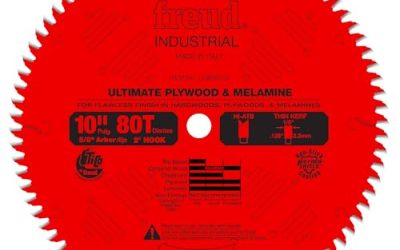
Freud LU80R010

The LU80R010 is the blade to reach for when the ipe top is already glued up and every crosscut shows. Its 80 Hi-ATB teeth shear the dark grain cleanly, leaving an edge that needs little sanding and shows no chipping along the cut line. The full 0.126-inch kerf tracks straight through dense boards, so long crosscuts stay true instead of wandering. It is the slowest of the five on thick rips, so save it for finish cuts and let a coarser blade do the heavy ripping. On a dark ipe surface, the difference this blade makes is easy to see.
Specs
- 10-inch diameter
- 80 teeth, Hi-ATB grind
- 0.126-inch kerf, full kerf
- 2-degree hook angle
- Max RPM 7,000
- TiCo Hi-Density carbide
- Perma-Shield nonstick coating
Best for: Glass-smooth crosscuts on dark ipe tabletops.
Watch out for: The listing shows part number FRE-D1080X, so confirm the model is LU80R010 and the ASIN is B0007WKBEQ before ordering. Do not confuse it with the Diablo D1080X.
Diablo D1060X

The D1060X is the workhorse for visible crosscuts and miter cuts on ipe. Its 60 Hi-ATB teeth leave a clean edge on the dark grain while cutting faster than an 80-tooth blade, so it suits the repeated cuts of a table project. The 0.098-inch thin kerf asks less of the motor, which helps on a saw under 3 HP, and the laser-cut stabilizer vents keep the plate steady through long boards. It is not the blade for deep rips or flat-bottom grooves, but for crosscuts and miters it earns its place in the set.
Specs
- 10-inch diameter
- 60 teeth, Hi-ATB grind
- 0.098-inch kerf, thin kerf
- 15-degree hook angle
- Max RPM 7,000
- TiCo Hi-Density carbide
- Perma-Shield nonstick coating
Best for: Clean crosscuts and miter cuts on ipe table parts.
Watch out for: Thin kerf blades can be thinner than a standard riving knife, so measure the knife with calipers before you buy.
Freud LU88R010

The LU88R010 is the everyday crosscut blade for ipe, and its 0.090-inch kerf is the thinnest in this set. That thin kerf wastes the least wood and asks the least of the motor, which matters when a dense board already loads the saw. The 60 ATB teeth cut cleanly across the grain, and the plate stays flat through long cuts thanks to the Perma-Shield coating. It can chatter on very thick stock if the feed is uneven, so keep a steady pace and let the blade do the work. For most crosscuts on a table project, this is the blade that stays on the saw.
Specs
- 10-inch diameter
- 60 teeth, ATB grind
- 0.090-inch kerf, thin kerf
- 0.071-inch plate thickness
- 15-degree hook angle
- TiCo Hi-Density carbide
- Perma-Shield nonstick coating
Best for: Everyday crosscuts with minimal wood waste.
Watch out for: The listing sometimes shows no featured offers, so confirm the listing still has a seller before ordering.
Diablo D1050X
The D1050X is the rip blade for ipe. Its 50 ATB teeth clear sawdust fast and keep the cut moving through thick boards, where a fine-tooth blade would pack up and burn. The 0.098-inch thin kerf reduces the load on the motor, which helps smaller saws push dense stock without stalling. Crosscuts with this blade show a slightly rougher edge, so save it for rips and rough sizing and switch to a finer blade for the visible cuts. It is the fastest way to break down rough ipe boards into table parts.
Specs
- 10-inch diameter
- 50 teeth, ATB grind
- 0.098-inch kerf, thin kerf
- 15-degree hook angle
- Max RPM 6,000
- TiCo Hi-Density carbide
- Perma-Shield nonstick coating
Best for: Fast rips through thick ipe boards.
Watch out for: The listing sometimes shows no featured offers, so confirm the listing still has a seller before ordering. The Amazon listing lists max RPM as 6,000, while some retailers list 7,000.
Freud LU83R010
The LU83R010 is the only blade in this set that cuts flat-bottom grooves, and that makes it the joinery blade for ipe tables. Its flat-top raker tooth levels the bottom of each groove, so legs and aprons sit tight with no gap under the joint. The 50 ATB teeth handle rips well, and the 0.091-inch thin kerf suits saws under 3 HP. It leaves a slightly rougher crosscut edge than the 80-tooth blade, so use it for grooves and rips and let the finer blades finish the visible edges. No ipe table project is complete without a groove-cutting blade.
Specs
- 10-inch diameter
- 50 teeth, ATB with flat-top raker
- 0.091-inch kerf, thin kerf
- 0.071-inch plate thickness
- 10-degree hook angle
- For saws under 3 HP
- TiCo Hi-Density carbide
- Perma-Shield nonstick coating
Best for: Flat-bottom grooves for legs, aprons, and shelf supports.
Watch out for: The listing sometimes shows no featured offers, so confirm the listing still has a seller before ordering.
Which One Fits Your Situation
A First Ipe Dining Table
Pick the LU80R010 for the top and the D1050X for the rips. The 80-tooth blade gives the big top a glass-smooth edge with almost no sanding, while the 50-tooth blade breaks down the thick boards fast. Add the LU83R010 when the legs need grooves. This trio covers every cut in a first dining table, and you can add the 60-tooth blades later when the budget allows.
A Small Side Table from Offcuts
Use the LU88R010 for the whole job. Its 60 ATB teeth and 0.090-inch kerf cut cleanly and waste the least wood, which matters when the offcuts are short and every inch counts. The thin kerf also asks little of a small saw, so a compact jobsite saw handles the cuts without stalling. One blade, one setup, and the side table is done.
An Outdoor Ipe Table
Choose the D1060X for the top and the LU83R010 for the frame. Ipe stands up to weather better than almost any other wood, so the table can live outside with an outdoor finish on every face. The 60-tooth blade leaves clean edges that take finish evenly, and the raker blade cuts the grooves for the apron and the lower shelf. Keep the feet off wet ground and re-oil the top each year.
Grooves and Joinery for Legs and Aprons
Fit the LU83R010 and nothing else. Only its flat-top raker leaves a groove bottom flat enough for a tight mortise-and-tenon joint, and a tight joint is what keeps a heavy ipe table from wobbling. Cut the grooves before the final crosscuts, so any small chip at the groove edge gets trimmed away. Test the fit on an offcut first, since ipe glue joints do not forgive a loose fit.
Common Mistakes
- Ripping thick ipe with an 80-tooth blade, which packs the gullets, builds heat, and burns the edge black.
- Skipping the riving knife check: thin kerf blades can be thinner than a standard riving knife, so measure it with calipers first.
- Cutting oily ipe with a dull or uncoated blade and letting pitch build up until the cut drifts and the edge scorches.
- Using an ATB blade for grooves, which leaves a V-shaped ridge and weakens the leg joints.
- Forgetting that a 10-inch blade cuts only about 3-1/8 inches deep, so thick legs need two passes or a different approach.
Frequently Asked Questions
How is an ipe table different from a cumaru table?
Cumaru is golden-brown and very hard, with straighter grain than ipe. Ipe is darker, with an olive-brown tone and a heavier feel, and it weathers outdoors even better. Both woods blunt blades fast and need sharp carbide, but ipe shows burn marks more clearly, so a steady feed and a sharp blade matter more. Pick cumaru for a warm golden top and ipe for a dark one.
How is an ipe table different from a massaranduba table?
Massaranduba is reddish-brown and very hard, with silica in the grain that dulls blades fast, so keep a sharp spare ready. Ipe is darker and oilier, with an olive-brown tone, and it also dulls blades quickly. Both suit outdoor tables under cover, but ipe handles full weather better. Massaranduba dust irritates skin and lungs, so wear a mask and long sleeves with either wood.
Can I use one blade for the whole ipe table?
One blade can do the job if it is a 60-tooth ATB blade, but the result will not match a small set. It crosscuts cleanly and rips thin stock well, yet thick rips will be slow and grooves will have a ridged bottom. For a small side table, one blade is enough. For a dining table, add a 50-tooth rip blade and a raker blade for the joinery.
Do I need a special finish for an ipe table?
Ipe is weather resistant, so the finish is about looks and upkeep, not survival. An outdoor oil keeps the dark color, but it needs a fresh coat each year, since sun turns the surface gray without it. A wax oil or marine varnish lasts longer on a table that stays outside. Whatever you pick, finish every face, including the underside, so moisture stays even and the top does not cup.
More from Amazon
Programs that pair well with the guide above. Offers and eligibility are set by Amazon and may change.
A free business account with business pricing and bulk-buying tools for work, shop or home office.
Create a business accountFree shipping on eligible items, Prime Video and more. Eligible new members can start with a free trial.
Start a Prime free trialAudiobooks and podcasts to listen to on the go. Eligible new members can start with a free trial.
Try Audible freeAd-free music streaming. Eligible new subscribers can start with a free trial.
Try Music Unlimited freeAs an Amazon Associate we earn from qualifying purchases.








Write Your Review
No reviews yet. Be the first to share your experience!